Home Pour-Over Coffee Brewing Techniques Tutorial: The Impact of Coffee Grind Size on Flavor

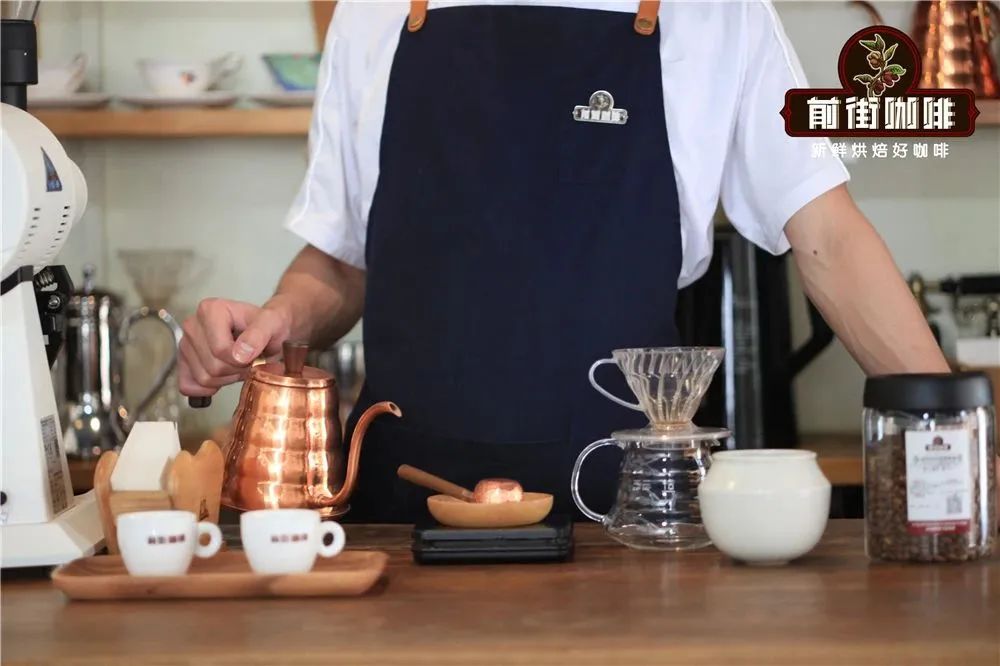
Yesterday, as FrontStreet Coffee was busy pouring water over the grounds in the filter, a friend watching nearby raised a question about home pour-over: "Why does the very same coffee taste so different at home than it does in the shop? No matter how I adjust things, the flavor never comes out right. Which step am I getting wrong?"
As the friend put it, if the beans are the same, the problem should lie in extraction. So today FrontStreet Coffee will explore what might make a home pour-over taste bad.
Have You Really Got the Coffee Grind Size Right?
Pour-over is a filtration method, so quality depends directly on the size and consistency of the particles. The finer the grind, the greater the resistance to water flow through the bed, which extends the contact time between water and coffee and more easily leads to over-extraction, producing bitterness, saltiness, acidity and astringency. The coarser the grind, the lower the resistance, and too brief a contact time leads to under-extraction and a weak taste. Learning to judge coarseness while keeping the grind uniform is therefore essential.
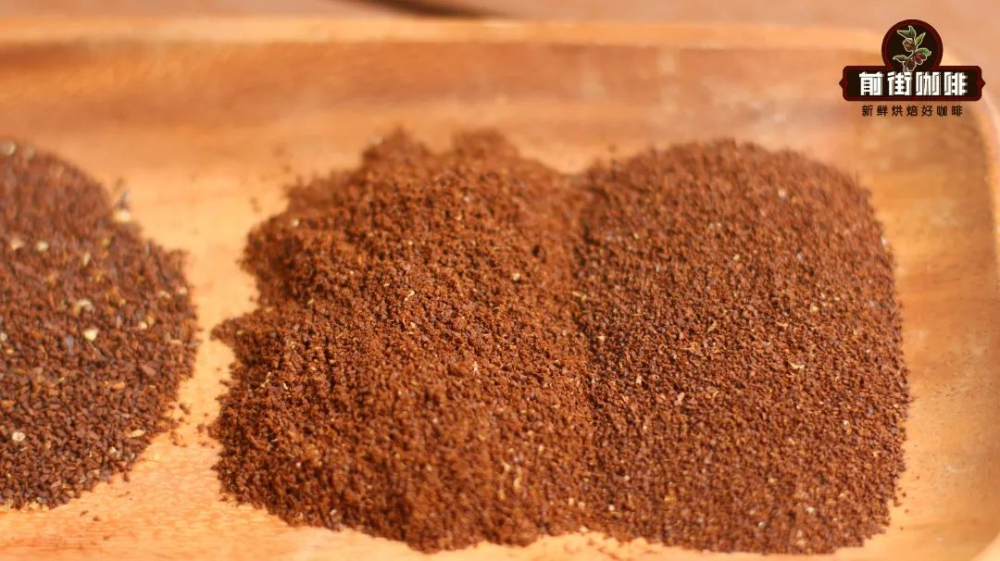
The difference between coffee with many fines and coffee with the fines sifted out.
FrontStreet Coffee offers grind recommendations for different roast levels, extraction methods and taste preferences, with fine sugar and coarse sugar being the most common references for pour-over. Some people judge by eye and start brewing as soon as the particle size roughly matches the coarseness of sugar, only to find that the final stage clogs and drains slowly. That is usually caused by too many fine particles.
The better the grinder, the tighter the particle-size distribution, with fewer coarse and fine particles and therefore a more even extraction. By the same token, an average grinder produces plenty of fines and plenty of boulders. Even if the sifting rate looks correct, during the brew the fines quickly absorb water and sink to the bottom while the coarse particles float on top, causing slow drainage and uneven extraction.
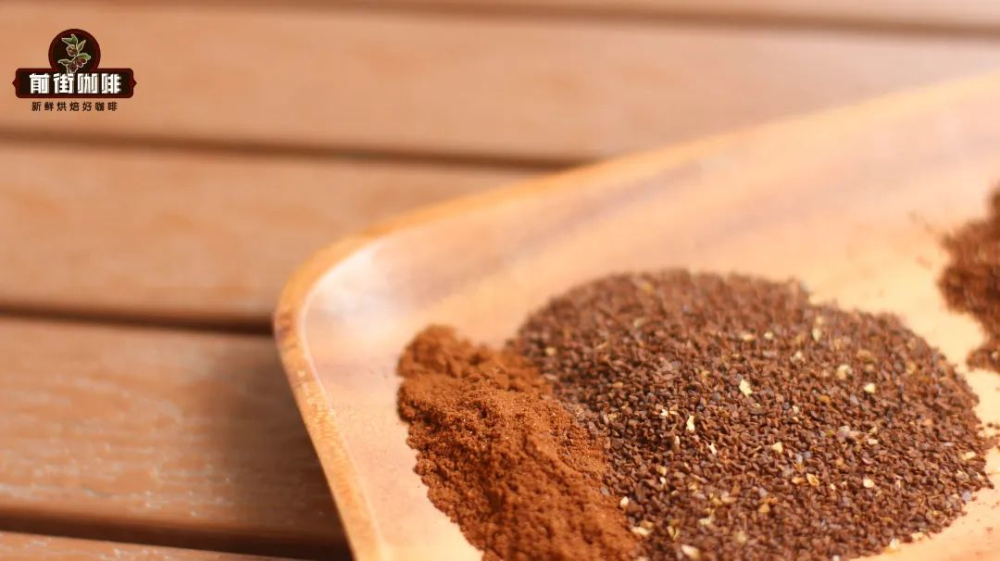
Fine particles and coarse particles.
So when your own brew tastes off, first study the particle size of the coffee bed, the "crater." Are there obvious large particles? Is it muddy, a sign of too many fines? Then recall whether the drainage was too fast or too slow. Work through it this way to pinpoint why the cup tastes wrong.
"Conservative" Parameters and Techniques Are the Foundation for Beginners Learning to Brew Coffee
FrontStreet Coffee always stresses the importance of brewing parameters, because the basic variables interlock in their effect on extraction, and using supporting tools makes the process more data-driven. Then, when the coffee does not taste good, there is a reason you can trace.
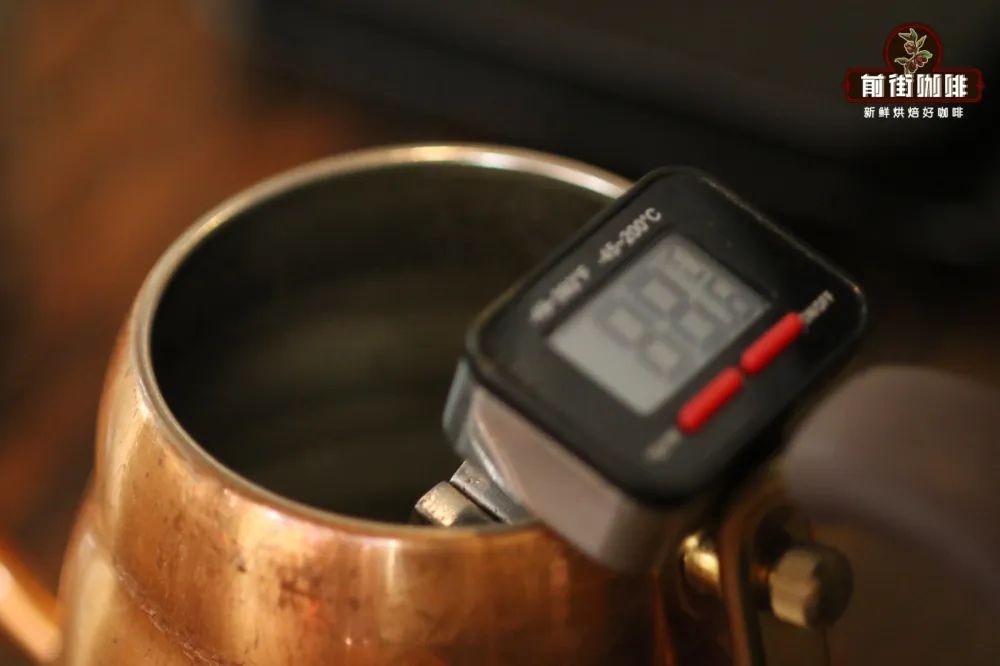
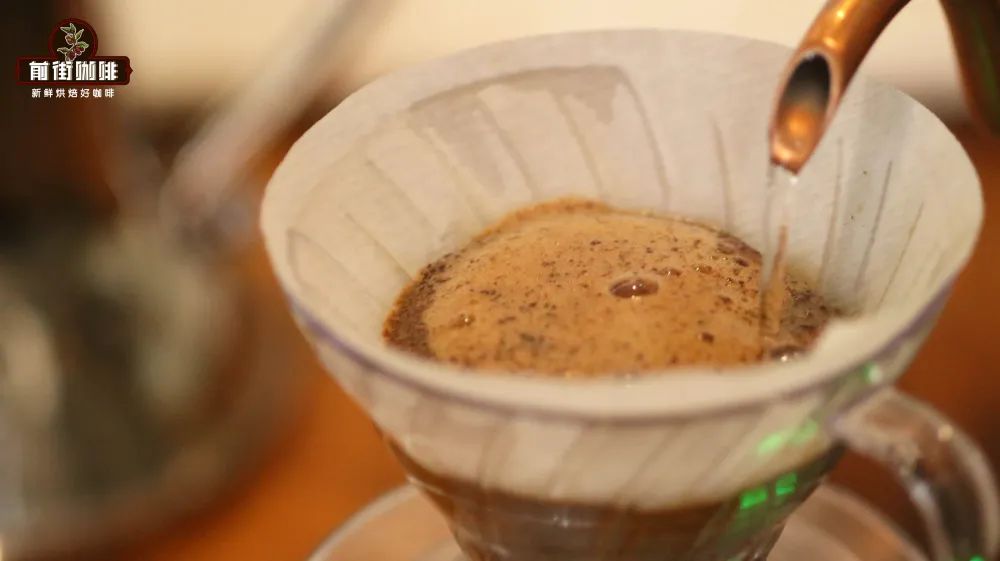
These brewing parameters revolve around four basics: coffee-to-water ratio, grind size, water temperature and extraction time, which FrontStreet Coffee has summarized across several articles. As for technique, FrontStreet Coffee has always recommended the three-stage method, because with suitable parameters it more fully extracts the pleasant compounds of the front and middle stages while also drawing out the bitter compounds of the later stage just enough to build the coffee's body.
You may come across tutorials online that suggest "rotating" or "stirring" during the bloom, pairing different techniques with specific parameters to lift certain aspects of the cup. FrontStreet Coffee believes, however, that rather than chasing these uncertain, flashy techniques, beginners are better off learning how to extract the right compounds from 15-20 grams of grounds in 1 minute 50 seconds to 2 minutes 20 seconds. Once you understand the principles, it is not too late to take on more advanced techniques.
Finally, A Potentially Overlooked Factor: Water Quality
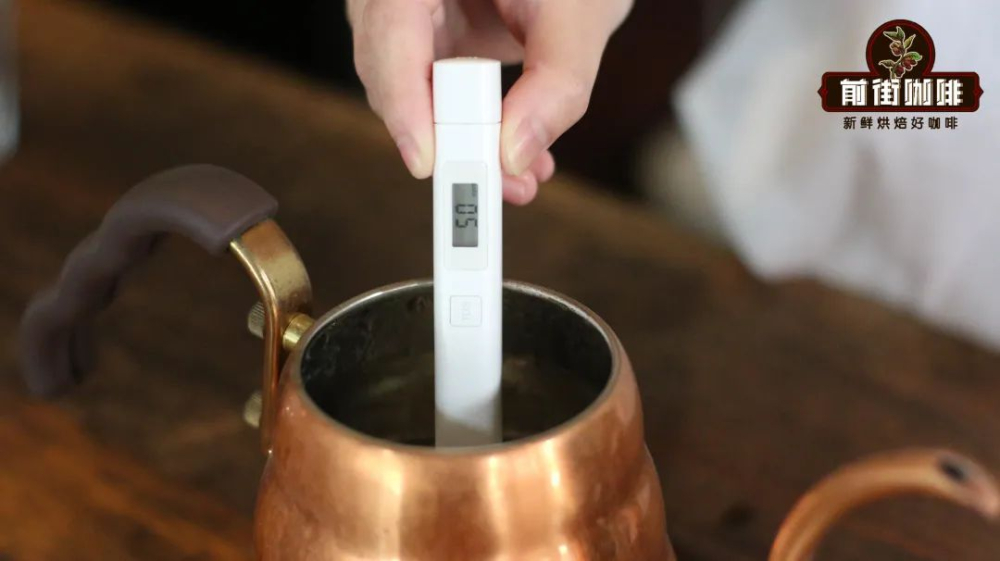
Research from several mainstream institutions shows that water containing appropriate amounts of calcium and magnesium ions produces coffee with better taste and texture. Too many magnesium ions, though, push the coffee toward bitterness, and too many calcium ions make the taste complex and astringent.
So if every coffee you brew with your home filtered water carries negative flavors, no matter which beans you use and no matter how well you control the parameters and technique, the problem likely lies in the water, which makes up the largest proportion of the cup. At that point, FrontStreet Coffee suggests trying a common brand such as Nongfu Spring, with a TDS value around 50ppm, to see whether the flavor and texture improve.
FrontStreet Coffee Recommendation
Dialing in grind size is easiest when the bean itself is clean and expressive, so you can taste exactly what your changes are doing. FrontStreet Yirgacheffe Gudingding is a great reference bean here: its citrus, berry and floral notes over a green-tea finish are bright and easy to read, and it stays clean even as you push the grind finer or coarser.
For a cup with more bite to test your adjustments against, try FrontStreet Kenya Little Tomato, a washed Kenyan bean from the Thika region grown at 1550-1750 meters from the classic SL28 and SL34 varieties. Given a 72-hour double washed fermentation and a light roast, it shows tomato and dark plum acidity, a full, juice-like body, snow pear and black plum mid-palate, and a clean sugarcane-sweet finish with a hint of green tea. Its high definition makes even small grind changes obvious in the cup.
Important Notice :
FrontStreet Coffee is a long-established specialty coffee roaster in Guangzhou China, selling freshly roasted beans from its own farm in Yunnan as well as dozens of carefully selected single-origin beans from around the world for both pour-over and espresso. The products deliver consistently excellent quality and great value, with shipping within 24 hours. Guangzhou's FrontStreet Coffee shop is recommended by many coffee lovers, and the beans are now available online at the Tmall 。
FrontStreet Coffee has moved to a new address:
FrontStreet Coffee Address: 315,Donghua East Road,GuangZhou
Tel:020 38364473
 Scan and follow the En Gafei WeChat official account. Please indicate that the reprint comes from "En Gafei".