
Pour-Over Coffee: Hot vs Iced - Flavor Differences and Which Tastes Better
Hot vs. Iced Pour-Over: Understanding the Flavor Difference
As the weather warms up, more customers at the café find themselves torn between hot pour-over and iced. The question they ask most often is, "Does this bean taste better brewed hot or iced?" Today, FrontStreet Coffee breaks down the differences between the hot and iced pour-over brewing methods.
The Brewing Logic Behind Each Method
To understand the difference, you first need the logic behind each approach. Historically, hot pour-over came first. Among iced methods, Japanese-style iced pour-over has the widest reach, and most iced pour-over methods practiced today trace back to it.

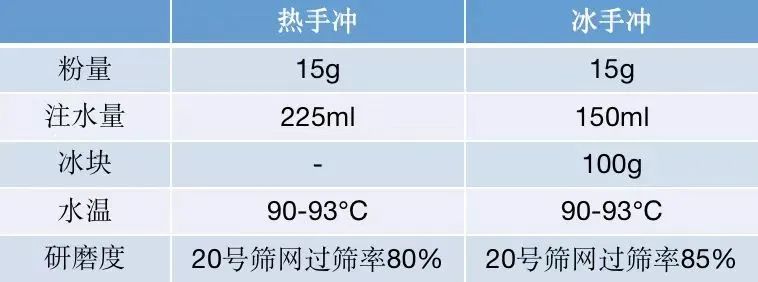
Japanese-style iced pour-over was developed as an adaptation of traditional hot pour-over. A standard hot brew uses a full coffee-to-water ratio to extract the coffee, expressing the beans' inherent flavor characteristics as completely as possible.

Iced pour-over, by contrast, cuts the water ratio to produce a more concentrated brew, which the ice then cools and dilutes. To compensate for the extraction lost to the reduced water, the grind is typically slightly finer than for hot pour-over, or the water temperature slightly higher.
Flavor Profile Differences
From an extraction standpoint, even with those compensating adjustments, iced pour-over simply lacks the later stages of extraction that hot pour-over captures.
So when you compare the same beans brewed hot and iced, the iced version is thinner in body, sweetness, complexity, and aftertaste. In clarity and acidity, however, the iced brew comes out ahead.

Aroma tells a similar story. With the same beans, hot pour-over offers the richer aromatics: in light roasts, delicate floral and fruity notes are much easier to pick up hot, while iced brewing brings sugary and fermented aromas to the fore.

In dark roasts, hot pour-over releases fuller nut and caramel aromas, whereas the iced version's nose recedes to a faint hint of low, wine-like fermentation.
Conclusion
In short: to experience a bean's complete flavor profile, FrontStreet Coffee recommends hot pour-over. If you're after something refreshing to beat the heat, iced pour-over is the likelier winner.
FrontStreet Coffee Recommendation
For iced pour-over's bright, clean style, FrontStreet Coffee recommends the light-roast classics: the Ethiopia Yirgacheffe Guodingding with crisp citrus, berry, and floral aromatics; the Ethiopia Huakui, bursting with strawberry, passion fruit, and lychee sweetness; and the Kenya Little Tomato — washed SL28/SL34 from Thika (1550-1750 meters, AA TOP, 72-hour double-washed fermentation) whose vivid cherry tomato acidity shines over ice.
If you're brewing hot instead, the mellow middleweights are superb: the PWN Indonesia Golden Mandheling (dark roast, low acidity, herbal and dark chocolate depth), the Brazil Queen Estate with nut, cocoa, and caramel sweetness, and the balanced Jamaica Blue Mountain No. 1 — often called the specialty coffee almost everyone loves.
Important Notice :
FrontStreet Coffee is a long-established specialty coffee roaster in Guangzhou China, selling freshly roasted beans from its own farm in Yunnan as well as dozens of carefully selected single-origin beans from around the world for both pour-over and espresso. The products deliver consistently excellent quality and great value, with shipping within 24 hours. Guangzhou's FrontStreet Coffee shop is recommended by many coffee lovers, and the beans are now available online at the Tmall 。
FrontStreet Coffee has moved to a new address:
FrontStreet Coffee Address: 315,Donghua East Road,GuangZhou
Tel:020 38364473
 Scan and follow the En Gafei WeChat official account. Please indicate that the reprint comes from "En Gafei".

