
Patrik Rolf Pour-Over Coffee Brewing Method - How to Make Light Roast Sour Coffee Taste Delicious
Patrik Rolf's Pour-Over Coffee Method: A Beginner-Friendly Approach
Pouring technique, timing judgment, and balancing a dozen different parameters — these are the hurdles every new pour-over brewer has to clear. Even the three-stage method that FrontStreet Coffee recommends as the most beginner-friendly still demands some feel for water flow and pouring timing. The brewing method FrontStreet Coffee shares today, however, lets you sidestep all of that. Even if you've never brewed before, simply following the recipe will get you delicious coffee.
The method comes from Patrik Rolf, founder of the Norwegian coffee brand April and runner-up at the 2019 World Brewers Cup Championship.
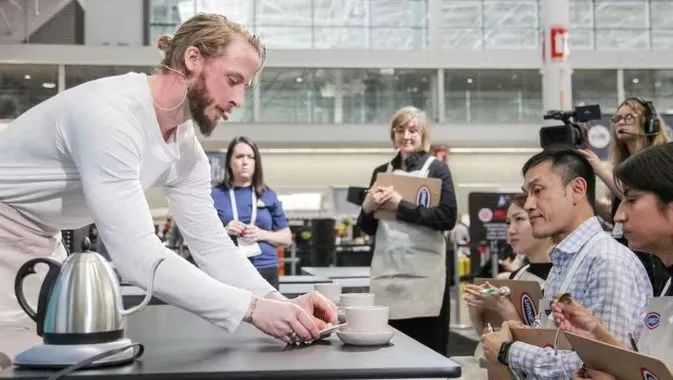
Patrik has a distinctive, systematic take on both roasting and brewing. The method FrontStreet Coffee walks through here departs clearly from tradition, but it is undeniably practical.
Brewing Method Overview
First, the recipe in brief. The heart of the whole setup is an Origami dripper fitted with trapezoidal (flat-bottom style) filter paper. (FrontStreet Coffee tried swapping in similar drippers or papers — copying the parameters verbatim didn't work; the recipe needed adjustment to reproduce the same results.)
This method suits a wide range of conventionally processed light roast beans. FrontStreet Coffee tested several commonly available light roasts, and all of them performed well with it.
Brewing Parameters
The parameters: 12g of coffee with 200ml of water (a coffee-to-water ratio of roughly 1:16.7) at 94°C. The grind is relatively coarse — 65-70% retained on a #20 sieve, which is actually the coarseness FrontStreet Coffee typically uses when three-stage brewing a dark roast.
Pouring Technique
The pouring structure couldn't be simpler: just two stages. In the first, pour 100ml of water in about 10 seconds, so the flow is quite fast. There's no need to finesse the flow — pour boldly, keeping your circles small and centered.
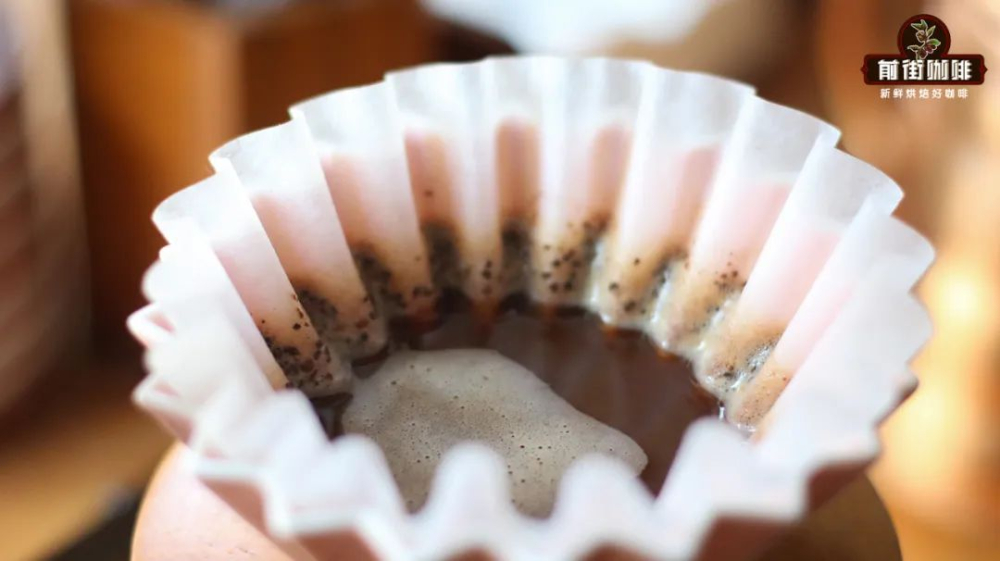
Normally, around 50 seconds to 1 minute, the liquid in the dripper finishes draining. The coffee bed will have settled into a central depression ringed by thick walls of grounds, forming a "bowl" shape.

The second pour starts at the 1-minute mark: another 100ml, beginning at the grounds wall to wash it down, then slowly spiraling back to the center. This pour ends around 1 minute 20 seconds. Again, no deliberate flow control is needed — even if you splash onto the filter paper, it doesn't matter.
From there, you simply let the dripper drain on its own. It finishes draining around 2 minutes 40 seconds, but Patrik recommends waiting until the 3-minute mark before removing the dripper. That keeps the parameters consistent, and besides, even when the bed's surface looks dry, a small amount of coffee liquid is still trickling out at the bottom — a longer wait lets it drain completely.
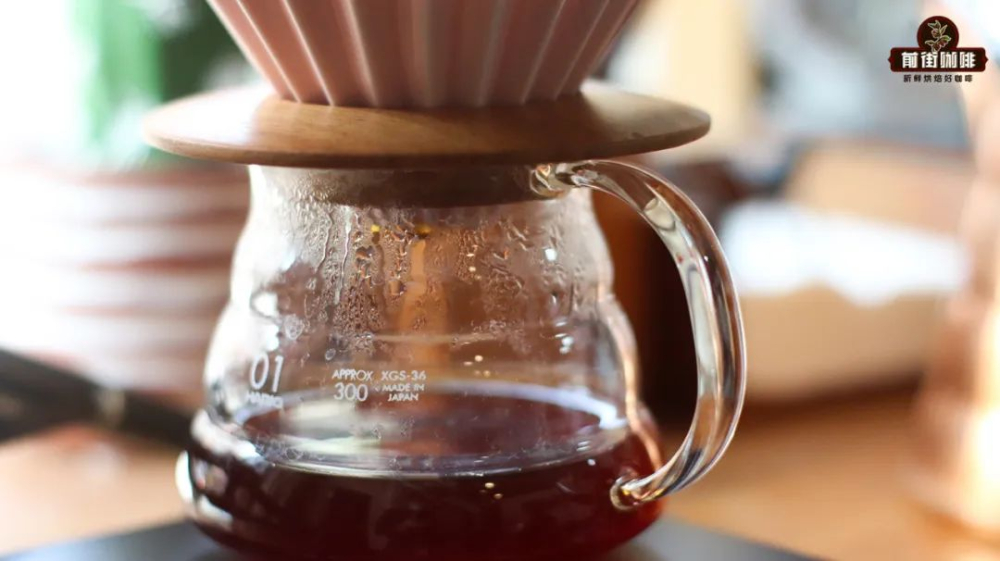
Tasting Results and the Logic Behind the Method
On paper, the method reads like a "summer iced brew," and the absence of a conventional bloom might raise eyebrows. But one sip tells you otherwise: the cup is remarkably smooth and clean, with the coffee's natural fruit acidity and sweetness fully expressed.
Here's the reasoning behind Patrik's design. Using the Origami with trapezoidal filter paper — combined with a small 12g dose — thins out the coffee bed, while the dripper's folded ribs hold the filter paper snugly against the walls, keeping water from racing down the sides even without grounds walls to slow it.
The whole process can be summed up in one sentence: "extending time to stabilize even extraction." Of course, every parameter is designed around avoiding over-extraction — hence the coarser-than-usual grind.
Understanding the "Non-Traditional" Bloom
It looks like there's no bloom, but the first pour actually functions as one — just an unconventional version. In the classic sense, blooming uses as little water as possible to wet the grounds and let trapped gases escape. Patrik instead uses 100ml of water for a "bloom" that lasts a full minute. On one hand, this degasses the grounds completely; on the other, the liquid that drains during this stage carries off the coffee's brightest acidity.
The second 100ml pour then works like a long, gentle steep: it evens out extraction, adjusts concentration, and builds sweetness and body.
Conclusion
This is not a universal recipe, nor a conventional one. But Patrik's numbers are exceptionally well suited to light roast coffee, and even a total beginner can replicate them perfectly. Best of all, the demand for water-pouring skill is virtually zero.
FrontStreet Coffee Recommendation
The V60-style approach Patrik uses shines brightest with floral-and-fruity light roasts. Hario, the Tokyo glassware maker founded in 1921, redesigned the V60 in 2004 around its signature 60-degree cone, letting water flow to the center before dripping through — extending contact time so aroma and flavor extract fully. FrontStreet Coffee favors the resin version for its heat retention and tight manufacturing tolerances.
For beans, FrontStreet Coffee recommends the Ethiopia Yirgacheffe Guodingding with its white floral character and bright citrus-berry acidity, the tropical-fruit-forward Ethiopia Huakui, and the Kenya Little Tomato — a washed SL28/SL34 lot from Thika (1550-1750 meters, AA TOP grade, 72-hour double-washed fermentation) whose vivid cherry tomato and dried plum acidity pairs beautifully with the V60's fast, aromatic extraction.
Important Notice :
FrontStreet Coffee is a long-established specialty coffee roaster in Guangzhou China, selling freshly roasted beans from its own farm in Yunnan as well as dozens of carefully selected single-origin beans from around the world for both pour-over and espresso. The products deliver consistently excellent quality and great value, with shipping within 24 hours. Guangzhou's FrontStreet Coffee shop is recommended by many coffee lovers, and the beans are now available online at the Tmall 。
FrontStreet Coffee has moved to a new address:
FrontStreet Coffee Address: 315,Donghua East Road,GuangZhou
Tel:020 38364473
 Scan and follow the En Gafei WeChat official account. Please indicate that the reprint comes from "En Gafei".

