How to Brew Sweet Coffee? Reasons and Solutions for Pour-Over Coffee Lacking Sweetness
Why are we so set on making coffee taste sweet? Most likely because sweetness triggers dopamine release in the brain and simply makes us feel good.
To brew a sweet cup, we first need to understand what sweetness in coffee really is. Coffee's sweetness does not stand on its own; it comes forward through the balance between acidity and bitterness. In a light roast, for example, there are fewer bitter compounds, so sweetness emerges through high acidity and low bitterness, showing up as a sweet-tart profile like the flavors of various fruits. In a dark roast, there are more bitter compounds, so sweetness emerges through low acidity and high bitterness, showing up as a bittersweet profile like caramel.
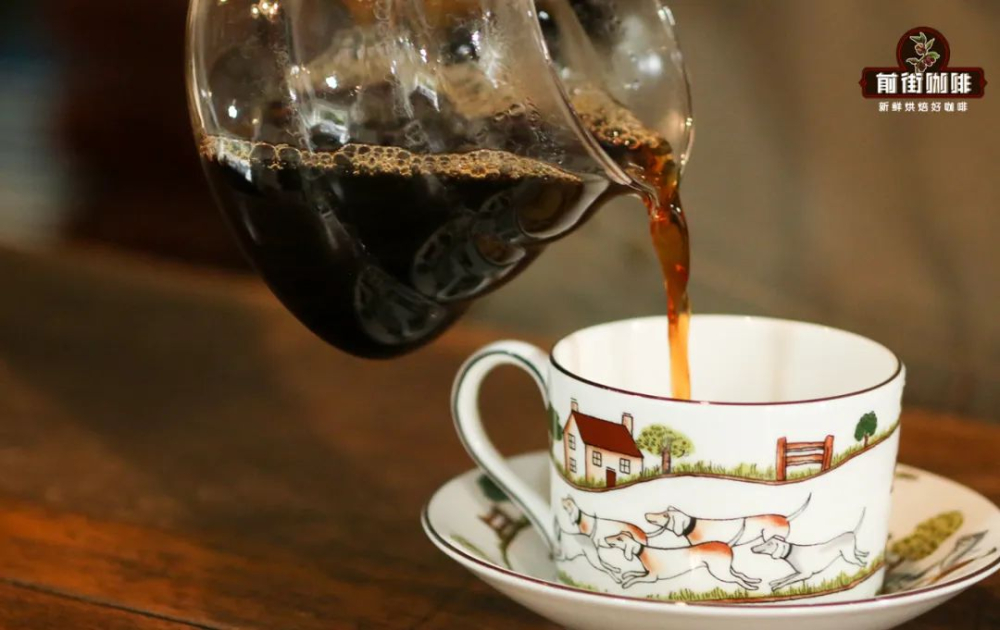
To brew sweet coffee, we need to pull as many sweet compounds out of the grounds as possible during brewing. The principle works like this:
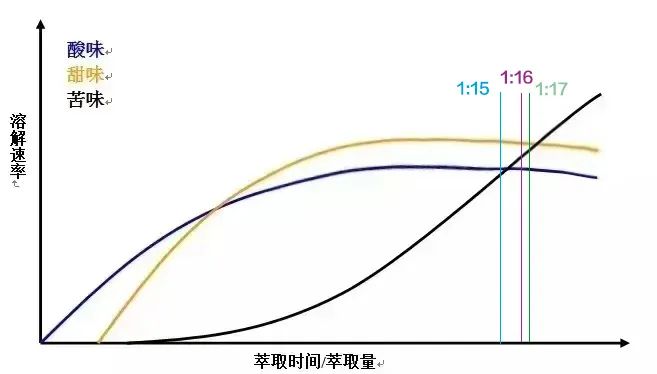
During pour-over extraction, sour, sweet and bitter compounds are released at different times. Acidic compounds extract most easily, so they dominate the early stage, though some sweet and bitter compounds also release early. By the middle stage, the release of acidic substances gradually falls off, and the extraction efficiency of sweet compounds begins to overtake that of the acidic ones. Bitterness, meanwhile, is also creeping up at a gradual pace.
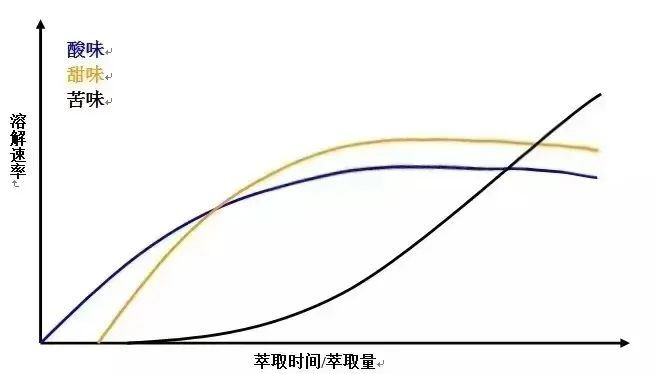
By the late stage, the release of acidic substances drops further and sweet compounds are declining too, while the extraction efficiency of bitter compounds starts to rise.
In this model, the ideal state for sweetness is to extract the highest possible proportion of sweet compounds, which means reaching a relatively high extraction rate. It is generally held that coffee tastes best at an extraction rate between 18-22%. Placed on our model, that range looks roughly like this:
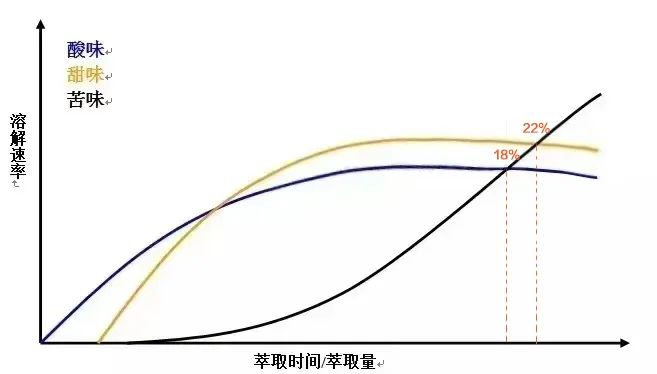
At a 22% extraction rate, this is in theory the upper limit for coffee's sweetness. Pushing past 22% very easily brings on undesirable bitterness.
Common Issues and Solutions
With the extraction model in mind, let us look at practical brewing examples. There are usually two situations in which coffee fails to show sweetness: the first is over-extraction, and the second is being too conservative.
In the first case, the sweetness is actually extracted fairly completely, but so much bitterness comes along with it that the proportion of sweetness drops. The result is coffee that is both sour and bitter, with sweetness barely noticeable.
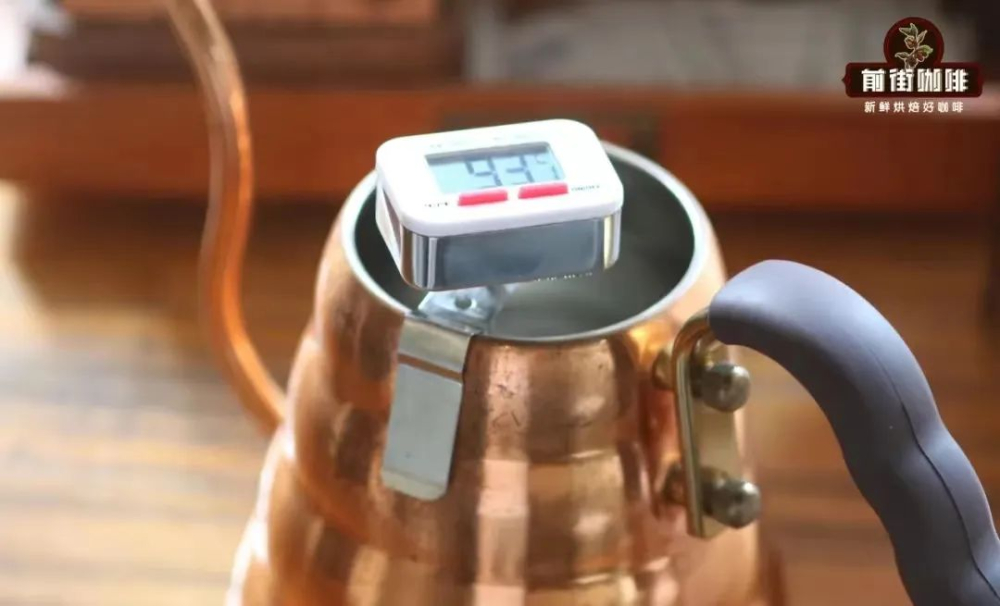
If your coffee tastes like this, check whether your water temperature is appropriate. For light to medium roasts we generally recommend 90-93°C, and for medium to dark roasts 86-89°C. Within those ranges, choose the lower end.
Next, check whether your grind is too fine, which shows up in flow rate and extraction time. If, say, 15 grams of grounds takes more than 2 minutes 30 seconds to extract, or 20 grams takes more than 3 minutes, you need to shift to a coarser grind.
The second situation is the one most people run into. Fearing the unpleasant bitterness of the late extraction stage, many people set a coarser grind, which lets them finish the brew within about 2 minutes.
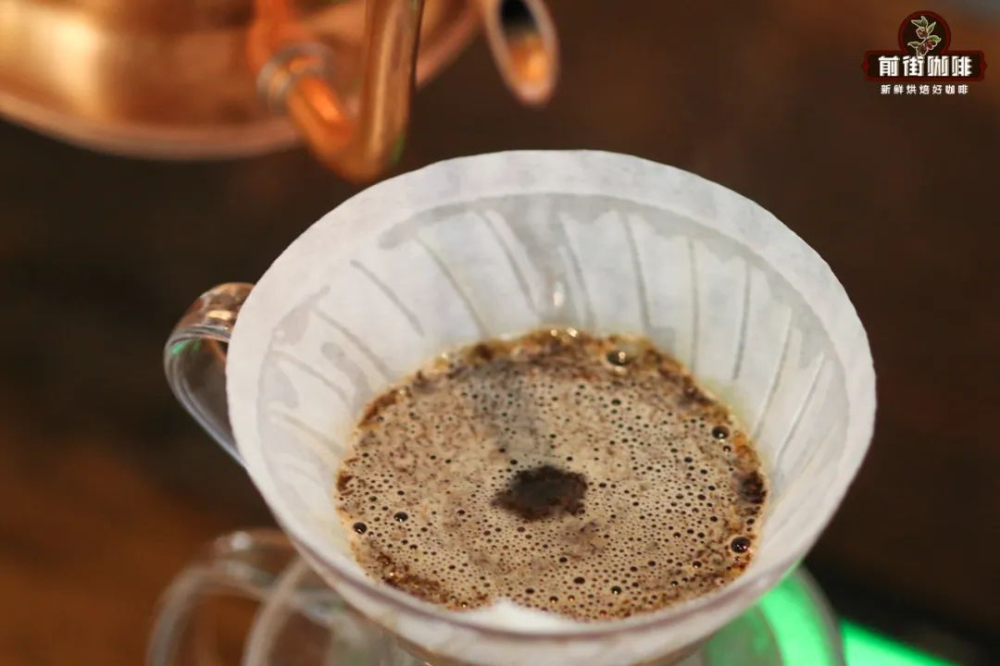
Coffee brewed this way lands at roughly 17-19% extraction. Bitterness is unnoticeable, but the proportion of sweetness is low too. Acidity dominates absolutely, coming across as a fairly bright, even sharp, sourness, while sweetness feels faint and elusive.
If your brew shows prominent sourness and weak sweetness, and you are using a 1:15 or lower coffee-to-water ratio with an extraction time of around 2 minutes, then the direct fix is to keep pouring, extending the ratio to 1:16 or 1:17. The extra water lengthens the extraction time and keeps pulling out flavor compounds. The proportion of sweetness rises, and sweetness naturally becomes more noticeable.
If the coffee is already too diluted, extending the ratio will only make it more watery. In that case, FrontStreet Coffee suggests a segmented pour to lengthen the extraction time. Say you are using a three-stage pour at a 1:16 ratio and the cup shows obvious sourness with unremarkable sweetness; split the pour into four stages instead. This extends the overall extraction time, while the more efficient "washing extraction" is concentrated in the middle and late stages, which helps draw out sweet compounds.
FrontStreet Coffee Recommendation
Once your technique is in order, bean choice does the rest, and FrontStreet Coffee's fruit-forward coffees are built to taste sweet. FrontStreet Ethiopia Huakui is a strong pick: its tropical aromas of strawberry, passion fruit and jackfruit come with clear sweetness and almost no bitterness, and it stays smooth and juice-like from the first sip, which is why so many drinkers call it the coffee that does not taste like coffee.
For a caramel-and-chocolate kind of sweetness rather than a fruity one, try FrontStreet Brazil Queen Estate. Low in acidity, balanced and rich in nut and cocoa aromas with pronounced caramel sweetness, it goes down smooth without astringency and suits pour-over, espresso or moka pot alike. And if you want sweetness wrapped in near-perfect balance, FrontStreet Jamaica Blue Mountain No. 1 layers cream, caramel, chocolate, nuts and honey with a light fruit note, soft and round with a clean, long finish.
Important Notice :
FrontStreet Coffee is a long-established specialty coffee roaster in Guangzhou China, selling freshly roasted beans from its own farm in Yunnan as well as dozens of carefully selected single-origin beans from around the world for both pour-over and espresso. The products deliver consistently excellent quality and great value, with shipping within 24 hours. Guangzhou's FrontStreet Coffee shop is recommended by many coffee lovers, and the beans are now available online at the Tmall 。
FrontStreet Coffee has moved to a new address:
FrontStreet Coffee Address: 315,Donghua East Road,GuangZhou
Tel:020 38364473
 Scan and follow the En Gafei WeChat official account. Please indicate that the reprint comes from "En Gafei".