Is Dirty Coffee Always Made with Boke? What Are the Differences in Taste Between Dirty Coffee and Latte?
Is Dirty Coffee Always Made with Bock Milk? What Are the Differences in Taste Between Dirty Coffee and Latte?

Dirty coffee has long been a secret-menu item at FrontStreet Coffee — in our view, Dirty is simply a "special" way of drinking a latte. Then one day we overheard a customer explaining it to a friend, roughly like this: Dirty is made by using Eisbock milk as the base, then pouring espresso over it to create a layered effect; no stirring needed — just drink it as is.
The explanation was broadly correct, except for one ambiguity: must Dirty be made with Eisbock milk? Type "dirty coffee" into a search engine and among the suggested terms you'll find "Does dirty coffee have to use Eisbock?" Clearly, this isn't an isolated confusion. So FrontStreet Coffee wants to untangle what's really going on between Dirty coffee and Eisbock.
The Origin of Dirty Coffee
Dirty coffee is, at its core, a latte presented with a layered effect. It grew out of the "dirty food" trend of 2018, where chocolate powder was used to create a deliberately "filthy" visual. Applied to coffee, the "dirt" comes from deep-black espresso slowly seeping down and "contaminating" the pure white milk.
After the dirty-food craze faded, people realized this layered way of drinking a latte — first the hot, rich coffee flavor, then the mild milk-coffee middle, and finally the cold, sweet lactose finish — had its own charm, so it stayed on menus. To distinguish it from the stirred iced latte, the name "Dirty" stuck too.
Dirty Coffee vs. Iced Latte

The ingredients are basically the same — espresso plus milk. But iced lattes contain ice and don't bother with layering, while Dirty skips the ice and deliberately builds the layered look (some shops use slightly less milk than a regular latte to balance the coffee-to-milk ratio).
What Is Eisbock Milk?
Eisbock is a process the Germans originally used to purify beer by ice distillation, making it richer and stronger. The principle: freeze the beer solid, then let it thaw — because the various substances in beer have different melting points, some water separates out as ice and is removed, concentrating what remains.

At the 2017 World Barista Championship, a Canadian barista first brought ice distillation into coffee. At the 2018 WBC, a Chinese barista applied Eisbock to milk, raising its concentration from 11-12% to 20-21%. After that competition, some coffee shops in China began offering Eisbock lattes.
Making Eisbock milk isn't complicated — early shops did it by hand: freeze the milk, cut a small opening in the carton, invert it over a container, and let it thaw slowly. Since ice (solid H₂O) melts last, once 1L of frozen milk has yielded 0.5L of melted milk, the rest can be discarded. What melts out is Eisbock milk at twice the original concentration.
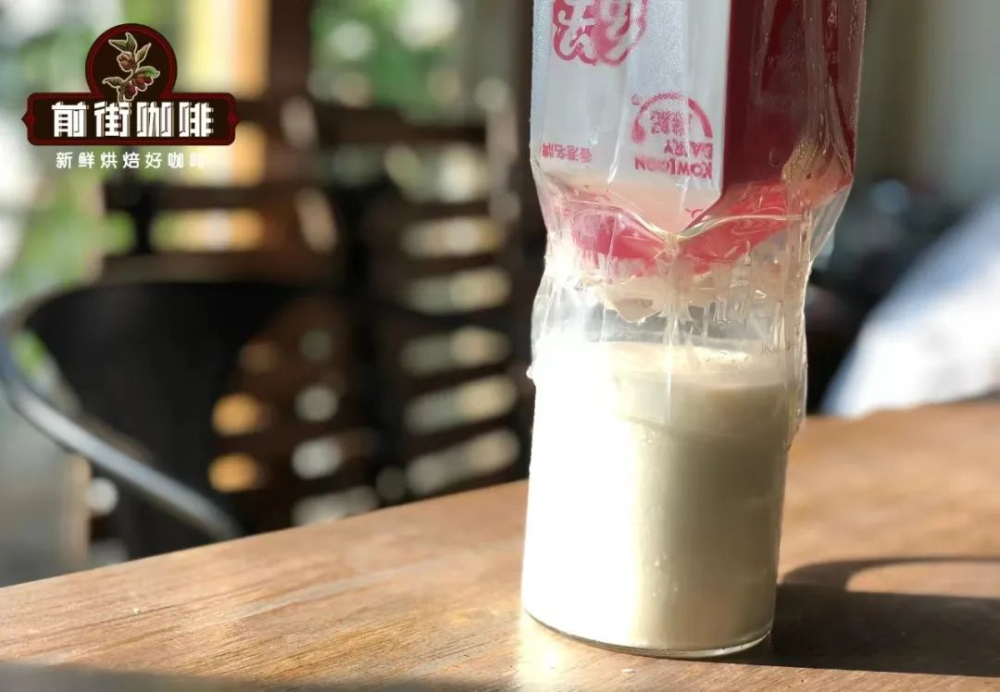
Eisbock milk is more viscous and richer than regular milk, with more pronounced lactose sweetness — you can even pick up a hint of mild cheese.
The Connection Between Dirty Coffee and Eisbock
Dirty coffee and Eisbock milk emerged around the same time but developed in parallel with little overlap. It wasn't until 2020, when industrially produced Eisbock milk appeared, that the two truly converged. Handmade Eisbock meant low yield, high cost, and tricky storage, so it never spread widely. Industrial production solved that, and with the product aimed squarely at café supply, Eisbock milk took off after a few rounds of promotion.
Since Eisbock is just concentrated milk, it can also go into lattes, cappuccinos, flat whites, and the like. So why is it Dirty coffee specifically that's associated with it? Because Dirty and Eisbock simply pair better.
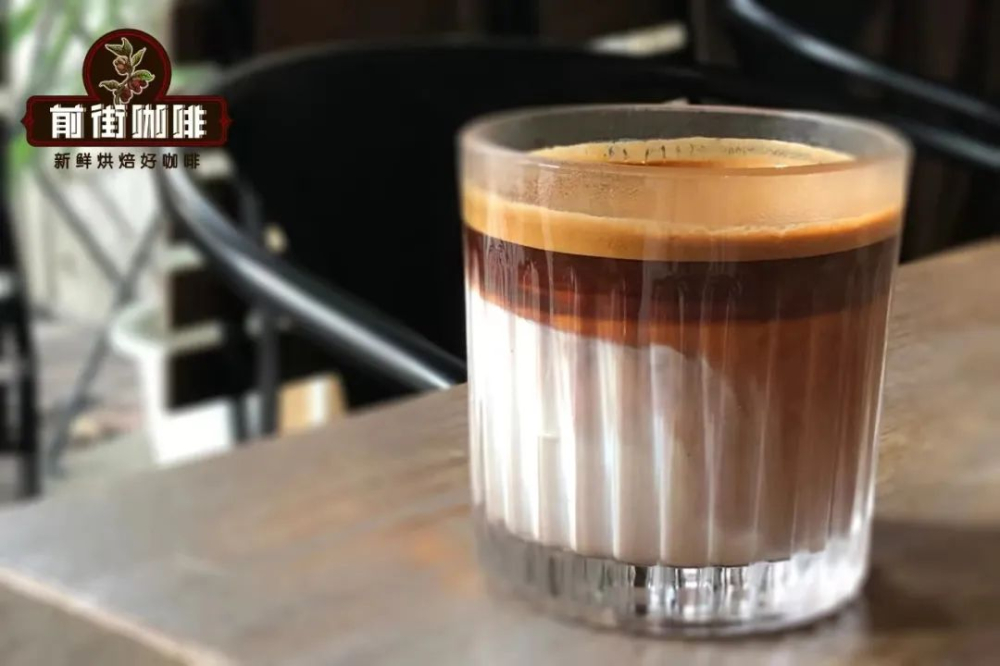
Other milk coffee drinks fully integrate coffee and milk, so the balance of coffee flavor to milk flavor is everything — and Eisbock milk would bulldoze the coffee. Presented as a Dirty, though, the coffee flavor doesn't get buried by the extra-sweet milk. The collision of rich coffee with rich milk also makes the flavor journey more varied. Most importantly, Eisbock milk's thickness makes the layered effect easier to achieve and stretches out the drinking experience.

That said, Eisbock is an option for Dirty, not a requirement. Shops also match different milks to the beans' flavor profiles. FrontStreet Coffee has seen flavor-driven shops use different beans for Dirty with correspondingly different milks. Others split the difference — regular milk too thin and watery, Eisbock too rich and cloyingly sweet — and blend their Dirty base from 2 parts regular milk plus 1 part Eisbock.
FrontStreet Coffee Recommendation
A great Dirty starts with an espresso base that can stand up to rich milk. FrontStreet Coffee's picks:
FrontStreet Coffee Classic Blend (First Choice) — Built for espresso and moka pot, with crema that goes above and beyond — even beginners on basic home machines can pull a dense, silky layer. The traditional Mandheling-Brazil recipe delivers mellow, warm depth that's perfect under Eisbock or regular milk in a Dirty.
FrontStreet Coffee Specialty Blend (Shop Classic) — The longest-serving espresso blend at FrontStreet Coffee's own stores: Brazil Cerrado paired with Colombia Huila. In milk drinks it shows silky almond and walnut complexity — exactly the nutty backbone a layered latte needs.
FrontStreet Coffee Strawberry Sugar — A fruit-forward espresso blend recreating the sweetness of strawberry gummy candy. Rose-like florals and low bitterness make it a distinctive Dirty base — especially striking with milk poured over, where the fruity layers show through beautifully.
Important Notice :
FrontStreet Coffee is a long-established specialty coffee roaster in Guangzhou China, selling freshly roasted beans from its own farm in Yunnan as well as dozens of carefully selected single-origin beans from around the world for both pour-over and espresso. The products deliver consistently excellent quality and great value, with shipping within 24 hours. Guangzhou's FrontStreet Coffee shop is recommended by many coffee lovers, and the beans are now available online at the Tmall 。
FrontStreet Coffee has moved to a new address:
FrontStreet Coffee Address: 315,Donghua East Road,GuangZhou
Tel:020 38364473
 Scan and follow the En Gafei WeChat official account. Please indicate that the reprint comes from "En Gafei".