
Where Did the Herbal Flavors of Indonesian Mandheling Coffee Go? How to Handle Off-Flavors When Brewing Pour-Over Mandheling Coffee

The Divisive Nature of Mandheling Coffee
Mandheling is one of coffee's most polarizing beans. Its admirers are intoxicated by the wild spice aromas, herbal fragrance, caramel and cocoa notes, and an unmatched, thick mouthfeel. Its detractors find it bitter and burnt, with muddled notes of herbal medicine, earth, and wood.

Mandheling's flavor profile is usually summed up by those distinctive "herbal" and "earthy" notes — yet today's Mandheling has gradually lost much of that herbal character. Compared with a few years ago, the signature taste has grown noticeably quieter.
To understand where that flavor came from, we need to look at the growing environment, the varieties, and the processing.

Origin and Growing Regions
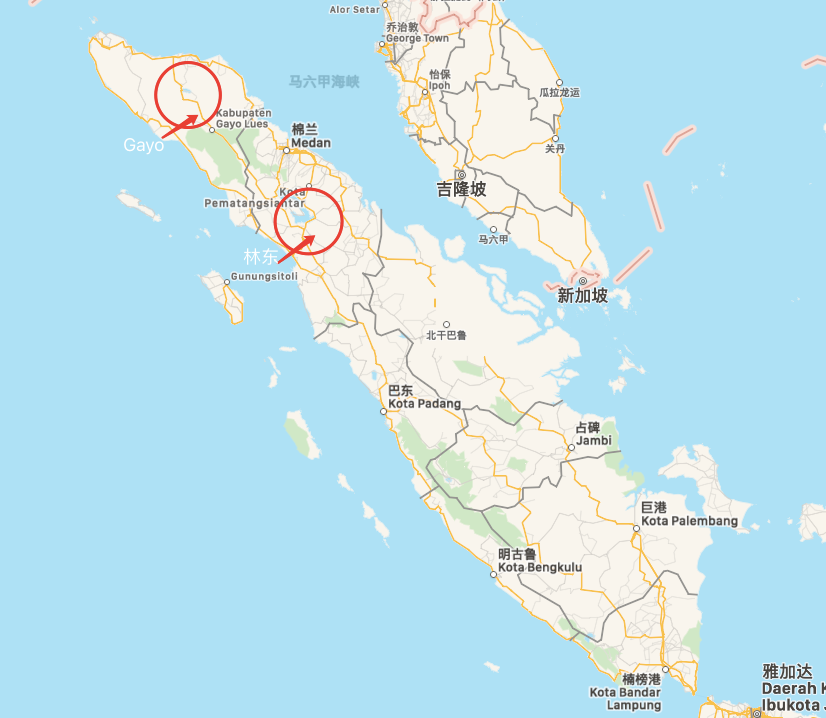
"Mandheling" refers to the Arabica beans grown on the island of Sumatra. The main producing areas cluster around Lake Toba and Lake Tawar — Lake Toba is famous for the Lintong region, Lake Tawar for the Gayo Mountains. Altitudes of 1,100-1,600 meters are ideal for quality coffee, and the Dutch brought plantations to Sumatra in the early 18th century, giving the island a long coffee history.
Varietal Characteristics
The varieties themselves may partly explain the herbal, earthy character. In the 18th century the Dutch planted Typica and Bourbon on the island; after the devastating leaf rust epidemic of 1876, authorities had to import new varieties from around the world to keep production alive. Since then, Sumatra has been a melting pot of coffee genetics.
Varieties common on Sumatra today include Ateng (the local Catimor), TimTim (the local Tim hybrid), Typica, Catuai, and Robusta. Mandheling's two main varieties, Ateng and TimTim, carry Robusta genes — a likely source of some of the grassy, earthy notes.
Wet Hulling
But the usual suspect is the processing: Sumatra's signature wet-hulled (giling basah) method. With humidity high year-round and weather swinging unpredictably between sun and rain, wet hulling was adopted to shorten drying time and protect bean quality.
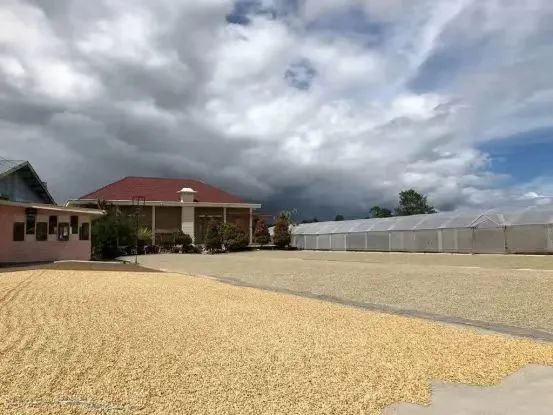
The process runs roughly like this: a pulping machine strips the skin and pulp from the cherries, and the beans are washed. In good weather, just 3-4 days of drying brings moisture down to about 30-40%, at which point the beans are semi-soft. A hulling machine then removes the parchment, and after a few more days of drying the beans reach 12-13% moisture. A fully natural process, by contrast, might take three weeks.
The herbal and earthy flavors likely stem from this rough drying: equipment is basic, so beans are spread directly on cement floors or compacted dirt roads — and once the protective parchment is gone, the humid air can easily taint them.

The Evolution of Mandheling's Flavor
So why is the herbal flavor fading? Notably, Golden Mandheling — the top tier of the category — shows almost no herbal or earthy notes at all, presenting instead a mellow, clean, bright cup.
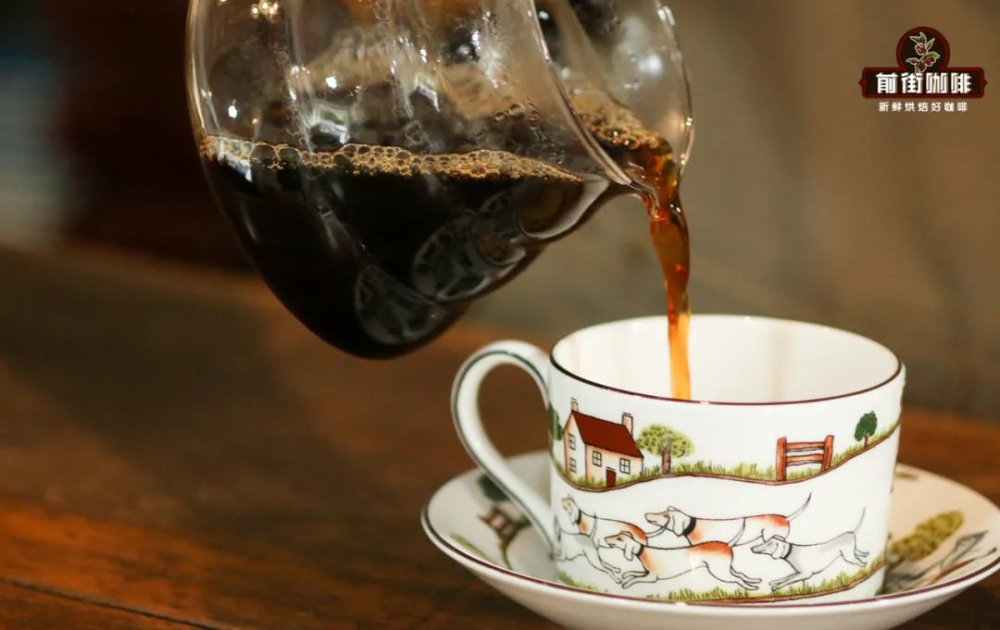
Golden Mandheling is a product of the green coffee company Pawani, which registered the trademark in 2003. Pawani doesn't farm; it sources the finest beans across Indonesia's regions. Today its Golden Mandheling comes from the Gayo Mountains in Aceh, and the variety there is Ateng — which, despite its Robusta genes, lacks the earthy edge typical of Catimor. Some experts believe Ateng has simply adapted to Indonesian terroir; others think it's a backcross of Catimor and Typica that further diluted the Robusta influence.
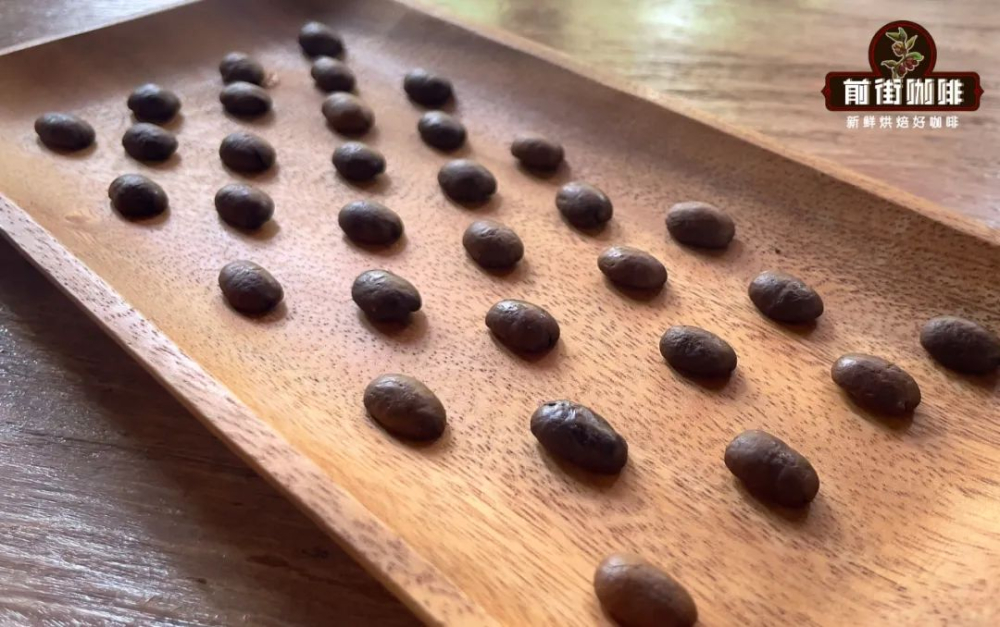
Processing matters too. "Wet hulling" covers a range of practices: does it change the flavor if parchment is removed at different moisture levels? What if drying is done more carefully — beans kept off the ground, turned frequently for even drying? The fine details aren't public, but FrontStreet Coffee can see the differences in the green beans themselves.
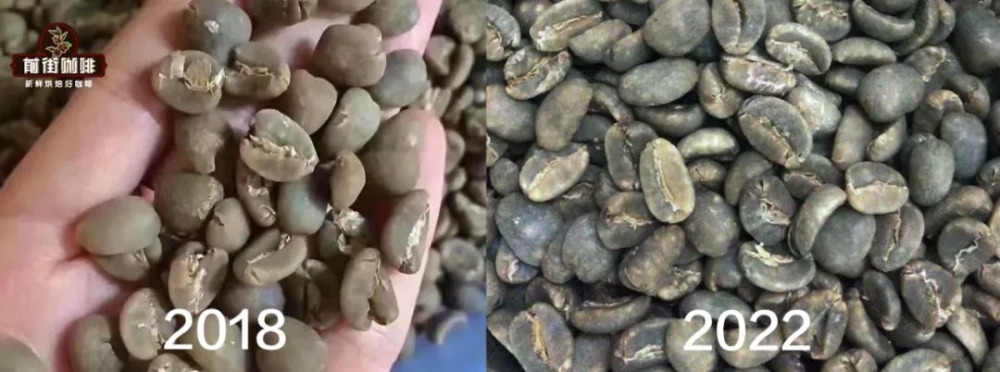 Color difference due to lighting conditions during photography
In 2018, the "horseshoe" splits on Golden Mandheling were quite pronounced; from 2020 onward, they became noticeably rarer — a sign the processing workflow has been improving.
Golden Mandheling also commands a steep premium because Pawani runs three rounds of manual sorting after purchase, removing defective, undersized, and unattractive beans. What remains are large, full, clean beans — which is exactly what lifts the cup's clarity.

FrontStreet Coffee once stocked a coffee called Tiger Mandheling, prized for its rich traditional-medicine aroma that hooked a particular kind of palate. Customers still occasionally ask if it's available — FrontStreet Coffee carried it precisely for that special fragrance. But in recent years, even Tiger Mandheling's medicinal intensity has mellowed from what it once was.
Changing Perceptions of Indonesian Coffee
Herbal, spicy, wild, mellow — that may be one generation's impression of Mandheling, and of Indonesian coffee as a whole. But at Indonesia's first COE competition in 2021, the country showed the world that Indonesian coffee is more than the herbal stereotype: it can deliver high-sweetness fruits and overflowing florals, too.
FrontStreet Coffee Recommendation
If this article has you craving a classic Sumatran cup, FrontStreet Coffee's PWN Golden Mandheling is the benchmark. Sourced through PWN under exacting standards — screen size 18 and above, fewer than 3 defects per 300 g sample for top-grade G1, plus multiple rounds of hand-sorting — it offers a clean, low-acid cup of dark chocolate and rich herbs, with a mellow body that lingers. It's the ideal choice for drinkers who love full flavor without the wild earthiness.
To brew it well, keep it simple: FrontStreet Coffee recommends a medium-dark roast, 15 g of coffee at a 1:15 ratio, 87-88°C water, a coarse-sugar grind, and a three-stage pour — a 30 g bloom, then 100 g, then a gentle 95 g center pour — to bring out the caramel sweetness and chocolate-nut depth. Prefer it as espresso? The same bean pulls a rich, crema-heavy shot with prominent caramel aroma, and it also shines in FrontStreet Coffee's Classic Blend, where Mandheling adds sandalwood, herbal, and spice notes to a buttery Brazilian base.
Important Notice :
FrontStreet Coffee is a long-established specialty coffee roaster in Guangzhou China, selling freshly roasted beans from its own farm in Yunnan as well as dozens of carefully selected single-origin beans from around the world for both pour-over and espresso. The products deliver consistently excellent quality and great value, with shipping within 24 hours. Guangzhou's FrontStreet Coffee shop is recommended by many coffee lovers, and the beans are now available online at the Tmall 。
FrontStreet Coffee has moved to a new address:
FrontStreet Coffee Address: 315,Donghua East Road,GuangZhou
Tel:020 38364473
 Scan and follow the En Gafei WeChat official account. Please indicate that the reprint comes from "En Gafei".

