
How to Describe Delicious Coffee Flavors? A Guide to Tasting Single-Origin Coffee Aroma and Notes

Plenty of customers tell FrontStreet Coffee the same thing: they can't actually pick out coffee flavors, and no matter how many tasting tutorials they watch, it all "makes sense while reading but falls apart in practice." If that's you, here's how FrontStreet Coffee approaches coffee appreciation.
Tasting Coffee ≠ Describing Flavors
A common misconception equates "being able to name coffee flavors" with "understanding coffee tasting." In truth, flavor descriptions are just a small slice of the tasting experience. Recognizing notes doesn't automatically mean you know how to appreciate a cup.

Flavor descriptions simply borrow from familiar foods to make coffee's taste easier to grasp. If a coffee's acidity reminds you of green apple, we call it a green apple note.
But to detect green apple in coffee, you must first have eaten green apples and remember the taste. That's why FrontStreet Coffee keeps saying: taste more foods and fruits to build your flavor memory library. There are no shortcuts — it accumulates only through experience.

When we taste coffee, the real questions are whether it's delicious, what makes it good, and where it falls short — none of which depends on naming flavors. Even if you can't identify a single note, it won't stop you from judging a cup. If you're an enthusiast who wants to appreciate coffee, start with five aspects: aroma, overall impression, mouthfeel, taste, and aftertaste.
First: Aroma
Aroma is the first thing you experience, and it comes in two forms: dry aroma and wet aroma. Dry aroma reflects the coffee's quality — freshly ground beans release distinct fragrances, most of them pleasant. Light roasts typically smell of toasted bread, florals, and jam; dark roasts of roasted nuts, spices, pine, and dark chocolate.

Wet aroma is the fragrance rising with the steam as coffee brews. Light roasts release delicate florals, sweet-tart fruit, and candied sweetness; dark roasts give off spices, roasted walnuts, hazelnuts, and caramel.
Pleasant aromas earn positive points; uncomfortable smells — or none at all — silently lower our score. Off-aromas to watch for include raw almond (peanut skin), ginseng-like medicinal notes, burnt scents, and rubber. And like everything in this hobby, recognizing aromas can't be learned from text alone — it takes daily smelling and comparing.

Second: Overall Impression
Why does FrontStreet Coffee rank overall impression second rather than last? Because "overall" here means how the very first sip performs right after you've smelled the cup. The test is simple: does it feel comfortable to drink, and does it make you want a second sip?
A comfortable cup is a passing cup: no off-flavors (high cleanliness), moderate strength, nothing repellent on the palate. And if the first sip leaves you reaching for a second — that's a genuinely delicious coffee.

As an enthusiast, you're free to lean hard into personal preference. If acidic coffee makes you wince, follow your own tastes to find the coffee that feels comfortable to you.
But if you want to taste seriously, you need to balance subjectivity with objectivity — hunting for flaws in a "fault-finding" mode: off-flavors, burnt notes, astringency, imbalanced tastes. If the coffee has none of these, don't let personal dislike of the flavor style override your judgment. (It's precisely because our subjective tastes differ so wildly that sensory training courses exist — they give you that "ruler" of objective evaluation.)

Third: Mouthfeel
This one is the easiest to judge, because we all share a reference point: water. If a coffee feels like water, we call it "watery, thin." If it feels harsh or drying, we call it "rough, astringent."
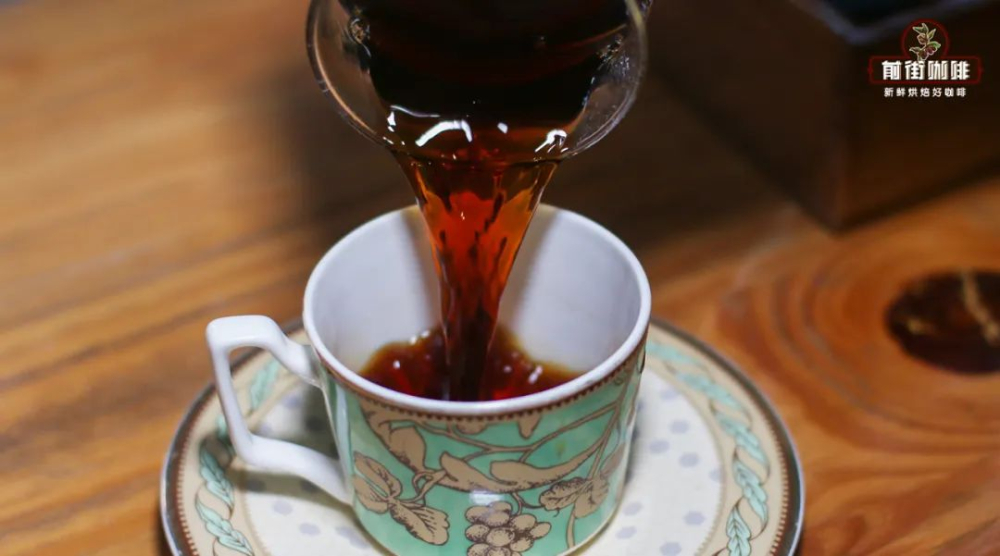
Conversely, if it feels textured and heavier than water, that's "full body, rich thickness"; if it glides, it's "silky." Mouthfeel descriptions basically reduce to rough, smooth, thin, or rich — and they're easy to perceive.
Fourth: Taste
For infrequent coffee drinkers, coffee may not taste great at first — most newcomers find it too bitter or too sour. But as you drink more, you naturally develop a sense of what good acidity and good bitterness are, and — most importantly — you start detecting sweetness.

Your brain keeps samples as you drink. Each new coffee gets compared against that internal library: if this cup is less bitter and less sour than what came before, what you're tasting is sweetness.
Fifth: Aftertaste
Aftertaste is simply how your mouth feels once the coffee is gone. As an enthusiast, treat it as a scoring criterion: a lingering bitterness, strong fermentation, or sharp vinegar notes after the swallow are deductions. A mouth that feels like nothing afterward is neutral.

But if your mouth feels sweet after drinking — a returning sweetness — or releases light, pleasant fragrances like florals or tea, or rich, welcome ones like caramel and cocoa, that's an excellent aftertaste and a complete experience.
Finally: Back to Flavor Descriptions
Everyone has the capacity to distinguish flavors. If you can't taste notes in coffee, the usual reasons are: first, you haven't built a flavor library, so there's nothing to match against; second, a lack of method — you may actually be detecting flavors but assume your approach is "unorthodox," which breeds self-doubt, silence, and isolation.
In reality, the coffee community is warm and welcoming. Speak up about what you perceive, join the discussions, and you'll gradually find that "ruler" for describing flavors.

And if someone still insists, "I've tried the fruits in the flavor notes and genuinely can't taste them!" FrontStreet Coffee has two suggestions:
First, go back to fundamentals — the detailed methods are a click away. Second, a shortcut you shouldn't use if you truly want to savor coffee: drop your preconceptions about the described notes, then drink coffee and match each taste in the cup one-to-one with the objects in the flavor list. Drink enough coffee that way, and the mappings stick — the flavors become part of your memory.

Either way, the road to coffee appreciation ends in the same place: drink more coffee!
FrontStreet Coffee Recommendation
Training your palate is far easier with beans whose flavors are vivid and unmistakable. A great starting point is FrontStreet Coffee's Yirgacheffe Guodingding from Ethiopia: unmistakable citrus, berry, and white floral notes with a green-tea-like sweetness, and a gentle, fruit-like acidity that never turns harsh — a favorite first stop for new specialty coffee drinkers.
For louder, more aromatic fruit, try FrontStreet Coffee's Ethiopia Huakui, one of the specialty market's biggest recent stars: overwhelming tropical aromas of strawberry, passion fruit, jackfruit, and even lychee, with obvious sweetness, almost no bitterness, and a smooth, juice-like body that earns it the nickname "the least coffee-like coffee." And if you want to calibrate your sense of bright, structured acidity, FrontStreet Coffee's Kenya Cherry Tomato — a washed SL28/SL34 lot from Thika grown at 1,550-1,750 meters, featuring a 72-hour double-fermentation wash and a light roast — delivers crisp cherry-tomato and dark plum acidity, pear and black plum mid-palate, and a long finish of yellow sugar and green tea. Tasting these three side by side will do more for your flavor vocabulary than any tutorial.
Important Notice :
FrontStreet Coffee is a long-established specialty coffee roaster in Guangzhou China, selling freshly roasted beans from its own farm in Yunnan as well as dozens of carefully selected single-origin beans from around the world for both pour-over and espresso. The products deliver consistently excellent quality and great value, with shipping within 24 hours. Guangzhou's FrontStreet Coffee shop is recommended by many coffee lovers, and the beans are now available online at the Tmall 。
FrontStreet Coffee has moved to a new address:
FrontStreet Coffee Address: 315,Donghua East Road,GuangZhou
Tel:020 38364473
 Scan and follow the En Gafei WeChat official account. Please indicate that the reprint comes from "En Gafei".

