
What are the tips and considerations for brewing 30g of coffee powder? How to make delicious 4-serving pour-over coffee

A friend recently asked FrontStreet Coffee: "I'm used to brewing a single serving, but the moment I tried a bigger batch, the cup tasted completely different." The question was how to brew pour-over for two — or in this case, 30g of coffee for four servings.
For most home brewers, the dose of grounds is a fixed anchor. If you always use 15g for one cup, you develop an instinct for it: you know how a 15g coffee bed should look, you can predict the total extraction time from your flow rate, and you adjust your pouring to hit the target time. After dozens of brews, every parameter becomes muscle memory and you feel in complete control.

What Changes When the Dose Changes
So which parameters are actually affected when the dose doubles? Take 15g per serving as the baseline: two servings means 30g of coffee. At the same coffee-to-water ratio, the water doubles too, and the coffee bed becomes noticeably thicker. The most direct consequence is a longer extraction time.
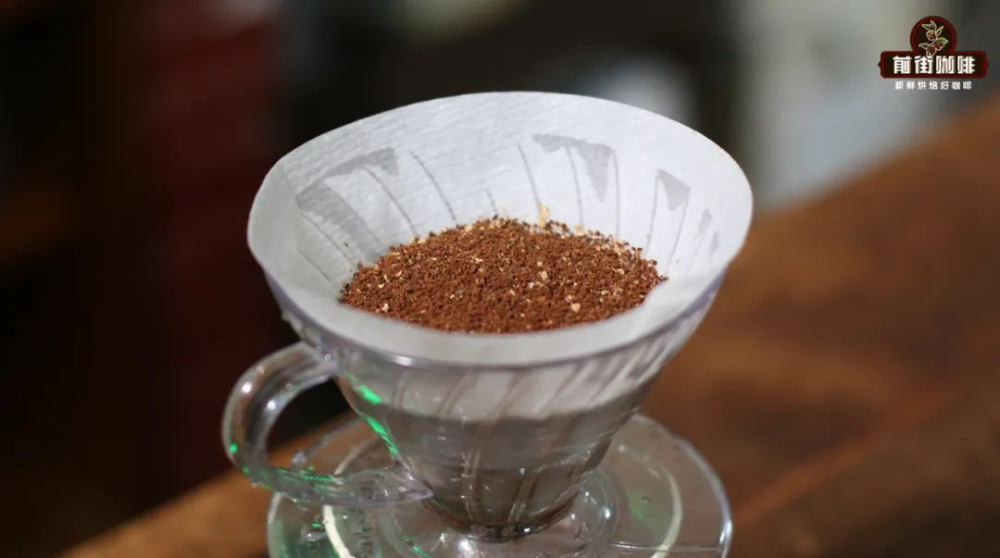
That raises a few natural questions: what extraction time is appropriate when you double the dose? Should you tweak parameters to hit the same extraction time? Pour with a faster flow? Or can you simply double the coffee and change nothing else?
If you only increase the dose and leave everything else alone, the cup will come out stronger than a single-serving brew. More grounds means both the pouring and the draining take longer, so the coffee naturally extracts more — it will taste heavier, more bitter and more concentrated. The simplest fix is to pour with a larger flow to shorten the pouring time, which also raises the coffee bed and shortens the time the grounds spend soaking in water.
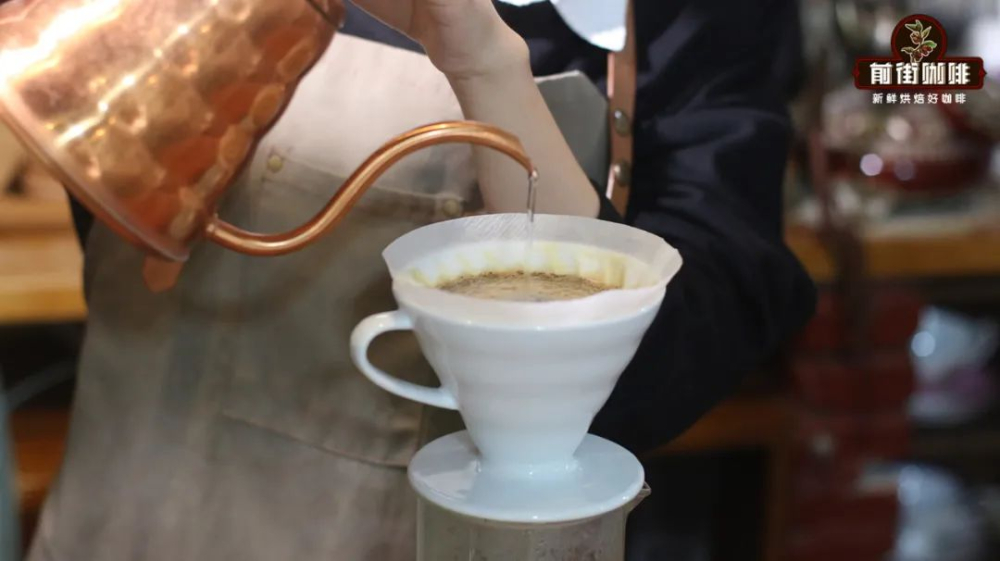
Getting the Bloom Right
Then there is the bloom — which is not always locked at 30 seconds. A bigger dose means a deeper bed, and a deeper bed needs more time to release its trapped gas. With a conical dripper, the center of the bed is the last area to saturate, so when you pour the bloom water, start with small circles from the center outward and let the grounds absorb water and swell gradually. The gas is then pushed toward the edges and escapes evenly, which gives a much better result.
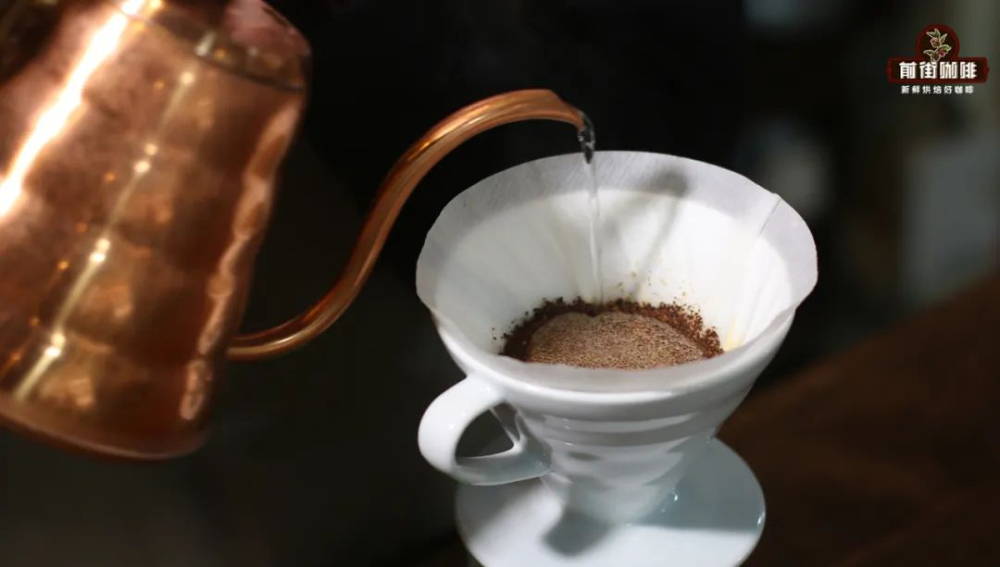
If instead you pour big circles from the center outward right away, you wet the surface grounds first while the bottom and sides of the bed saturate faster than the middle. The gas then has only one way out — upward — and you will see the coffee "puck" bubbling away endlessly. That degassing route actually takes longer.
The signal that degassing is done is simple: the bed stops swelling and stops releasing bubbles. If it holds that still state for 2–3 seconds, the bloom is finished — typically around the 30–35 second mark.
Choosing the Right Dripper
Finally, the dripper itself matters when brewing a larger batch. There are three scenarios to consider.
1. You own both a size 01 and a size 02 dripper. Use the 01 for 15g and the 02 for 30g. Here you only need to watch the bloom state and timing, and pour with a larger flow than usual. If your single-serving flow is 5–6ml/s, push it to around 10ml/s for the double batch. Keep everything else the same and the total extraction time will run slightly longer than a single brew, roughly 2 minutes 30 seconds.
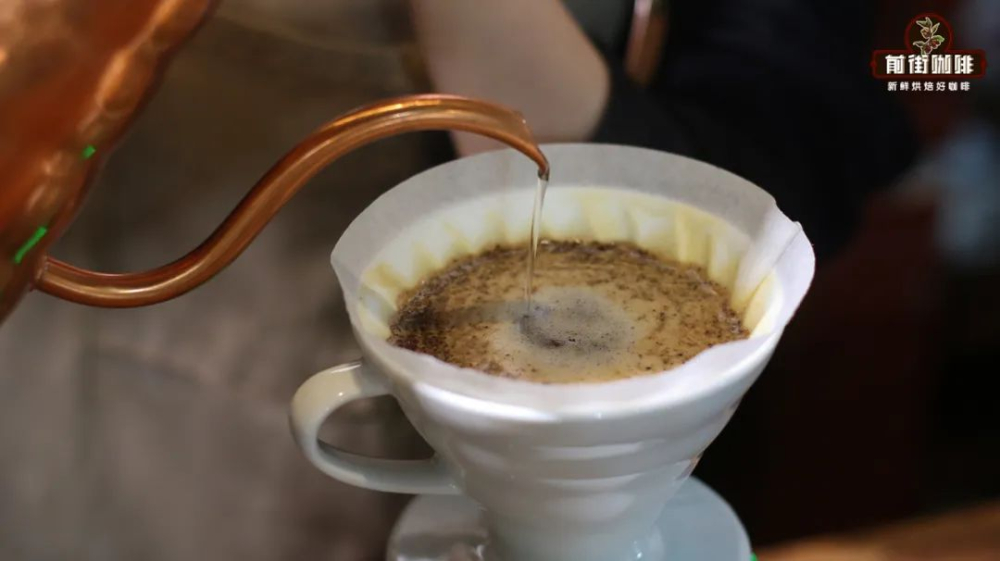
2. You only own a size 02 dripper and use it for both doses. When brewing 30g this way, grind slightly coarser. If your 15g setting gives an 80% pass-through rate on a #20 sieve, aim for 75–78% at 30g. This matters most with dense, hard light roasts: doubling the dose visibly slows drainage and can even stall the filter. Adjust the grind, watch the bloom, and everything else can stay the same — the extraction time still lands at about 2 minutes 30 seconds.
3. You only own a size 01 dripper. A 01 is really sized for 15–20g; with 30g, the bloomed coffee puck nearly fills the entire cone, leaving no room for both grounds and water to coexist.

If you insist on using a 01 for a large batch, you will need to redesign the recipe. The principle is straightforward: redistribute the water across more stages. There are many ways to do it, and here is one that FrontStreet Coffee has tested and confirmed works.
For the grind, go coarser. FrontStreet Coffee normally grinds light roasts to an 80% pass-through on a #20 sieve, but for this method we drop it to a 70% pass-through — close to what we would use for a dark roast.
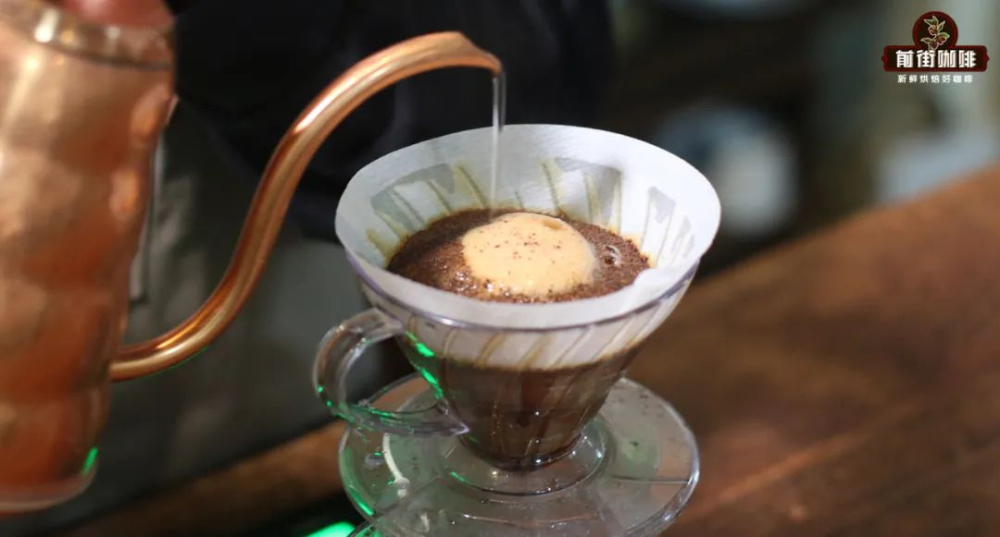
The ratio is 1:15 at 91°C, poured in five stages: 50ml for the bloom, then four pours of 100ml each.
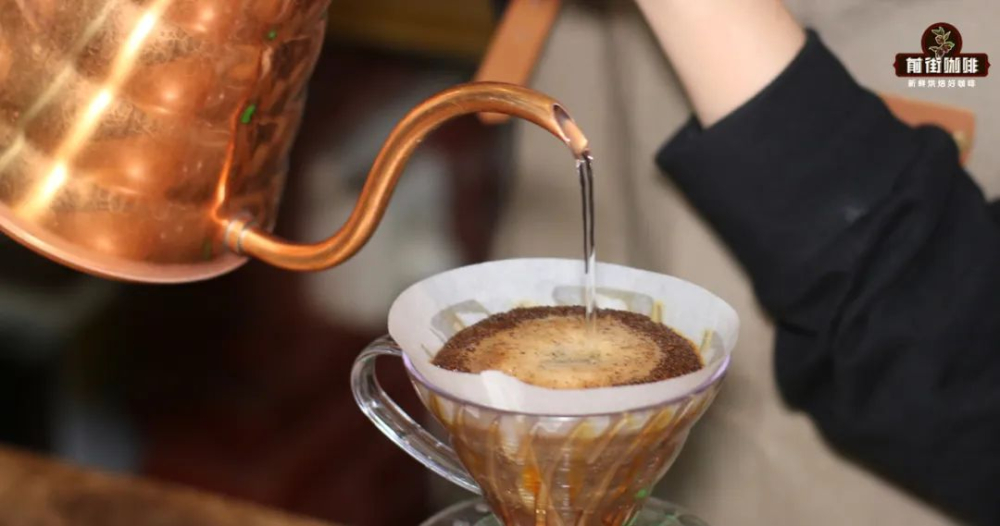
The technique: in the second stage pour small circles; in the third, circles slightly wider than the second; in the fourth, wider still; and in the fifth, pour straight into the center. The total extraction time should land between 2 minutes 40 seconds and 3 minutes.
FrontStreet Coffee Recommendation
Brewing a 30g batch means the whole pot should stay lively from the first cup to the last, so beans with clear, generous flavor structure are the best candidates. From FrontStreet Coffee's range, these three work beautifully in a bigger pour-over:
FrontStreet Kenya Cherry Tomato — a washed Kenya from the Thika growing region, farmed at 1550–1750 meters on SL28 and SL34 varieties and given Kenya's signature 72-hour double-wash fermentation, then roasted light. Expect vivid cherry-tomato and dried-plum acidity, full juice-like body, mid-palate sweetness of snow pear and black plum, and a clean yellow-sugar finish. A superb choice when you want a bright, complex multi-cup brew.
FrontStreet Ethiopia Yirgacheffe Guodingding — the classic first step into specialty coffee. Soft yet bright citrus, berries and florals with a green-tea sweetness; its gentle acidity makes a 4-cup batch easy for everyone at the table to enjoy.
FrontStreet Brazil Fazenda Rainha — low acidity, deeply balanced, with rich nut and cocoa aromas and a clear caramel sweetness. Smooth and never astringent, it works just as well as pour-over, espresso or moka pot coffee — a dependable crowd-pleaser when you are brewing for several people.
Important Notice :
FrontStreet Coffee is a long-established specialty coffee roaster in Guangzhou China, selling freshly roasted beans from its own farm in Yunnan as well as dozens of carefully selected single-origin beans from around the world for both pour-over and espresso. The products deliver consistently excellent quality and great value, with shipping within 24 hours. Guangzhou's FrontStreet Coffee shop is recommended by many coffee lovers, and the beans are now available online at the Tmall 。
FrontStreet Coffee has moved to a new address:
FrontStreet Coffee Address: 315,Donghua East Road,GuangZhou
Tel:020 38364473
 Scan and follow the En Gafei WeChat official account. Please indicate that the reprint comes from "En Gafei".

