
How to Make Rich Crema on Espresso? What Substances Compose Crema?
Understanding Rich Crema in Espresso Coffee
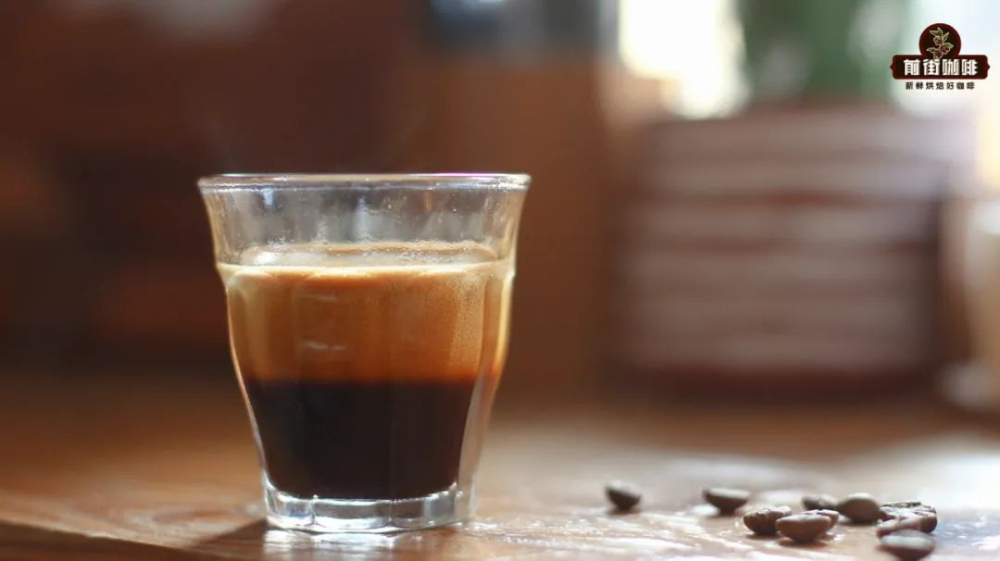
Just a few days ago, a customer stopped by FrontStreet Coffee's Guangzhou Dongshankou store for an espresso. On the way out, they remarked, "I absolutely love your espresso! That's the richest crema I've ever seen!" Friends have been asking FrontStreet Coffee the same question lately—how do you get thicker crema on an espresso? So today, FrontStreet Coffee is laying out everything they know on the subject.
What is Espresso?
Espresso, as the name suggests, comes from Italy. It was developed to speed up coffee service. Originally, "espresso" referred to a method of making coffee—the word conveys "fast," meaning a black coffee could be produced in a very short time.

Understanding Crema
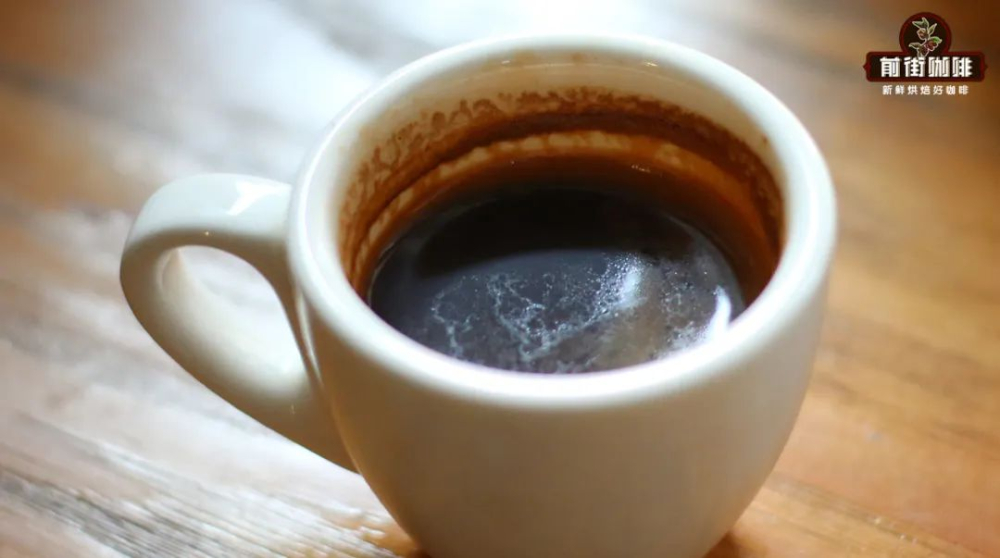
The golden layer sitting on top of an espresso is called crema. Strictly speaking, though, calling it "oil" isn't quite accurate: the golden crema is coffee oils combined with carbon dioxide. Once the crema breaks down and the CO2 dissipates, what's left is a thin, reflective film of actual coffee oil.
By common usage, however, the golden layer is simply called espresso crema. Understanding its composition tells us what we need: to pull rich crema, we have to start with beans that carry abundant oils and plenty of carbon dioxide.
The Evolution of Espresso Machines
In 1884, the Italian Angelo Moriondo designed the first espresso machine, built around two independent brewing boilers operating at 1.5 bar with steam. The coffee it produced was fairly viscous, with a fuller taste than drip coffee. As machines kept improving, water temperature and pressure became ever better controlled. Then in 1948, Achille Gaggia, a café owner in Milan, invented a lever-driven machine capable of generating the high pressure that creates what we now call crema. From that point on, crema was regarded as one of the markers of espresso quality, and "espresso" came to be defined specifically as a high-concentration coffee made under pressure, crowned with rich crema.
Coffee Bean Selection for Rich Crema
How much oil a bean delivers depends primarily on variety and roast level. Generally speaking, Robusta beans produce richer oils than Arabica, though their flavor doesn't match Arabica's. That's why Robusta is usually blended into Arabica for balance. FrontStreet Coffee's commercial blend, for example, contains 10% Robusta to boost crema while keeping the flavor in check. Meanwhile, American Arabica beans tend to outperform African varieties on oil content. The Sunflower Warm Blend used in FrontStreet Coffee's stores, for instance, contains 70% Honduras Sherry beans, which supply plenty of rich oils.

Roast level matters too: the darker the roast, generally the better the oil expression. That's why espresso beans are typically roasted medium to dark. Some drinkers chase acidity in their espresso and use medium-light roasts, but the crema will naturally not be as impressive.

The Importance of Freshness
Next comes carbon dioxide content—which is really a question of freshness. CO2 is generated during roasting and slowly escapes from the beans over time. As a rule, espresso beans fully release their carbon dioxide within about 45-60 days. But by the time the CO2 is completely gone, the coffee's flavor is nearly spent as well (in other words, it's no longer fresh). Such beans pull shots with thin crema and little beyond flat bitterness. Friends sometimes ask FrontStreet Coffee why their espresso produces no crema at all—only to reveal, when asked for the roast date, that the beans were roasted six months ago... Kept that long, the coffee has no aroma left, let alone crema. It's exactly why FrontStreet Coffee has stressed fresh roasting year after year.
Some counter that they've bought imported beans that still showed crema after more than half a year. First, imported beans often rely on preservation technology such as nitrogen flushing—but once the bag is opened, those safeguards stop working, and after two months the flavor is gone regardless.

Second, fresher is not always better. Without a 7-12 day degassing period, the beans' abundant carbon dioxide gets forced into the crema, producing a very thick but coarse, unstable foam that collapses quickly—while the coffee flavor itself stays weak. Friends who brew beans straight out of a fresh bag sometimes ask FrontStreet Coffee why the coffee tastes different from before; FrontStreet Coffee tells them to let the beans rest for 5 days and try again. Five days later, they confirm it tastes the way it should.

Extraction Techniques for Rich Crema
Once you've chosen the right beans, extraction is the next variable. To get a thick, golden crema, extraction pressure should hold steady at 9 Bar. Some small home machines with vibration pumps struggle to keep pressure stable throughout the shot—another common reason for missing crema.
With the hardware in place, technique becomes decisive. Some people assume that pulling more liquid means more crema. But watch a shot closely and you'll see the stream run dark brown at first, then brownish-yellow, then golden yellow, and finally yellowish-white.
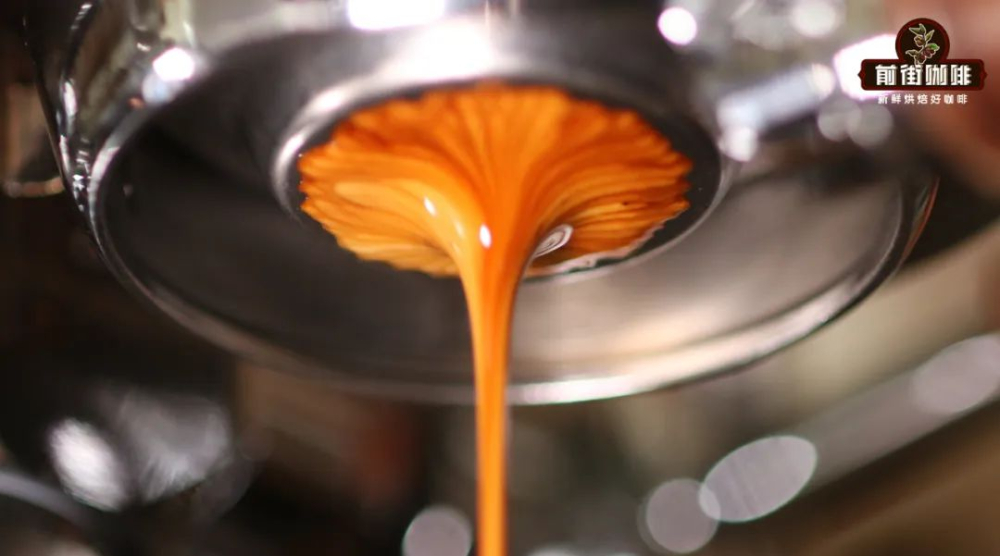
That progression is the crema going from rich to pale. The deeper you run the extraction, the thinner and lighter the crema becomes—which actually drags down the overall quality of the shot. FrontStreet Coffee's espresso typically uses a powder-to-liquid ratio between 1:1.8-2, rarely stretching beyond 1:2. Today's parameters, for example, were 20 grams of grounds extracted for 30 seconds to yield 40 grams of liquid espresso.
FrontStreet Coffee Recommendation
Looking for beans that pull thick, golden crema? These FrontStreet Coffee picks are built for the espresso machine:
FrontStreet Classic Blend (the first choice) — designed specifically for espresso and moka pot brewing, its standout strength is exceptional crema. Even a beginner with a non-professional home machine can easily pull a dense, velvety layer. Built on the traditional Mamba (Mandheling + Brazil) formula, it offers a mellow, rounded body that both veterans and newcomers will enjoy—perfect for lattes, cappuccinos, and Dirty drinks, at home or behind the bar.
FrontStreet Premium Blend and FrontStreet Dark Cocoa Blend — both built on a large proportion of Brazilian coffee, delivering comfortable bittersweetness and creamy peanut aromas with an extremely smooth entry. FrontStreet Coffee's Premium Blend brings Colombia's nut, chocolate, and caramel character with balanced acidity; the Dark Cocoa Blend pairs Yunnan Arabica's ripe-plum acidity with a creamy chocolate fragrance, adapting easily to lattes, americanos, and signature specialty drinks alike.
FrontStreet Brazil Queen Estate SOE — Brazil's low acidity, gentle body, and approachable price make it a favorite base for espresso, and Queen Estate stands out with its distinctive Yellow Bourbon variety. At a medium-dark roast through an espresso machine, it shows butter cookie, macadamia, and toasted-bread creaminess—another excellent option for a crema-forward shot.
Important Notice :
FrontStreet Coffee is a long-established specialty coffee roaster in Guangzhou China, selling freshly roasted beans from its own farm in Yunnan as well as dozens of carefully selected single-origin beans from around the world for both pour-over and espresso. The products deliver consistently excellent quality and great value, with shipping within 24 hours. Guangzhou's FrontStreet Coffee shop is recommended by many coffee lovers, and the beans are now available online at the Tmall 。
FrontStreet Coffee has moved to a new address:
FrontStreet Coffee Address: 315,Donghua East Road,GuangZhou
Tel:020 38364473
 Scan and follow the En Gafei WeChat official account. Please indicate that the reprint comes from "En Gafei".

