
How Long to Foam Milk for Latte Art: The Perfect Milk Foam Thickness for Making Latte Coffee Art

FrontStreet Coffee has covered the ins and outs of milk frothing in detail before. Even so, some readers have lately sent in videos of their milk frothing and asked for advice. The problems they hit are the ones beginners run into again and again, so let's go through the main points to watch when frothing milk.
Category 1: No foam after frothing
The most important reason is that the steam wand was buried too deep in the milk from the start. First, a quick look at how the wand actually creates foam. The wand releases high-temperature steam, and if that steam is injected directly into the milk, all it does is heat the milk.
But if the steam passes through air before it enters the milk, it creates foam. When air is beaten into the milk, you hear a tearing sound, a sizzle. So to tell whether foam is forming, just listen for that sizzle. Foam, in essence, is air wrapped in protein.
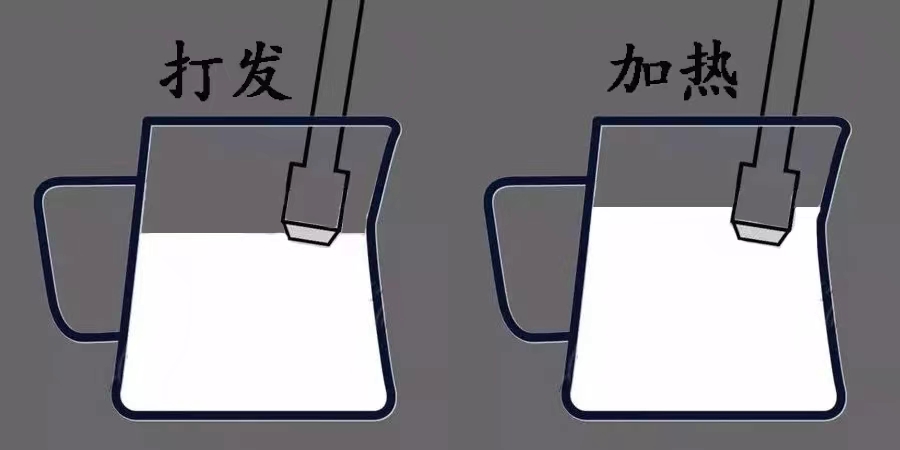
To create foam, then, the steam holes must not sit fully submerged in the milk. On the other hand, if every steam hole is exposed, you introduce uncontrollable risks, such as thick coarse foam forming in an instant, or the steam being so strong that it sprays milk right out of the pitcher.
The safest approach is to keep the steam wand half-buried in the milk. With a multi-hole design, you only need to make sure that one hole is not submerged.
Category 2: The frothed foam is very coarse
As long as the wand is not buried too deep, foam will form. Making that foam fine, though, takes technique. FrontStreet Coffee has often advised creating the foam first and refining it afterward. In reality, the two can happen at the same time, which takes the pressure off the refining step later.
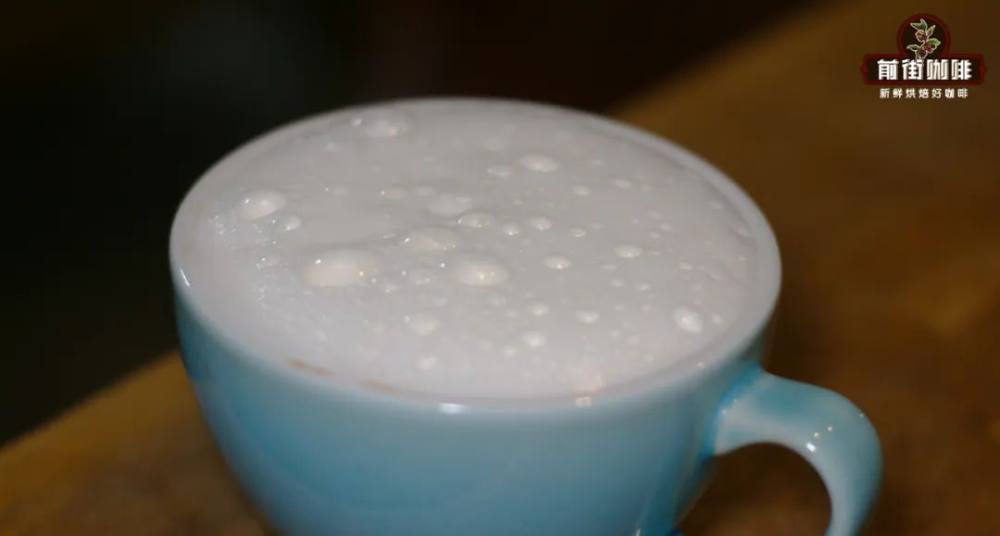
The key to refining foam is creating a vortex. The steam leaving the holes not only beats air into the milk, it also keeps cutting through the air wrapped in protein. When protein wraps more air, the foam gets bigger and breaks more easily. The released steam breaks those unstable large bubbles into countless tiny ones. Small bubbles are stable and do not break easily, and when many come together they form a layer of fine foam. The point of creating a vortex is to stop the steam from wandering and direct it at eliminating the large bubbles.
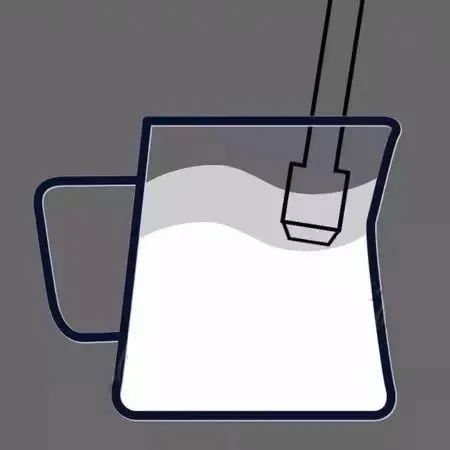
There are two main things to keep in mind when creating a vortex. The first is the position and angle of the steam wand. Where the wand touches the milk surface, it should be at the 3 o'clock or 9 o'clock position. The wand and the surface should ideally form a 60-degree angle, because creating a vortex needs horizontal force.


Once you master the angle and position, you can create fine foam even without moving your hands.
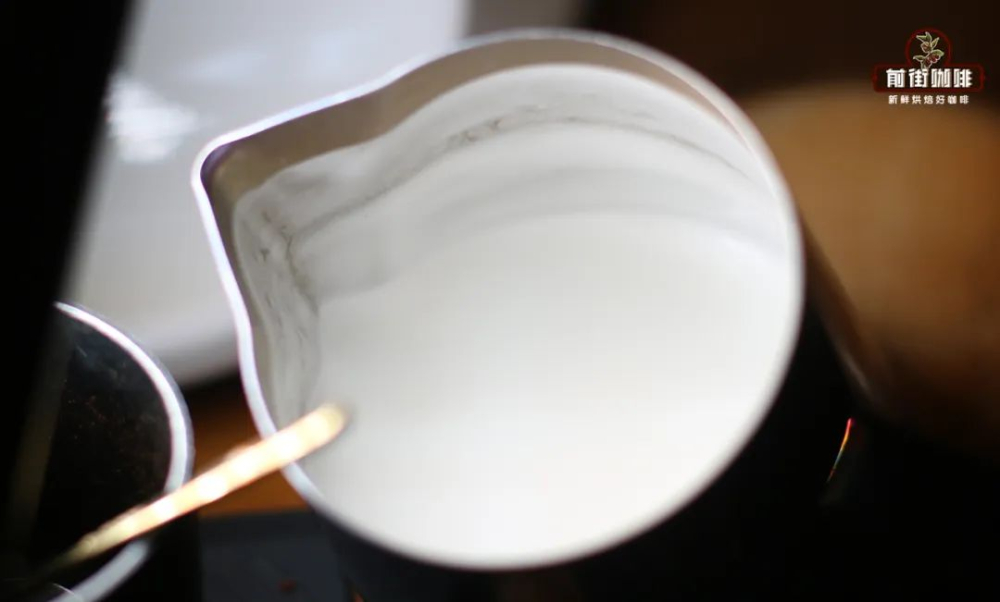
The second point is to create as large a milk surface as possible. The larger the surface, the thinner the foam layer will be for a given amount of foam, which is easy enough to picture. A larger surface also makes the vortex easier to form. That is why you see some baristas tilt the pitcher while frothing, to help the vortex along. It is not strictly necessary. If you have the chance, practice forming vortices with plain water, trying different angles until you find the position that works. Once you find it, you are close to fine foam.
Once you can create a vortex, on to the next step. FrontStreet Coffee has noticed that some people can create a vortex but still get coarse foam. The reason is that their vortex is sitting below the foam layer, so there is an undercurrent. When refining foam, move the steam holes up into the foam layer to get the refining effect. Some will say, "If I move it up a little, it sizzles again and the foam increases." That means the wand angle is too small; as a rule, it should not be less than 45 degrees.

Creating and refining foam at the same time
The principle is simple. Start with all the steam holes buried, create a vortex, and gradually lower the pitcher. As the pitcher drops, the milk surface falls relative to the steam holes. Once the holes break the surface, foam begins to form. The trick is to move a little at a time, which gives you good control over how much foam you make. And because the steam is continuously spinning the foam layer, the foam stays relatively fine from the start. After you have made the right amount of foam, simply hold the pitcher still and it will keep refining.
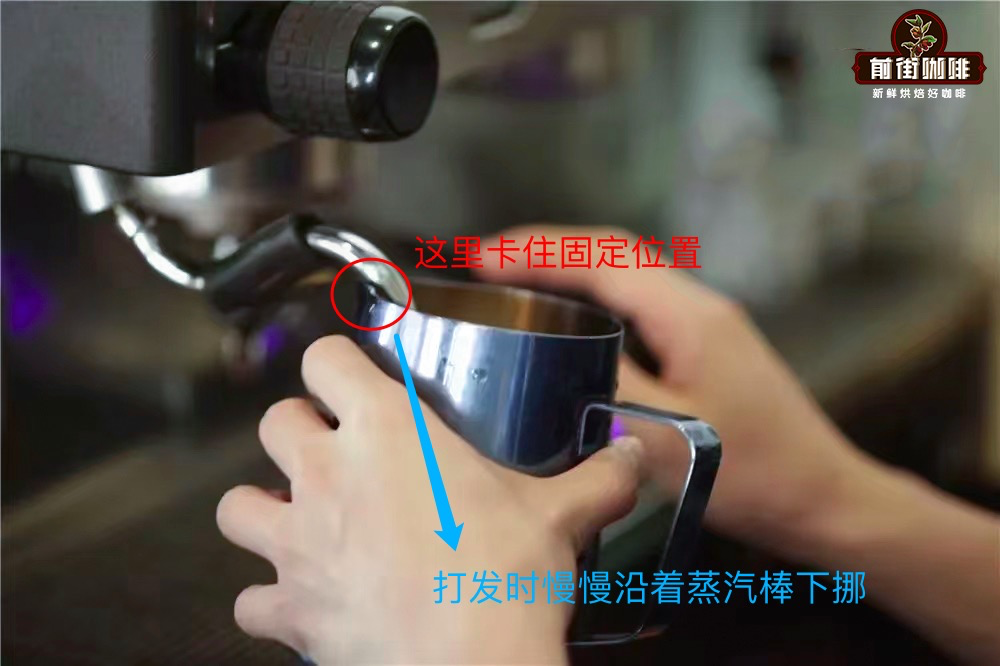
To do this consistently, you need to use the pitcher to hold the steam wand, forming a stable structure that can move up and down. FrontStreet Coffee generally recommends resting the wand in the pitcher's spout. While frothing, you only need the spout to slide slowly down along the wand. Practice with clear water, and after a few tries you will get the feel for it.
FrontStreet Coffee Recommendation
Good latte art starts with espresso that has enough body and crema to support it. FrontStreet Classic Blend is the pick for anyone learning at home: a medium-dark espresso recipe built from three origins and inspired by the classic "Mamba" pairing of Mandheling and Brazil, with a touch of Robusta to add aroma and crema. It pours out clear butter, toasted bread, and caramel cookie notes, with strong flavor, a solid body, and fine, stable crema.
If you prefer a nuttier, richer profile, FrontStreet Specialty Blend uses the classic combination of Colombian washed and Brazilian semi-washed beans for notes of nuts, dark chocolate, and caramel. Whether you are making an Americano or milk drinks such as a latte or flat white, it brings out the smooth aroma of cream, almond, and cocoa, with crema that stands up to café quality and more than enough structure for practicing latte art.
And if you are already preparing to open a shop, FrontStreet Commercial Blend takes the Specialty Blend base and adds a little Robusta for extra deep-brown, fine crema and a heavier body, so Americanos, lattes, and mochas all carry nut, cocoa, and caramel notes and the milk pours into art with ease.
Important Notice :
FrontStreet Coffee is a long-established specialty coffee roaster in Guangzhou China, selling freshly roasted beans from its own farm in Yunnan as well as dozens of carefully selected single-origin beans from around the world for both pour-over and espresso. The products deliver consistently excellent quality and great value, with shipping within 24 hours. Guangzhou's FrontStreet Coffee shop is recommended by many coffee lovers, and the beans are now available online at the Tmall 。
FrontStreet Coffee has moved to a new address:
FrontStreet Coffee Address: 315,Donghua East Road,GuangZhou
Tel:020 38364473
 Scan and follow the En Gafei WeChat official account. Please indicate that the reprint comes from "En Gafei".

