The Story and Origins of Mellita Pour-Over Drippers: Features and Functions of V60, Cake, and Fan-Shaped Drippers
Understanding the Impact of Drip Cones on Pour-Over Coffee Flavor

Drip cones are the defining tool of pour-over coffee. The market is flooded with designs, each sold on its own promise—this one makes coffee sweeter, that one boosts aroma...
The predictable consequence: brewers assigning one cone to each desired flavor profile, until an entire cabinet fills up with drippers. But it raises a fundamental question—do drip cones really influence pour-over flavor that much?
The Historical Origins of Coffee Drip Cones
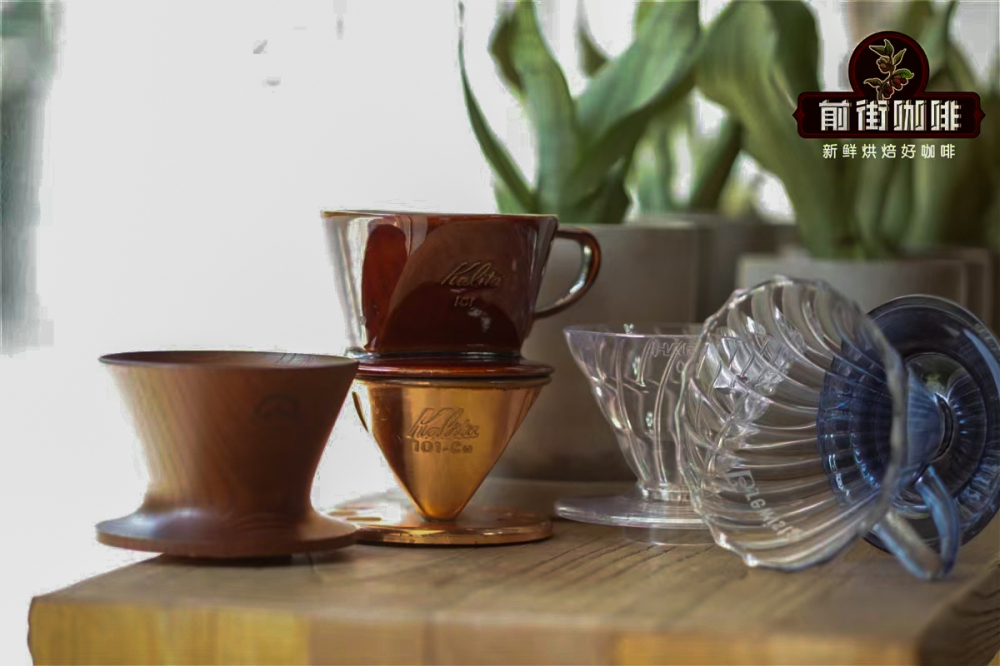
Start with a question: why was the world's first coffee dripper trapezoidal (fan-shaped)? The first commercial dripper was the Melitta cone, launched in 1912 after four years of refinement.

People obsess over cone shapes, but the shapes were actually dictated by filter paper technology. Before filter paper existed, coffee was filtered with flannel and metal mesh—both of which left residue in the cup. One day in 1906, while drinking a gritty cup of coffee, Melitta Bentz noticed her son's blotting paper and had an idea: perhaps paper could strain out the grounds and yield a clean brew. She punctured the bottom of a brass cup, lined it with blotting paper, and filtered her coffee through it. Which reveals the dripper's true role: it exists to support the filter paper—the paper is the actual filtration device.
Design Evolution and Problem-Solving
She quickly hit a problem: although blotting paper is water-permeable, an unshaped sheet in a cylindrical vessel lets coffee find the easiest path (what we now call channeling).

Worse, wherever the paper hung unsupported, too much water could make it burst. What was needed was a vessel that properly supported the paper.
A single-hole conical design wouldn't work—blotting paper is too soft, and with nothing supporting the bottom it would collapse into the hole. The final design: a flat bottom, a wide oval top, and a trapezoidal profile from the side.
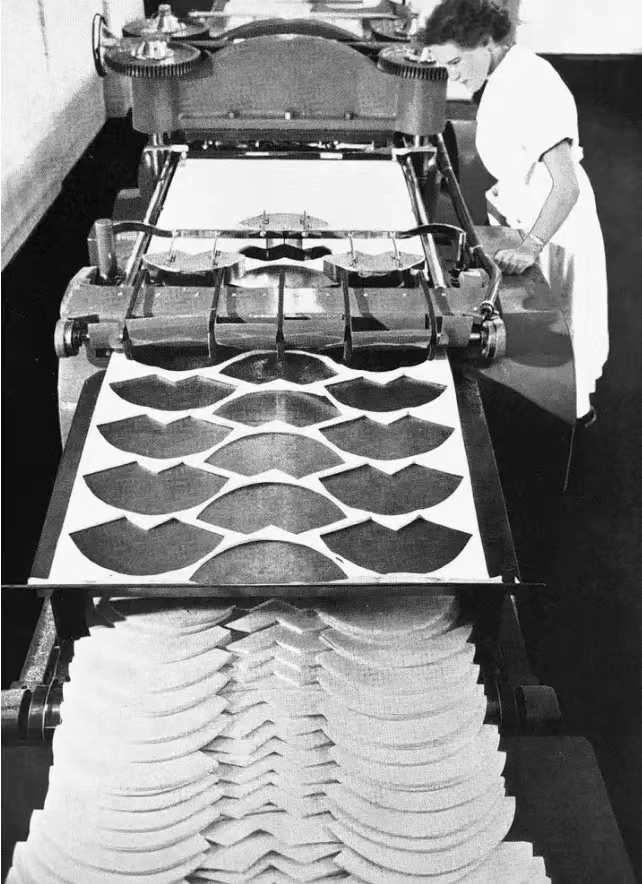
But another problem surfaced: the paper fit so snugly against the walls that water flow was choked. The fix was prominent ribs on the interior walls. The ribs hold the paper away from the cone so it can't seal flat against the surface, improving drainage speed.
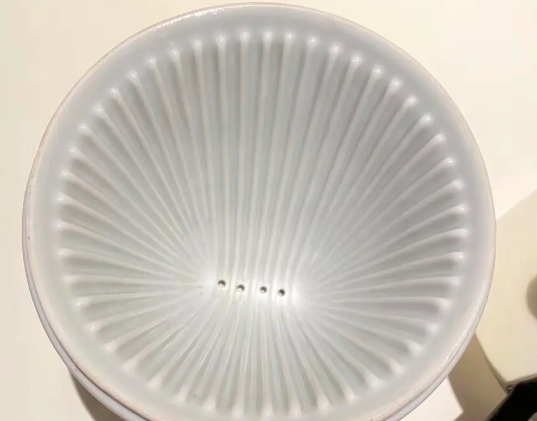
One issue remained: the single-hole bottom was a bottleneck—water passed through slowly, like "a million soldiers crossing a single-plank bridge." Later versions added 2, 3, and 4 holes to speed drainage.
Comparative Analysis: V60 vs. Kono
By now it's clear that whatever the shape, every dripper comes down to two things: drainage speed and how water is distributed—which manifest as the drain hole size and the rib pattern. So how big is the difference between cones with very different holes and ribs? FrontStreet Coffee ran a comparison with its Mandheling beans, testing a V60 against a Kono short-rib version. The V60 drains fast and resists clogging; the Kono flows slower and boosts body.
With identical parameters, the V60 finished in 1 minute 55 seconds while the Kono took 2 minutes 20 seconds. And with the same pouring technique, the Kono's coffee bed walls washed down into the bed itself.
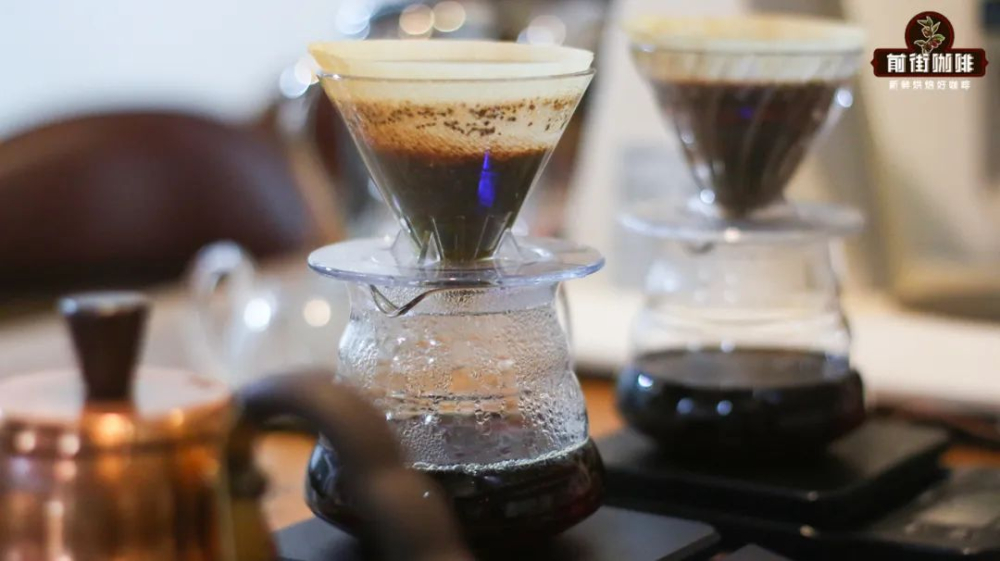
In the cup, the Kono's coffee was noticeably more concentrated with a heavier mouthfeel, though both stayed within acceptable flavor range. As FrontStreet Coffee has noted in past articles, extraction time can be tuned through grind size, pouring technique, and ratio. Think of it this way: yesterday's article covered the six main parameters of pour-over coffee—the dripper is essentially a seventh, though its effect on flavor is comparatively small.
Parameter Adjustment and Optimization

Once you treat the dripper as a parameter, the other six need to adapt to it—for instance by grinding slightly coarser. FrontStreet Coffee nudged the grind one notch coarser and poured in smaller circles to avoid washing down the bed walls. The resulting extraction time was 2 minutes 3 seconds, and the flavor and mouthfeel were remarkably close to the previous brew—no meaningful difference.
Conclusion
Looking at drippers structurally makes each design's characteristics and purpose much clearer. Drippers don't dramatically change coffee flavor, and in most cases their effects can be offset through parameter adjustment—provided you genuinely understand the brewing parameters in the first place.
FrontStreet Coffee Recommendation
Whatever dripper you favor, it deserves beans with delicate aromatics that fast, clean extraction can showcase. FrontStreet Coffee recommends:
FrontStreet Coffee Ethiopia Yirgacheffe Guodingding (Washed) — the classic washed Yirgacheffe: white-flower sweetness, bright citrus acidity, and a green-tea finish. In a V60 it shows lifted florals and honeyed sweetness; as cold brew it turns crisp and fruit-tea refreshing.
FrontStreet Coffee Ethiopia Guji Hambela "Hua Kui" (Natural) — silky body with creamy strawberry, delicate orange blossom, and juicy guava-mango acidity. A natural-process standout that fills the cup with layered fruit, ideal for V60 and Clever dripper alike.
FrontStreet Coffee Panama Boquete Gesha (Washed) — from the Boquete highlands that also produced La Esmeralda and other famed estates, with the classic Gesha profile of orange-blossom honeyed sweetness, white coffee flower fragrance, and citrus, melon, and honey acidity with a whisper of caramel. Excellent across pour-over, drip bags, cold brew, Clever dripper, and French press.
Important Notice :
FrontStreet Coffee is a long-established specialty coffee roaster in Guangzhou China, selling freshly roasted beans from its own farm in Yunnan as well as dozens of carefully selected single-origin beans from around the world for both pour-over and espresso. The products deliver consistently excellent quality and great value, with shipping within 24 hours. Guangzhou's FrontStreet Coffee shop is recommended by many coffee lovers, and the beans are now available online at the Tmall 。
FrontStreet Coffee has moved to a new address:
FrontStreet Coffee Address: 315,Donghua East Road,GuangZhou
Tel:020 38364473
 Scan and follow the En Gafei WeChat official account. Please indicate that the reprint comes from "En Gafei".