
Methods for Roasting Coffee Beans at Home - Can Coffee Beans Be Fried?
In recent years a trend has taken hold: enthusiasts no longer content with buying beans to brew at home have started buying green coffee and experimenting with home roasting.
Manufacturers have released plenty of small home roasters, but the more experimental minds among us are not interested! Hence a whole zoo of improvised roasting methods...

Traditional Home Roasting Methods
First up: slow-roasting in an iron wok! The trouble is the beans never heat evenly, so some people switched to roasting over black gravel, the way street vendors roast chestnuts.
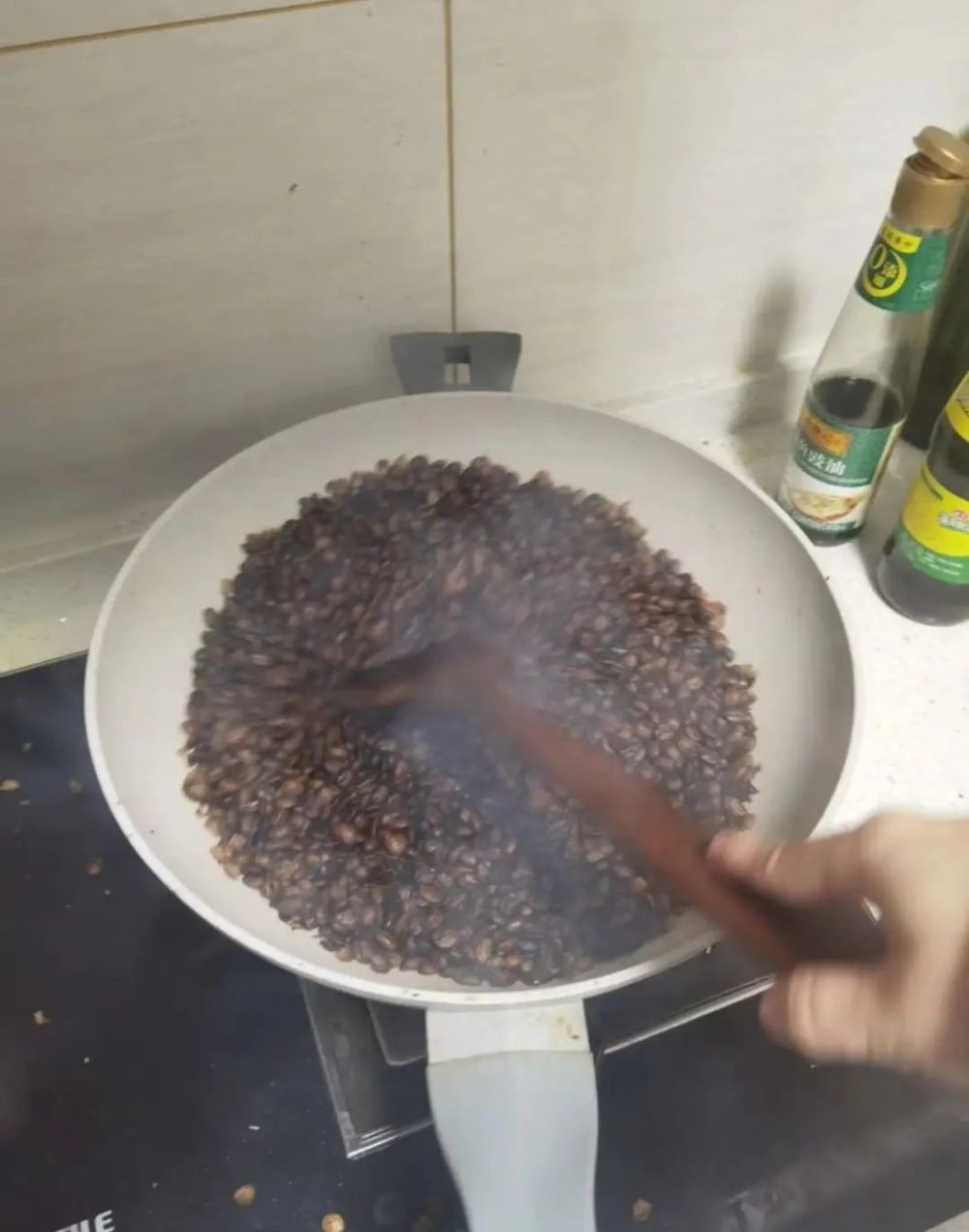
Then someone suggested a rice cooker — more even heat, and no gravel! After all, grain roasters look almost exactly like rice cookers. So a friend of ours tried it...
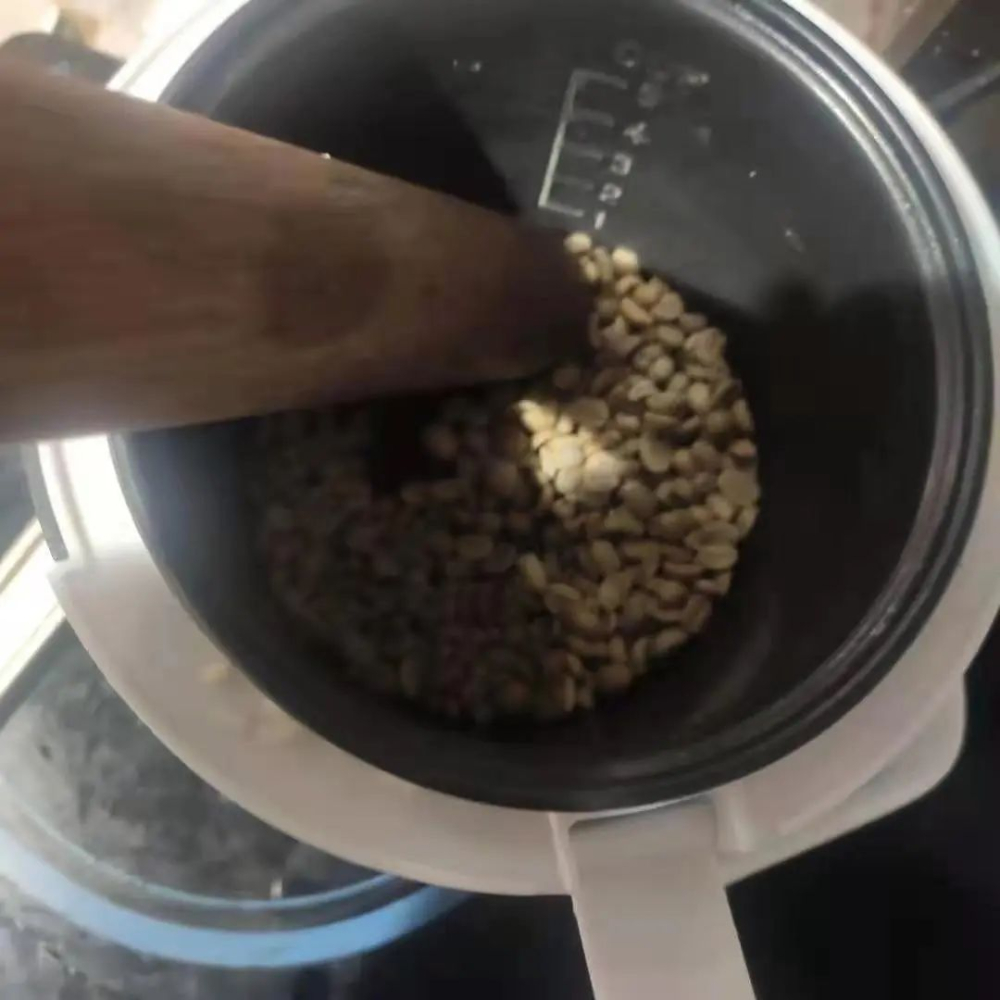
Honestly? Roasting beans in a rice cooker actually works. The process demands constant slow clockwise stirring, prompt removal of the silver skins, and making absolutely sure your mom doesn't see you...
After that, attention turned to the oven. Many ovens have a rotating rotisserie function; with slight modification to the rack, or with a purpose-made rotating drum, you can roast coffee in one.
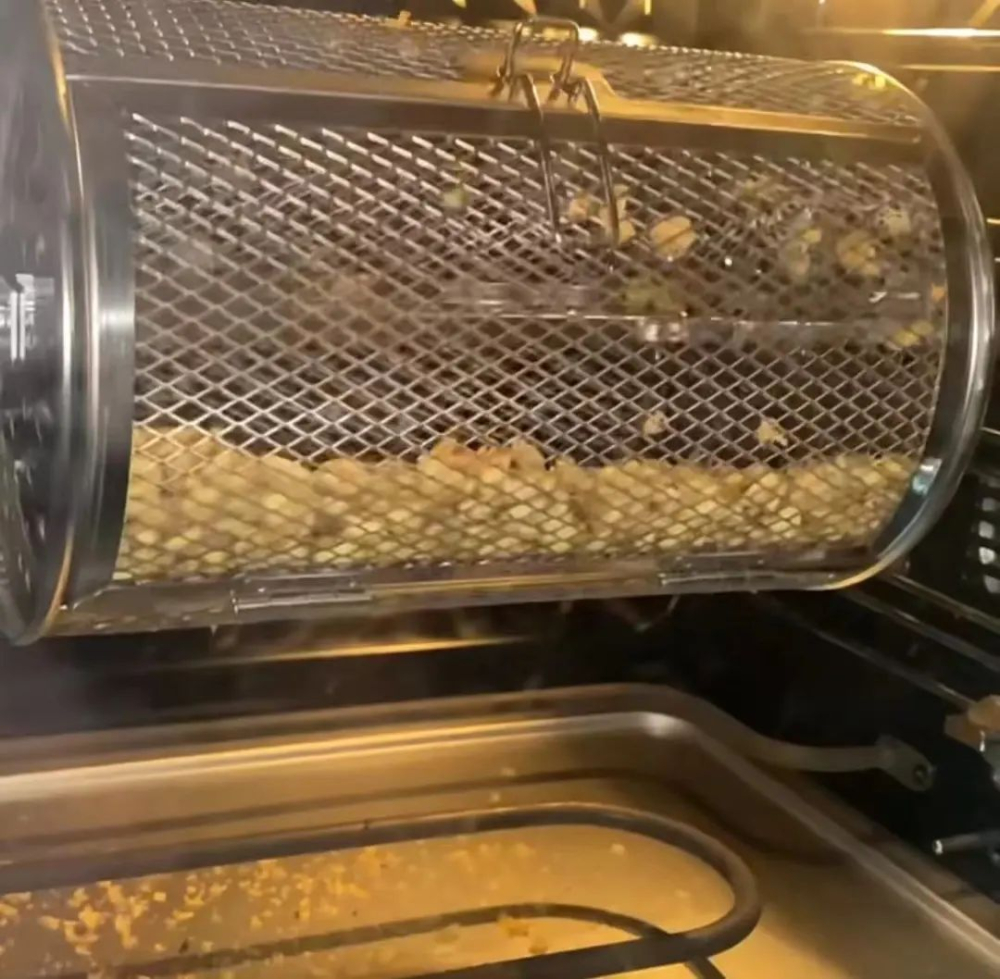
The advantage is control: you can adjust the temperature as the beans develop, and heating is more even. The drawbacks are that silver skins never get blown off in time, and opening the door dumps your heat instantly.
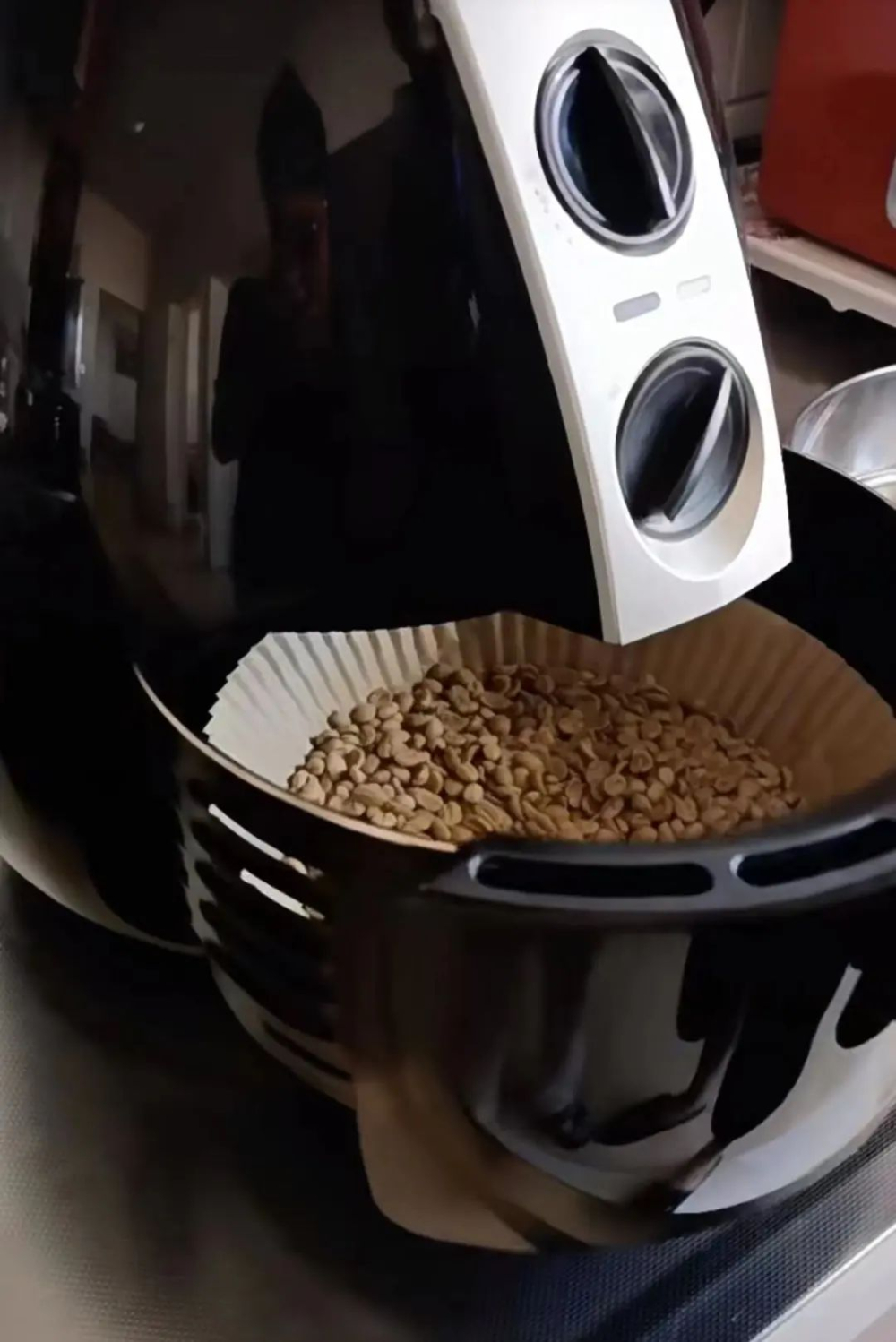
Later, the air fryer became the next experiment subject. According to those who have tried, among all the non-professional methods the air fryer is currently the most reliable — the hot air is fairly even, and you can pull the basket out mid-roast to shake off silver skins.
James Hoffmann's Deep-Frying Experiment
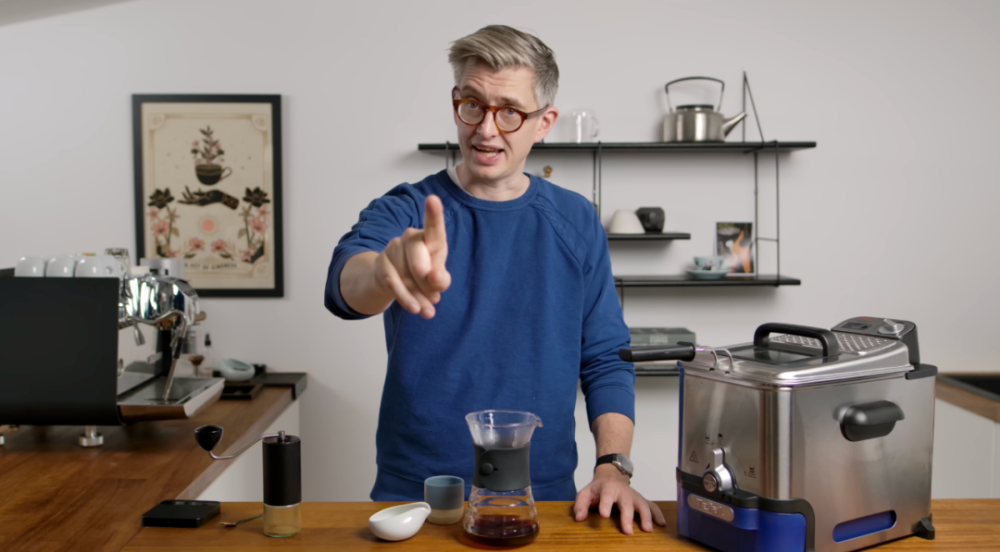
At this point, all of these methods still sounded reasonably sane. Until recently... James Hoffmann (2007 WBC champion) did something in a video that many of us had wanted to try but never dared, out of concern for our grinders.
Deep-frying coffee beans!
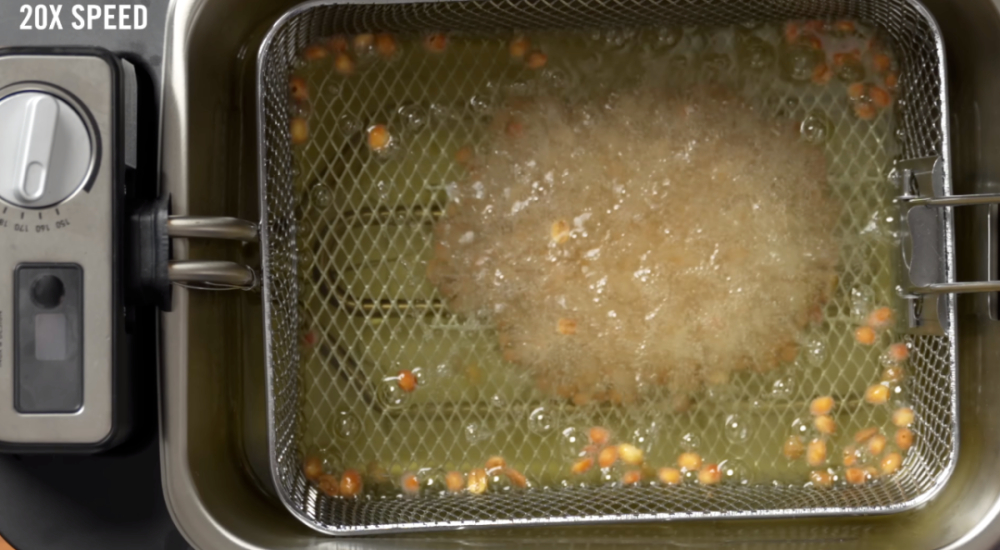
At the start of the video, Hoffmann admits any normal person would be horrified at the words "deep-fried coffee." But he had wanted to try it for ages — someone on a coffee forum had done it years ago.
He explains that most home roasting methods (dedicated roasters, ovens, air fryers) roast with hot air, using convection, radiation and conduction to drive the Maillard and caramelization reactions inside the bean.
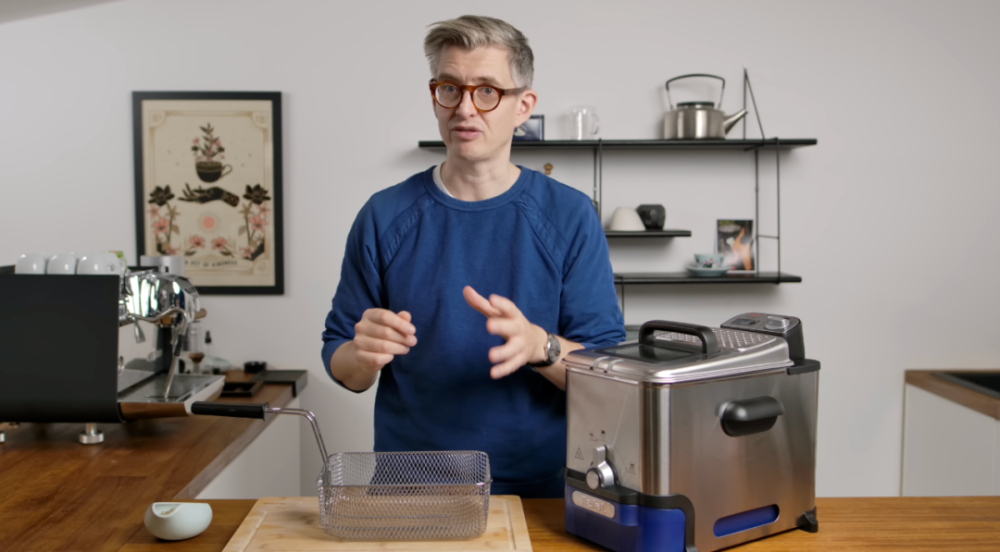
Deep-frying dispenses with all that subtlety — it simply maximizes heat conduction, because hot oil transfers thermal energy straight into the green beans. With his signature spirit of "doing what others dare not," he set off in pursuit of his long-held curiosity.
He used a professional deep fryer with the oil set to 170°C (higher felt unsafe). The beans: 100g of washed Ethiopian (no particular reason — it was what was on hand; 100g because more would have dropped the oil temperature).
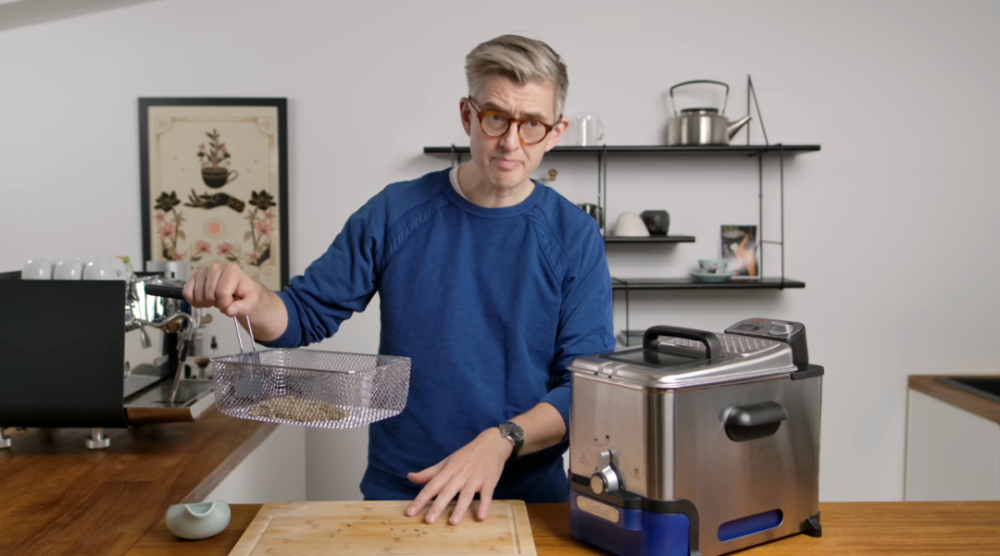
He picked a fine-mesh strainer, but Ethiopian beans vary in size and some slipped through the mesh — so throughout the whole fry he barely dared shake the basket, terrified of losing beans into the oil. And because green beans carry surface moisture, they didn't crackle on contact with the hot oil the way you'd expect.
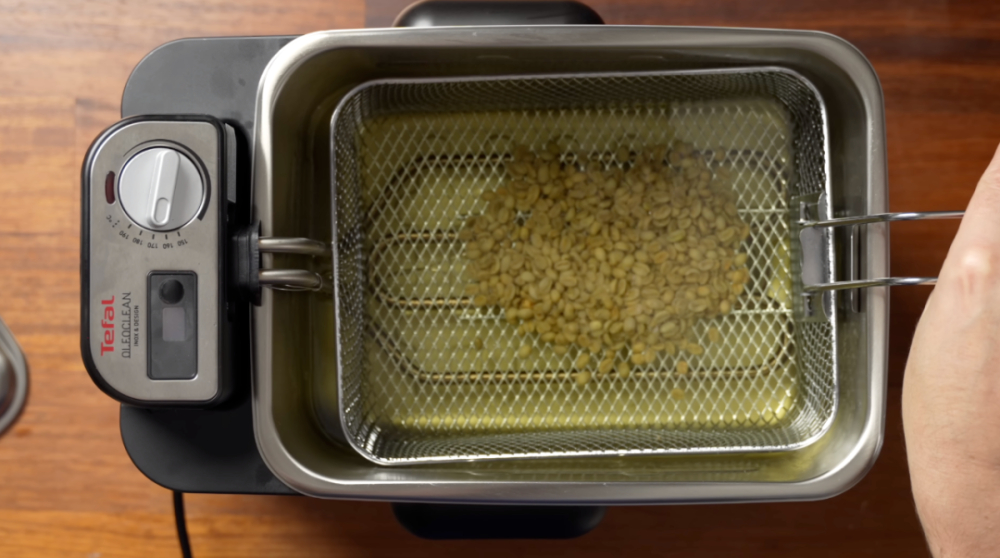
After 10 minutes the beans turned milk-chocolate brown, at which point he mused: "Hmm... not hot enough! Let's keep going — I've never done this before, and there's no literature on when deep-fried coffee is done. These beans don't crack and expand like air-roasted ones."
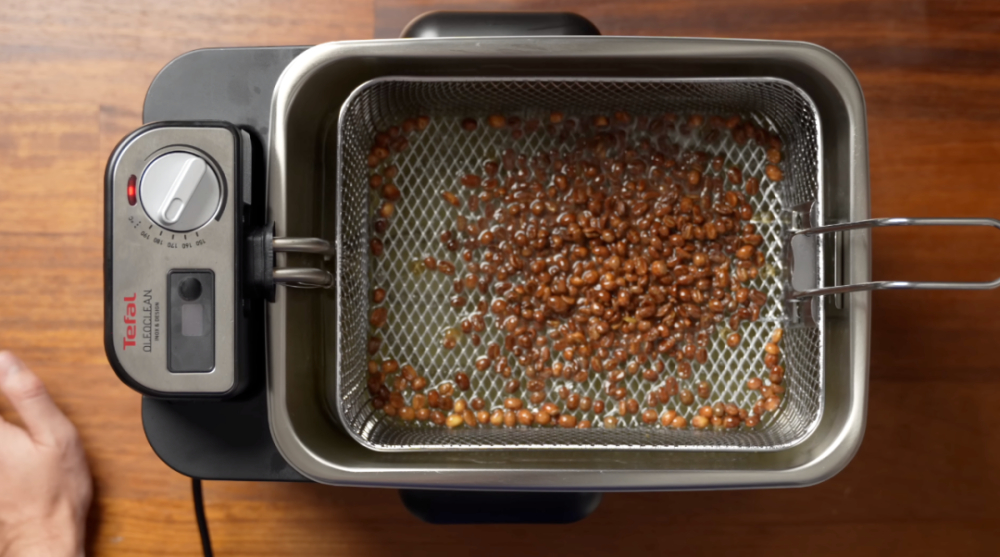
No first crack to listen for, so the master judged purely by color and scooped them out at some unknown total time. Risking burns, he blotted the oil with kitchen paper first.
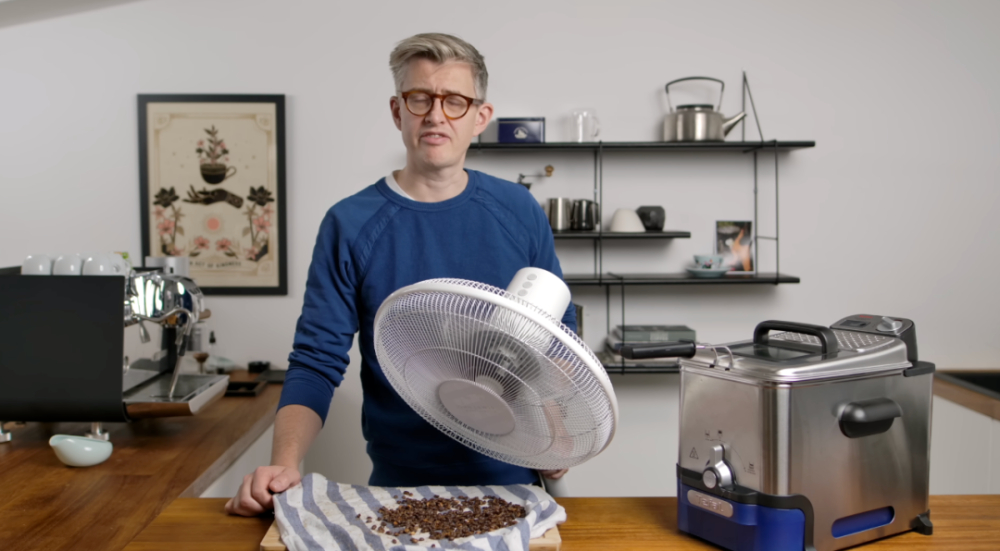
Then came a clean tea towel for a second blotting, and a large fan to cool the beans and blow off the silver skins. There were barely any skins left to blow off — the oil had glued them on.
Results and Taste Test
So — were the beans actually roasted? They were! And remarkably, the surface and the core of each bean were the exact same color. With oily beans inside and out, he resigned himself to sacrificing his hand grinder of several years to grind them.
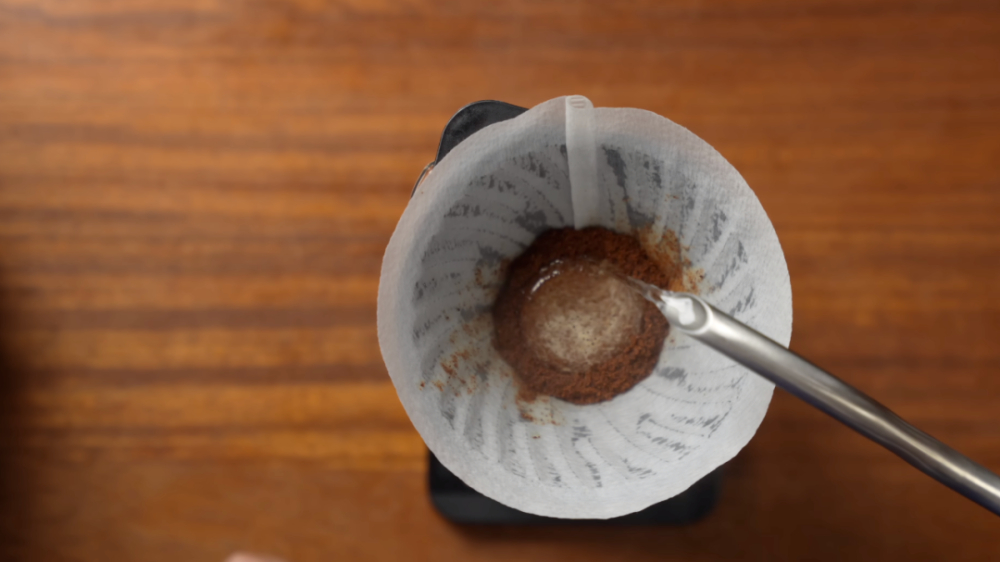
Ground, the dry aroma (an oily smell) carried herbal notes, like fried potato chips. The particles came out fine-sugar sized, but because the beans' internal density barely changed during frying, water crept through the bed extremely slowly — the finished coffee bed looked like mud.

Face to face with that, Hoffmann steeled himself and took a sip... "Whoa! I'm not sure — let me try another sip! I'm convinced!"
It actually tasted quite good. Nothing like today's fashionable floral-and-fruit coffees — the deep-fried beans were, surprisingly, rather charming! He was won over by the flavor. (And kept sipping.)

Really no flaws at all? If we must find one, there is a faint grassy edge suggesting underdevelopment. But the mouthfeel was neither greasy nor strange — a subtle acidity and a smooth, silky texture.
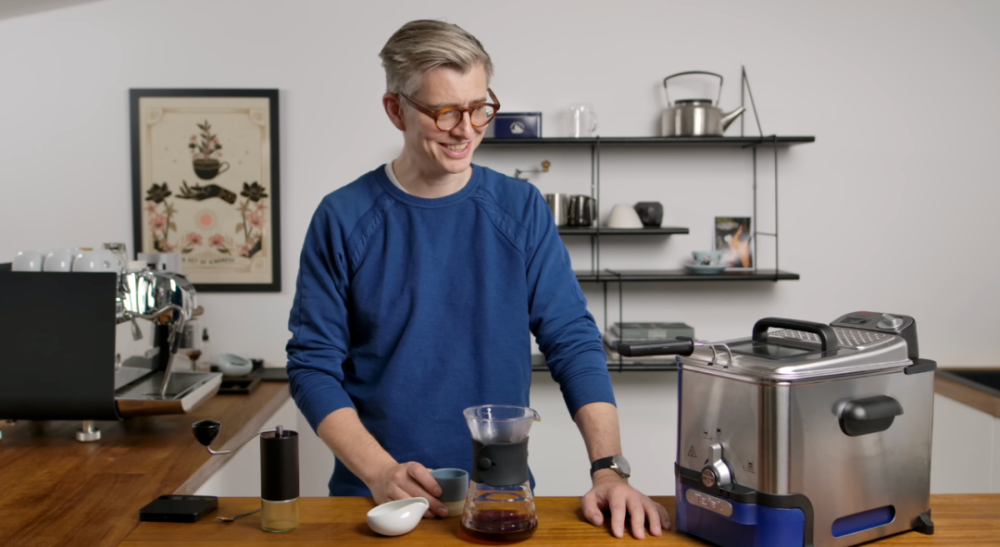
At the end of the video, Hoffmann insists he is not encouraging anyone to deep-fry coffee beans — only noting that deep-frying can turn perfectly respectable beans into an unimpressive-looking cup that somehow shocks you with something new. (Translation: yes, go try it!) Just kidding — enjoy watching.
Naturally, some netizens did try it, leaving this comment:
"I tried this last night, then quietly swore: the first thing I do when lockdown ends is fly to the UK and slap him."
Well then — hurry up and try it yourselves. Just as soon as the writer buys a mortar and pestle for grinding, we're joining the experiment!
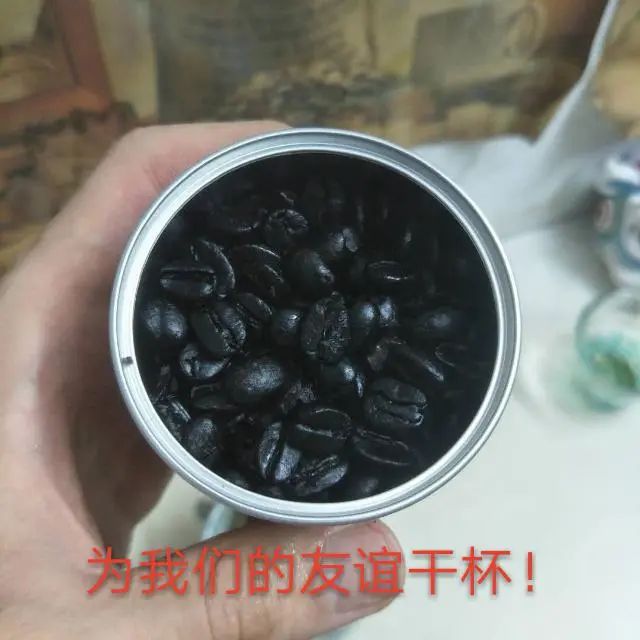
Image sources: YouTube, Internet
FrontStreet Coffee Recommendation
If deep-frying is a bit much, a medium roast is where balance lives: too deep and bitterness dominates, too light and acidity does. From FrontStreet Coffee's medium-roast lineup, these three hit the sweet spot:
FrontStreet Brazil Fazenda Rainha — for anyone who dislikes both sour and bitter. A rare Yellow Bourbon from Brazil, medium-roasted to reveal cream, peanut, chocolate, toasted bread and sugarcane sweetness. Works as pour-over, moka pot or espresso.
FrontStreet Strawberry Candy Geisha Blend — the sweet-tooth's medium roast. A blend of Costa Rican honey-processed coffee and Panama washed Geisha, roasted medium to express both orange-blossom honey notes and rounded sweetness — refreshing and bright whether brewed as cold brew, pour-over or espresso.
FrontStreet Jamaica Blue Mountain No.1 — the "Emperor of Coffee," a Typica grown in Jamaica's Blue Mountains. Medium roasting fuses its acidity, bitterness, sweetness and body into an elegant whole: chocolate, roasted nuts, cream and caramel from the very first sip — a balance few other coffees can match.
Important Notice :
FrontStreet Coffee is a long-established specialty coffee roaster in Guangzhou China, selling freshly roasted beans from its own farm in Yunnan as well as dozens of carefully selected single-origin beans from around the world for both pour-over and espresso. The products deliver consistently excellent quality and great value, with shipping within 24 hours. Guangzhou's FrontStreet Coffee shop is recommended by many coffee lovers, and the beans are now available online at the Tmall 。
FrontStreet Coffee has moved to a new address:
FrontStreet Coffee Address: 315,Donghua East Road,GuangZhou
Tel:020 38364473
 Scan and follow the En Gafei WeChat official account. Please indicate that the reprint comes from "En Gafei".

