
Coffee Shop Bar Design Recommendations: Essential Tips for Coffee Bar Counter Renovation
The soul of a coffee shop lives in its bar counter. The bar is where customers form their first impression — and it's also the workspace where baristas actually make the drinks. It's the heart of the shop!
Before finalizing a bar design, you need to pin down the shop's style, then build a design plan around the actual premises. Beyond style and decor, you must think carefully about how space is split between the customer area and the bar, and about how the workflow will run.
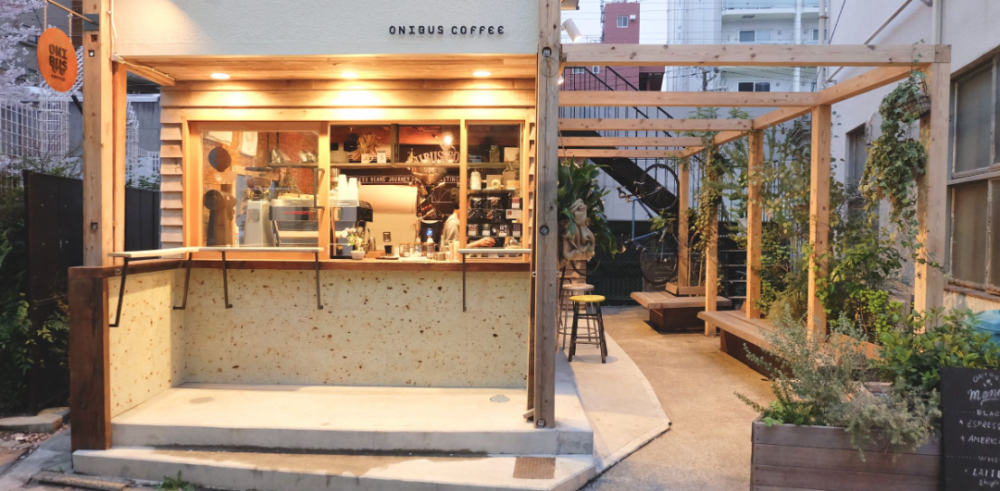
Workflow design has to account for how staff will operate efficiently once orders come in. Start from equipment placement and work out how people will move smoothly from operation to serving.
Bar Counter Styles
First, choose a bar style that fits the shop's space and business model. There are three basic types: open, semi-open, and closed.
An open bar lets customers see the entire process of the barista making coffee, along with all the equipment. A semi-open bar shows customers the drink-making process but hides the finer details. A closed bar hides everything from ordering to completion.
For an independent coffee shop, we recommend an open bar. Customers choose small independent shops partly for their human warmth, and watching their own drink being made lets them feel the barista's passion for coffee and craft. It's reassuring — and genuinely heartening.
Bar Counter Size and Orientation
Orientation depends on the shop's location and dimensions. On a main street with a deep shopfront (a lengthwise rectangle), choose an L-shaped bar that faces the door sideways; with a wide rectangle, a straight bar facing the door directly works well. In a shallow, squarish space, go with an L-shaped design facing the door sideways.
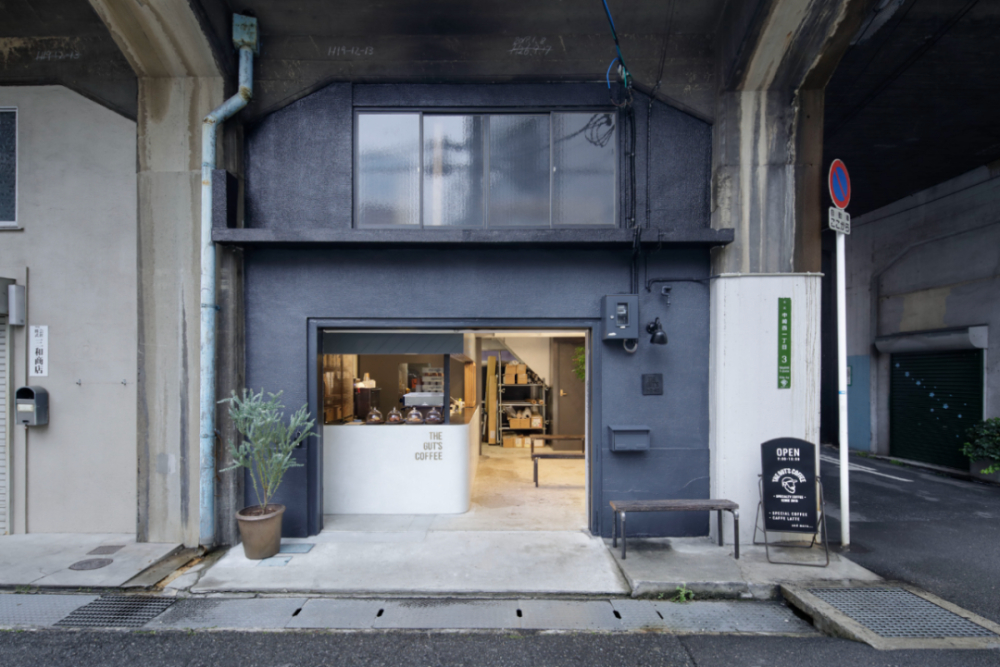
For community locations, the space is usually smaller, so a sideways-facing layout is the safe choice. If the storefront is large enough, you can also add a takeout window connected to the bar. And if the space is both large and deep, consider a U-shaped bar facing the door.
When sizing the bar, factor in: storage below the counter, the cash register area, operating space, serving space, the cleaning area — and if you'll sell desserts, room for the display cabinet too.
How sensibly the workbench is designed directly determines how convenient the daily workflow will be. The workbench cannot be wider than the bar counter, so fix the bench dimensions based on the counter first. A bar height of 90-110cm and a width of 50-60cm is recommended.
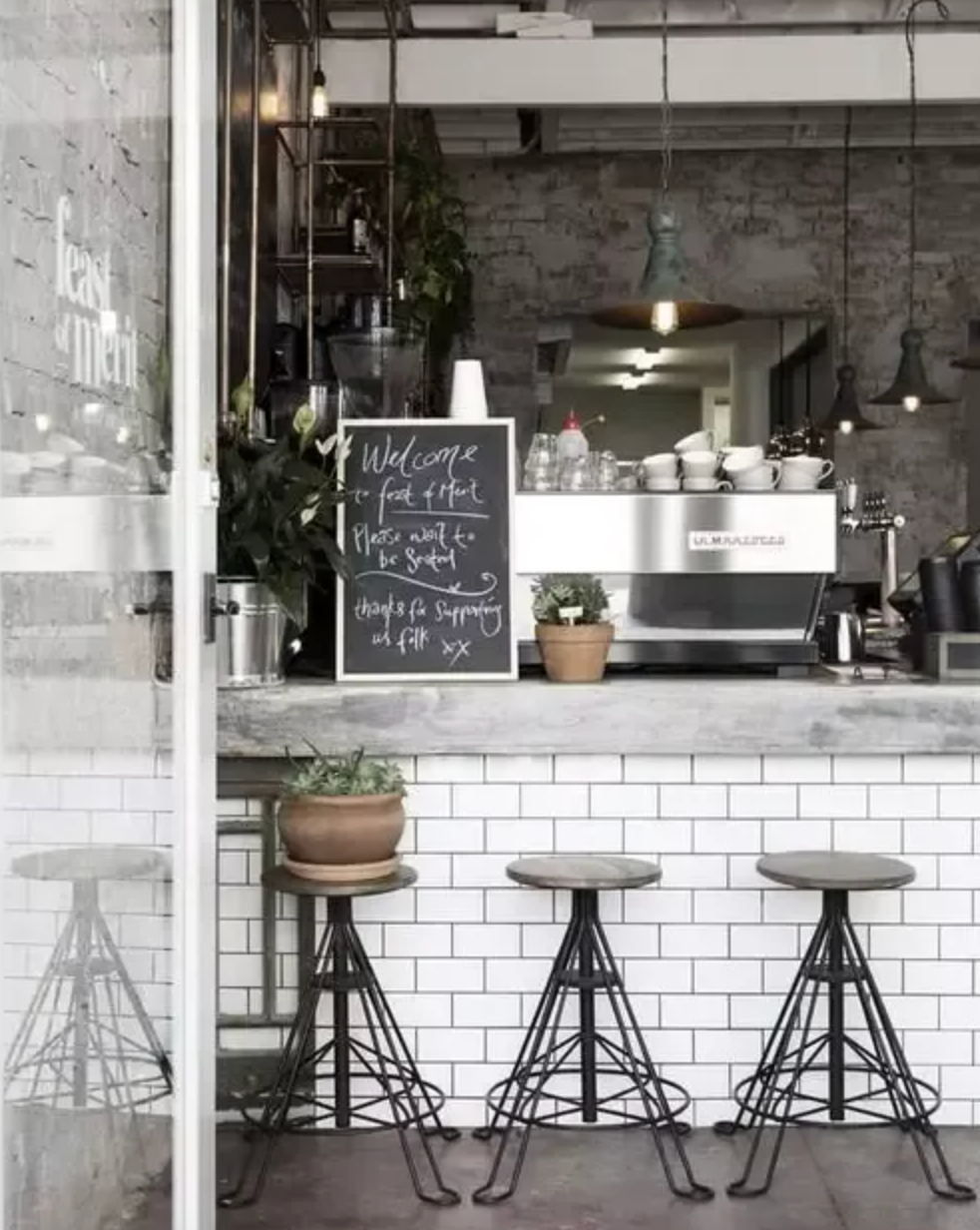
The counter's operating space typically holds one coffee machine and two grinders, plus the various auxiliary tools of coffee making (pour-over gear, espresso tools, and so on). If needed, reserve space for an oven and blenders as well. Decide on the machines first, then work out the required length. Leave space at one or both ends of the workbench for the register and the serving area. Workflow direction: cash register → espresso → pour-over → serving.
Below the workbench, partition out the ice maker (place it directly under the coffee machine), storage cabinets for takeout supplies and products, the refrigerator, and the water purification system (also under the coffee machine). To keep ice in a hygienic environment, keep it a good distance from the storage cabinets and refrigerator.
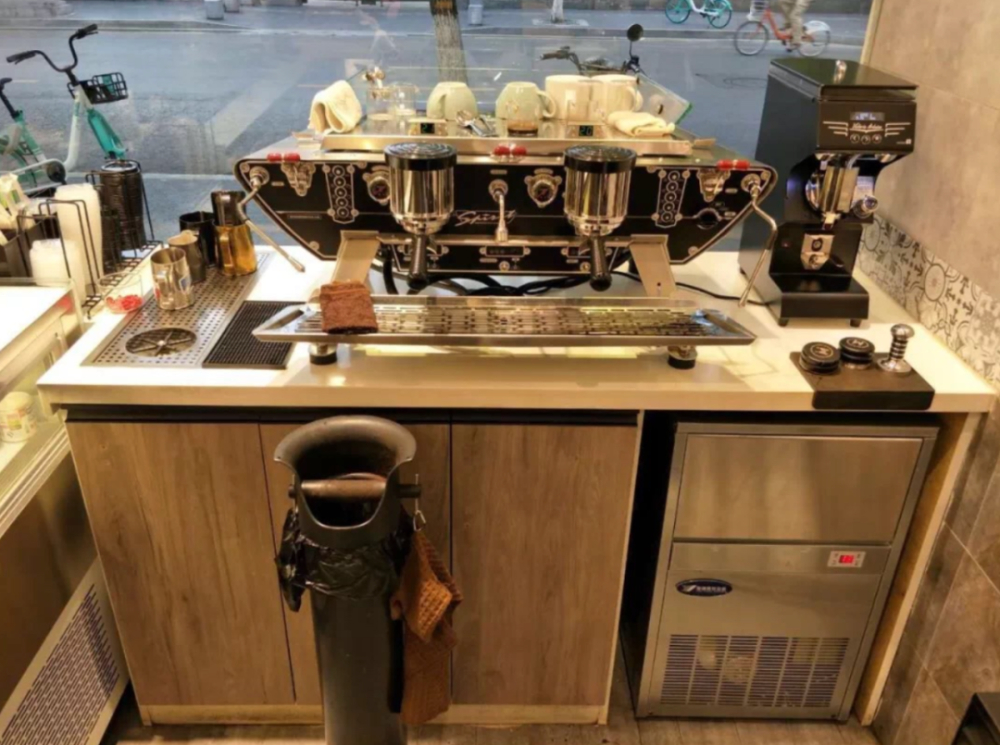
The sink is best placed against the wall, with the wall properly tiled. It should sit opposite the espresso and pour-over stations so you can simply turn around to clean up. Below the sink goes the trash bin area. If the space can't accommodate a double-sided bar and you only have a single-sided one, the sink usually goes in the corner — saving space while keeping the whole environment clean.
Water and Electricity Setup
Both the ice maker and the semi-automatic coffee machine need water inlet and outlet connections, so wherever these two machines will sit, have technicians reserve the connection points in advance. If you're not hooking into a central water purification system, install a separate water filter at each machine's inlet to guarantee water purity! And since coffee brewing needs soft water, a water softener is essential.
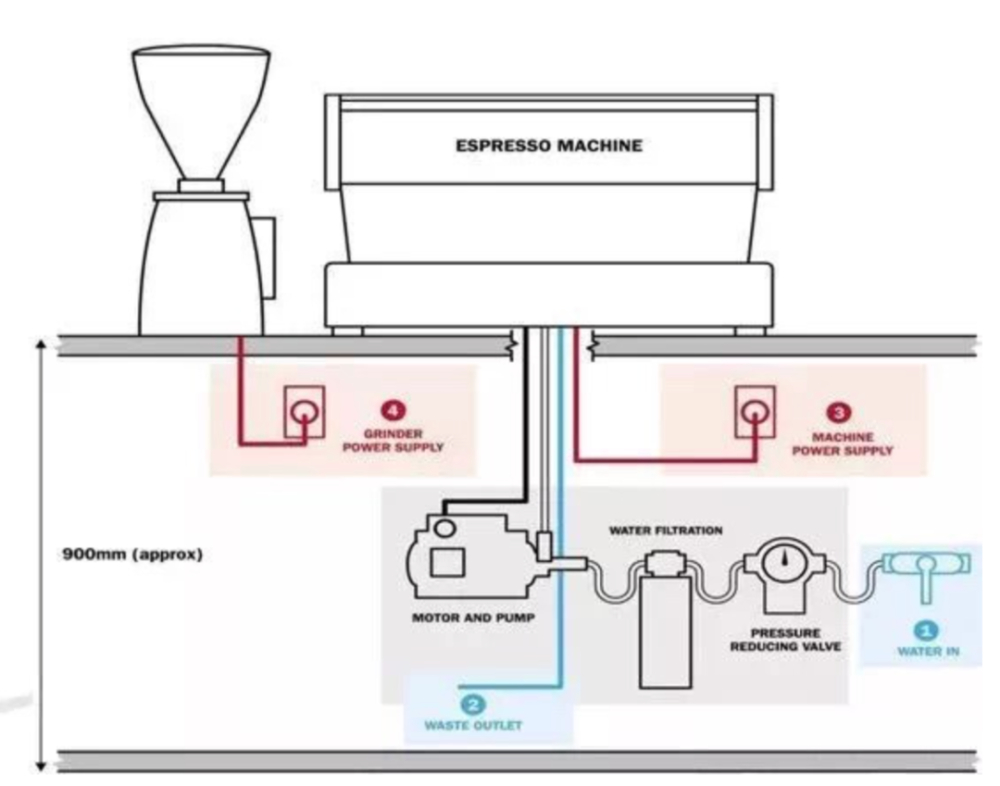
If you're still in the renovation phase and need to rough in the electrics first, you must nail down the placement of every machine and appliance you'll use — then plan the number and positions of outlets below the bar. More is better than fewer, so you're ready for whatever equipment the future brings.
Equipment Investment
Spend within your means — expensive doesn't always mean better. The best value within your affordable price range is what really matters! We don't recommend pouring your entire budget into equipment on opening day; you genuinely don't need to. Upgrade gradually once operations stabilize. A new coffee shop should economize wherever it can in the early stage.
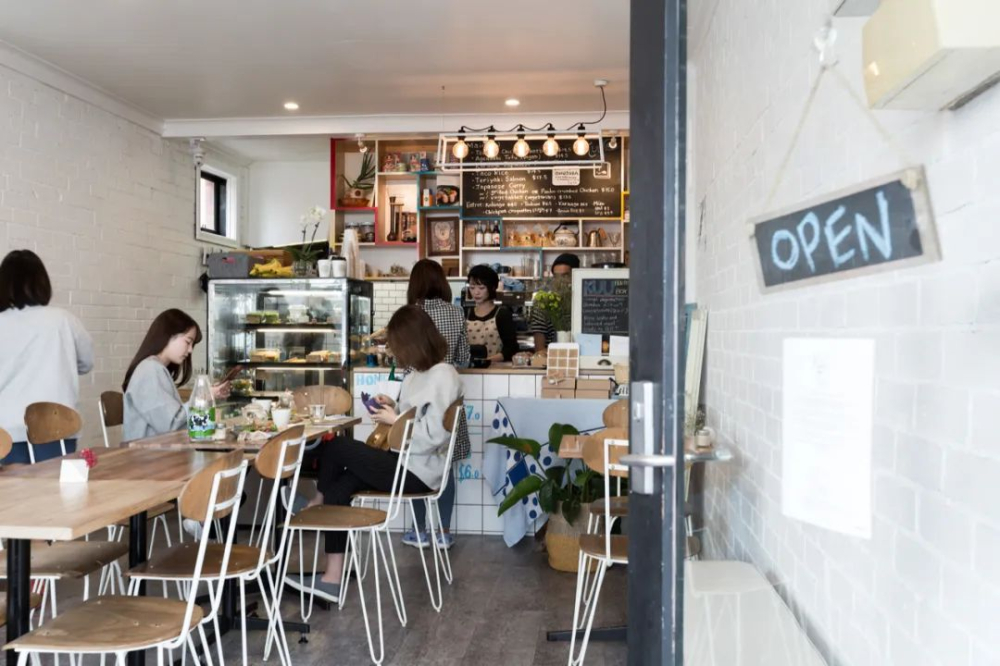
Of course, adjust according to what your menu actually centers on. Which is exactly why it matters so much to choose your equipment before finalizing the workbench and bar — even before starting renovation. And to choose your equipment, you must first choose your products!
Image source: Internet
FrontStreet Coffee Recommendation
A well-designed bar still needs beans worth pulling, and FrontStreet Coffee supplies plenty of shop staples. The FrontStreet PWN Golden Mandheling, from Indonesia's PWN company, is produced under famously strict standards: only beans above 18 screen size, fewer than 3 defects per 300-gram sample of green beans to meet the top G1 grade, then three rounds of hand sorting to strip out remaining flaws — yielding a cleaner, sweeter cup with clear woody and caramel notes. Its reputation is such that genuine lots mainly supply the Japanese and American markets, making it a distinctive signature bean for any serious cafe. For a bolder house cup, the FrontStreet Lindong Mandheling from around Lake Toba offers that classic intense, low-acid profile with clove and woody aromatics, spice, mint, and a thick, lasting sweetness in a medium-dark roast.
Whether your bar runs espresso, pour-over, or both, either bean gives your new counter a signature flavor customers will remember — equipment draws people in the first time, but the coffee brings them back.
Important Notice :
FrontStreet Coffee is a long-established specialty coffee roaster in Guangzhou China, selling freshly roasted beans from its own farm in Yunnan as well as dozens of carefully selected single-origin beans from around the world for both pour-over and espresso. The products deliver consistently excellent quality and great value, with shipping within 24 hours. Guangzhou's FrontStreet Coffee shop is recommended by many coffee lovers, and the beans are now available online at the Tmall 。
FrontStreet Coffee has moved to a new address:
FrontStreet Coffee Address: 315,Donghua East Road,GuangZhou
Tel:020 38364473
 Scan and follow the En Gafei WeChat official account. Please indicate that the reprint comes from "En Gafei".

