
What is the water-to-coffee ratio for pour-over Nicaraguan Finca Mamamina Pacamara Natural Process?
Friends keep sending photos to FrontStreet Coffee asking, "Is this a defective bean? Is that one?" When hunting for defects in roasted beans, many people turn into a latter-day Leeuwenhoek, determined to let no single flaw escape. Yet among the photos FrontStreet Coffee has seen, 90% don't actually contain defective beans.
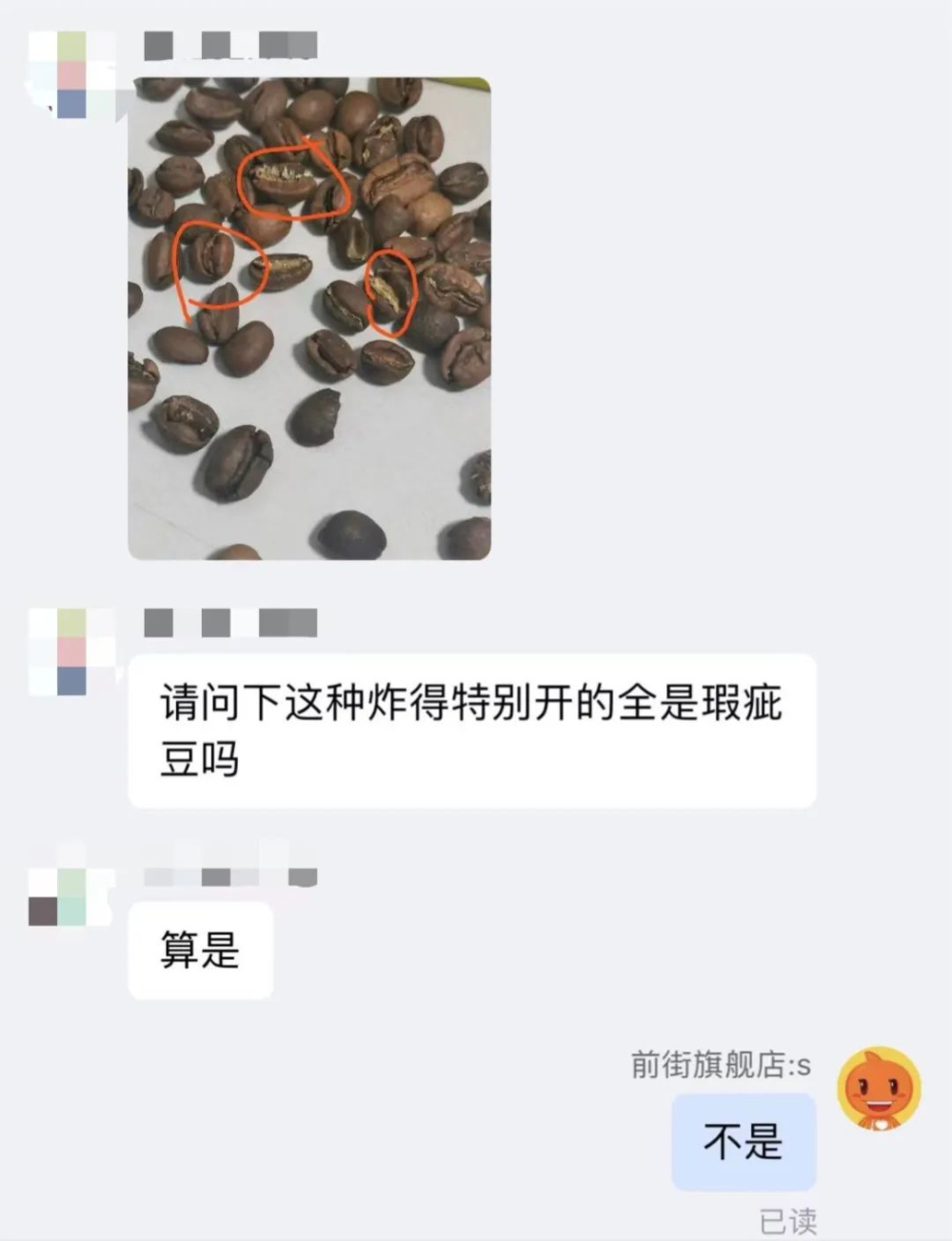
This widespread misunderstanding comes from two main causes. First, consumers who have only ever handled roasted beans rarely see real defective beans. Second, people treat coffee beans like products off an industrial assembly line, assuming there should be a rigidly formulaic standard for how they look.
With information so easy to spread today, a quick search turns up plenty on coffee defects: insect-damaged beans, moldy beans, shell beans, quaker beans (white-eyed beans). Although these sources often include example images, without ever seeing the physical beans the concepts stay abstract — people end up remembering only the names and their simple definitions.
Most defects show up at the green-bean stage. Many producing countries, for instance, have established grading systems specifying allowable defect amounts in green coffee. Take Ethiopia's G1 grade: in a 350g sample of green beans, no more than 3 defective beans are allowed — roughly 3 defects per 2,300 beans. Blue Mountain coffee, graded by bean size, has a defect-rate requirement of no more than 2%.
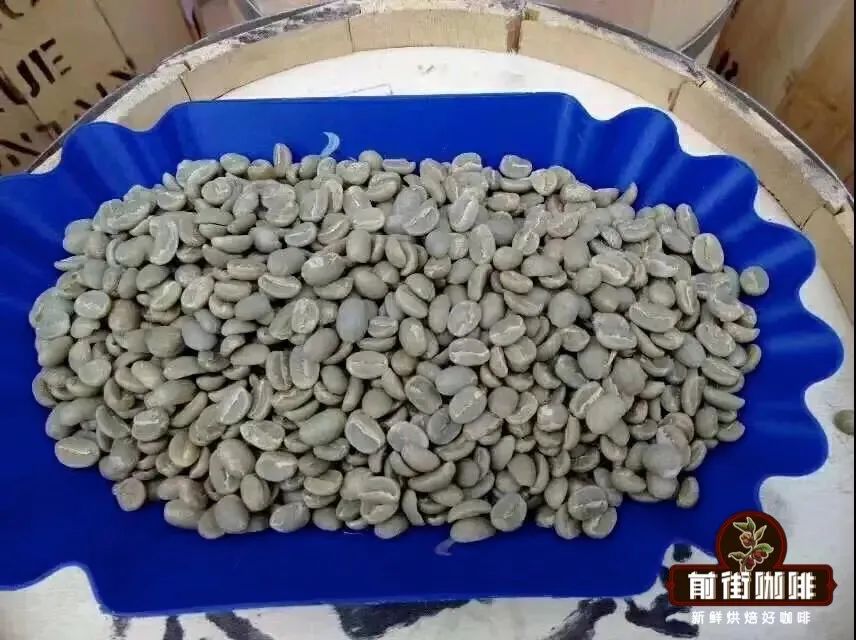
So the defective-bean proportion at the green stage is already very small. By the roasting stage, additional defects can appear, such as meteor crater beans on an over-roasted surface, or white-eyed beans that were hard to spot while green but turn much lighter in color after roasting. There are also false shell beans that look whole when green but split apart after roasting.
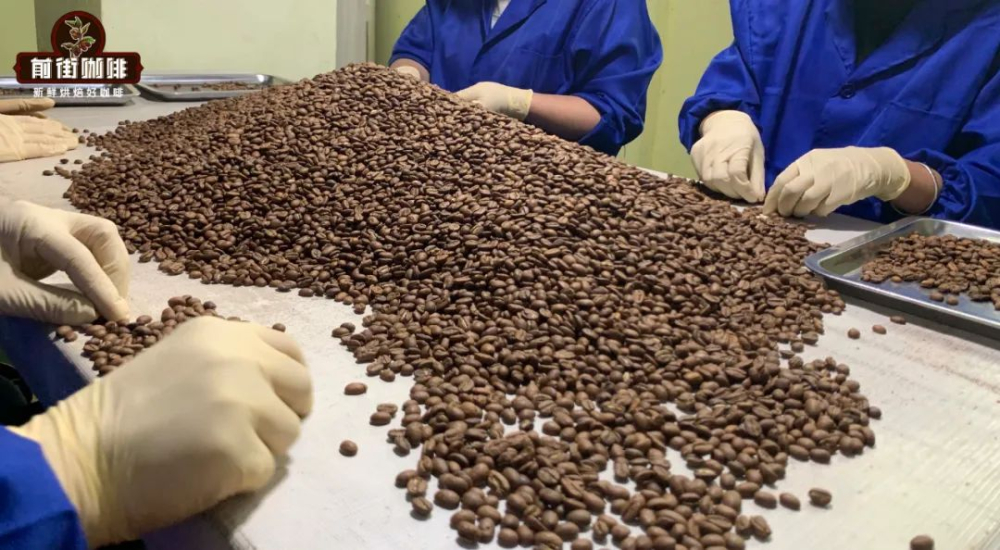
Facing all this, FrontStreet Coffee's practice is to hand-screen every batch of beans after roasting is complete, removing these defective beans. By the time coffee reaches end consumers, it's already hard to find what the industry considers a major defect. (One caveat: some minor defects may still exist, such as broken beans, because after roasting and packaging the coffee has to be transported before it reaches you, and collisions in transit can crack a small number of beans — though these won't significantly affect the flavor.)
Common Cases of Misidentification as Defective Beans
Below, FrontStreet Coffee shares some situations where consumers often mistake normal characteristics for defects.
Peaberries
Anyone who has bought a whole bag of peaberries (PB) might find the question odd. Still, it's common for people to pick peaberries out of a bag of flat beans and ask, "Is this a defective bean?"
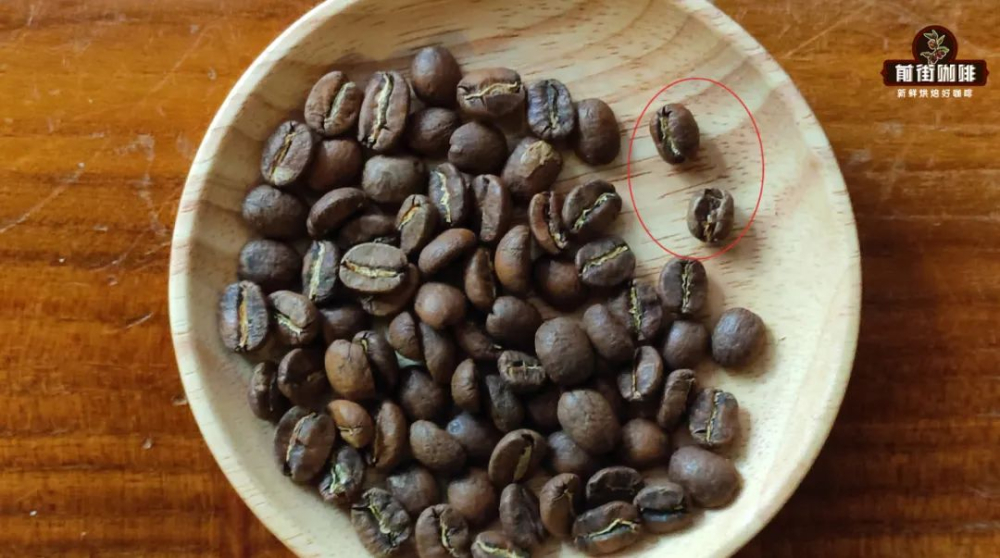
A normal coffee cherry contains two beans (seeds). One side of a flat bean is flat precisely because it originally formed as one of a pair filling a single fruit. Peaberries are special: environmental or genetic factors prevent one ovule inside the fruit from being pollinated, giving the other ovule double the space to develop, so the fruit ends up with only one bean.
So peaberries are not defective beans. Some producing countries (Kenya and Jamaica, for example) separate peaberries for individual sale, while most countries don't. Finding a few peaberries in a bag is completely normal.
Split Open Coffee Beans
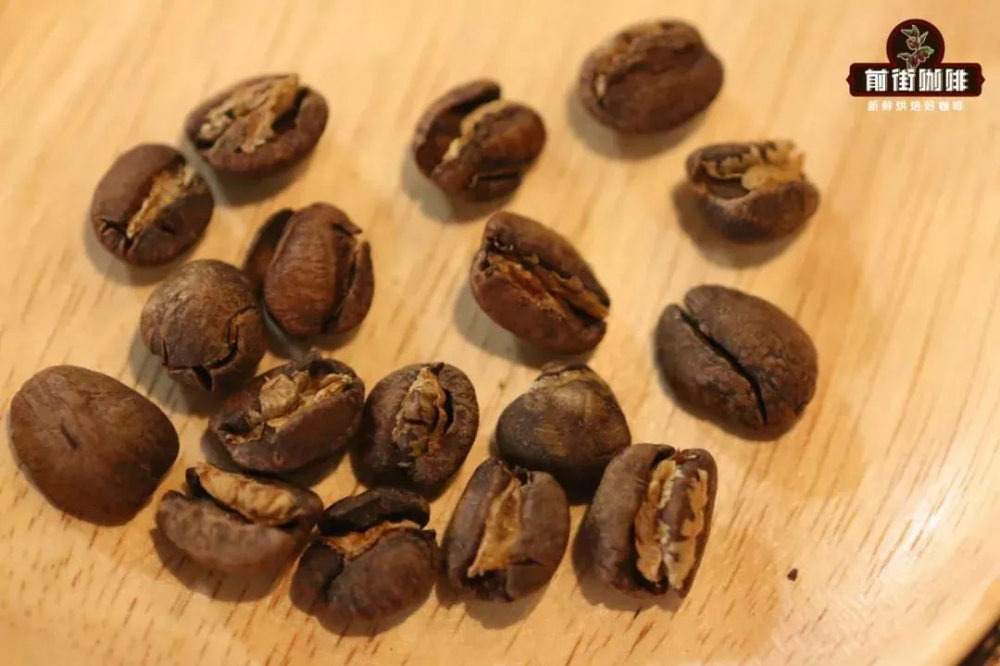
This was the issue raised by the friend at the start. Some beans have split open, looking incomplete and easily mistaken for defects. In fact, these are normal beans: they simply have high density, absorbing and storing more heat during roasting. When they hit first crack, the rupture is violent and they burst open. They may not look pretty, but they don't affect flavor — and may even make the coffee taste better.
Uneven Surface Color on Coffee Beans
Some friends see beans with uneven color, pick out the lighter ones, and ask, "Why are there so many quaker beans?"
First, let FrontStreet Coffee explain what quaker beans are. They're actually unripe coffee cherries that are hard to distinguish after processing and only reveal an obvious color difference after roasting.
Except for Brazil's highlands, which use large-scale mechanical harvesting, most regions still harvest by hand with small mechanical assistance. Today most high-quality coffee emphasizes picking only fully red cherries. That means finding a large number of quaker beans among roasted beans is a low-probability event.
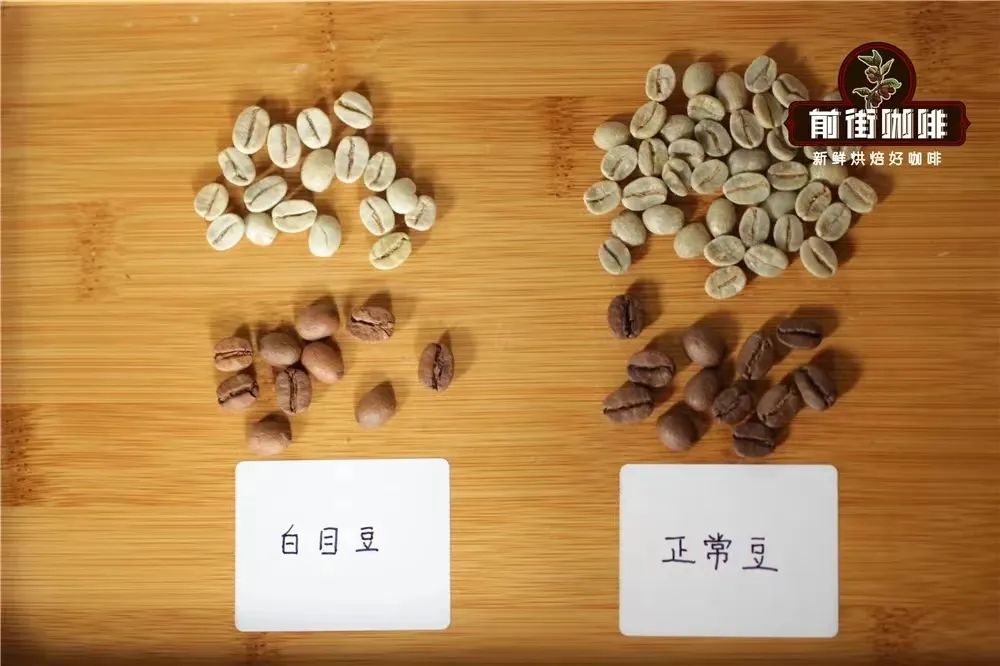
So what are these light-colored beans? FrontStreet Coffee has noticed that the people asking usually bought beans from Costa Rica or Colombia. Beans from these countries often undergo heavy fermentation such as honey processing or anaerobic processing, which leaves more sugar clinging to some beans' surfaces while others stay cleaner. Through the caramelization reaction during roasting, areas with more surface sugar darken while cleaner areas stay lighter, creating two distinct colors in a single batch.
Shriveled Beans with Black Spots and Stripes
Finally, there's a situation most people read as a defect: beans that look shriveled and dry, with many spots on the surface, nothing like the classic coffee-bean image.
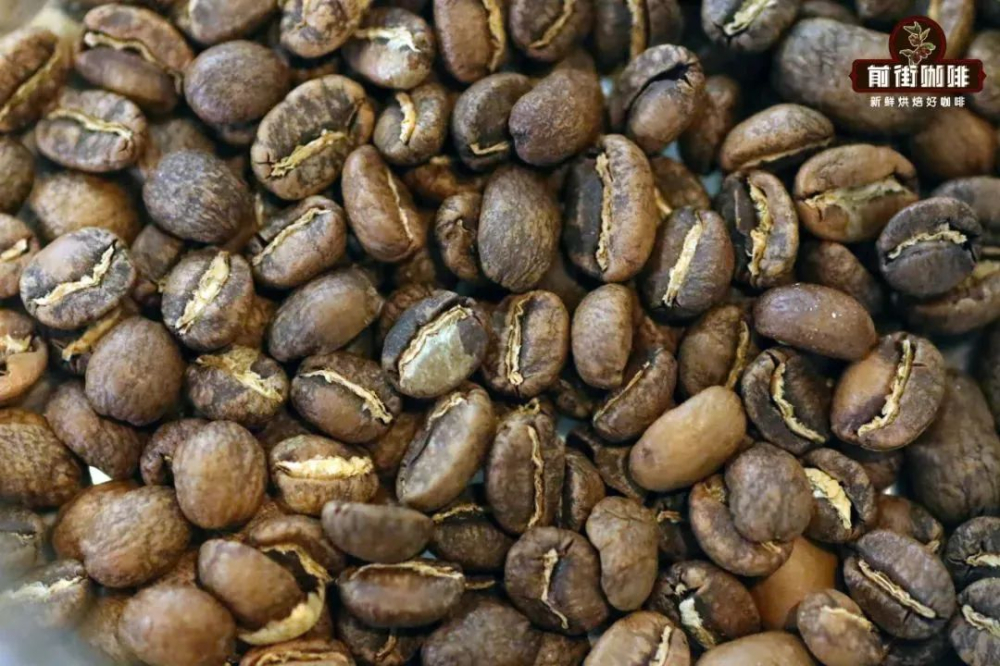
Unappealing as they look, these beans are delicious and definitely not defective. Beans showing this are typically high-altitude, light-roasted coffee. High-altitude beans are dense; during roasting, as moisture evaporates, they shrink and wrinkle. Because of the light roast, they leave the roaster before fully expanding, so the shriveled stripes from contraction remain and the surface looks dry.
Making the surface smooth is actually simple — just keep roasting so the beans absorb enough heat to expand. But the flavor will definitely be off.
FrontStreet Coffee Recommendation
Since defect rates are really a green-bean grading matter, it helps to buy from a lot where the grade itself guarantees cleanliness. Jamaica's Blue Mountain No. 1 is one such benchmark: the Coffee Industry Board, established in 1952, assesses bean size, defect rate, color, and uniformity, and the top grade must measure 17 mesh or larger with a defect rate below 3%. FrontStreet Coffee's Blue Mountain No. 1, from the historic Clifton estate, arrives with full origin certification and the wooden barrels that mark genuine Blue Mountain — so what you open is a hand-screened, evenly graded lot rather than a bag where you're left guessing.
FrontStreet Coffee roasts it medium-dark and rest it 4-7 days before brewing with a Kono dripper at 15g, a 1:15 ratio, 87-88°C water, and a grind around white-sugar coarseness. The cup shows clean dark chocolate, roasted hazelnut, cream, and brown sugar — a reminder that a well-graded bean needs no defect-hunting to taste right.
Important Notice :
FrontStreet Coffee is a long-established specialty coffee roaster in Guangzhou China, selling freshly roasted beans from its own farm in Yunnan as well as dozens of carefully selected single-origin beans from around the world for both pour-over and espresso. The products deliver consistently excellent quality and great value, with shipping within 24 hours. Guangzhou's FrontStreet Coffee shop is recommended by many coffee lovers, and the beans are now available online at the Tmall 。
FrontStreet Coffee has moved to a new address:
FrontStreet Coffee Address: 315,Donghua East Road,GuangZhou
Tel:020 38364473
 Scan and follow the En Gafei WeChat official account. Please indicate that the reprint comes from "En Gafei".

