
Beautiful Pour-Over Coffee Grounds Don't Always Mean Great Taste - How to Pour Water When Brewing Coffee
The "Deep Crater" Phenomenon in Pour-Over Coffee
Through conversations with customers, FrontStreet Coffee has noticed that many beginners fall into a kind of quiet reverence for coffee grounds that "bloom" dramatically and carve out a "deep crater" in the dripper. Here, FrontStreet Coffee breaks down what's actually behind that deep crater.
First, a summary of what these beginners read as a "deep crater":
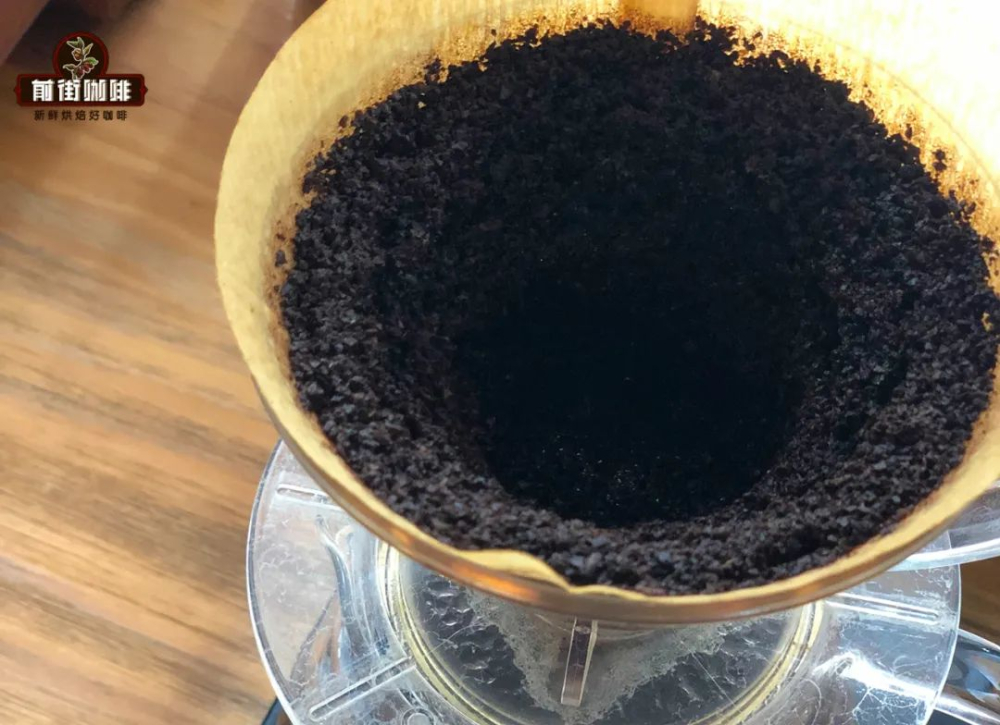
Producing a crater like this is not necessarily proof of superior technique. It really comes down to three things:
1. Using dark-roasted coffee beans
2. Pouring water in tight circles
3. Using a generous dose of coffee
The first point matters most. Some customers often tell FrontStreet Coffee, "The barista at that café built a crater that was tall and deep, but I can never reproduce it at home." Chances are, you watched someone brew with dark-roasted beans and then tried to copy it with much lighter beans.
The explanation lies in the density of the grounds. The darker the roast, the more the beans expand during roasting, which leaves them less dense and more porous. So during brewing, dark-roasted grounds swell far more dramatically—more of them float on the surface of the liquid, while comparatively fewer settle into the coffee bed at the bottom.
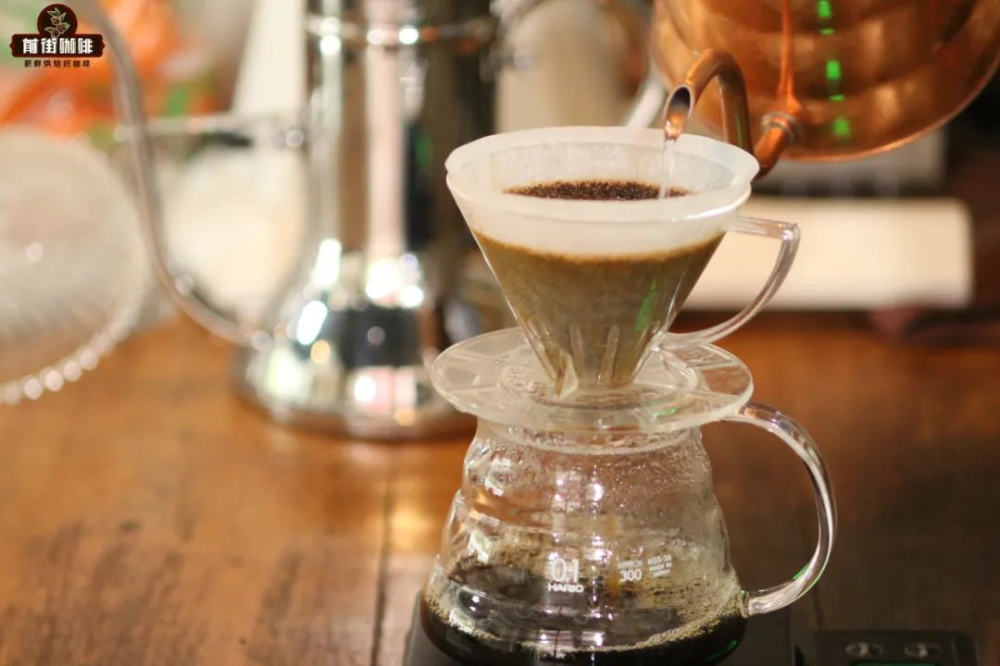
Light-roasted grounds are the opposite: denser, so they expand much less during brewing. Fewer grounds float; more of them sink and pack into the bed below.
If you watch the grounds layer as the brew drains, you'll see that once pouring stops and the water level falls, the floating grounds and foam gradually cling to the walls of the bed. That's why dark roasts tend to build thick side walls over a thin bottom layer—which is exactly what makes the crater look so impressively deep.
 10x speed
The second point is about how you pour. Pouring in small circles carves out a hollow in the center while leaving the surrounding walls intact. Pour in wide circles and you "shave down" those walls—the grounds washed off the sides end up filling the hollow in the middle, and the crater flattens out.
The third point is obvious once you think about it. Drippers are wider at the top and narrower at the bottom, so building deep walls takes enough grounds to form them in the first place. In a small cone, 15 grams of coffee will struggle to produce anything resembling a deep crater—generally you'll want 18 grams or more.
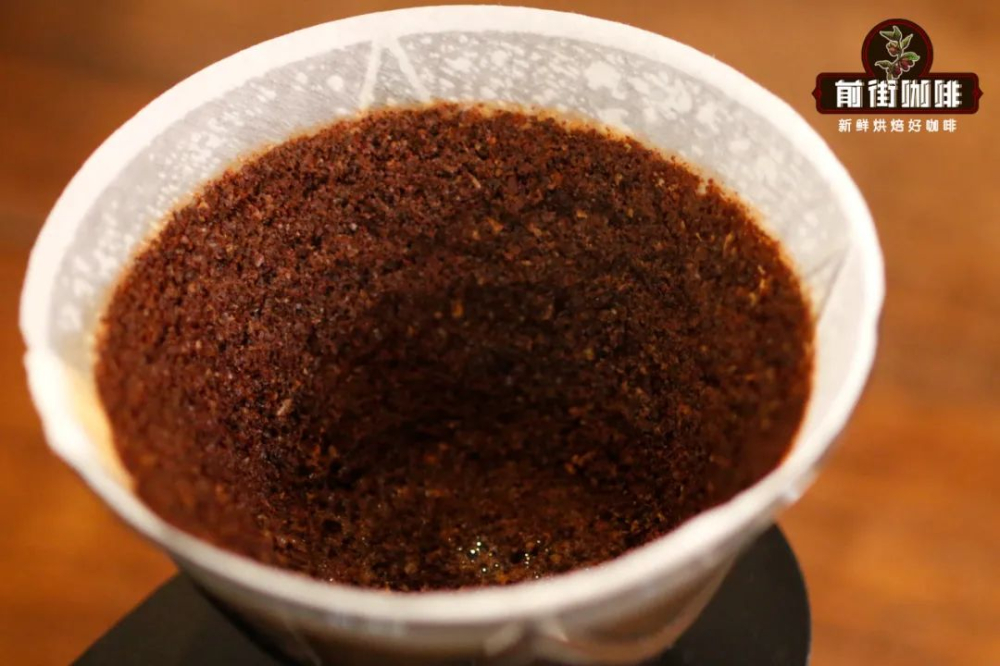
Now that we've covered how to "build a crater," the takeaway should be clear: a dramatic coffee bed doesn't mean your coffee tastes good. When we inspect the bed after brewing, it's mainly to spot evidence of sloppy technique. Pouring with circles that are too wide, for instance, can wash out the side walls, and uneven circular pouring can leave one side of the bed thin and the other thick. These faults are visible in the bed and can be corrected by watching for them.
The reverse doesn't hold, though: a neat, "textbook" crater doesn't prove your coffee is problem-free—it only proves the bed hasn't exposed any problems with your pouring.
So when you brew, don't obsess over the coffee bed. Put your attention where it belongs: on brewing logic and parameters.
FrontStreet Coffee Recommendation
A beautiful crater starts with beautiful beans, and no dripper suits expressive beans better than the Hario V60. Its 60-degree cone and single large outlet reward good technique with a faster, more three-dimensional extraction—which is exactly why floral, fruit-forward coffees shine in it. The FrontStreet washed Worka Gedeb from Yirgacheffe is a classic match: jasmine florals, bright citrus acidity, and berry tones come through with remarkable clarity, while a green-tea-like sweetness lingers at the finish.
For something juicier, try the FrontStreet natural Huakui from Ethiopia's Guji zone. Its tropical fruit character—strawberry, passion fruit, jackfruit, even lychee—pairs wonderfully with the V60's quick extraction, and its low bitterness makes it a favorite among drinkers who usually shy away from "acidic" coffees. If you prefer a fuller, more grounded cup instead, the FrontStreet PWN Golden Mandheling from Indonesia, wet-hulled in the traditional Sumatran style, delivers a thick, herbal, dark-chocolate body that the V60 can render with surprising sweetness and cleanliness.
On grind size, aim for something close to fine granulated sugar—about 80% passing through a #20 sieve—and start with water at 90–91°C using a 1:15 ratio. Pour in steady, small circles, keep an eye on the bed, and let the coffee—not the crater—be the judge.
Important Notice :
FrontStreet Coffee is a long-established specialty coffee roaster in Guangzhou China, selling freshly roasted beans from its own farm in Yunnan as well as dozens of carefully selected single-origin beans from around the world for both pour-over and espresso. The products deliver consistently excellent quality and great value, with shipping within 24 hours. Guangzhou's FrontStreet Coffee shop is recommended by many coffee lovers, and the beans are now available online at the Tmall 。
FrontStreet Coffee has moved to a new address:
FrontStreet Coffee Address: 315,Donghua East Road,GuangZhou
Tel:020 38364473
 Scan and follow the En Gafei WeChat official account. Please indicate that the reprint comes from "En Gafei".

