
Tims China Listed on NASDAQ! Raising Nearly $200 Million
Professional Coffee Knowledge Exchange
For more coffee bean information, please follow Coffee Workshop (WeChat public account: cafe_style)
For more specialty coffee beans, please add FrontStreet Coffee's private WeChat: qjcoffeex
Tims China: The First Coffee SPAC Listed on Nasdaq
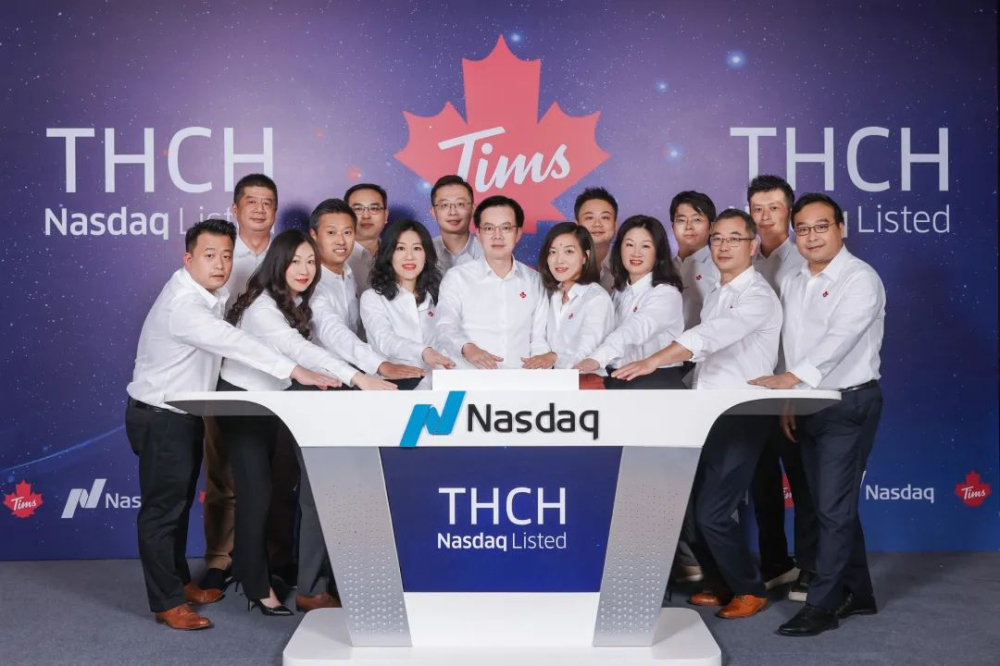
On September 29th, Tim Hortons' China business — "Tims China" for short — officially listed on Nasdaq, with total fundraising reaching nearly $200 million.
According to Tims China, on August 18th of this year the American special purpose acquisition company Silver Crest held a special shareholders' meeting approving the merger with Tims China. The merger's completion was announced on September 28th Eastern Time, and the very next day Tims China began trading on Nasdaq under the stock codes "THCH" and "THCHW," making it China's first coffee SPAC stock.
Understanding SPAC
What exactly is a SPAC? A Special Purpose Acquisition Company is a form of backdoor listing — with a twist. Unlike a traditional backdoor listing, a SPAC is a listing platform (a shell company) that holds nothing but cash: no actual business, no operating assets. Its purpose is to invest in and acquire a target company preparing to go public, letting that company achieve listing and financing quickly through merger with an already-listed SPAC.
After its IPO, a SPAC has up to 2 years to find a merger target. Once due diligence and financial audits are done on a candidate, the SPAC's shareholders vote on the deal. With approval from more than half, the SPAC proceeds with the merger and the combined company trades under a new stock code. If no suitable target is found within two years, the SPAC is liquidated and $10 is returned to investors.
Compared with a traditional IPO, the SPAC route promises faster timelines, lower costs, higher success rates, and simpler processes — genuine advantages for both investors and target companies. Naturally, it carries risks of its own.
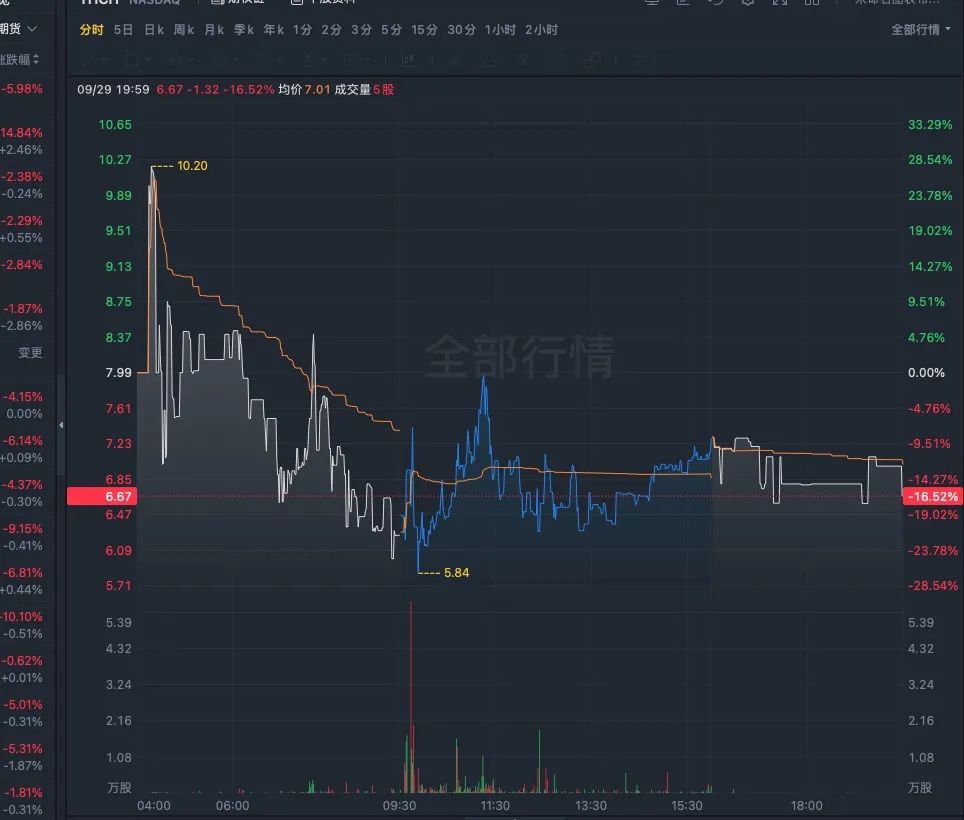
Investors can reach listing status at relatively low cost, but many SPACs are after the listing itself. Compared with traditionally listed companies, they often lack historical business accumulation and any considered development plan — and indeed, many SPAC-completed acquisitions of the past year or two have fizzled, quickly sliding back to their starting point.
The Tims China merger had its own drama. Roughly 99% of Silver Crest's shareholders initially chose to redeem their shares, totaling over $343 million. Shareholders were allowed to withdraw their redemption decisions before August 29th, and the final redemption ratio came in at 96%, totaling $331 million.
Meanwhile, Tims China's PIPE financing (Private Investment in Public Equity — funds buying listed shares at a discount) was expected to satisfy the transaction's $175 million minimum cash condition. Tims China also struck a separate agreement with an investor to purchase up to $100 million of the company's shares within three years after the SPAC merger.
Choosing the "SPAC+PIPE" path hints, perhaps not subtly, at how badly Tims China wanted to list. After an equity financing round in March of this year, the company even cut its "entry" valuation by nearly $300 million to get the deal done.
Tims China's Development Strategy
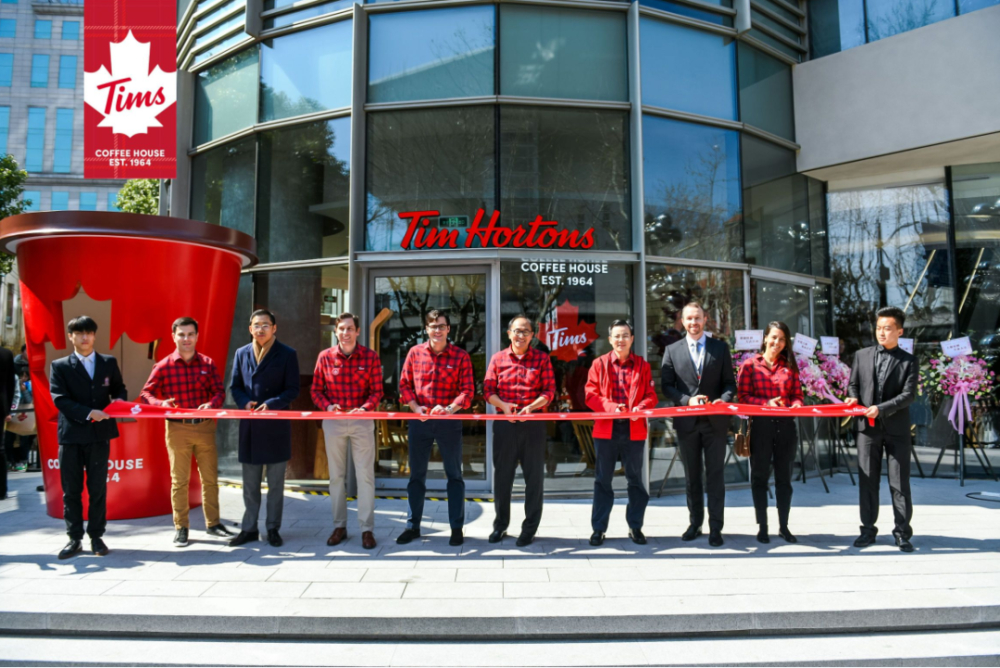
As for the brand itself: Tim Hortons is a legendary North American coffee chain, and its parent company RBI jointly founded Tims China with Cartesian Capital in 2018, opening the first Chinese store at Shanghai's People's Square in February of the following year.
The original ambition when entering China was 1,500 stores within 10 years. But Tims China CEO Lu Yongchen said in a recent interview with "Chinese Entrepreneur" that the plan has since been revised upward — "increase to 2,750 stores by 2026." Tims currently operates 400+ stores in China, and under the latest plan its opening pace will hit one store every 36 hours.
Growth, however, has come at a price — Tims' situation mirrors early Luckin Coffee: the more it expands, the more it loses. Per Silver Crest's data, Tims China's revenues for 2019 through 2021 were 57.257 million yuan, 210 million yuan, and 640 million yuan, generated mainly from "self-operated store product sales," "franchise fees," "other franchise businesses," and "e-commerce businesses."
2021 was Tims China's fastest-growing year, and its net losses multiplied right alongside. In its three years in China, total losses exceeded 600 million yuan, attributed mainly to the pandemic and rising raw material costs.
On the product side, Tims China follows a "coffee + dessert + light food" formula — regular espresso-based drinks, donuts, toasted sandwiches — priced in the 15–30 yuan range, slotting itself between Starbucks and specialty coffee. To win over younger consumers, it has leaned into themed scenarios in recent years, from e-sports themed stores to "The King's Avatar" themed stores.
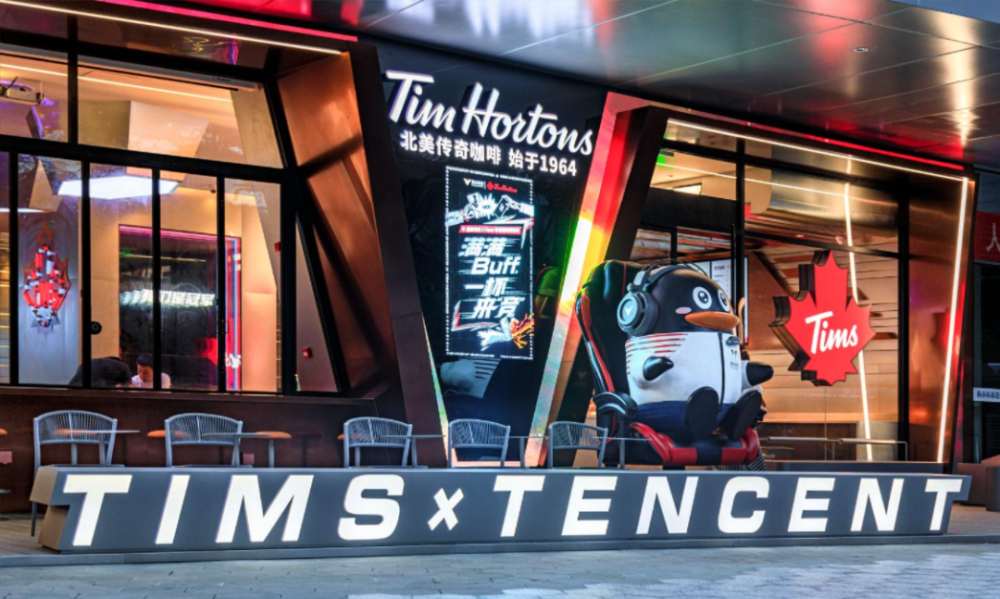
Site selection follows Starbucks deliberately, aiming to catch coffee consumers whose needs the nearby Starbucks doesn't quite meet. In look and feel, Tims is brighter and more energetic than Starbucks, cultivating a cozier third space.
There is a structural tension, though. Tim Hortons in Canada is positioned as affordable grab-and-go; that same pricing in China reads as somewhat premium, and could become a competitive bottleneck. Even so, Tims China has not paused its expansion while the losses pile up.
CEO Lu Yongchen explained in recent media interviews that the company uses multiple formats and scales to increase density and convenience, applies advanced analytics to site selection to improve store economics, and covers more coffee scenarios to build brand awareness. At the same time, the "coffee + warm food" product strategy is designed to meet differentiated user needs — particularly the desire for high-quality, cost-effective products.
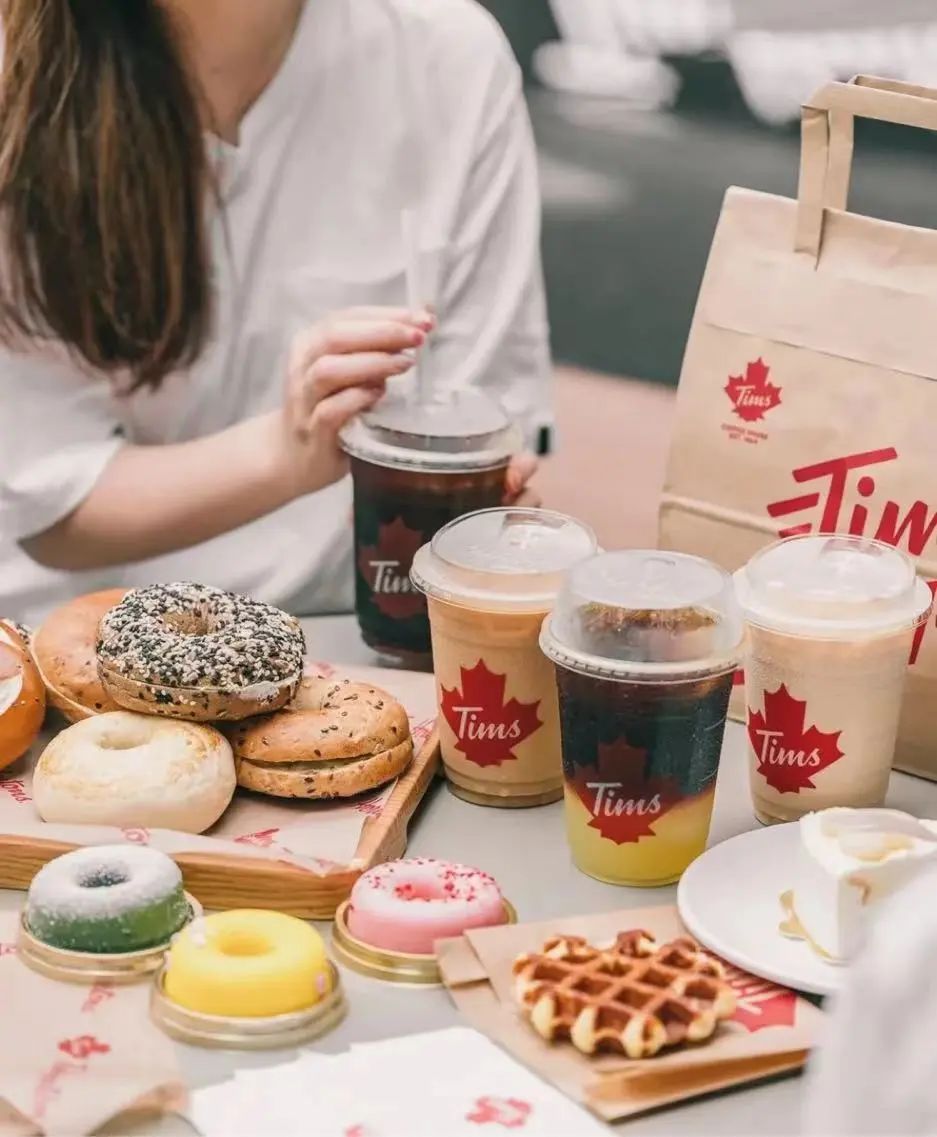
The strategy amounts to splitting the difference: Luckin and Manner offer cost-effective coffee but nowhere to sit; Starbucks offers coffee, light food, and space — at a steep price. Tims is betting there's a middle ground.
Through this blend of scenarios and product strategies, Tims hopes to serve both the grab-and-go crowd and the third-space crowd, giving the general public one more doorway into coffee.
Future Outlook
Bearing the title of "China's First Coffee SPAC Stock," will Tims China live up to the "North American Legend" brand name? We'll be watching.
Image source: Internet
FrontStreet Coffee Recommendation
Chain Coffee Is Everywhere — Brew Something Special at Home
With chains opening one store every 36 hours, affordable coffee is easy to find. But if you want your home brew to be more interesting than the average 15-yuan latte, FrontStreet Coffee's entry-level bean list is a good shopping route. Start with Ethiopia, coffee's birthplace and Africa's largest producer: the natural-processed FrontStreet Guizi (berries, florals, jackfruit, melon, honey) and the washed Yirgacheffe Guodingding Cooperative lot (jasmine, lemon acidity, berry tones) define what light-roast African coffee tastes like.
For a smooth, balanced daily cup, Brazil is the value king: FrontStreet Cerrado Red Bourbon offers cream, peanut, and cocoa in an affordable daily-drinker, while the higher-elevation Queen Estate Yellow Bourbon adds sugarcane sweetness to its compound nut aromas — superb black or with milk. Prefer zero acidity and a heavy body? The wet-hulled FrontStreet Mandheling is richer and smoother with herbal and spice notes, and the triple-hand-sorted PWN Golden Mandheling delivers the cleanest version, with distinct woody aroma and caramel sweetness.
And for those who want something genuinely premium without the estate-lot price, the entry-level FrontStreet Boquete washed Geisha from Panama's most representative specialty region offers pure-varietal Geisha with its clear orange-blossom honeyed character, brewable by any method you like. China's own beans deserve a spot too: the washed FrontStreet Yunnan Small Beans from Baoshan (nuts, chocolate, soft and balanced) and the 1,300-meter 2013 Yunnan Typica (hazelnut, dried apricot, black tea, caramel, ripe plum) prove that domestic specialty coffee has truly arrived.
Important Notice :
FrontStreet Coffee is a long-established specialty coffee roaster in Guangzhou China, selling freshly roasted beans from its own farm in Yunnan as well as dozens of carefully selected single-origin beans from around the world for both pour-over and espresso. The products deliver consistently excellent quality and great value, with shipping within 24 hours. Guangzhou's FrontStreet Coffee shop is recommended by many coffee lovers, and the beans are now available online at the Tmall 。
FrontStreet Coffee has moved to a new address:
FrontStreet Coffee Address: 315,Donghua East Road,GuangZhou
Tel:020 38364473
 Scan and follow the En Gafei WeChat official account. Please indicate that the reprint comes from "En Gafei".

