
What Causes Water Accumulation in the Portafilter Basket After Espresso Extraction and How to Solve It
A friend with an espresso machine wrote to FrontStreet Coffee about something he had run into at home: after pulling a shot, he would remove the portafilter and find water pooling in the filter basket, with the puck not intact but soggy. "At first I assumed the grind was too fine," he said, "so I moved the grinder a step coarser, and there is still water pooling. I am stumped."
A properly extracted espresso puck should come out fairly dry and hold together as a firm, rounded cake. When it instead looks wet and mushy, or when water actually pools on the surface, something in the process is out of balance and worth tracking down.

Coffee Grounds Too Fine
Like the friend above, most people suspect the grind first. When the grind is too fine, water passes through the coffee bed more slowly, and by the end of the shot some water has simply not had time to clear the puck. What is left behind keeps the puck muddy and sodden, and in severe cases it pools outright.
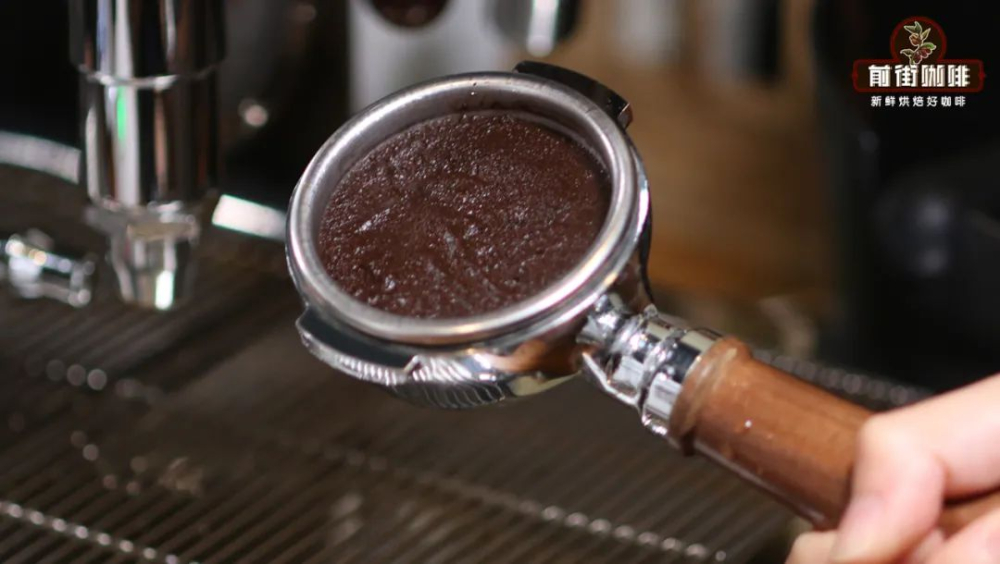
Fortunately, a too-fine grind is usually easy to diagnose, because it also slows the flow of the shot and stretches out the extraction time. That makes this cause simple to rule in or out.
Stale Coffee Beans
There is one situation, though, in which a too-fine grind is hard to spot: when the beans are no longer fresh. This is common among home brewers who drink relatively little coffee. A bag of espresso beans stretched over a month steadily loses its carbon dioxide.
Carbon dioxide matters because it makes the puck swell when hot water first hits it, so the grounds expand and fill the gaps between particles. Beans with little or no gas left do not swell, and at the same grind setting the shot runs faster. To bring the extraction time back, you grind finer, and in doing so you can easily go too fine, which is what produces the pooling.
Puck Too Far From the Shower Screen
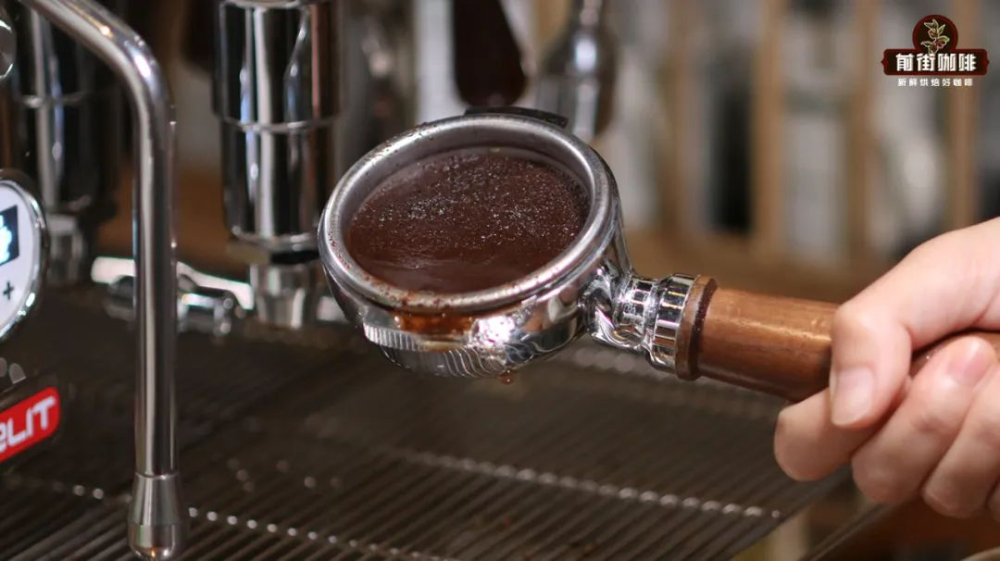
It helps to picture what happens during extraction. Press the button and the group head releases water at 9 bar. After passing through the shower screen, that water breaks into several streams that extract the puck evenly. When the shot ends, the pressure-relief valve opens, and the resulting backpressure draws the excess water back out of the puck and through the valve.
Filter baskets are sized for different doses of coffee. Too much coffee and the puck presses against the shower screen; too little and it sits well below it. When the gap between the top of the coffee and the shower screen is too large, some water is not pulled back by the backpressure, and it stays in the basket as a pool.
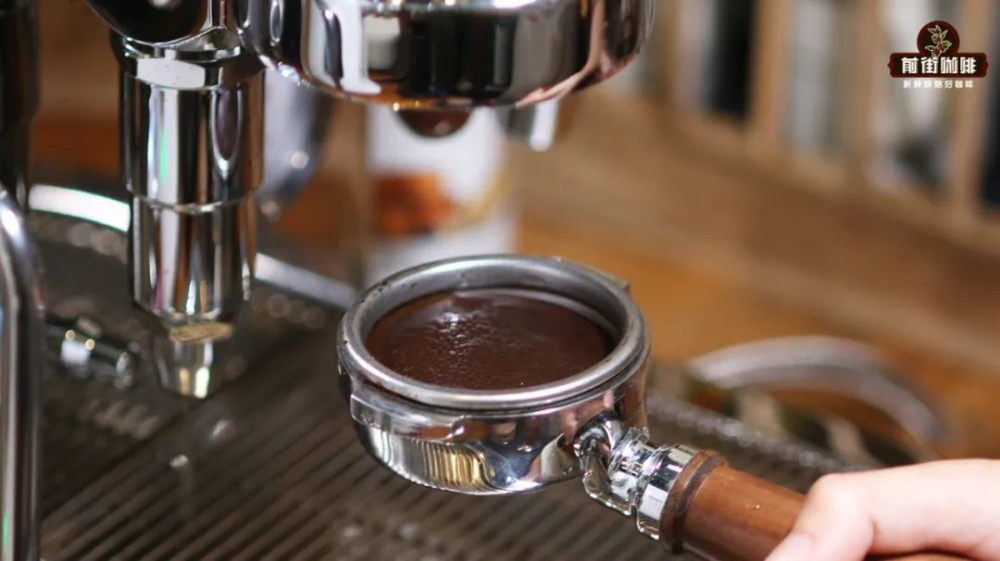
To judge whether your dose is right, tamp the coffee firmly and see where the surface lands relative to the fill line. If it sits well below the line, you are under-dosing; if it rides above the line, you are using too much.
Insufficient Pressure
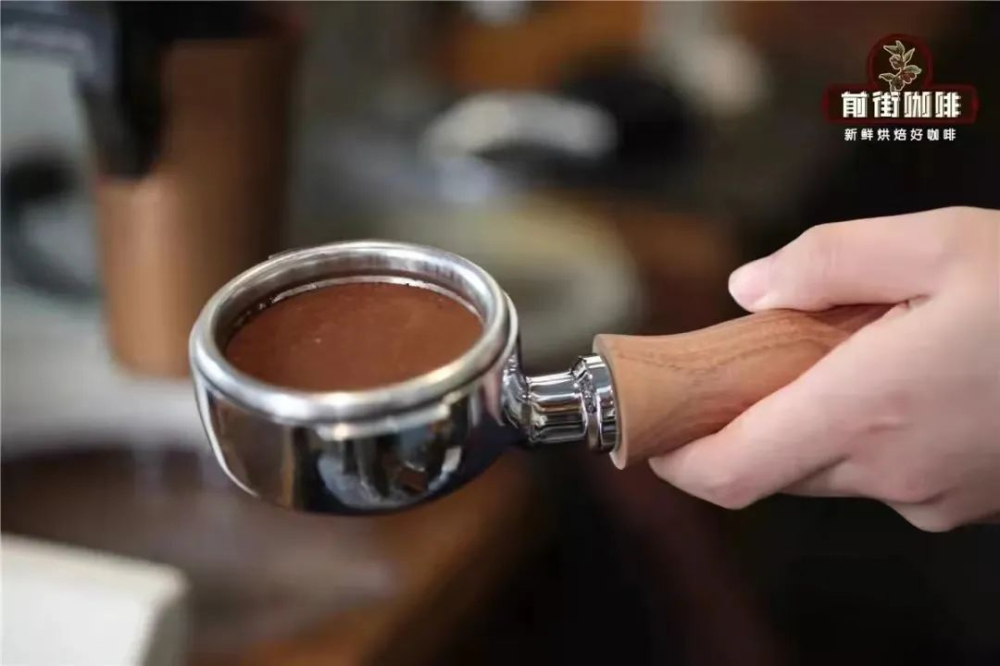
This last cause is more common on home machines whose extraction pressure is not especially stable. The machine may hold pressure well early in the shot and then fall off toward the end. When the pressure drops, so does the backpressure during the final phase, and water is left behind in the basket.
FrontStreet Coffee Recommendation
If water pooling has you rethinking your setup, it is worth starting with a bean that behaves predictably on a home machine. FrontStreet Classic Blend is built specifically for espresso and moka pot brewing, and its standout quality is the crema: even a beginner with a modest home machine can pull a dense, fine-textured shot. It follows the traditional Mamba blend recipe, rich and mellow enough for newcomers and seasoned drinkers alike, which makes it the safest all-round choice for home or cafe. FrontStreet Commercial Blend fills a similar role at a friendlier price, tuned for flavor and cost control, while FrontStreet Specialty Blend, FrontStreet's longest-serving house espresso, in service for nearly a decade, pairs Brazil Cerrado with Colombia Huila for the familiar classic Italian profile.
For a nuttier, more chocolate-forward cup, FrontStreet Specialty Blend and FrontStreet Black Cocoa Blend lean heavily on Brazilian coffee, giving a comfortable bittersweet note and a creamy peanut aroma with a very smooth entry. FrontStreet Black Cocoa Blend uses 100% Arabica beans, adds the ripe-plum acidity of Yunnan coffee, and releases a creamy chocolate fragrance when ground. Balanced and highly adaptable, it works for lattes, Americanos, and flavored espresso drinks, which makes it a strong choice for a cafe.
If you would rather chase a single origin, FrontStreet offers several SOE-ready options. FrontStreet Sun-Dried Huakui SOE comes from Hambela in Guji, Ethiopia, grown at altitudes up to 2,300 m and roasted medium to keep its creamy strawberry, cocoa, and berry notes. FrontStreet Costa Rica Blackberry SOE is a honey-processed single origin prized for its high sweetness, crisp and refreshing as an Americano and full of cranberry-cookie, raisin, and nut flavors with milk. FrontStreet Brazil Queen Farm SOE, a Yellow Bourbon roasted medium-dark, brings butter cookie, macadamia, and toasted bread notes with low acidity and a gentle, stable profile.
Important Notice :
FrontStreet Coffee is a long-established specialty coffee roaster in Guangzhou China, selling freshly roasted beans from its own farm in Yunnan as well as dozens of carefully selected single-origin beans from around the world for both pour-over and espresso. The products deliver consistently excellent quality and great value, with shipping within 24 hours. Guangzhou's FrontStreet Coffee shop is recommended by many coffee lovers, and the beans are now available online at the Tmall 。
FrontStreet Coffee has moved to a new address:
FrontStreet Coffee Address: 315,Donghua East Road,GuangZhou
Tel:020 38364473
 Scan and follow the En Gafei WeChat official account. Please indicate that the reprint comes from "En Gafei".

