
What Are the Effects of Coffee Beans That Are Too Fresh? What Causes Throat Discomfort in Pour-Over Coffee?

We all know that coffee brewed from overly fresh beans never quite delivers its best flavor. The usual symptoms: weak coffee character, a thin mouthfeel, and an uncomfortable dryness in the throat. That's why seasoned coffee lovers check the roast date the moment their beans arrive — and if the roast is recent, they set the bag aside for several days to rest before brewing. This simple patience yields coffee with far more developed flavor.

Still, some of us simply can't resist ripping open a fresh bag and brewing a cup on the spot. So what can be done to soften the undesirable flavors of beans that are too fresh?
Why Are Overly Fresh Coffee Beans Less Enjoyable?
Start with flavor. Coffee brewed from overly fresh beans tends to taste weak and can show astringency. The aroma and flavor are technically there, but they come across noticeably flatter than a properly rested coffee of similar quality. The culprit is the excess carbon dioxide trapped inside the beans, which interferes with the release of flavor compounds during brewing.

Right after roasting, beans hold a large reserve of carbon dioxide. When hot water first hits the grounds, that gas must be expelled in an orderly way to make room for water to penetrate and extract flavor. If it isn't, the escaping CO2 keeps forming bubbles that block soluble compounds from dissolving properly. The result is coffee with a thin body, watery texture, and muted aroma. This is exactly why blooming matters: it isn't just about venting carbon dioxide first, but also about "waking up" the coffee's soluble compounds so the main extraction that follows can do its job properly.
As for that dry, irritating scratch in the throat after drinking, that comes from residual roast flavors — smoky, harsh notes left by high-temperature roasting. Only time can clear them away. Typically, after the fourth day post-roast, the throat discomfort becomes much less noticeable.

How to Handle Overly Fresh Coffee Beans?
Certain brewing adjustments can improve how overly fresh beans present themselves. But a special reminder from FrontStreet Coffee: no brewing technique can completely solve the problem — these methods only mitigate the impact of excess freshness during the brew itself. For the best experience, seal the bag and rest the beans for 4-7 days, counting from the roast date.
If you do decide to brew beans that are too fresh, FrontStreet Coffee suggests a few techniques:
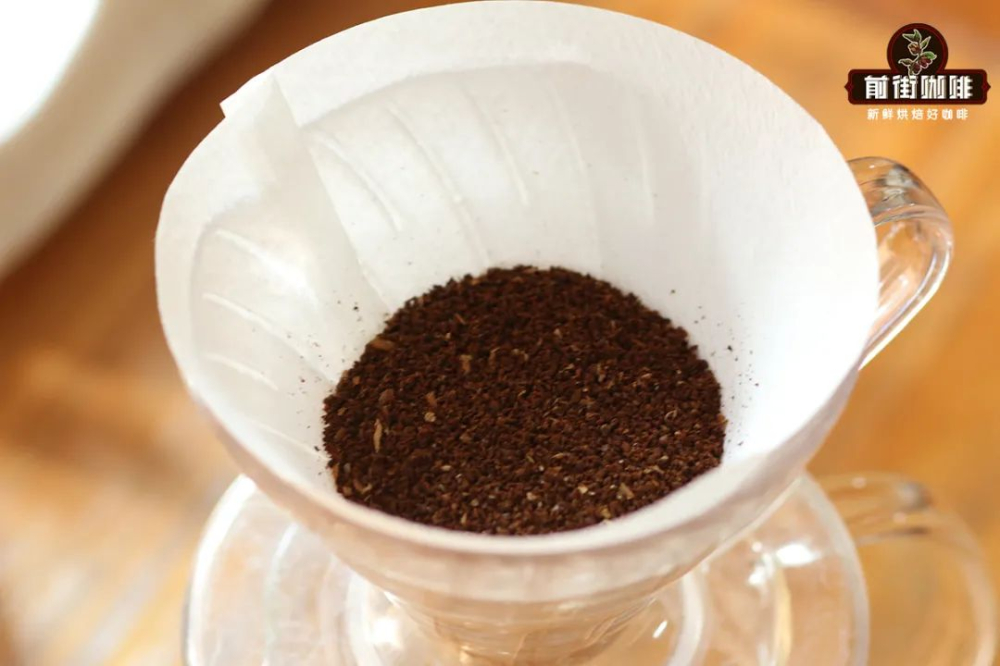
Let Ground Coffee Rest for 2 Minutes Before Adding Water
We all know that once beans are ground, aromatic compounds dissipate rapidly. With overly fresh beans, however, the excess carbon dioxide actually suppresses that dissipation — and grinding accelerates the release of trapped gas. Give the grounds a couple of minutes to off-gas before you start pouring.
Extend the Blooming Time
With very fresh beans, a standard bloom may not vent the gas completely, leaving CO2 trapped in the grounds. During the subsequent pours, bubbles will keep surging up through the coffee bed and disturb extraction. The fix: extend the bloom to give the carbon dioxide enough time to escape.
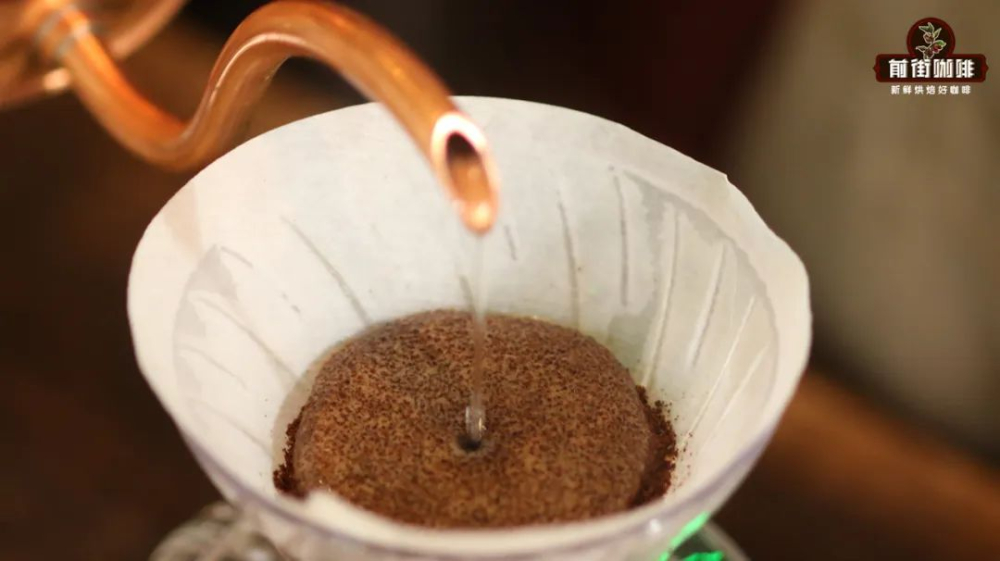
For instance, our standard blooming time is 30 seconds, but with relatively fresh coffee we stretch it to 35-40 seconds. Watch the bloom itself to judge: if the coffee bed is still swelling and releasing gas, CO2 is still escaping. If the bloom sits motionless for more than 3 seconds, most of the gas has already been released.
Use Stirring to Accelerate Gas Release
After the blooming pour, gently stir the coffee bed with a spoon or a wooden stick. The mechanical agitation helps the grounds saturate more thoroughly, speeding up the escape of gas.

The typical routine: pour quickly with three times the water (no need for precision here), then stir the coffee bed briskly with a spoon.
FrontStreet Coffee Recommendation
Once your beans have properly rested, a V60 dripper is a great way to show them off. Ask any experienced pour-over lover to recommend a practical, easy-to-use, good-looking dripper, and the odds are high they'll point you to the V60. It was designed by Hario, a renowned Japanese glassware maker founded in 1921 in Tokyo that originally built heatproof glass instruments for research institutions. In 2004, Hario redesigned the V60's prototype into the form we know today, named for its distinctive 60° cone angle and "V" shape, and released it to market a year later.
The conical 60° geometry channels water toward the center before it drips through, extending water-to-coffee contact for fuller aroma and flavor extraction, while the signature single large hole lets flow rate depend almost entirely on your pour control. Fast extraction like this brings out layered aromatics and lively acidity — which is why floral-and-fruity coffees shine in a V60.
Excellent candidates include the FrontStreet Yirgacheffe Guodingding from Ethiopia, with its bright citrus, berries, florals, and a green-tea-like sweetness; the FrontStreet Ethiopia Huakui (Aricha), one of the most successful specialty stars in recent years, bursting with tropical fruit — strawberry, passion fruit, jackfruit, even lychee — with pronounced sweetness and almost no bitterness; and the FrontStreet Kenya Cherry Tomato, a washed Kenyan from the Thika growing region at 1550-1750 meters, built on the classic SL28 and SL34 varieties and given Kenya's characteristic 72-hour double-washed fermentation, delivering vivid cherry tomato and dried plum acidity with full, juice-like body.
For those who prefer low acidity and rich body instead, the FrontStreet PWN Golden Mandheling from Indonesia offers herbal and dark chocolate depth with a faint earthy note, while the FrontStreet Brazil Fazenda Rainha balances low acidity with nutty, cocoa, and caramel sweetness — an equally fine choice for pour-over, espresso, or a moka pot.
Important Notice :
FrontStreet Coffee is a long-established specialty coffee roaster in Guangzhou China, selling freshly roasted beans from its own farm in Yunnan as well as dozens of carefully selected single-origin beans from around the world for both pour-over and espresso. The products deliver consistently excellent quality and great value, with shipping within 24 hours. Guangzhou's FrontStreet Coffee shop is recommended by many coffee lovers, and the beans are now available online at the Tmall 。
FrontStreet Coffee has moved to a new address:
FrontStreet Coffee Address: 315,Donghua East Road,GuangZhou
Tel:020 38364473
 Scan and follow the En Gafei WeChat official account. Please indicate that the reprint comes from "En Gafei".

