How to Brew Coffee with a Flat-Bottom Dripper? Characteristics of Pour-Over Coffee with Flat-Bottom Filters
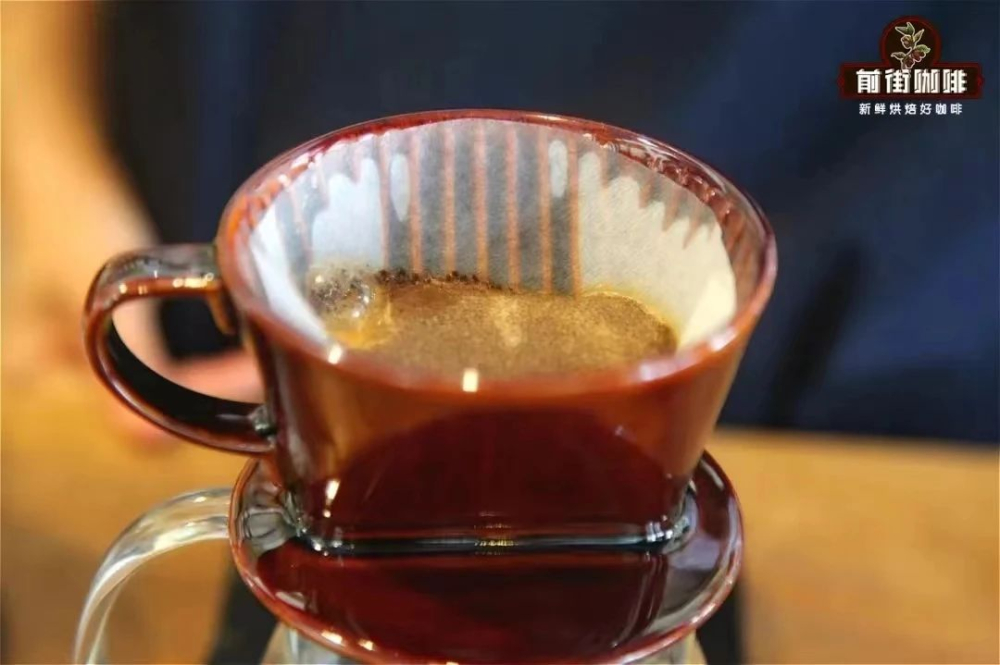
Understanding Even Extraction in Pour-Over Coffee
Even extraction is crucial in pour-over brewing. Whether we think about equipment or technique, we are always trying to coax a uniform extraction from the coffee grounds. When FrontStreet Coffee discusses why most people now reach for conical drippers, one reason is that they distribute water better and therefore extract more evenly.
The flat-bottom dripper, which arrived a little later than the conical style, also claims to deliver even extraction. So how well does it actually work?
The Origins of Flat-Bottom Drippers
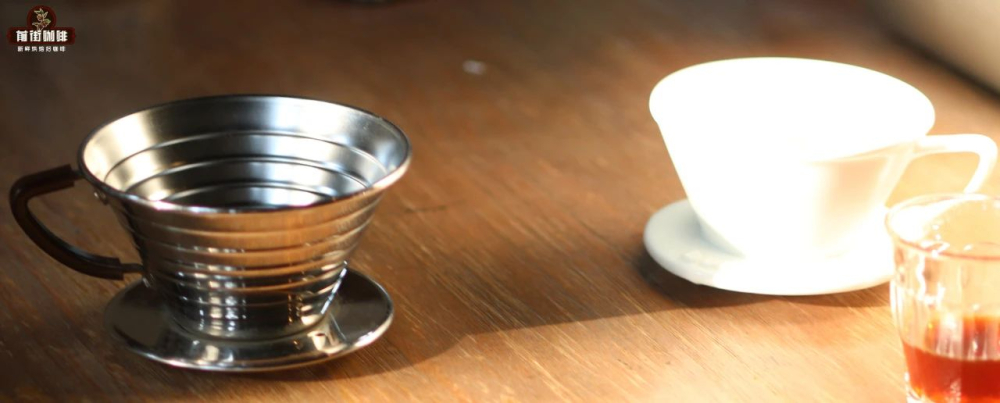
The first company to design a flat-bottom dripper was Kalita, the same company that popularized wedge-shaped drippers. After the V60 became a runaway hit, it likely needed to introduce a more competitive dripper. In 2010, Kalita launched the Wave series, built around this flat-bottomed, round dripper. Because its special filter paper resembles the shape of a paper cupcake, this style is also known as the "cake dripper." Considering the naming of the Wave series and its unified look, it was probably positioned to compete with a rival's Cloud series.
Either way, the Kalita Wave pioneered the flat-bottom category, and other brands such as B and Blue Bottle later introduced their own flat-bottom drippers.
How Flat-Bottom Drippers Achieve Even Extraction
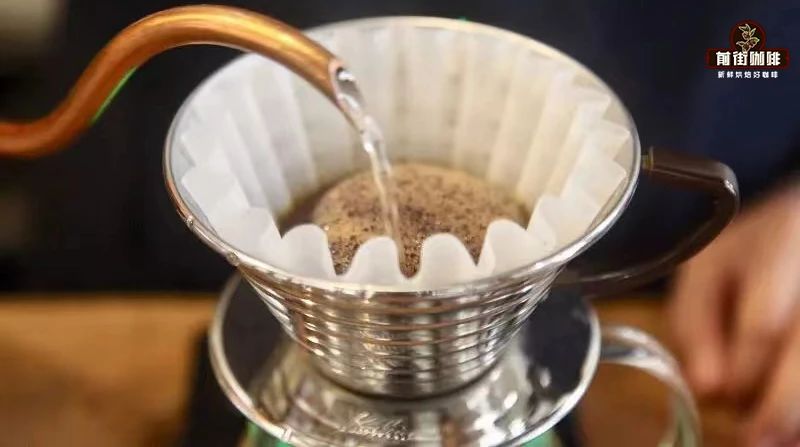
First, a word on how drippers help achieve even extraction. FrontStreet Coffee must reiterate that no method can guarantee every single particle of coffee extracts exactly the same amount of material. The "even extraction" we talk about here is not absolute uniformity but a relative comparison. When FrontStreet Coffee previously discussed the V60 dripper, for instance, we compared it with wedge-shaped drippers. Seen from above, the circular opening of the V60 makes even water distribution easier, so extraction is more even than in drippers that struggle with uniform flow.
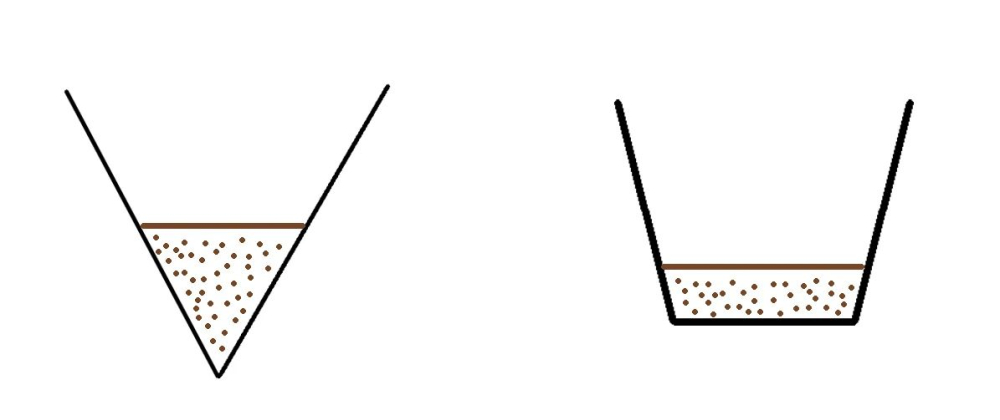
Flat-bottom drippers keep that same circular opening, making them comparable to conical drippers in water distribution. Their advantage lies in the coffee bed thickness. Shift your view to the side and a conical dripper has a pointed bottom that widens toward the top, producing a thick bed that is not consistent from point to point, thickest at the center and thinnest at the edges. That can create significant differences in extraction rate between the coffee at the top and the coffee lower down. With a flat bottom and the same dose of coffee, the bed is thinner and more uniform, so with even water distribution the extraction across the bed becomes far more consistent.
Flavor Profiles: Conical vs. Flat-Bottom
Under normal circumstances, conical drippers led by the V60 produce coffee with rich aromas that emphasize sweet-and-sour fruit notes and clear layers. Flat-bottom drippers focus on a balanced mouthfeel and highlighting sweetness.
Design Variations in Flat-Bottom Drippers
Even among flat-bottom drippers, design differences affect the final flavor. FrontStreet Coffee will explain this through two aspects: the bottom design and the rib design of the dripper body. Flat-bottom drippers usually have drainage holes and "paper supports" at the bottom. The drainage uses several small holes, and drainage speed depends on their distribution and total area. A larger total hole area drains faster, as in recently introduced hollow-bottom designs, which essentially provide a large drainage area.
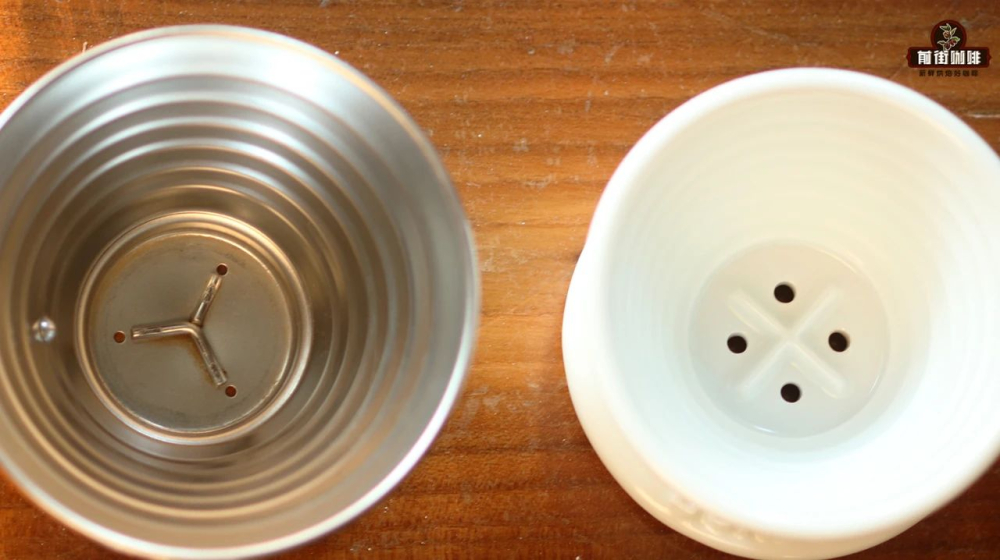
Beyond the drainage holes, the bottom also has raised frameworks to support the filter paper. If the bottom were smooth and the paper adhered completely to it, water would struggle to flow down. Leaving some space between the paper and the dripper keeps drainage moving smoothly.
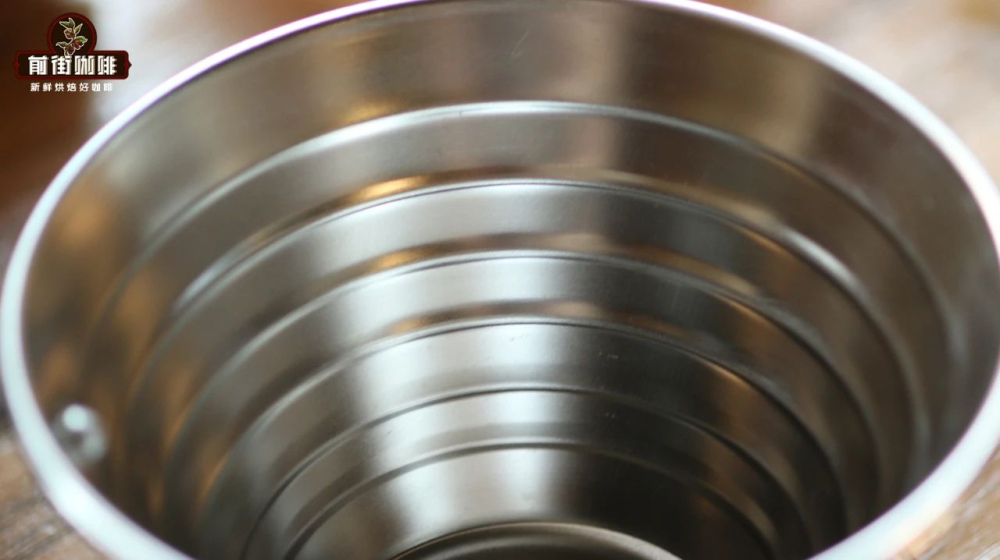
The rib design of the dripper body falls into two categories: water-retaining and water-channeling. The horizontally distributed circular ribs of the Wave dripper, for example, slow the water down and keep the water surface level. Their ring-like structure lets water at higher points flow along the ring to lower positions on the other side, producing a balancing effect.
The other type features vertical ribs similar to those on a conical dripper, which guide and channel the water flow to prevent blockages and accumulation during extraction.
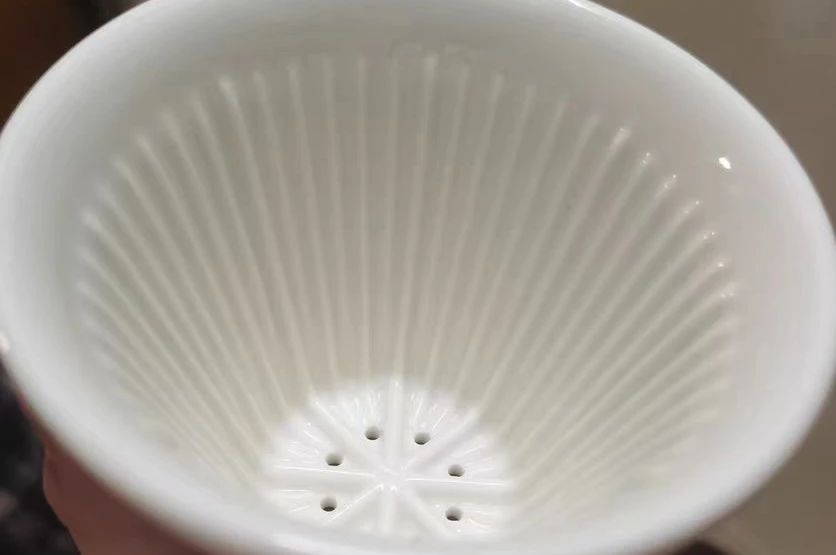
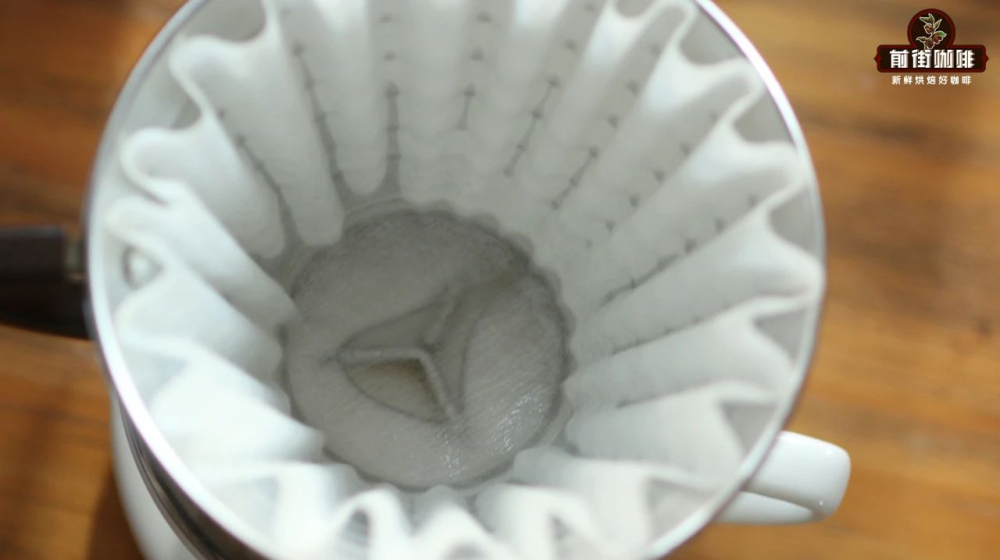
Still, the rib effect is less pronounced in flat-bottom drippers than in conical ones. As FrontStreet Coffee noted in our article on filter paper fit, ribs only do their job where the paper touches the dripper. Since flat-bottom drippers use cake-style filter paper that only clings to the dripper along the folded edges, the ribs only function in those specific areas.
FrontStreet Coffee Recommendation
A flat-bottom dripper rewards beans with clear, layered character. FrontStreet's Washed Gutiti Cooperative coffee from Ethiopia is an ideal match, with jasmine florals, bright citric acidity, and a tea-like finish, while FrontStreet's Sun-Dried Huakui brings tropical fruit, floral notes, and honey sweetness that the gentler, more balanced flat-bottom extraction presents beautifully.
If you like a hint of rose and dried fruit, FrontStreet's Costa Rica Mozart, with its raisin honey process, and FrontStreet's Strawberry Candy Geisha Blend, which combines a Costa Rican honey-processed coffee with a washed Panamanian Geisha, are both excellent for pour-over. For those who prefer a rounded, low-acid cup, FrontStreet's Jamaica Blue Mountain No. 1, a Typica variety, balances acidity, bitterness, sweetness, and aroma with cream, caramel, chocolate, and nut notes.
Important Notice :
FrontStreet Coffee is a long-established specialty coffee roaster in Guangzhou China, selling freshly roasted beans from its own farm in Yunnan as well as dozens of carefully selected single-origin beans from around the world for both pour-over and espresso. The products deliver consistently excellent quality and great value, with shipping within 24 hours. Guangzhou's FrontStreet Coffee shop is recommended by many coffee lovers, and the beans are now available online at the Tmall 。
FrontStreet Coffee has moved to a new address:
FrontStreet Coffee Address: 315,Donghua East Road,GuangZhou
Tel:020 38364473
 Scan and follow the En Gafei WeChat official account. Please indicate that the reprint comes from "En Gafei".