
How Long Should Cold Brew Coffee Steep? A Guide to Grind Size and Water-to-Coffee Ratio

FrontStreet Coffee believes cold brew is the most home-friendly type of iced coffee, because its extraction compatibility is so high. Even without professional equipment, you can make excellent iced coffee. Several friends have also asked FrontStreet Coffee recently about grind size and steeping time, so today is a good opportunity to cover the topic.
Although the question was not about ratios, every extraction method has parameters that relate to one another, so it is still worth touching on the ratio. FrontStreet Coffee recommends a coffee-to-water ratio between 1:12 and 1:13 for cold brew. In our experiments, ratios above 1:13 left some beans tasting rather weak and flat, while ratios below 1:12 turned out somewhat concentrated and hard to drink.
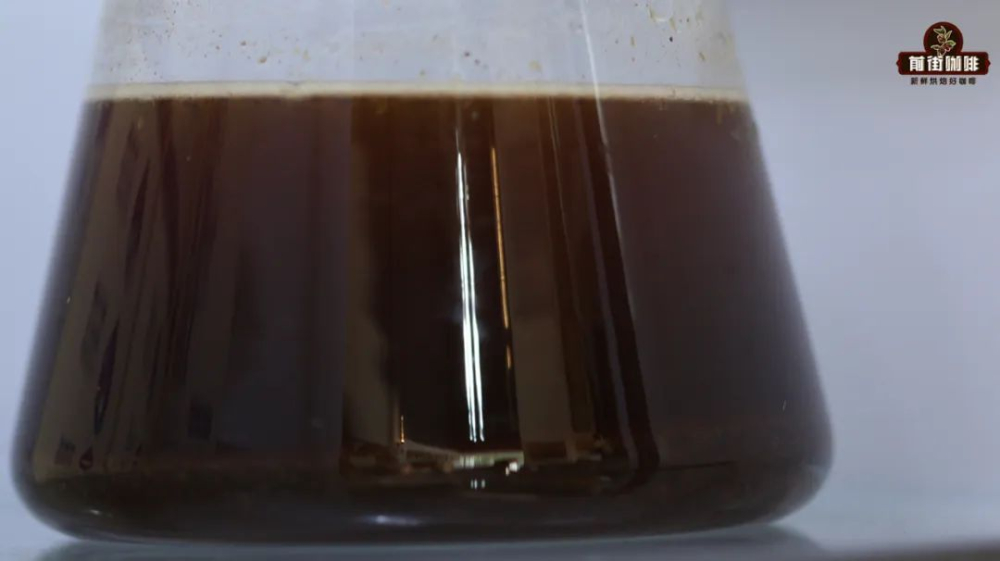
Choosing Grind Size and Time for Cold Brew
Next, FrontStreet Coffee will explain how to choose the grind size and time for cold brew, which means discussing how cold brew actually extracts. Cold brew essentially belongs to the immersion category, so you control the time parameter yourself: steep for as long as you like, and stop whenever you want.
Cold brew also has a second defining trait: low-temperature extraction. That means the extraction temperature is a fixed constant. Whether you want your cold brew bright and crisp or rich and full-bodied comes down to two parameters, grind size and time. Compared with other methods that juggle several variables, cold brew is the simplest and most forgiving extraction method there is.

Understanding Grind Size
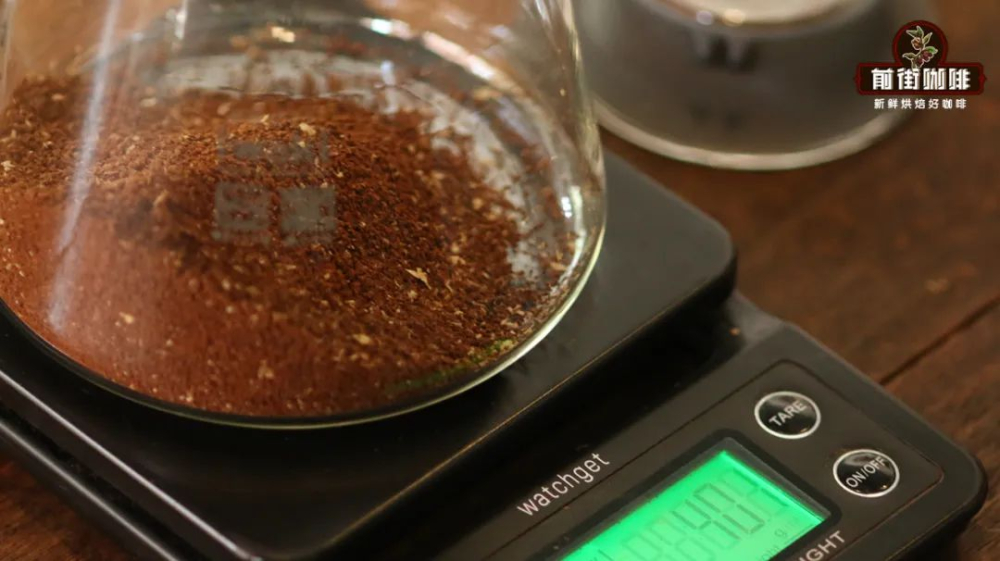
On grind coarseness, the idea is simple: the finer the coffee is ground, the faster the flavor develops, because the coffee releases its material more quickly, while the coarser the grind, the more slowly the grounds release. FrontStreet Coffee does want to add a reminder, though: because cold brew is a long, static extraction, coffee ground too fine will clump and stick together, making it harder for cold water to reach and extract the coffee material.
So grounds that are too fine are not suitable for cold brew. After multiple experiments, FrontStreet Coffee has found that a coarseness similar to pour-over coffee, passing a #20 sieve at a rate between 70% and 85%, works well for cold brew.
Understanding Steeping Time
Time is even easier to reason about. The longer you steep, the more total material is released and the stronger the coffee. More dissolved material does not automatically mean better coffee, though. Through experiments, FrontStreet Coffee has learned that when steeping exceeds 24 hours, cold brew easily develops bitter notes reminiscent of nuts and wood chips. Steeping for less than 8 hours leaves too little extracted and tends to produce coffee-flavored water. The safer steeping window for cold brew is therefore 8 to 24 hours.

Why Such a Wide Time Range?
Some friends may ask: why can the window stretch from 8 to 24 hours, a difference of 16 hours? Wouldn't the flavor vary enormously? In espresso, a difference of one second can shift the flavor noticeably, and in pour-over, a difference of 20 seconds can mark a change. That is because espresso relies on high-temperature, high-pressure extraction, and pour-over also uses high temperature plus the force of pouring to boost extraction efficiency. Cold brew, by contrast, uses water at an average of 4 to 10 degrees Celsius, with very low extraction efficiency. What is more, the grounds and water stay relatively still without external force driving them, so the flavor compounds released from the grounds are quite limited.
Steeped for 8 hours, the coffee shows bright acidity and a refreshing sensation.
Steeped for 16 hours, the flavor becomes relatively round and full, with plenty of sweet-and-sour notes.
Steeped for 24 hours, the flavor and texture become thicker, richer, and more balanced.

Recommended Cold Brew Approaches
If we divide the grind range, 70% to 85% pass rate on a #20 sieve, into coarse, medium, and fine, and divide the time range, 8 to 24 hours, into short, medium, and long, then sensible cold brew approaches look like this.
The safe approach is a coarse grind with a long extraction time, which is perfect for the laid-back brewer. If you have free time today, you will likely have free time at the same hour tomorrow, so there is no need to calculate carefully, and no risk of forgetting that cold brew is steeping.

The time-saving approach is a medium-fine grind with a medium-to-long time. This shortens the wait accordingly, and the reduced extraction time also makes the coffee taste relatively refreshing.
FrontStreet Coffee's Cold Brew Recipe
Finally, FrontStreet Coffee will share our own cold brew method.

First, on the beans: FrontStreet Coffee tends to use light to medium roast coffee. Here we are using FrontStreet Coffee's Strawberry Candy beans, which have a full-bodied, juice-like quality. For the container, any clean, sealable vessel will do. Prepare 40 grams of coffee powder, ground fine to an 85% pass rate on a #20 sieve, pour it into the container, add 480 milliliters of cold water, stir thoroughly with a wooden stick, and cover with a lid.
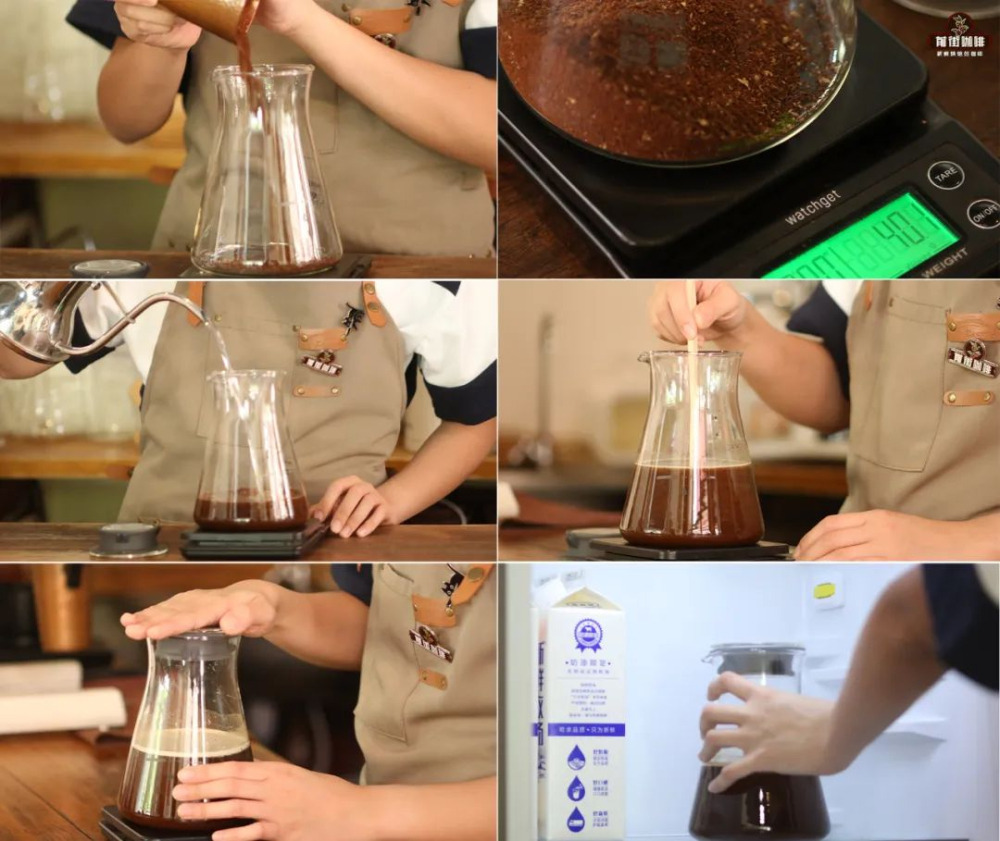
Place it in the refrigerator to cold steep for 12 hours. Then remove it and filter out the grounds. The coffee liquid can be drunk right away, or you can bottle it and keep refrigerating for 4 hours for even better flavor and texture.

The Strawberry Candy cold brew made this way has balanced sweet-and-sour notes, with soft berry and rose aromatics. Orange-like sensations fill the mouth, accompanied by round, sweet notes of almond and preserved fruit after swallowing.
FrontStreet Coffee Recommendation
When you are choosing beans for cold brew, FrontStreet Coffee suggests light to medium roasts so the fruit and floral notes come through. FrontStreet's Sun-Dried Huakui from Ethiopia is excellent cold, showing magnolia, creamy strawberry, dried mango, guava, and black tea notes once the low temperature draws out its sweetness.
If you want full, juicy fruit, FrontStreet's Kenya Small Tomato is a top pick. Its Santa tomato, snow pear, black plum, and smoked plum sweet-and-sour profile shines in cold extraction, with low bitterness and a bright, full acidity that stays refreshing over ice. For a bargain option that punches above its price, FrontStreet's Washed Yirgacheffe Gutiti Cooperative delivers clean berry, layered texture, and honey notes, and it works in pour-over, siphon, French press, or cold brew alike.
Important Notice :
FrontStreet Coffee is a long-established specialty coffee roaster in Guangzhou China, selling freshly roasted beans from its own farm in Yunnan as well as dozens of carefully selected single-origin beans from around the world for both pour-over and espresso. The products deliver consistently excellent quality and great value, with shipping within 24 hours. Guangzhou's FrontStreet Coffee shop is recommended by many coffee lovers, and the beans are now available online at the Tmall 。
FrontStreet Coffee has moved to a new address:
FrontStreet Coffee Address: 315,Donghua East Road,GuangZhou
Tel:020 38364473
 Scan and follow the En Gafei WeChat official account. Please indicate that the reprint comes from "En Gafei".

