
Flavor Characteristics of Costa Rican Geisha Coffee Beans - Rivense Farm Natural Geisha Coffee
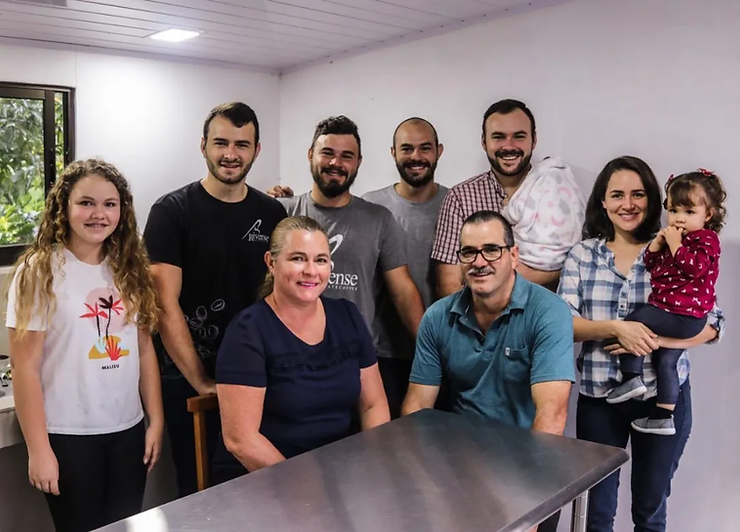 Café Rivense del Chirripó
In 2005, Régulo Gerardo Ureña Chacón and his wife Isabel Rojas bought the eight-hectare Café Rivense del Chirripó farm, and with it began a life devoted to growing and producing coffee.
The farm sits between Cerro de la Muerte, Costa Rica's second-highest mountain, and Chirripó, its highest peak. Tucked into the Brunca region of southern Costa Rica at 1550-1600 meters, this distinctive terroir creates a microclimate well suited to coffee. Every time Régulo and his wife climb the slope to tend their trees, they are rewarded with sweeping views of the Chirripó range, the sight that inspired the farm's name, "Café Rivense del Chirripó" (Coffee Rivense of Chirripó).

Café Rivense del Chirripó is a small, family-run plantation dedicated to high-quality specialty coffee from the very start. Besides the farm, the family runs its own processing facility, which lets them produce micro-lots independently using natural or semi-natural drying. In the beginning the Ureña Rojas family grew only Caturra and Catuai. As their methods matured, they began introducing new varieties such as Geisha. In 2015, Café Rivense del Chirripó took fifth place in the 35th Cup of Excellence with a honey-processed Catuai, drawing attention to their distinctive honey processing.
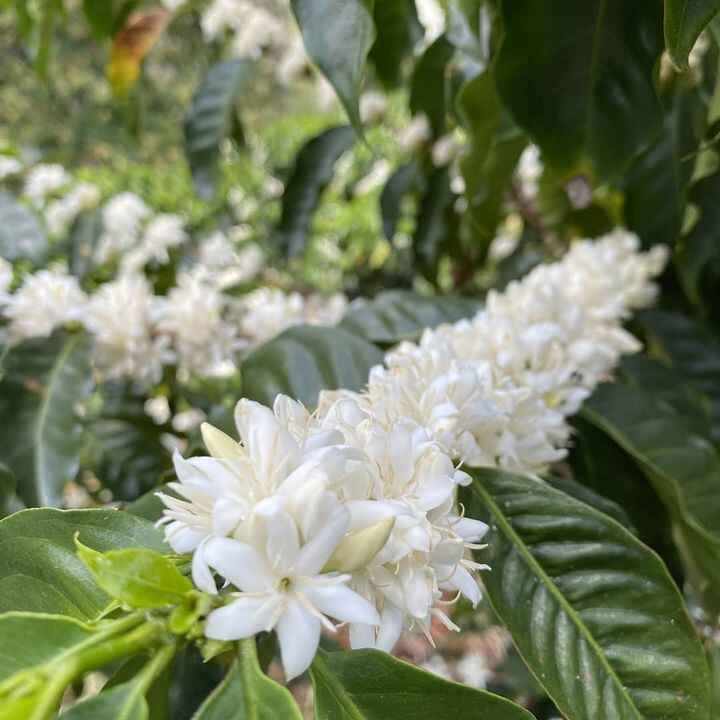
Today the farm keeps a stretch of pristine forest that shelters a great deal of wildlife. This protects the natural water resources within the farm and helps maintain the wider growing environment. The owners are consistent advocates of environmental sustainability: from cultivation to processing, every task is managed in a way that minimizes the carbon footprint. Organic fertilizer is applied in doses tailored to different soil compositions, so the trees get proper nutrition without excessive chemical influence, which also keeps the natural water sources cleaner. The Ureña Rojas family has also planted many fruit trees to give the coffee partial shade; the fruit is food the farm's wildlife can eat directly. The overall ecology of the farm is ideal for coffee trees.
Natural Processing Method
Café Rivense del Chirripó follows strict harvesting rules, picking by hand only fully ripe cherries, which carry the highest sugar content.

After harvest, the cherries are sorted to remove defective beans and spread evenly on drying beds for sun drying. Because midday temperatures run high, the cherries must be turned by hand at regular intervals to prevent unwanted over-fermentation. At night, protective covers are put up to guard against sudden rain, until the cherries reach a moisture content of 11-12%. The beans are then strictly standardized, graded, packaged, and exported, so buyers can trace detailed information about each lot.
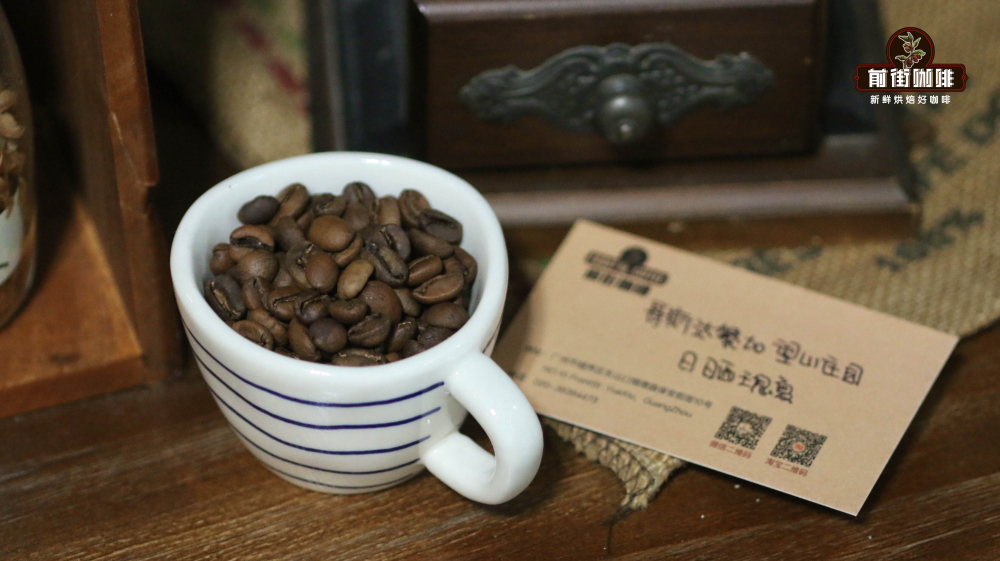
FrontStreet Coffee: Café Rivense del Chirripó Natural Geisha Coffee Beans
Origin: Brunca Region, Costa Rica
Farm: Café Rivense del Chirripó
Variety: Geisha
Altitude: 1550m
Processing Method: Natural
Flavor Notes: Jasmine, Sweet Orange, Lemon
This natural Geisha from Café Rivense del Chirripó, which FrontStreet Coffee has acquired, leans heavily toward fruit. FrontStreet's roasters give it a light-medium roast to preserve the variety's characteristic sweetness. Through cupping, they found that the dry aroma offers fresh jasmine florals, while the cup shows the balanced sweet-tart character of sweet orange backed by a saturated, bright lemon acidity.
Brewing Reference
High-altitude Geisha from Costa Rica falls into the SHB (Strictly Hard Bean) classification. To draw out the coffee's layered fruit, FrontStreet Coffee recommends a higher water temperature and a finer grind. The harder the bean, the finer the grind needed to increase the extraction surface area and lift the extraction rate.

Filter: V60
Water Temperature: 90-91°C
Coffee Dose: 15g
Coffee-to-Water Ratio: 1:15
Grind Size: Fine sugar consistency (78% retention on #20 sieve)
Three-Stage Extraction: Add the grounds to the V60 filter, wet the bed with twice the coffee's weight in water, and bloom for 30 seconds. Then, with a small stream, pour in a spiral from the inside out until you reach 125g for the first stage. Wait until the bed drops to half the filter's height, then continue with the same fine stream for the third stage up to 225g. Remove the filter once all the liquid has drained, with a total time of about 2 minutes (plus or minus 10 seconds).

Once brewed, this natural Geisha from Café Rivense del Chirripó shows fresh lemon and dried apricot sweet-tart notes. As it cools slightly, sweet orange comes forward, leaving a black tea-like sweetness in the finish.
FrontStreet Coffee Recommendation
Geisha fans who want to explore further will find plenty to choose from at FrontStreet. Beginners can start with FrontStreet Boquete Geisha from Panama, an entry-level lot that delivers the classic Panamanian profile of orange-blossom sweetness, an oolong-tea texture, and delicate fruit acidity at a friendly price. For a step up, FrontStreet's Esmeralda Red Label Gesha and Green Label Gesha carry the same celebrated estate name: the Red Label (Esmeralda Special) comes from single plots at 1600-1800 meters and each lot cups above 90 points, while the Green Label (Private Collection) blends several plots to express the estate's signature high-altitude Gesha character.
Those who prefer an Ethiopian expression can try FrontStreet Gesha Village Gold Label, a Gesha 1931 lot with a refined natural process, or FrontStreet Grana Estate Gesha from Yirgacheffe, which shows bright citrus acidity, elegant ginger-lily aroma, and ripe-fruit sweetness. Because these Gesha beans are hard and floral, FrontStreet suggests a finer grind, around 78% passing a No. 20 sieve (roughly fine-sugar consistency), with 91°C water, 15g of coffee, and a 1:16 ratio in a V60, using a three-stage pour that finishes in about 2:10 to 2:20.
Important Notice :
FrontStreet Coffee is a long-established specialty coffee roaster in Guangzhou China, selling freshly roasted beans from its own farm in Yunnan as well as dozens of carefully selected single-origin beans from around the world for both pour-over and espresso. The products deliver consistently excellent quality and great value, with shipping within 24 hours. Guangzhou's FrontStreet Coffee shop is recommended by many coffee lovers, and the beans are now available online at the Tmall 。
FrontStreet Coffee has moved to a new address:
FrontStreet Coffee Address: 315,Donghua East Road,GuangZhou
Tel:020 38364473
 Scan and follow the En Gafei WeChat official account. Please indicate that the reprint comes from "En Gafei".

