The Impact of Pour-over Coffee Flow Rate on Flavor: What's the Ideal Pouring Speed?
Friends visiting the shop often trade pour-over techniques with FrontStreet Coffee, and few topics come up as often as water flow rate. Big flow or small? When to pour hard, when to pour gently...

Before answering, FrontStreet Coffee wants to clear up two misconceptions. First: a small water flow doesn't necessarily mean gentle pouring, and a large flow doesn't necessarily mean aggressive pouring. Gentle pouring means minimal agitation of the grounds — think slow, steady spirals. Flicking water with wrist movements agitates the grounds far more, however small the stream; conversely, a large flow can still circle gently.
Second misconception: the perception of flow size itself. Spout width and personal pouring skill mean that "large" and "small" mean different things to different people. A wide-spout kettle pours bigger flows; a narrow spout, smaller ones. So here's a simple way to measure your own.
You'll need an electronic scale. Place a container on it and pour with your usual technique for 10 seconds, then divide the grams poured by 10 to get your average flow rate. When FrontStreet Coffee pours from a Hario copper kettle holding a vertical water column, the minimum flow is 2.3ml/s and the maximum 9ml/s. With a Hario stainless steel kettle (slightly wider spout), the range is 4ml/s minimum to 12ml/s maximum.
Of course, pouring at your absolute minimum or maximum will rarely taste good. What matters is knowing the actual rates of what you personally call "small" and "large," so you can log your brews and compare notes with others without talking past each other. For reference, FrontStreet Coffee's small flow in real pours is 4ml/s, large flow 7ml/s, and standard flow 5ml/s.
What Do Small and Large Water Flows Affect?
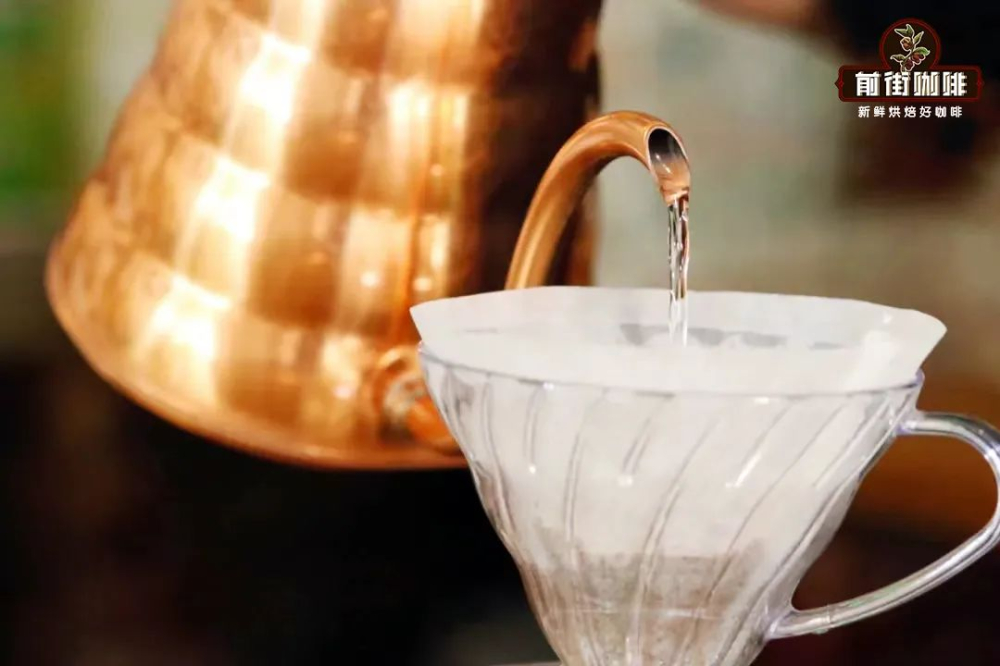
With the coffee-to-water ratio fixed, a small flow takes longer to finish the brew; a large flow finishes sooner.
As for the liquid level: whenever water is poured faster than it drains, the level rises — and the bigger the gap between inflow and drainage, the faster it climbs.
Flavor-wise, a small flow produces a richer, more concentrated taste, while a large flow yields clearer flavors with more noticeable acidity, a lighter body, and a thinner mouthfeel.
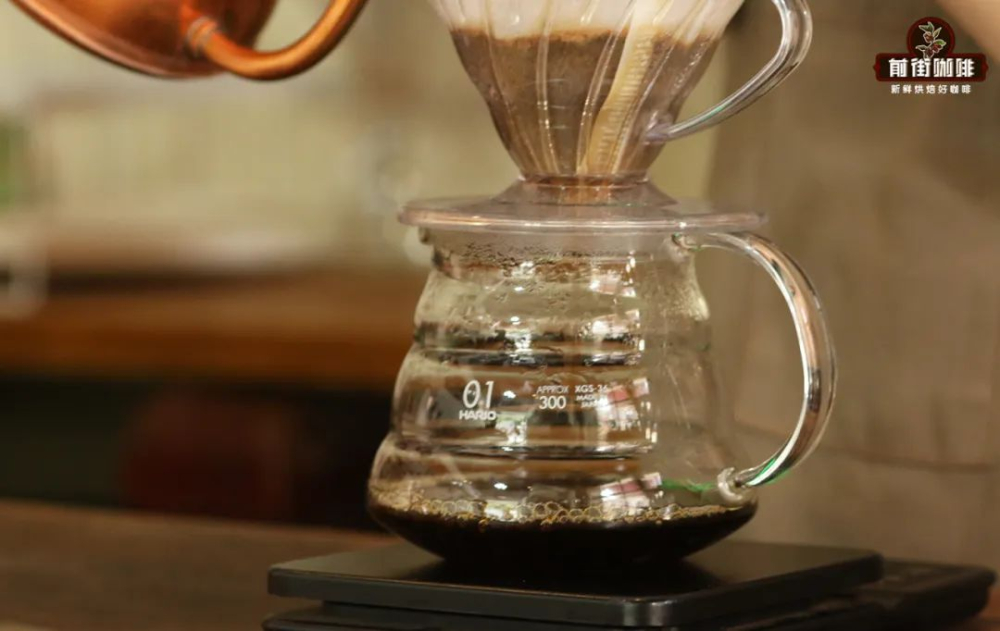
Large Flow & Small Flow
Which one to use depends on what the coffee bed is doing and on your own habits. If you normally pour small, there are situations that call for opening up the flow:
1. When you need to lift the coffee bed. A small flow can raise the liquid level too slowly, leaving the cup concentrated and heavy — a larger flow lifts the bed and balances it out.
2. When extraction is running too long. Small flows take more time; if you can tell the brew will overshoot your target time, increase the flow to finish sooner.
3. When the bed is clogging. If drainage stalls — apparently blocked by fines — a bigger flow stirs the grounds at the bottom and restores the drainage speed.
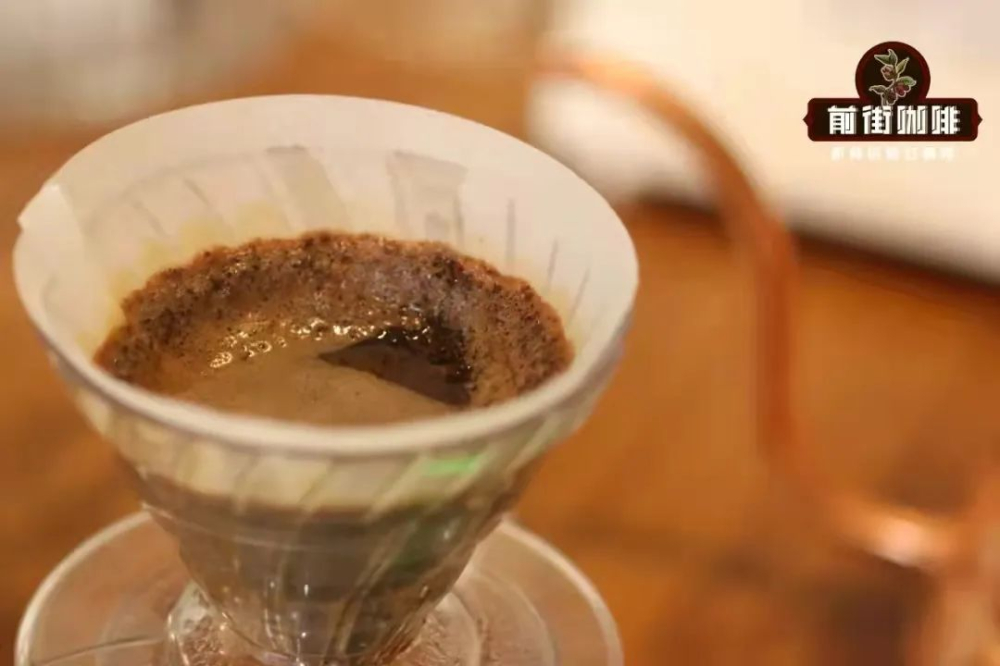
And if you're a large-flow pourer, there are moments to throttle back:
1. If the grind looks too coarse and water is draining too fast, a small flow extends the extraction to compensate.
2. If the liquid level climbs too high mid-pour, stop pouring, let it drop a little, then resume with a small flow.

3. To slow extraction efficiency in the late stage, pour the final 20-30% of the water gently.
One last rule of thumb from FrontStreet Coffee: never swing your flow rate too wildly. "Increase the flow" only ever means relative to where you are now. Our standard pour is 5ml/s; when we need more, we go to 6-7ml/s, not 12. Big flow or small, what you're really looking for is an appropriate rate for the situation.
FrontStreet Coffee Recommendation
Mastering flow control pays off most with light-roast, floral-fruit coffees, whose delicate aromatics reward precise extraction. On a V60, FrontStreet Coffee's Yirgacheffe Guodingding is the ideal practice bean: its jasmine florals, bright citrus acidity, and green-tea sweetness respond clearly to changes in flow and agitation, so you can actually taste the difference a slower or faster pour makes. For more tropical intensity, the FrontStreet Natural Huakui from Ethiopia (Sidama, 2250-2350m) rewards a gentler flow with thick notes of strawberry, passion fruit, honey, and black tea, its low acidity and high sweetness making faults easy to forgive.
If your technique favors a bolder, faster pour — or you simply prefer a fuller cup — the FrontStreet Brazil Queen Estate Yellow Bourbon (natural process, 1400-1950m) keeps its dark chocolate, cream, peanut, and sugarcane sweetness intact even with generous agitation, making it a forgiving everyday bean for any flow rate you throw at it.
Important Notice :
FrontStreet Coffee is a long-established specialty coffee roaster in Guangzhou China, selling freshly roasted beans from its own farm in Yunnan as well as dozens of carefully selected single-origin beans from around the world for both pour-over and espresso. The products deliver consistently excellent quality and great value, with shipping within 24 hours. Guangzhou's FrontStreet Coffee shop is recommended by many coffee lovers, and the beans are now available online at the Tmall 。
FrontStreet Coffee has moved to a new address:
FrontStreet Coffee Address: 315,Donghua East Road,GuangZhou
Tel:020 38364473
 Scan and follow the En Gafei WeChat official account. Please indicate that the reprint comes from "En Gafei".