
Arabica Coffee Bean Varieties: Visual Characteristics & How to Distinguish Typica, Bourbon, and Geisha
Identifying Coffee Varieties by Appearance
Have you ever noticed coffee enthusiasts around you who seem to have extraordinary powers? They glance at a pile of beans and immediately name the variety and origin, leaving you wondering how they do it.
While the single-origin beans we encounter daily are all Arabica, there are actually quite noticeable differences in appearance among the different Arabica varieties. To identify a coffee by sight alone, you have to study each type of bean carefully, pick out its characteristics, and commit them to memory. Sound familiar? It is much the same skill you build in coffee cupping.

So let's get acquainted with these beans that all look so similar. Since most people have limited access to green beans, FrontStreet Coffee uses roasted beans for the illustrations. If you happen to have a bag of coffee on hand, you can put this to use immediately by grabbing a handful and observing.
Typica
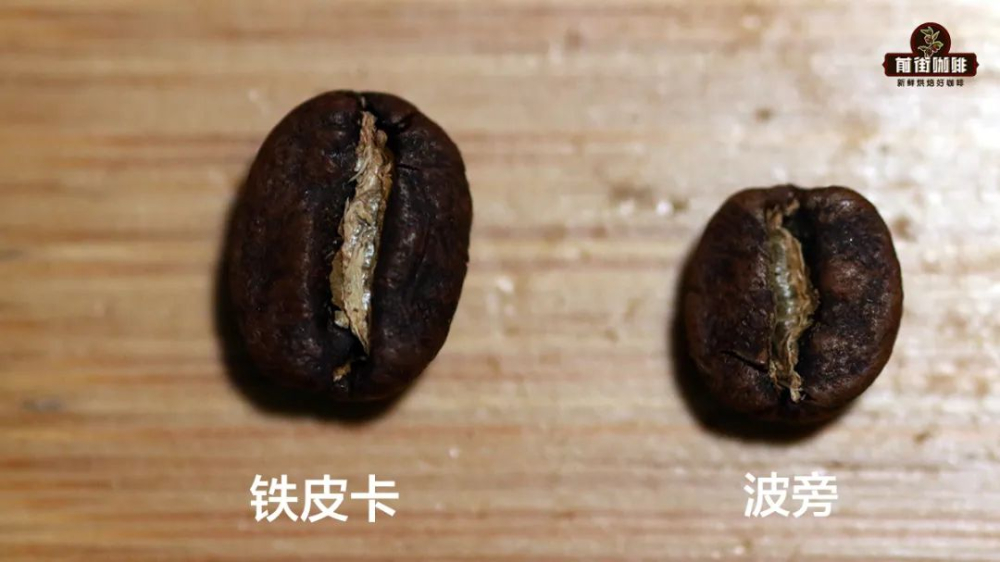
Start with the template for Arabica: Typica. Flip through any coffee book and any illustration of Arabica beans is most likely showing Typica. Typica beans generally have an oval shape, slender, elongated, flat, and plump, with a very standard appearance.

Bourbon
Bourbon is a natural variant of Typica. The Typica trees originally planted in Yemen mutated to produce beans with a round shape, which is why they are also called "round-bodied coffee beans." The French later planted a batch of these round-bodied seeds on Bourbon Island, now Réunion Island, and the name "Bourbon coffee" spread from there. Today, Brazil is the main country cultivating Bourbon varieties. Bourbon beans are characterized by short ends and a stout, round appearance, with a particle size similar to Typica.
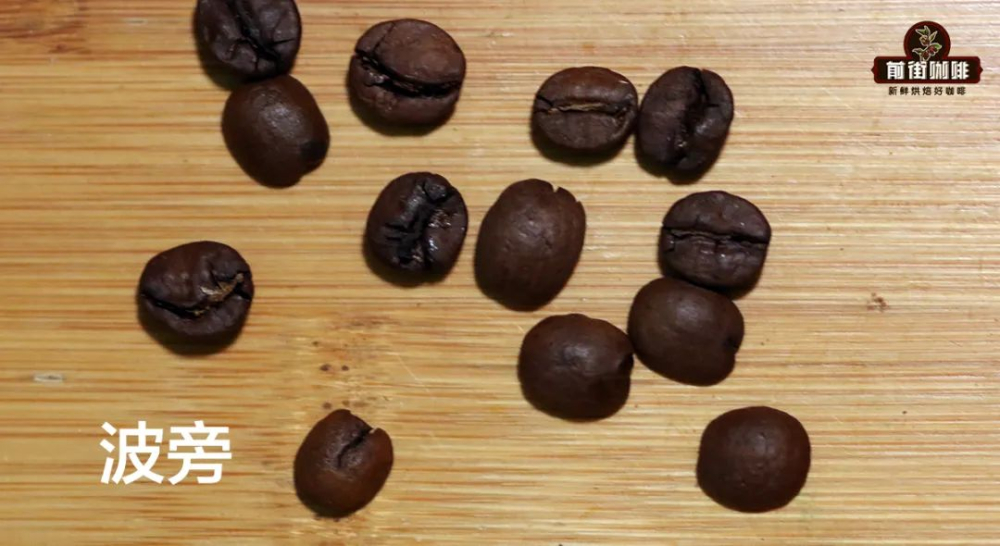
Typica and Bourbon are known as heirloom varieties within Arabica, and most of the widely cultivated varieties that followed are variants of these two.
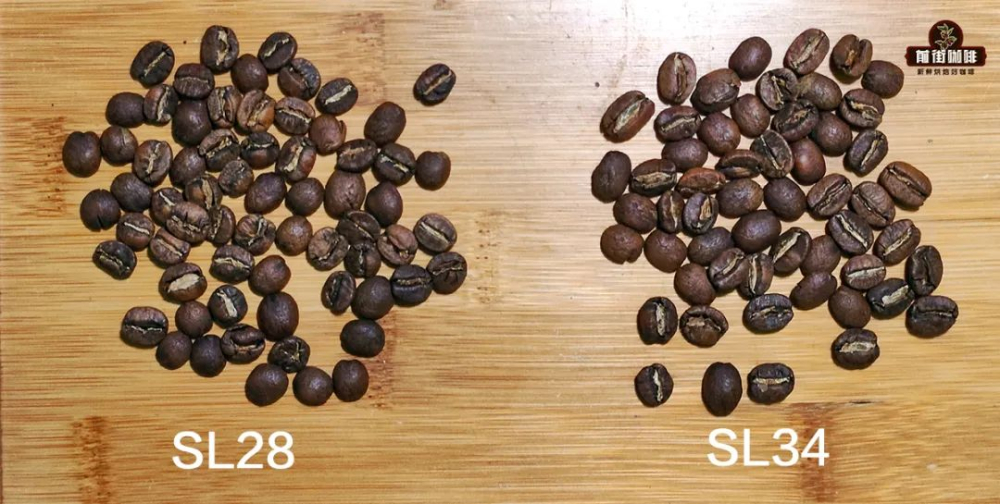
SL28 & SL34
The most classic examples are the SL28 and SL34 varieties grown widely in Kenya. Note that these are two different coffee varieties.
Both are the product of classic artificial selection. "SL" stands for "Scott Laboratory," a lab established specifically to study coffee cultivation. Its researchers found 42 coffee varieties in the wild and cultivated them in experimental fields, this being artificial selection rather than hybridization. After more than 10 years of selection, they ultimately identified SL28 and SL34 as the varieties suited to growing in Kenya.

Later research revealed that SL28 belongs to Bourbon or its variants, while SL34 belongs to Typica or its variants. That is why Kenyan coffee can contain beans of noticeably different appearances. Sort them by appearance and you can separate the rounder SL28 from the more elongated SL34.
Caturra
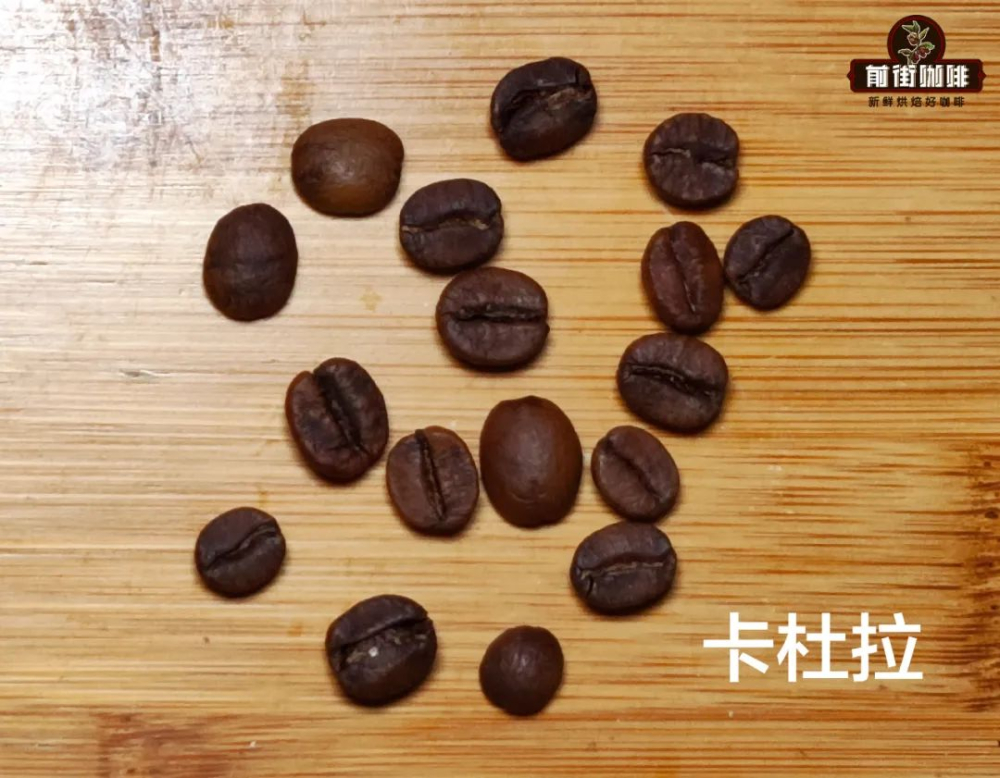
Caturra is a natural variant of Bourbon. Caturra plants have very close branch spacing and fruit smaller than Bourbon, which allows for more fruit production in the same space and significantly increases yield. Caturra beans are similar in shape to Bourbon, also tending toward roundness, but slightly longer, resembling small plump ovals.
Catuai
Catuai is an artificially cultivated hybrid of Caturra and Mundo Novo. Mundo Novo is itself the result of natural hybridization between Bourbon and Sumatran Typica, so Catuai naturally expresses Typica genes in its physical characteristics.
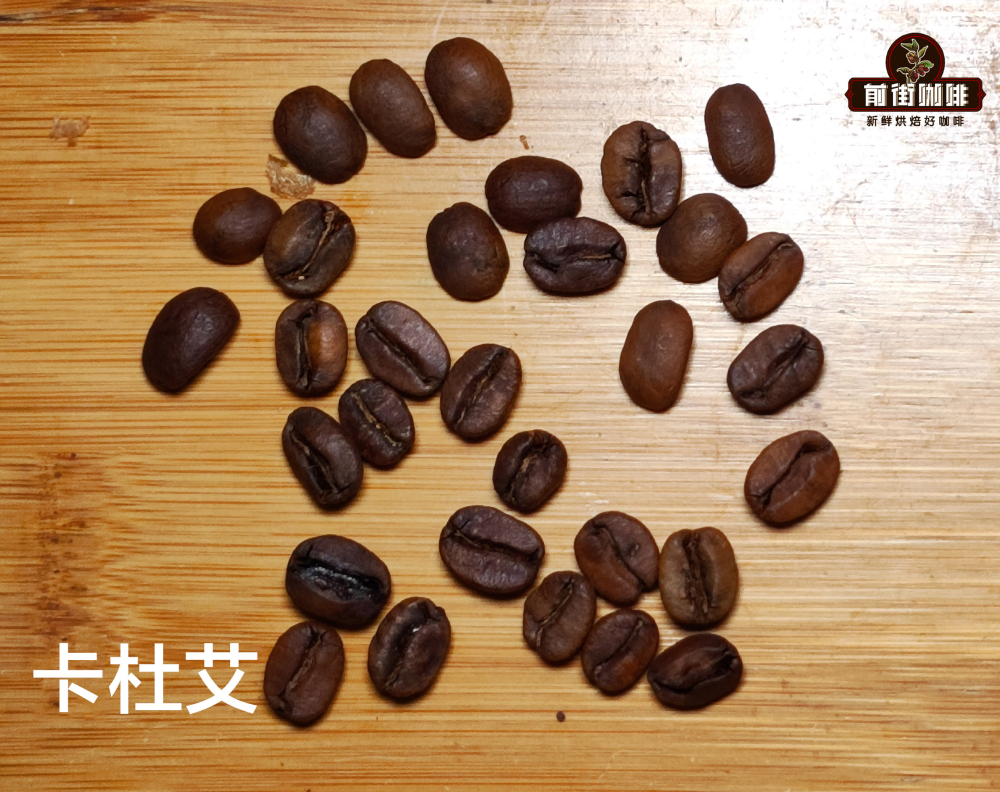
Catuai beans are oval and flat, with a relatively slender tail end. In Central and South America, many growing regions plant Caturra and Catuai together, which is why coffees from that part of the world often contain smaller, rounder Caturra beans alongside larger, more elongated Catuai beans.
Geisha
Geisha is probably the variety most familiar to everyone, but many people have only heard the name without ever seeing the bean. So FrontStreet Coffee will describe its characteristics, starting with Panamanian Geisha because it has the highest recognizability. Panamanian Geisha beans are slender and pointed at both ends, plump and full in the middle, and the roasted beans somewhat resemble cocktail sausages.
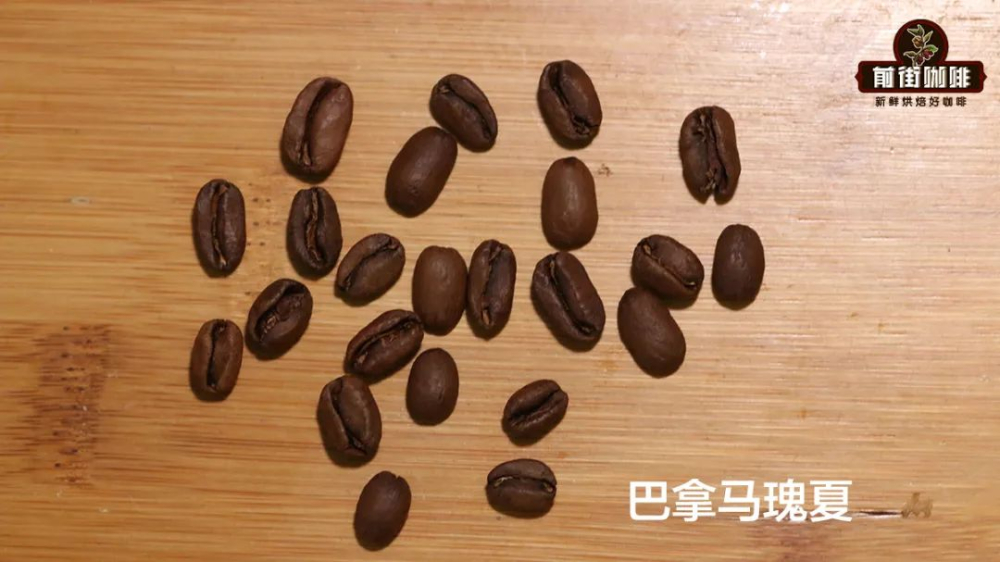
In a batch of "Flower Butterfly" beans, for example, which includes Geisha, Caturra, and Catuai, you can first clearly separate out the large, elongated beans with pointed ends, the typical marker of Geisha. Smaller Geisha beans are naturally harder to pick out, but with careful observation they still meet the standard of being pointed at both ends and plump in the middle.
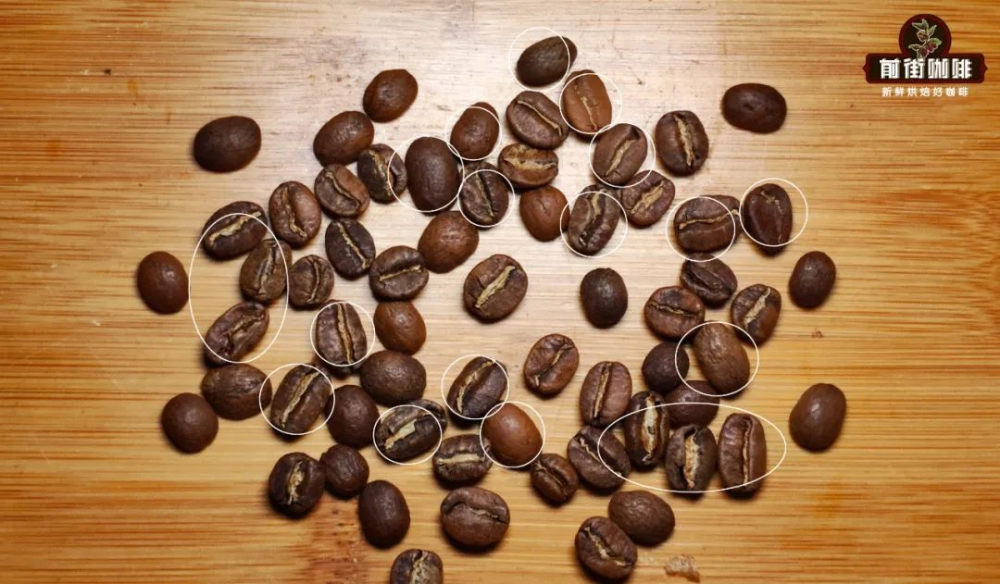
This characteristic does not apply to Ethiopian Geisha, though, because Ethiopian Geisha was identified by tracing back to the forest where the original samples were taken, after Panamanian Geisha became famous. Researchers went into the forest looking for varieties they believed had flavor profiles similar to Panamanian Geisha.
The Geisha varieties at Gesha Village Estate, for instance, are called Gesha Village 1931. The estate owner traced historical records to a place called the Gesha forest, believing the British had sampled Geisha varieties there. They sampled there as well and ultimately selected Gesha Village 1931. The selection was not based on genetic identification but on plant morphology, bean shape, and cupping profile, the belief being that this variety resembled Panamanian Geisha.

As for Gesha Village itself, the owner found it by entering the Gesha forest again in 2011. Even having found the right place, with thousands of varieties in the forest there was no guarantee the plants they found were the original Geisha, T2722. It is normal, then, for the bean characteristics to differ, since they are not the same variety after all.
In terms of size, Gesha Village's Geishas tend to be smaller. Gesha Village 1931 has slight pointed tips at both ends and is plump in the middle, while Gesha Village Geisha has an oval shape and is relatively small.

FrontStreet Coffee Recommendation
Geisha may be the most famous name in Arabica, but the family is broader than many drinkers realize, and knowing the differences helps you choose. The Esmeralda estate's Geisha line splits into two grades. FrontStreet's Red Label Geisha, officially "Esmeralda Special," grows between 1600-1800 meters, must cup above 90 points for each lot, and every lot carries its own number with all its beans drawn from a single plot, so buyers can choose the exact flavor profile they prefer. The Green Label, originally "Private Collection," blends lots from multiple plots rather than emphasizing a single one, and represents the estate's signature high-altitude Geisha style at a more accessible price.
Entry-level drinkers who want to sample the famous Geisha character should start with FrontStreet's Boquete Geisha from Panama. It delivers the classic orange-blossom honey note, an oolong-tea quality, and delicate fruit sweetness with clear layers, all at a friendlier price.
Ethiopia, the birthplace of coffee, has its own Geisha story at Gesha Village, where the grading is even more detailed than Panama's. The estate grows three Geisha varieties, Gori Gesha, Gesha 1931, and Illubabor Forest. FrontStreet's Gesha Village Gold Label belongs to the Gesha 1931 variety, accounts for 10% of the village's total production, and is often chosen by competition baristas; given a delicate natural process, it cups with remarkable complexity. The Red Label belongs to the Gori Gesha variety, accounts for 15% of production, scores 88 or above on the SCA 100-point scale, and is a single-terroir series with fully traceable lot information including farm block, variety, and processing date. Also worth trying is FrontStreet's Grana Geisha from the Genlana Gesha farm in Ethiopia, hand-picked as fully ripe cherries and dried on raised beds for 14-20 days depending on the weather, roasted light to medium for bright citrus acidity, elegant ginger-lily aroma, and a ripe fruit sweetness with a fine, silky, signature Geisha finish.
Important Notice :
FrontStreet Coffee is a long-established specialty coffee roaster in Guangzhou China, selling freshly roasted beans from its own farm in Yunnan as well as dozens of carefully selected single-origin beans from around the world for both pour-over and espresso. The products deliver consistently excellent quality and great value, with shipping within 24 hours. Guangzhou's FrontStreet Coffee shop is recommended by many coffee lovers, and the beans are now available online at the Tmall 。
FrontStreet Coffee has moved to a new address:
FrontStreet Coffee Address: 315,Donghua East Road,GuangZhou
Tel:020 38364473
 Scan and follow the En Gafei WeChat official account. Please indicate that the reprint comes from "En Gafei".

