
How Long is the Resting Period for Single-Origin Coffee Beans? How to Brew Pour-Over Coffee That's Too Fresh?
The Freshness of Coffee Beans
For roasted coffee, FrontStreet Coffee defines freshness as the time elapsed since roasting. Freshly roasted beans are at their freshest, and as days pass, that freshness gradually fades. After 2 months, most coffee beans have lost nearly all their flavor and gone stale.
By everyday logic, stale beans are bad — but beans that are too fresh aren't necessarily good either.
What Freshness Really Depends On
FrontStreet Coffee believes freshness is really a function of the carbon dioxide inside the beans. After roasting, coffee beans hold roughly 2% of their weight in CO2, which slowly escapes over time. While the gas remains inside, it inhibits the release of flavor compounds and helps preserve the coffee's character.

Once CO2 starts escaping, it opens a gateway for flavor compounds: volatile aromatics drift out along with the gas. That's why a puffed-up coffee bag, once opened, releases such a rich aroma.
And when nearly all the CO2 has escaped, it means many volatile flavor compounds have gone with it. Such coffee brews up flat and may even develop off-flavors — a sign the flavor window has closed.

Carbon Dioxide: A Double-Edged Sword
On one hand, CO2 locks aromatic compounds inside the beans, preventing flavor loss. On the other, it obstructs flavor release during brewing. That's why every pour-over starts with a blooming stage: a small pour of hot water lets the grounds degas, expanding into a dome as they do.
But if the beans are too fresh and gas-laden, blooming turns chaotic — CO2 rushes out, forming one or two big bubbles.
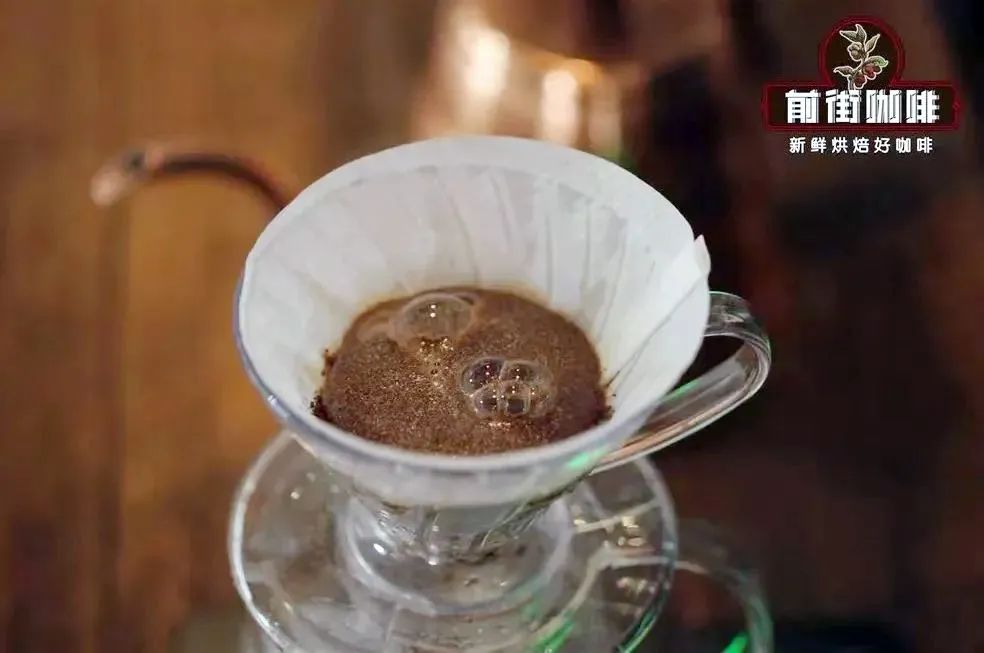
Worse, blooming may fail to release all the gas, and large bubbles keep appearing during the subsequent pours, disrupting extraction. Overly fresh beans thus brew up weak and lacking body.
Dryness and Astringency
Freshly roasted beans are also prone to dryness and astringency — that uncomfortable, scratchy feeling in the throat after drinking. The roast aromas haven't yet dissipated; only after resting a few days does this dryness naturally fade.
Sometimes you'll also notice grassy, unripe-fruit astringency in very fresh beans. That's not a roasting flaw — it's the excess gas at work. Incomplete degassing during blooming interferes with the later pours, causing under-extraction and astringency.

How to Handle Freshly Roasted Coffee Beans
So what do you do with freshly roasted beans? If your beans are close to the roast date, there's only one thing to do: resist the temptation and let them rest undisturbed for several days. FrontStreet Coffee calls this "bean resting."
Freshly roasted beans release about 60-70% of their gas within roughly 4-7 days. After that, degassing slows to a gentle trickle and the beans stabilize — exactly when flavor peaks. The volatile compounds dissipate slowly after gas release, so once most of the CO2 is gone, plenty of flavor remains inside the beans.
At brew time, the blooming stage takes care of the remaining CO2, letting the water carry the beans' flavor compounds into the cup.

How Long Should Coffee Beans Rest?
Using FrontStreet Coffee's roasted beans as an example: light-to-medium roast beans need about 4-7 days of resting — counting from the roast date, waiting that long before tasting yields noticeably better flavors. Medium-to-dark roast beans take about 7-10 days to reach optimal flavor.
FrontStreet Coffee Recommendation
Once your beans have rested, they deserve a brew that shows them at their best. FrontStreet Coffee recommends floral, fruit-forward lots for pour-over: the washed Ethiopia Guji cooperative lot offers jasmine florals, lemony brightness, and berry tones in a clean, tea-like cup, while the Ethiopia Sidamo Huakui natural — rested and brewed right — explodes with strawberry, jackfruit, and honeyed tropical fruit.
If your palate leans classic, the PWN Golden Mandheling rewards its slightly longer 7-10 day rest with a heavy, smooth body and clear notes of wood and caramel — proof that patience pays off whichever flavor camp you're in.
Important Notice :
FrontStreet Coffee is a long-established specialty coffee roaster in Guangzhou China, selling freshly roasted beans from its own farm in Yunnan as well as dozens of carefully selected single-origin beans from around the world for both pour-over and espresso. The products deliver consistently excellent quality and great value, with shipping within 24 hours. Guangzhou's FrontStreet Coffee shop is recommended by many coffee lovers, and the beans are now available online at the Tmall 。
FrontStreet Coffee has moved to a new address:
FrontStreet Coffee Address: 315,Donghua East Road,GuangZhou
Tel:020 38364473
 Scan and follow the En Gafei WeChat official account. Please indicate that the reprint comes from "En Gafei".

