
Is Pour-Over Coffee Difficult to Learn? A Guide to Pour-Over Coffee Brewing Parameters: Grind Size, Water Temperature, and Ratios

Coffee mysticism is everywhere in coffee circles — the most discussed varieties being "flavor mysticism" and "brewing mysticism." FrontStreet Coffee is here to strip away the mystique and show you the science underneath.
Flavor Mysticism
Flavor mysticism goes like this: you taste a cup of coffee and get nothing but bitter and sour, while your friend rattles off a dozen flavor notes. Suddenly you're questioning your life — "Are we drinking the same coffee? Or while I'm drinking coffee, are you secretly feasting on fruit behind my back?"

"Shouldn't coffee just taste like coffee? Can one dark cup really hold that many flavors — or are businesses inventing flavor lists to justify higher prices?"
Neither, actually. More than a decade ago, scientists established that coffee's fruity notes come from ester compounds and its caramel sweetness from furans. Volume 388 of Food Chemistry (published in April), in the paper "Recent advances in analytical strategies for coffee volatile studies: Opportunities and challenges," catalogs over 200 flavor compounds with their corresponding descriptors. Pineapple in your cup? That's methyl isovalerate and ethyl isovalerate. Rose fragrance comes from phenethyl alcohol, while intensely sweet caramel, brown sugar, maple, and marshmallow notes are the work of furaneol.

Every flavor you taste in coffee has a chemical basis. No mysticism required.
Brewing Mysticism
The other branch is brewing mysticism — most visible in "techniques." Take the doctrine of the bitter tail: when brewing, cut the brew before the last ~20ml drips through, because those last drops are supposedly the root of all bitterness.
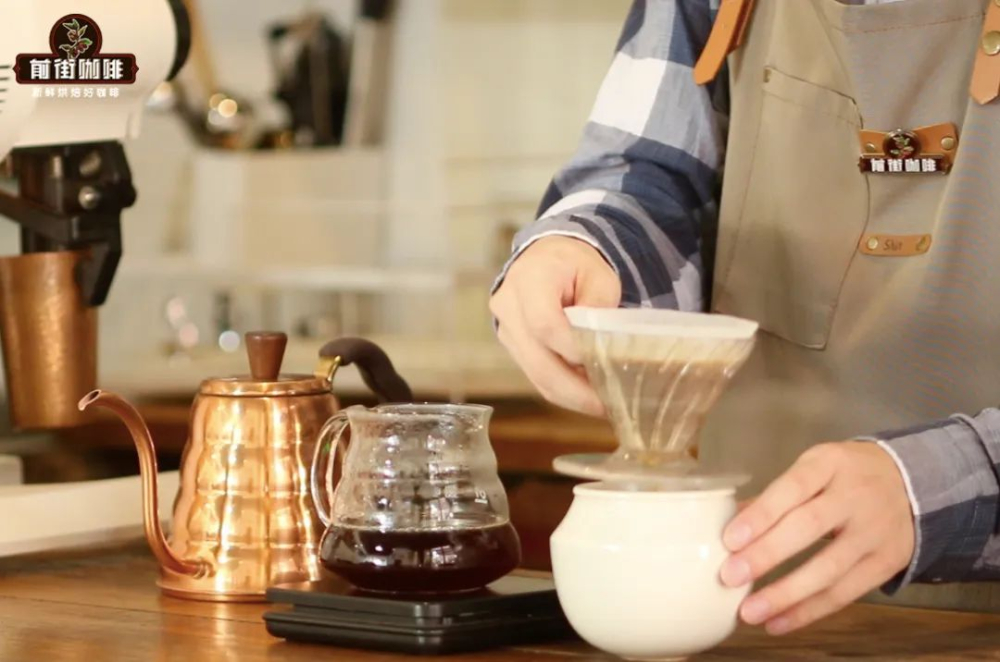
Or the claim that different pouring styles express different flavors — same beans, pour one way for citrus, another way for strawberry. Or: "We used the same recipe, so why does my cup taste worse than yours?"
To the mystified, this all sounds profound and unfathomable.

In reality, once you understand the logic of coffee extraction, every technique — however mysterious it looks — follows patterns you can control.
FrontStreet Coffee identifies the variables in pour-over coffee as: the beans, grind size, coffee-to-water ratio, water temperature, time, and the human hand. These parameters interact and together shape the final cup. Of them, beans, ratio, and water temperature are easiest to master, grind size and time come next, and technique is hardest.

Good beans are the foundation — and "good" doesn't necessarily mean expensive, just free of major defects and within their optimal drinking window. (Don't underestimate the roast date: friends often ask FrontStreet Coffee why a bean brews poorly, only to find it was never properly rested or was stored so long its flavors faded. Coffee generally peaks between 4 and 30 days off roast.)
Ratio and water temperature are the easiest to control because they're concrete numbers — an electronic scale and a thermometer remove nearly all deviation. Get these two right and you'll rarely go wrong.

Grind size is trickier — not conceptually, but practically. For calibration, FrontStreet Coffee recommends a #20 sieve: light-to-medium roasts target a 75–80% pass rate, medium-to-dark roasts a 70–75% pass rate.

The real difficulty is grinder quality. A poor grinder produces lots of fines and boulders with a wide particle spread; brewing that at an 80% pass rate easily leads to over-extraction as fines over-extract during long contact times. The fixes: sift out the fines to narrow the distribution, or grind coarser to shorten effective contact. Diagnose the cause, then solve it.
Among all the variables, the human hand is the least stable. You can set every parameter precisely, but no two pours are ever identical. That's why FrontStreet Coffee recommends the simplest possible method — the three-stage pour — to minimize human error.
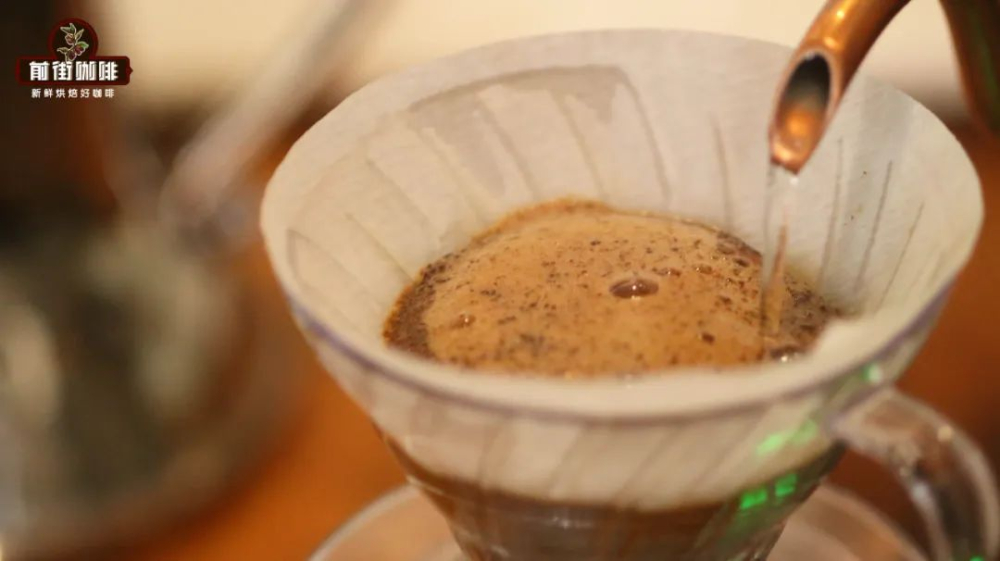
And any question about why a cup tastes the way it does traces back to these factors. Why is this coffee sour? Because the beans are lightly roasted.
Why is the tail of the brew bitter enough to warrant cutting it? Because your parameters are off — grind too fine, too many fines, water too hot, too much water, or too vigorous a stir. Fix the parameters and the bitter tail disappears. Cutting the tail is just a Band-Aid.
FrontStreet Coffee Recommendation
Of course, great beans make every parameter easier. The washed FrontStreet Yirgacheffe Worka Cooperative (Guji Ding Ding) is the classic first specialty bean — soft, bright citrus-berry acidity, jasmine florals, and a green-tea finish — forgiving enough for any beginner's three-stage pour.
For something juicier, the natural FrontStreet Ethiopia Guji Hambela (Hua Kui) is famous for tropical aromas of strawberry, passion fruit, jackfruit, and lychee, with almost no bitterness — "the coffee that doesn't taste like coffee." And if you prefer an iced glass on a hot day, cold brew amplifies florals and fruit while muting roasted woody tones: the FrontStreet Strawberry Candy Gesha Blend makes a lively, wine-like cold brew, while the Kenya Little Tomato at a medium-light roast turns into pure cherry-tomato and black-plum juice over ice.
Important Notice :
FrontStreet Coffee is a long-established specialty coffee roaster in Guangzhou China, selling freshly roasted beans from its own farm in Yunnan as well as dozens of carefully selected single-origin beans from around the world for both pour-over and espresso. The products deliver consistently excellent quality and great value, with shipping within 24 hours. Guangzhou's FrontStreet Coffee shop is recommended by many coffee lovers, and the beans are now available online at the Tmall 。
FrontStreet Coffee has moved to a new address:
FrontStreet Coffee Address: 315,Donghua East Road,GuangZhou
Tel:020 38364473
 Scan and follow the En Gafei WeChat official account. Please indicate that the reprint comes from "En Gafei".

