Can't Taste the Specific Flavors in Coffee? Should the Coffee Flavor Wheel Be Localized?
The Struggle of Identifying Coffee Flavors
I overheard this exchange during a break not long ago:
Barista: "This natural Yirgacheffe has notes of raspberry, grapefruit, orange blossom, and oolong tea..."
Customer A: "Huh? I can't taste any of that! What does raspberry even taste like?"
(So the barista pulls out the SCA Flavor Wheel): "Um... probably somewhere between blueberry and blackberry."
Customer A's friend: "Think of it as a sour, not-very-fragrant strawberry, plus pomelo peel, plus watered-down jasmine tea."
Barista: "...It's grapefruit..."

If you're new to single-origin coffee, this probably feels familiar. You read the flavor notes on a bag of beans or hear them from a barista, go home and search for how to "taste flavors in coffee" — and discover that of ten descriptors, seven mean nothing to you.
So you force yourself to hunt for those flavors, still can't find them, and start wondering if the flavor wheel is a con — or whether you're simply not "worthy" of drinking specialty coffee if you can't identify a single note. Of course not. There's no rule that says you must taste everything on the wheel. Nobody disqualifies you for failing to find raspberry in your cup.
Not everyone can separate the subtle flavors in coffee. Some people are blessed with unusually sharp palates and noses, sure — but most coffee drinkers are ordinary people who can tell that flavor A differs from flavor B without being able to name what A and B actually are. As long as the coffee tastes good to you, that's enough. Don't force it.
The Purpose and Limits of the SCA Flavor Wheel
The point of the SCA Coffee Flavor Wheel is to give enthusiasts and professionals a shared vocabulary for the sour, sweet, and bitter tastes on the palate and the aromas picked up through the nose — in other words, to narrow the gap in how different people describe the same cup. But the wheel carries a flaw that is also arguably its strength: a lack of inclusiveness.
The first coffee flavor wheel was published by the Specialty Coffee Association of America (SCAA) in 1995 as a standard reference, ending situations where baristas from different countries described the same coffee in terms the other couldn't parse. But that first wheel was simple, and it couldn't keep up as bean quality improved and coffee flavors grew ever more refined and layered.
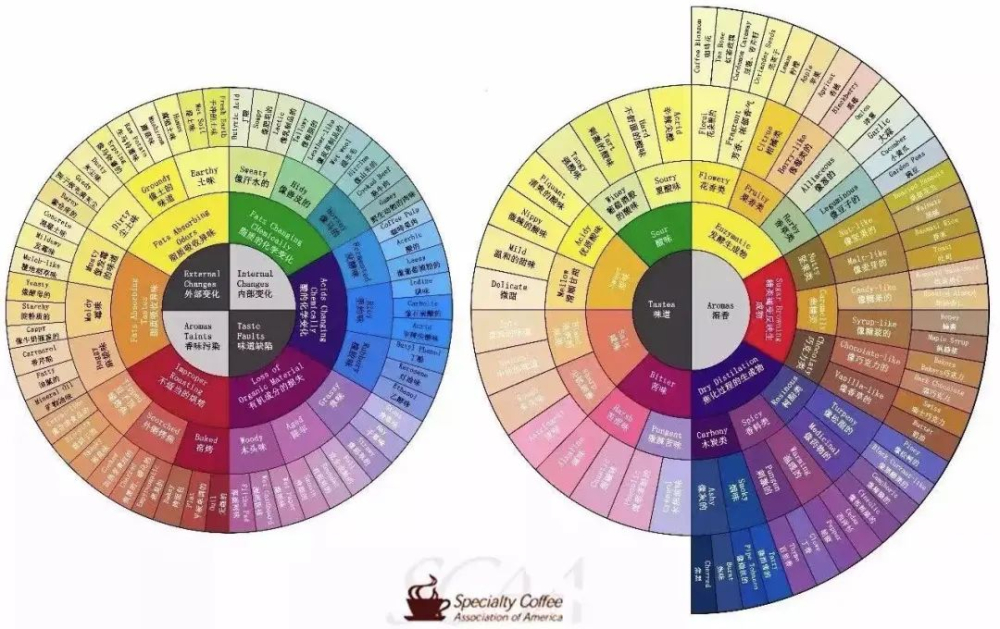
So the SCA, working with World Coffee Research, Kansas State University, Germany's University of Agricultural Sciences, and coffee industry representatives, built the "World Coffee Research Sensory Lexicon" as the foundation for a new wheel. They gathered data from 29 untrained but long-term American coffee drinkers plus 43 coffee industry experts, running cognitive tests on how flavors relate to one another. The new flavor wheel finally appeared in 2016.
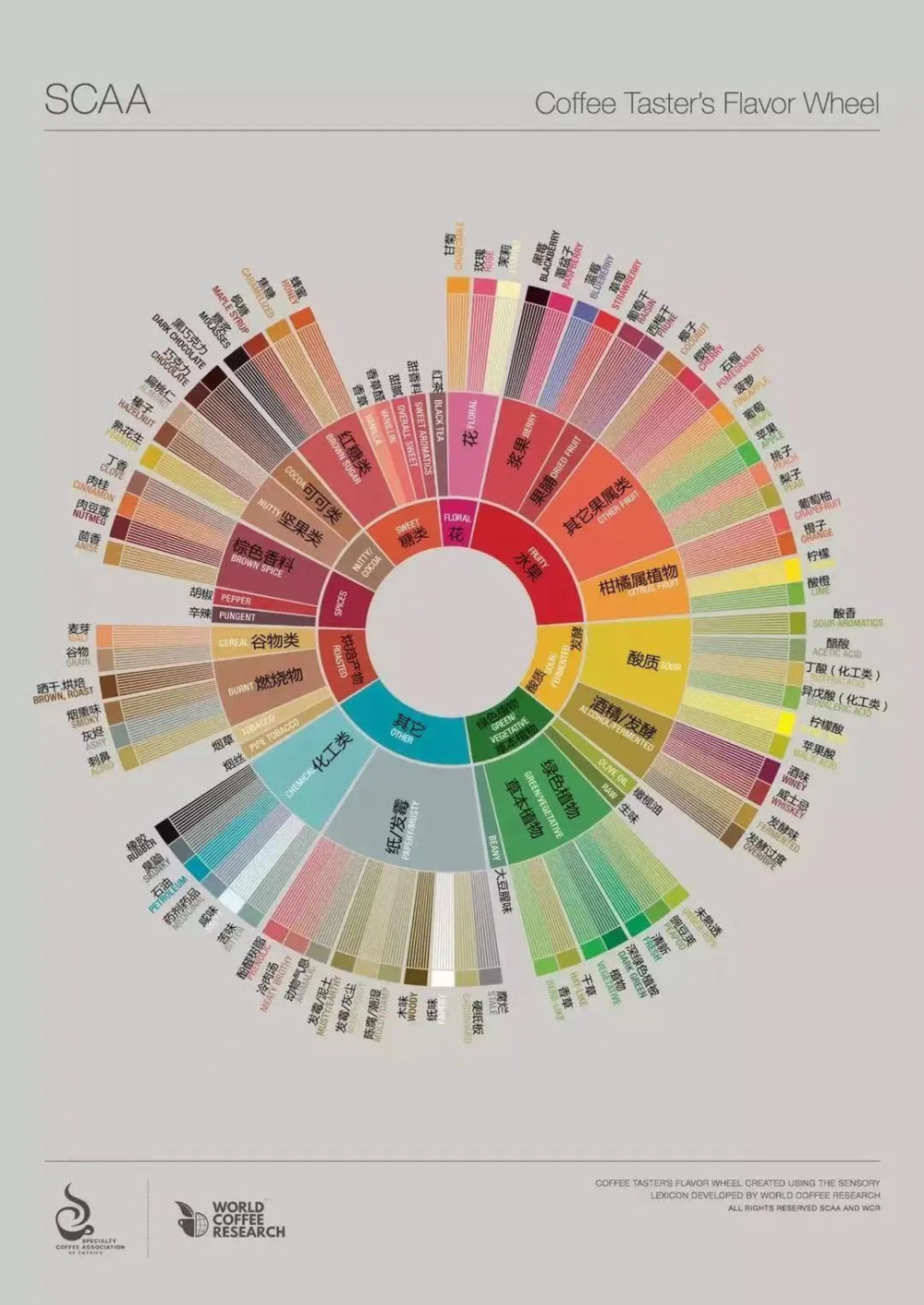
That new wheel offers far more detailed descriptors — but they're descriptors familiar mainly to coffee people in Europe and the Americas. There's no guarantee that enthusiasts and professionals on the other continents have ever encountered the reference flavors at all.
The wheel has been translated into many languages so that people in different regions can at least discuss the same coffee on the same page. In practice, though, plenty of the flavors simply don't resonate across cultures. Treat the flavor wheel as a pointer to a flavor region, not a precise label. Citrus is the classic example — there are dozens of citrus fruits, and if the bright sour aroma in your cup reminds you of "citrus," that's the answer. You don't need to pin it down to orange, tangerine, pomelo, or lemon.
Localized Flavor Wheels
Could the wheel be adapted into localized versions for different regions? Absolutely — with the caveat that a local wheel serves local consumers' communication and judgment; professional discussions still run on the SCA wheel.
In recent years, Taiwan and Indonesia have both begun researching localized wheels and published flavor sets built around what local coffee consumers, enthusiasts, and professionals actually recognize.
Taiwan's version, layered on top of the SCA wheel, adds locally familiar flavors such as dried longan, roselle, ginseng varieties, cedar, and pine, while dropping descriptors that mean little to Taiwanese drinkers — a Taiwan-localized wheel of 95 flavors.
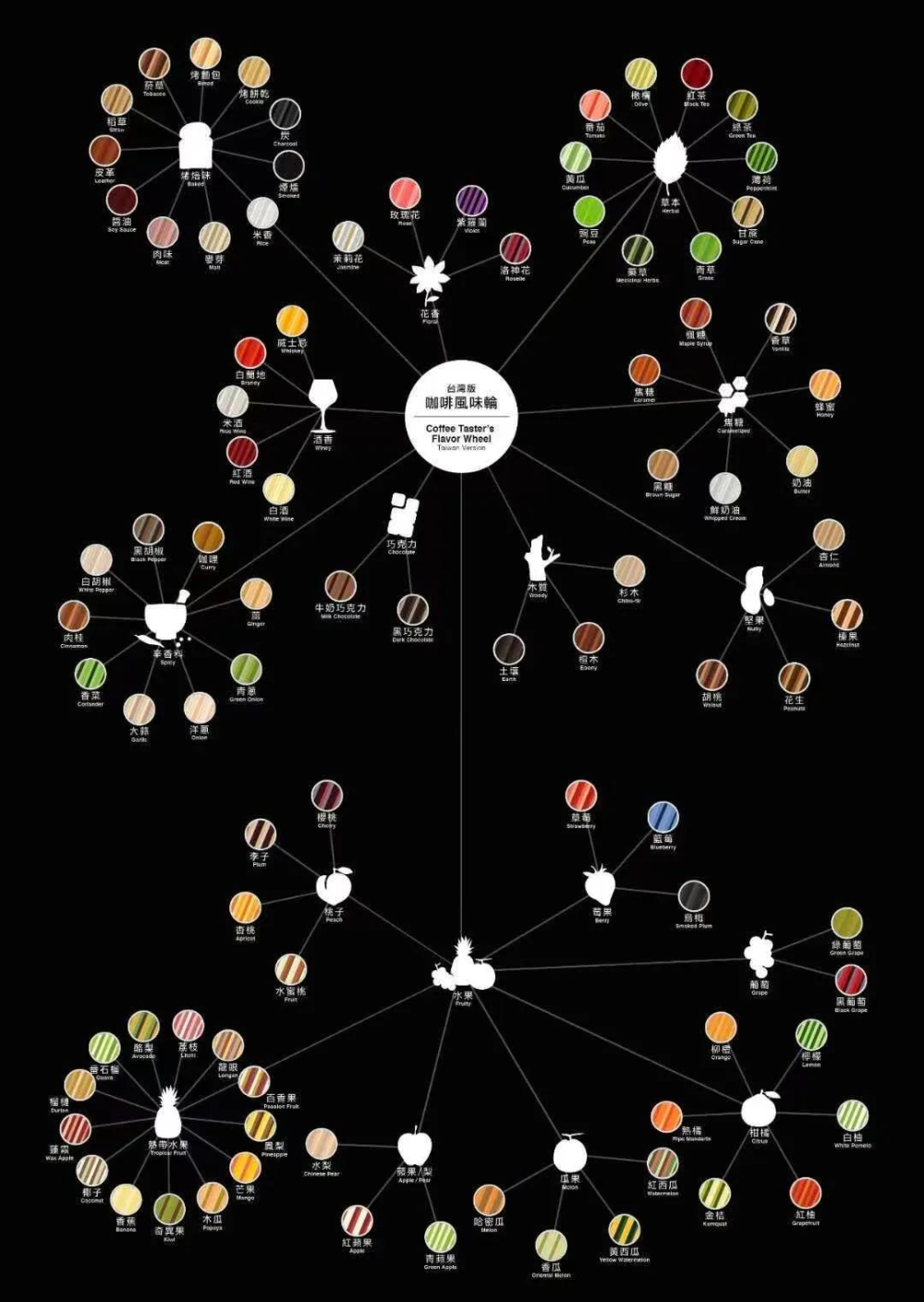
Indonesia, a major coffee origin, built its wheel to sharpen local farmers' flavor judgment so they can improve bean quality more effectively. The Gayo Cuppers team behind it argues that only the people who grow the coffee truly understand what specialty coffee consumers want, know how cultivation and processing can raise bean quality, and can thereby command better prices. Indonesia's localized wheel contains 118 flavors, adding a broader range of plant and spice descriptors to the SCA base.
Does China Need Its Own Flavor Wheel?
"Should China create its own localized flavor wheel?" A netizen asked me this a while back — yes, I remember! Here's the answer: honestly, it doesn't matter much either way.
Flavors carry cultural bias, and too many localized wheels invite conflicting judgments. In Indonesia's wheel, for instance, coffee pulp flavor sits in the fermented-sour category, while the SCA wheel classifies it as a defect. Localized wheels also tend not to clearly separate defect flavors — which helps consumers recognize good flavors but weakens their ability to spot flaws.
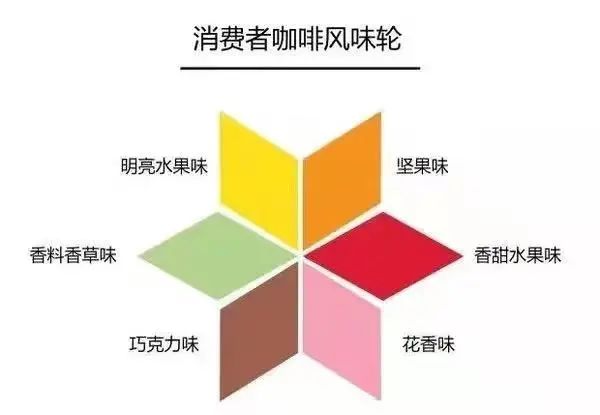
What tastes good or bad varies by culture, and China's food culture is famously diverse — familiar flavors differ from region to region. Building one national wheel would be no small task.
Having one would be a good thing, to be fair — it would signal how far specialty coffee has spread and how inclusive and diverse the scene is becoming. But not having one is fine too. In any setting, drinking and sharing coffee is a pleasure and a conversation starter; the joy is in sharing what you experience in the cup.

A Word of Encouragement
When someone can't taste a flavor, the kind response is to encourage them to taste and smell more broadly — to notice and remember the flavors that linger after swallowing, in the retronasal space. Not to insist they "should" taste it, and certainly not to deliver a lecture of unfriendly comments.
Coffee is just a drink, and everyone is free to enjoy it. Not everyone needs to dissect what's in the cup, and no one should give up drinking coffee because someone else's attitude was sourer than the brew.
Image source: Internet
FrontStreet Coffee Recommendation
If you're just starting out with Ethiopian coffee, FrontStreet's washed Yirgacheffe is the classic first bean — known for white jasmine florals, bright citrus and lemony acidity, and a tea-like finish, all at a friendly price. Yirgacheffe sits in Ethiopia's Sidamo region at roughly 1,700-2,100 meters, with trees planted above 1,800 meters, and the region was only officially separated from Sidamo in 2010 because its reputation had grown so large.
For a step up, try FrontStreet's washed Guji Cooperative coffee from Worka, at the southeastern tip of Yirgacheffe: a former member of the YCFCU union, washed in the most traditional style, with no harsh bitterness at all — just crisp citrus, lemon acidity, and jasmine fragrance. Or go natural with FrontStreet's Red Cherry, made from fully ripe cherries sun-dried on raised beds and turned every 2-3 hours during the first days: it keeps the classic Yirgacheffe character while adding tropical fruit — citrus-like acidity, berry juiciness, honey sweetness, and a creamy smoothness.
Important Notice :
FrontStreet Coffee is a long-established specialty coffee roaster in Guangzhou China, selling freshly roasted beans from its own farm in Yunnan as well as dozens of carefully selected single-origin beans from around the world for both pour-over and espresso. The products deliver consistently excellent quality and great value, with shipping within 24 hours. Guangzhou's FrontStreet Coffee shop is recommended by many coffee lovers, and the beans are now available online at the Tmall 。
FrontStreet Coffee has moved to a new address:
FrontStreet Coffee Address: 315,Donghua East Road,GuangZhou
Tel:020 38364473
 Scan and follow the En Gafei WeChat official account. Please indicate that the reprint comes from "En Gafei".