
What's the Right Coffee Powder to Water Ratio for Brewing? Expert Guide to Pour-Over Coffee Parameters
The coffee-to-water ratio is a crucial pour-over parameter. Put simply, for a fixed amount of grounds there is an optimal amount of water that expresses the coffee's aroma perfectly. Learning to find the right coffee-to-water ratio is therefore an important part of learning to brew.

What is the coffee-to-water ratio?
The coffee-to-water ratio is the proportion between grounds and total water, and it directly affects concentration. Whatever the brewing method, FrontStreet Coffee always fixes the coffee-to-water ratio before extraction. FrontStreet Coffee's shops, for example, typically use 15 grams of grounds for a single serving of pour-over, then brew at a 1:15 ratio, meaning about 225 milliliters of hot water.

With other parameters unchanged, the more water you pour, the lower the concentration and the more dispersed the flavor; the less water, the higher the concentration and the denser, heavier the coffee. More water also raises the extraction rate, pulling out more soluble material. As pouring continues, extraction efficiency keeps falling: the desirable compounds have already been extracted, and what remains gives up bitter substances, making the coffee bitter and astringent. So we need to find a coffee-to-water ratio that lands both concentration and extraction rate in the sweet spot.
What does the coffee-to-water ratio actually change?
FrontStreet Coffee ran a small experiment, holding every other parameter fixed while brewing three pour-overs at 1:10, 1:15 and 1:20 for comparison.
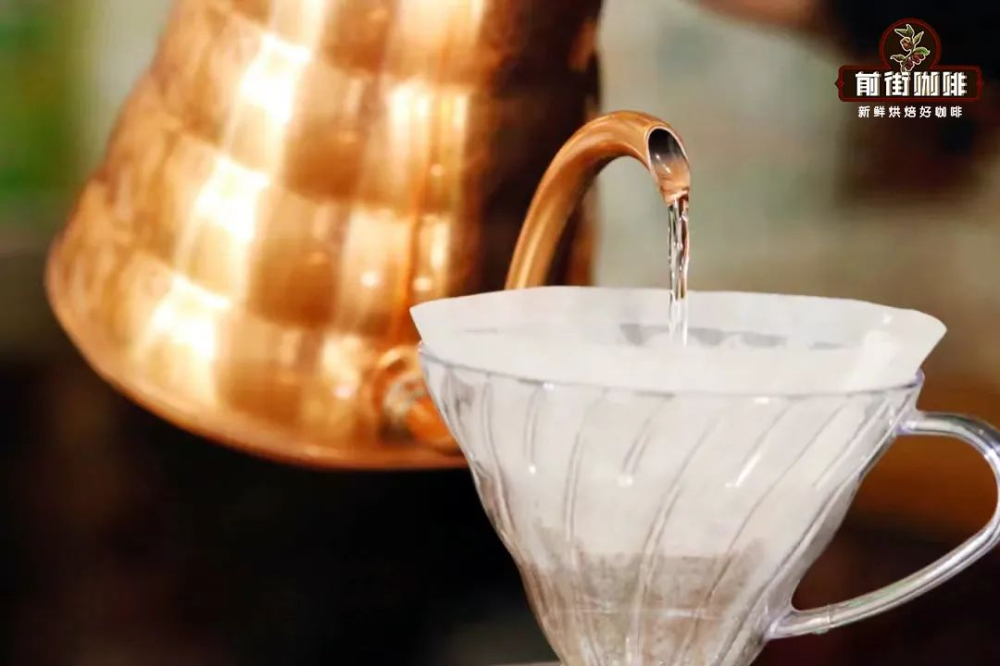
For the beans, FrontStreet Coffee chose medium-light roasted FrontStreet Coffee Kenya Asalia, fixed at 15g, then extracted it at three different ratios. The three sets were 1:10, 1:15 and 1:20, meaning water amounts of 150ml, 225ml and 300ml. The grind passed 80% through a #20 sieve, similar to sugar granules; the water temperature was 91°C; and the pouring technique was the same three-stage method across all three.
Measured with a concentration meter, the 1:10 ratio came out at 1.93%, the 1:15 at 1.35%, and the 1:20 at 1.04%. Clearly, less water means higher concentration, and more water means lower concentration.
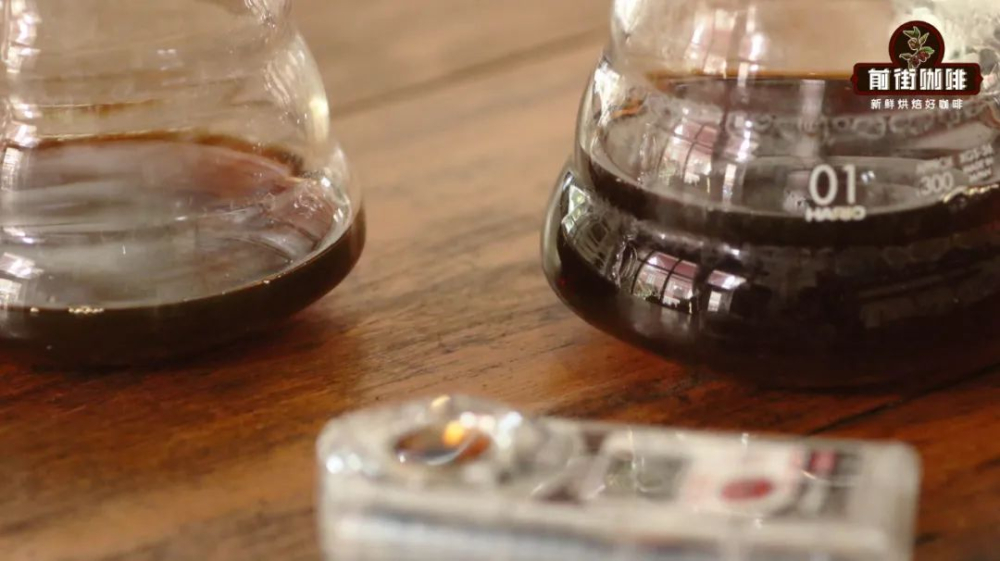
It isn't as simple as using less water for a stronger cup or more water for a milder one, though. Besides concentration, water amount also moves another flavor-related parameter: extraction rate. Once you know the concentration, the extraction rate is easy to work out. The 1:10 ratio gave a 16.43% extraction, the 1:15 gave 18.55%, and the 1:20 gave 19.72%.
The more water poured, the higher the extraction rate. But by looking at how much the rate rises, we can see that if you split the 300ml into two parts, the first 150ml already reaches 16.43%, while the next 150ml lifts it by only 3.29%. (This is why the 40-60 brewing method suggests extracting flavor in the first 40% and adjusting concentration with the remaining 60%.)
That means although less water gives a more concentrated cup, the extraction rate is lower, so fewer coffee substances are extracted overall. This is why coffee brewed at 1:10 tastes only strong, acidic and bitter; excessive concentration can be unpleasant in its own right.
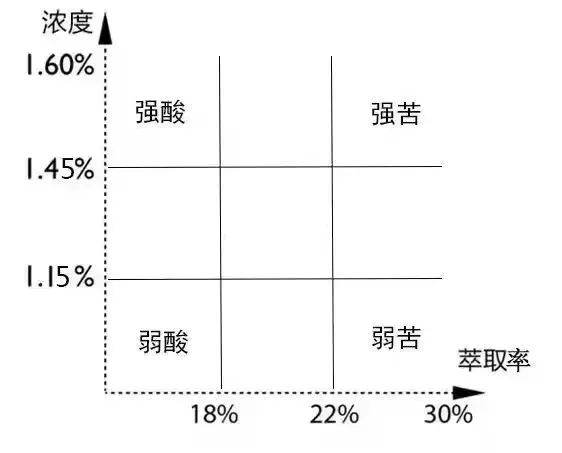
With more water, more substances are extracted, but because extraction efficiency drops sharply with the later pours, the concentration also becomes very weak. And the soluble material includes both the sweet and sour notes we enjoy and the bitter ones we don't; more extracted material naturally means more bitterness. Coffee at 1:20, for instance, tastes thin, lacking distinct coffee flavor and carrying a faint bitterness.
So the right coffee-to-water ratio is really about finding a balance point between concentration and extraction rate, bringing both to their best.
Must pour-over use the universal 1:15?
You may have seen 1:15 recommended so often that it seems like an unchangeable fixed parameter. It isn't. The reason 1:15 is suggested is that it's a relatively safe ratio, hard to get wrong, and recommended parameters target a broad audience that includes many beginners.
That calls for a very stable set of parameters, usually emphasizing variables that are easier to control, such as coffee-to-water ratio, water temperature and pouring method, to cut down the number of unknowns. Everything bends to accommodate the hardest variable to control: grind size, which is where many beginners' poor results come from.

If you've started researching coffee-to-water ratios, it proves you've moved past the beginner stage and have some grasp of brewing parameters. What were fixed variables for beginners, like ratio and water temperature, now become adjustable factors you can tune to make coffee taste better.
The 5ml difference
How much difference does pouring 5ml more or less make? Data from concentration-meter tests shows only a 0.02% gap, and once you allow for margin of error the two are almost indistinguishable.
FrontStreet Coffee would like to share a story. Once, while brewing a FrontStreet Coffee Geisha, the 1:15 ratio produced concentrated flavors and we couldn't detect the "money's worth" we were after. The second time, we poured just 5ml more water than before, a total of 230ml, and the cup tasted far more comfortable, the flavor complexity emerging at once.
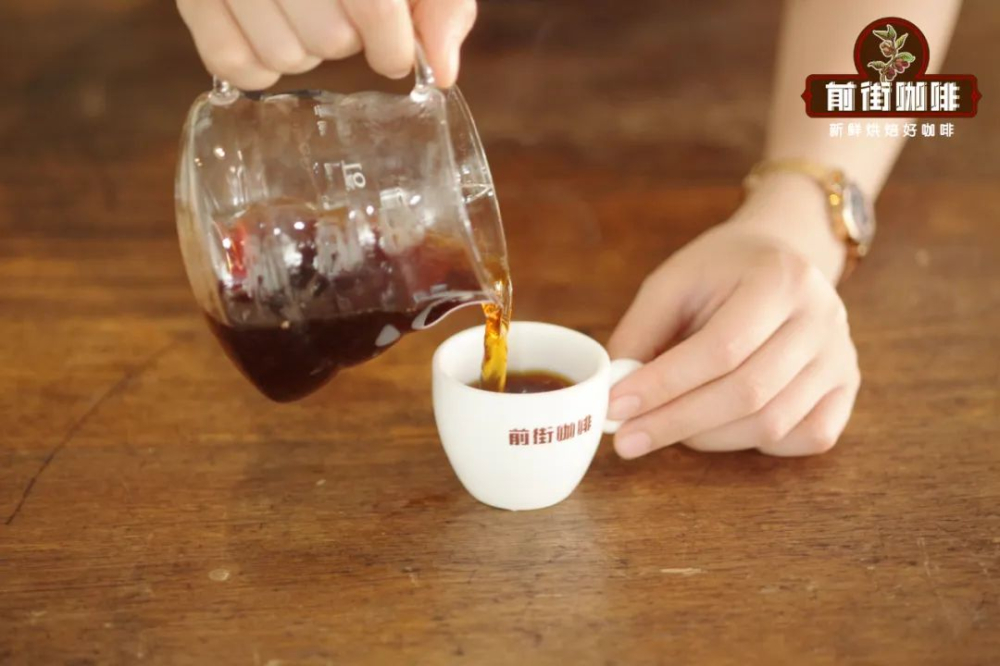
FrontStreet Coffee's experience sharing
Finally, FrontStreet Coffee sums up a few thoughts on coffee-to-water ratios to share:
1. 1:15 is not the only coffee-to-water ratio, nor necessarily the most suitable one. For different beans and personal preferences, it might be 1:14, 1:16 and so on.
2. The general pour-over coffee-to-water ratio range is roughly 1:13-1:18. Within that range, most people can more easily find the flavor profile that suits them.

3. For harder beans, you can lengthen the ratio a little, say between 1:16 and 1:17. "Hard" refers to the roasted bean, such as a high-grown, lightly roasted coffee.
4. Dark-roasted coffees generally show rich, mellow flavors that are quite appealing. You can choose between 1:13 and 1:15 depending on how concentrated you like it.
FrontStreet Coffee Recommendation
Because the ratio you dial in depends on the bean, it pays to start with coffees that respond well to adjustments. FrontStreet Ethiopia Huakui, a sun-dried Guji Hambela lot, is driven by tropical fruit aromas of strawberry, passion fruit, jackfruit and lychee with clear sweetness and very little bitterness, so it stays enjoyable even when you push the ratio higher. FrontStreet Yirgacheffe Gotingding, a washed Ethiopian coffee, gives bright citrus, berry and floral notes with a green-tea sweetness and handles a lighter, brighter pour beautifully.
For a clean, layered cup to fine-tune on, FrontStreet Costa Rica Mozart is a raisin honey-processed coffee with the sweetness of raisins and blueberries and the fragrance of osmanthus and rose, while FrontStreet Kenya Cherry Tomato, a washed Kenyan lot from the Sika region grown at 1,550-1,750 meters from SL28 and SL34, delivers vivid cherry-tomato and smoked-plum acidity with a full, juicy body that rewards careful ratio work.
Important Notice :
FrontStreet Coffee is a long-established specialty coffee roaster in Guangzhou China, selling freshly roasted beans from its own farm in Yunnan as well as dozens of carefully selected single-origin beans from around the world for both pour-over and espresso. The products deliver consistently excellent quality and great value, with shipping within 24 hours. Guangzhou's FrontStreet Coffee shop is recommended by many coffee lovers, and the beans are now available online at the Tmall 。
FrontStreet Coffee has moved to a new address:
FrontStreet Coffee Address: 315,Donghua East Road,GuangZhou
Tel:020 38364473
 Scan and follow the En Gafei WeChat official account. Please indicate that the reprint comes from "En Gafei".

