The Impact of Pour Height on Coffee Flavor: Standard Pour-Over Coffee Techniques Introduction
The Impact of Water Stream Height in Coffee Brewing
Have you ever paid attention to how high you hold the water stream above the coffee bed when pouring? What does that height actually do to the brew?
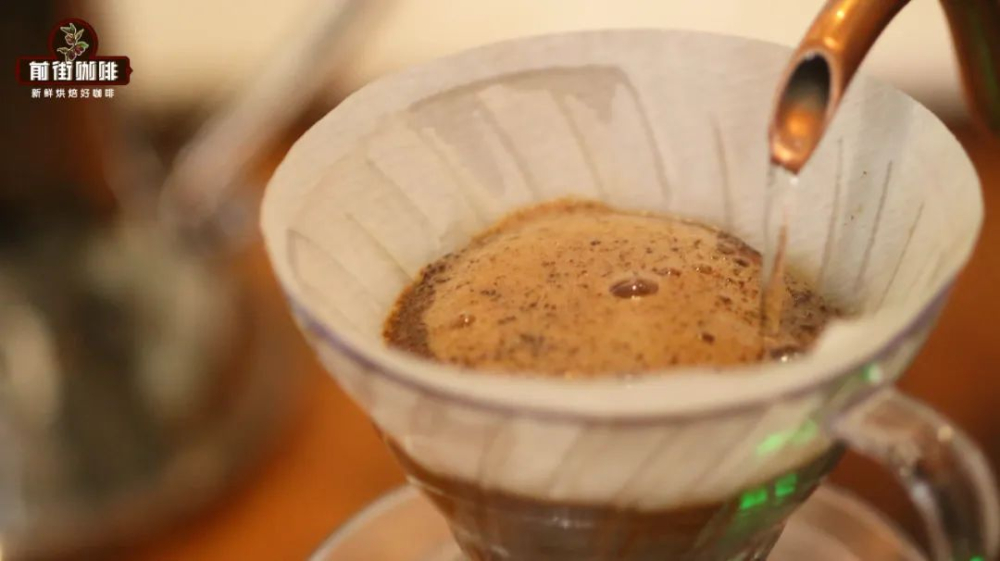
From FrontStreet Coffee's observations, most home brewers hold a stream somewhere between 0-7cm above the bed. Some keep the kettle spout nearly touching the liquid surface; others love a long, straight, dramatic pour. There's no right or wrong way to brew — FrontStreet Coffee simply wants to unpack how stream height affects extraction, so you can find what best fits your routine.
Water Stream Penetration
In pour-over coffee, the "rinsing and stirring" effect of the stream on the grounds is one of the main accelerants of compound release. The stream you pour isn't actually cylindrical — it's an inverted cone, wider at the top and narrower at the bottom. Raise it high enough and the stream breaks into droplets, or breaks off entirely.
In ordinary brewing we avoid that breakup, which is why restraint on maximum height pays off — generally 7cm is already the practical limit (special techniques aside).
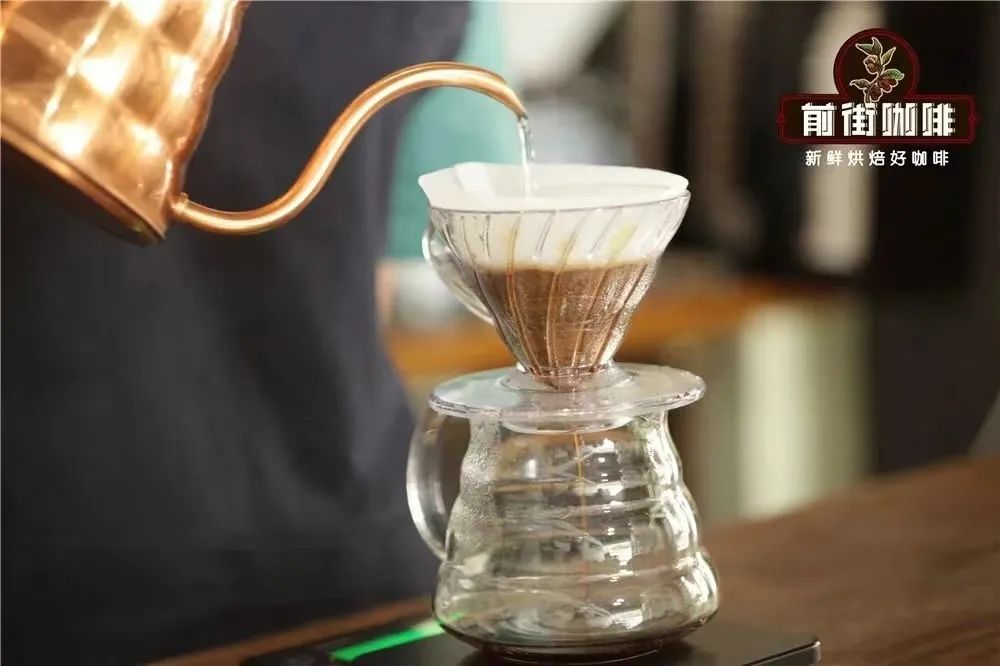
The higher the stream, the greater its penetration, and the more vigorously it churns the coffee bed. A lower stream is gentler, agitating the grounds less. And note: more agitation isn't automatically better — much of the bitterness in a cup comes from stirring and agitating the grounds too hard.
Heat Loss
FrontStreet Coffee once ran a controlled experiment: identical brewing parameters, only the pour height changed — 2cm versus 10cm. The coffee brewed at 2cm measured a concentration of 1.44%, clearly higher than the 1.30% from the 10cm pour.
The gap comes down to heat loss. The temperatures FrontStreet Coffee publishes in brewing recipes always refer to the water inside the kettle. The moment water leaves the spout it starts cooling: exposed to air, the stream sheds heat. The higher the pour, the more surface area of water contacts the air, the more heat is lost — and the cooler the water actually extracting coffee inside the dripper. Lower extraction temperature, lower concentration.
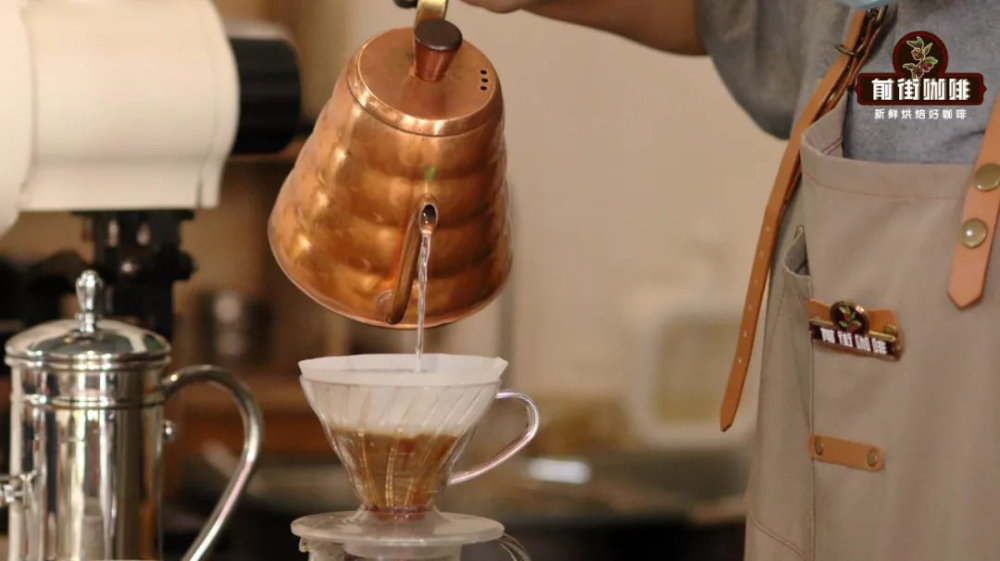
This is also why FrontStreet Coffee advises against using an oversized dripper for a small dose of grounds. A tall dripper forces you to raise the kettle higher, heat loss climbs, and pouring itself gets much harder — it's all too easy to clip the dripper walls.
Water Stream Verticality
Most kettle spouts don't deliver a vertical stream. The water leaves in a slight outward arc, straightening as it falls. So pouring with the spout pressed right down against the bed often causes uneven extraction, because the stream is still curved: the coffee bed ends up with a thicker wall on the side nearest the kettle, a thinner wall on the far side — occasionally the stream even cuts through the bed wall.
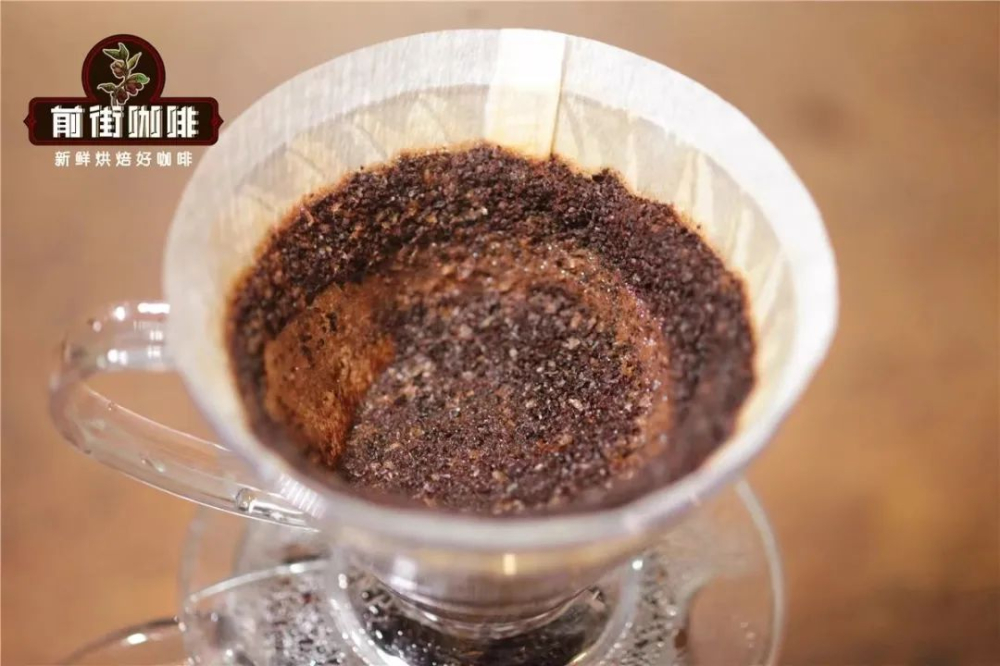
The practical fix: keep at least 2-3cm between spout and liquid surface, giving the curved stream room to straighten out.
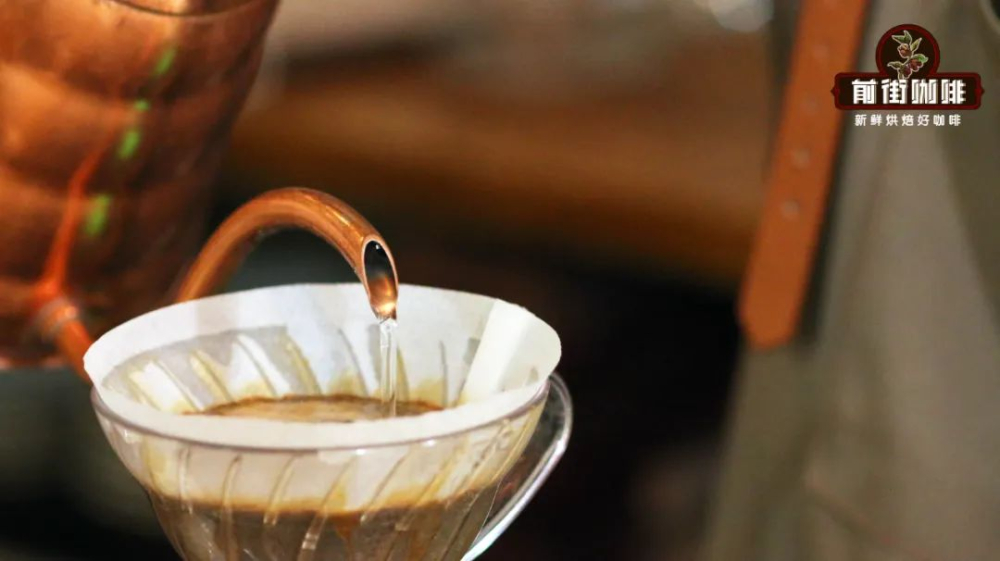
Ultimately, pour height touches only three variables: stirring intensity, extraction temperature, and stream verticality. Any height can work — provided you understand what that height will do to your cup. FrontStreet Coffee, for instance, doesn't recommend brewing right against the liquid surface, since it easily produces uneven extraction. Yet some brewers genuinely pull even, delicious coffee that way.
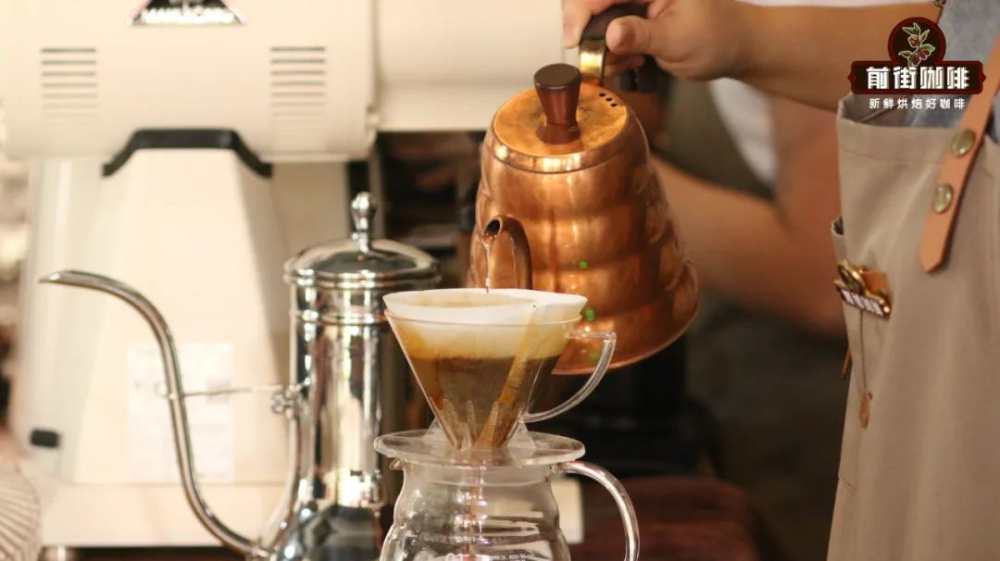
When brewing, FrontStreet Coffee typically holds a stream height of 3-4cm. Not because that height produces the best-tasting coffee, but because at that height accidents are least likely and the technique is easiest to master.
FrontStreet Coffee Recommendation
Pour height is only half the equation — the beans decide what you're extracting in the first place. If you're new to pour-over and want a dripper that's practical, forgiving, and handsome, the V60 is the near-universal recommendation. It was designed by Hario, the Tokyo glassware maker founded in 1921, which redesigned the V60's prototype in 2004 and released it to market the following year, named for its distinctive 60° cone angle and "V" profile. That cone and angle force the water to travel through the center before dripping out, extending contact between water and grounds so aromas and flavors extract fully, while the signature single large hole lets flow rate depend almost entirely on your pour control.
For the V60's bright, fast extraction, floral-fruity beans shine — try the classic-Yirgacheffe FrontStreet Guodingding, the tropically fruity FrontStreet Huakui, or Gesha-style and raisin-toned options like FrontStreet Strawberry Candy and FrontStreet Mozart. For a mellower, low-acid cup, the PWN Golden Mandheling (deep roast, herbal and dark chocolate, low acid and long) or the balanced Brazil Fazenda Rainha (nuts, cocoa, caramel sweetness, silky and unstrained) both work beautifully by V60, espresso, or moka pot; and the Jamaica Blue Mountain No. 1 remains the benchmark for balance — no aggressive fruit acidity, no heavy roast bitterness, just cream, caramel, chocolate, nuts, honey, and a whisper of fruit.
Important Notice :
FrontStreet Coffee is a long-established specialty coffee roaster in Guangzhou China, selling freshly roasted beans from its own farm in Yunnan as well as dozens of carefully selected single-origin beans from around the world for both pour-over and espresso. The products deliver consistently excellent quality and great value, with shipping within 24 hours. Guangzhou's FrontStreet Coffee shop is recommended by many coffee lovers, and the beans are now available online at the Tmall 。
FrontStreet Coffee has moved to a new address:
FrontStreet Coffee Address: 315,Donghua East Road,GuangZhou
Tel:020 38364473
 Scan and follow the En Gafei WeChat official account. Please indicate that the reprint comes from "En Gafei".