
Yihetang and Mixue Ice Cream & Tea Exposed Again for Using Expired Ingredients! Is Food Safety No Longer Valued in the Industry?
New-Style Tea Shops: A Lifeline for Young Consumers
Happy? Grab a cheese tea. Sad? Indulge in a signature milk tea with extra toppings. Thirsty? A fruit tea will do! New-style tea shops have become the "lifeline" of today's younger generation.

The Growing Food Safety Crisis in the Tea Industry
As consumer expectations climb, tea brands keep expanding their store networks while churning out new products. In this race for customers, food safety has quietly become a widespread problem across the new-style tea industry.
The recurring incidents are inseparable from large-scale expansion and weak brand management. The high operating costs of directly operated stores create a tug-of-war between low cost and high quality, while franchise stores suffer from insufficient professional management — and with personnel quality varying wildly from shop to shop, the entire industry sits in a deeply unhealthy state. That should worry anyone invested in the industry's sustainability, to say nothing of consumer health.
Recent Violations: Mixue and Yihetang Under Fire
Recently, Mixue and Yihetang — both hugely popular among students — landed on Weibo's trending list simultaneously, once again for using expired ingredients. On July 4th, according to administrative penalty information published on the Credit China (Yueyang, Hunan) website, a Yihetang store in Hunan was fined 5,976 yuan by the Yueyang County Market Supervision Administration for using expired pudding to make and sell a total of 8 "Yibei Grass Jelly" milk teas from May 12th until the ingredients were seized.
The same day, a Mixue store in Beijing was fined 5,000 yuan by the Fengtai District Market Supervision Administration because its opened frozen lychee juice had exceeded the store's required shelf life by 2 days. As milk tea brands keep making headlines over food safety, netizens seem increasingly resigned. Regulators have imposed appropriate penalties, but weak legal deterrence means repeat offenders show no sign of learning their lesson.
Disturbing Practices Exposed
Not long ago, undercover journalists exposed a litany of shocking problems at Yihetang. Employees showed utter disregard for food safety: unsanitary handling environments and the use of expired, moldy ingredients left many netizens stunned.
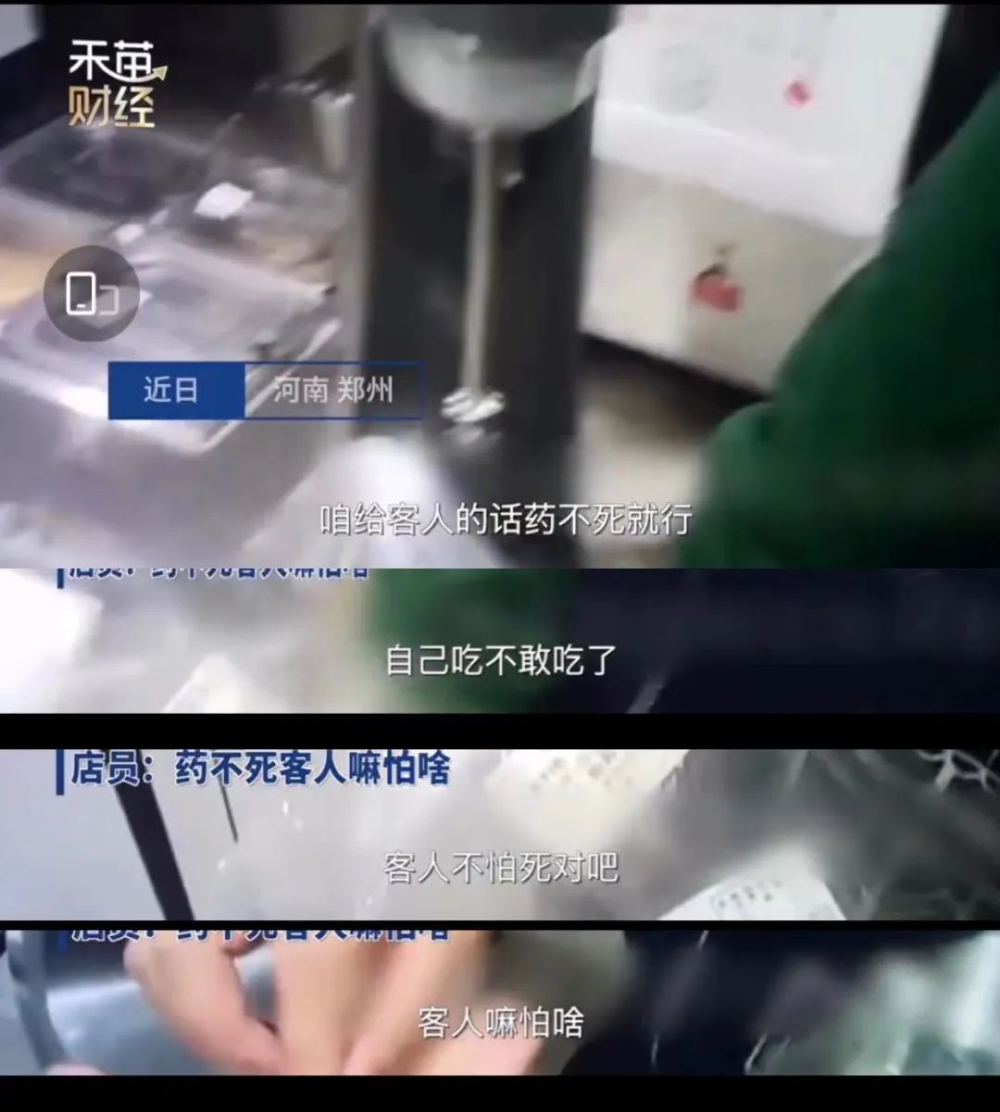
This May, multiple Yihetang stores in Zhengzhou were found to have used "closed-for-the-day" ingredients the next day; relabeled expired ingredients for continued use; used moldy fruit; fished insects out of toppings and kept using them; discovered insects in finished drinks, unsealed them, removed the insects and resealed them for resale; handled fruit without the required gloves; and tolerated flies crawling around the tea dispenser outlets. Faced with issues that directly affect consumer health, employees showed no concern whatsoever — one even remarked: "As long as it doesn't kill the customers, it's fine."
Mixue stores in multiple cities have been exposed for altering date labels on opened ingredients, using expired coffee powder, arbitrarily changing or failing to record ingredient expiration tracking cards, using overnight ice cream mixtures, tea and milk tea materials, and skipping the washing of fresh fruit before use. These stores have received varying degrees of penalties from local market supervision authorities.
Is this because the products are cheap? Not at all. Even directly operated brands targeting the mid-to-high-end market have repeatedly been caught in hygiene scandals! Their expansion models differ, but their approach to food safety problems is remarkably similar.

Systemic Management Issues
Every administrative penalty, in effect, targets only the company — employees feel no alarm; everything is met with indifference. In the restaurant market, both personnel and management take time to mature, and store managers play an especially crucial role.
As the saying goes, "when the upper beam is not straight, the lower beams will be crooked." With brands expanding at full tilt, good store managers are hard to find, so many stores' management lags far behind the brands' service and quality standards. Without experienced managers, daily sales forecasts and inventory planning go badly awry — and expired ingredients keep getting used.
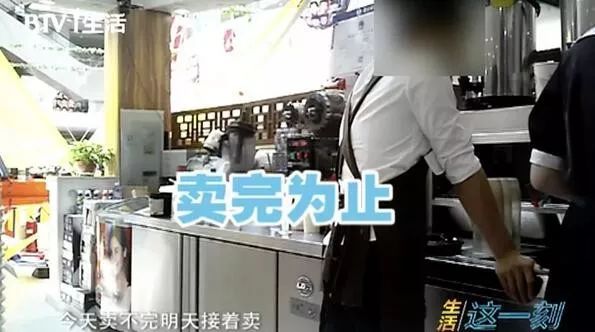
The store manager situation is not encouraging, and the state of rank-and-file staff deserves equally deep reflection. High turnover pushes managers to demand too much too fast; under-trained employees get deployed immediately, and problems pass from one generation of staff to the next, compounding with each cycle. Food safety awareness erodes generation by generation — and the problems keep recurring.
Industry Challenges and Consumer Trust
As brand owners race to expand, are they considering personnel quality and food safety? These supposedly "minor" issues keep eroding consumer trust — can that really lead to healthy development? Obviously not. Making money matters, but consumer health matters more.
The Chinese food industry analyst Zhu Danpeng once stated: "Excessively rapid expansion brings certain risks to brand identity and food safety." As things stand, food safety has become the biggest problem facing brand enterprises. The new-style tea industry continues to grow rapidly, but balancing space, scale and economic benefit remains a hard challenge for the whole sector. However that balance is struck, food safety must always come first.
Image Source: Internet
FrontStreet Coffee Recommendation
Food safety starts with the raw materials — which is why sourcing matters. From FrontStreet Coffee's range, these three beans combine dependable quality with honest, traceable origins:
FrontStreet Ethiopia Washed Guodingding (Yirgacheffe) — a cooperative-sourced Yirgacheffe with jasmine florals, lemon acidity and berry tones. Clean, bright and transparent from farm to cup.
FrontStreet Ethiopia Natural Huakui (Sidama) — a traditional natural-process Sidama with berry, floral, jackfruit, melon and honey notes: sweet, smooth, and reassuringly straightforward in its handling.
FrontStreet Brazil Fazenda Rainha — single-estate Yellow Bourbon from Brazil: nut, cocoa and sugarcane sweetness, viscous and smooth. Traceable to one farm, versatile for every brew method, and reliably consistent cup after cup.
Important Notice :
FrontStreet Coffee is a long-established specialty coffee roaster in Guangzhou China, selling freshly roasted beans from its own farm in Yunnan as well as dozens of carefully selected single-origin beans from around the world for both pour-over and espresso. The products deliver consistently excellent quality and great value, with shipping within 24 hours. Guangzhou's FrontStreet Coffee shop is recommended by many coffee lovers, and the beans are now available online at the Tmall 。
FrontStreet Coffee has moved to a new address:
FrontStreet Coffee Address: 315,Donghua East Road,GuangZhou
Tel:020 38364473
 Scan and follow the En Gafei WeChat official account. Please indicate that the reprint comes from "En Gafei".

