
Five Common Mistakes in Pour-Over Coffee Brewing: A Comprehensive Guide
Pour-over coffee is a skill that is easy to pick up but difficult to master. In an age of abundant online learning resources, the barrier to self-study has never been lower. But "free" knowledge is often unsystematic and rarely covers every angle, which leads many self-taught enthusiasts straight into common misconceptions. That is why you so often hear advice like, "When entering a completely new field, it is best to have someone guide you at the start. Otherwise it is easy to go down the wrong path, and correcting mistakes later is much harder than starting from scratch."
Here, FrontStreet Coffee would like to share several misconceptions that self-taught pour-over enthusiasts often run into.
Misconception 1: Starting the timer only after finishing the bloom pour
Everyone agrees the bloom needs 30 seconds; the confusion is when to start the clock. Some start timing from the moment they begin pouring, others wait until the pour is finished. That creates an 8-9 second difference between the two approaches.
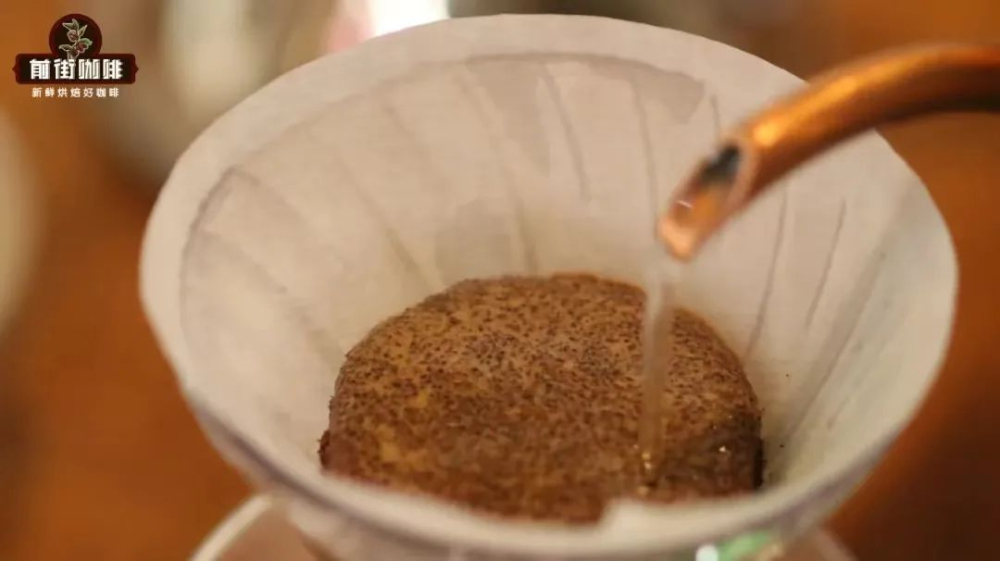
Anyone who understands the blooming principle knows the process actually begins the moment water touches the grounds. If you start timing 30 seconds after the pour is complete, the real bloom time is closer to 38-39 seconds.
So the correct approach is to start timing the moment you begin pouring water.
Misconception 2: The wrist-swing pour
Many enthusiasts have seen baristas pour with a wrist-swinging motion, a technique that uses the wrist to control the pour and creates height differences in the spout during the circular pour, giving the water stream momentum. It looks impressive, so many people try to copy it.

FrontStreet Coffee does not recommend the wrist-swing pour for beginners, because it demands a solid foundation in water control. Without that foundation, the technique introduces more human variables. In fact, many beginners report that their coffee tastes muddled, and part of the cause is wrist-swing pouring.
FrontStreet Coffee suggests sticking to level circular pouring when brewing and mastering the fundamentals first.
Misconception 3: A very small flow is the most stable
Some enthusiasts pursue extreme caution through the whole brew, careful for fear their own variables will ruin a cup. They measure the coffee carefully, pour carefully, and use a very fine stream throughout.
In reality, brewing with a very small flow often produces concentrated flavors that never fully develop, because the pouring takes longer and the extraction time is extended.
Misconception 4: Using a large flow at the end to flatten the coffee bed
Some enthusiasts like to use a large flow near the end of the pour to rinse the filter paper and wash down the grounds clinging to the sides. Their reasoning is that this ensures complete extraction and does not waste the grounds stuck to the paper's edge.
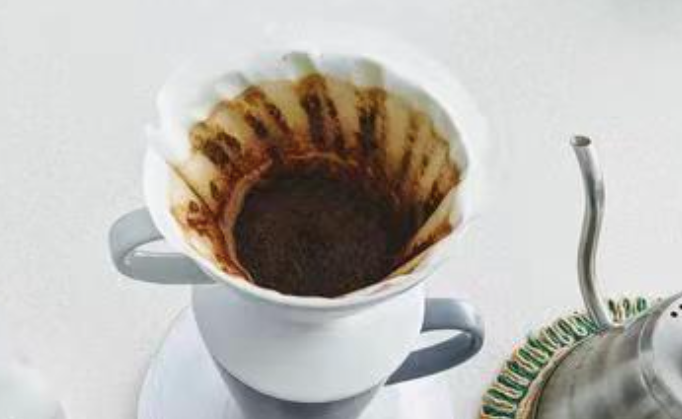
In reality, doing this sends the water poured onto the filter flowing away along the filter's ridges. When the grounds on the sides are washed down, they thicken the coffee bed, and the fine particles that were clinging to the filter edges are redistributed to the bottom, making it even harder for water to pass through. This truly creates a situation where some areas are over-extracted while others are under-extracted.
Of course, this is not to say the method is completely wrong; there are brewing approaches that use it as part of a systematic method. The key is that it must be part of a coordinated whole. If beginners are mixing and matching techniques from various sources, it is best to abandon it.
Misconception 5: Removing the filter before the coffee has finished dripping
Some enthusiasts hold an almost superstitious belief in "flow cutting." They believe the final 10-20ml of coffee is the source of bitterness, so they pull the filter when about 20ml of coffee liquid is still sitting in the dripper.
FrontStreet Coffee wants to be clear here: brewing coffee is not mysticism; it is scientific brewing based on evidence. That shows up in the brewing parameters, where we focus on grind size, water temperature, coffee-to-water ratio, and so on.
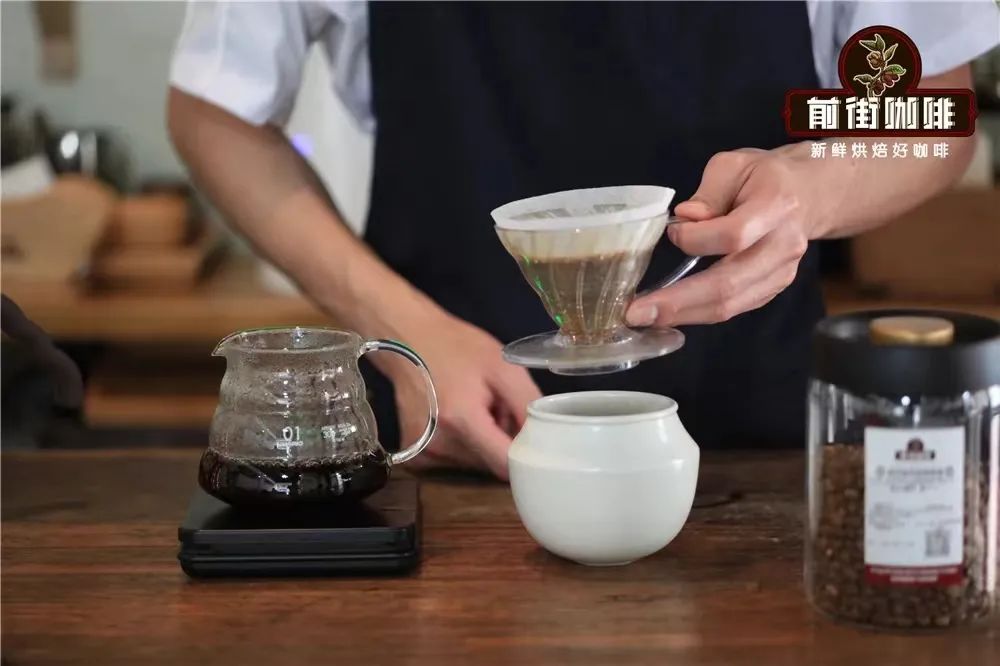
If you cut the flow, the coffee-to-water ratio is off, and the actual amount of coffee liquid is less than intended. That introduces uncertainty. If you believe the final 10-20ml is the source of bitterness, you should optimize your brewing parameters in later brews rather than rely on flow cutting.
Flow cutting is an emergency measure. When a brew runs into an unexpected situation, for example the filter clogs and water stops flowing, and waiting it out would certainly cause over-extraction, then you might choose to cut the flow to save the coffee. If you are using correct parameters and nothing goes wrong, there should be no situation where the final 10-20ml causes bitterness.
FrontStreet Coffee believes that finding the right parameters and letting the coffee finish dripping normally is the proper solution.
FrontStreet Coffee Recommendation
Getting these fundamentals right pays off most with beans that reward clean, controlled extraction, and a good V60 setup helps: designed by Hario, the Tokyo glassmaker founded in 1921 and reshaped in 2004 before its official launch a year later, its 60-degree cone and single large hole extend contact between water and grounds and put the flow rate squarely in your hands.
For that kind of brewing, FrontStreet Ethiopia Huakui is a rewarding choice, with strawberry, passion fruit, jackfruit, and lychee aromas, clear sweetness, very low bitterness, and a smooth, juice-like body. If you want a bean whose bright acidity makes flaws in timing or flow immediately obvious, FrontStreet Kenya Cherry Tomato is ideal: vivid cherry tomato and smoked plum acidity, a full juicy body, and a clean, long finish with brown sugar sweetness and a faint green tea note.
Important Notice :
FrontStreet Coffee is a long-established specialty coffee roaster in Guangzhou China, selling freshly roasted beans from its own farm in Yunnan as well as dozens of carefully selected single-origin beans from around the world for both pour-over and espresso. The products deliver consistently excellent quality and great value, with shipping within 24 hours. Guangzhou's FrontStreet Coffee shop is recommended by many coffee lovers, and the beans are now available online at the Tmall 。
FrontStreet Coffee has moved to a new address:
FrontStreet Coffee Address: 315,Donghua East Road,GuangZhou
Tel:020 38364473
 Scan and follow the En Gafei WeChat official account. Please indicate that the reprint comes from "En Gafei".

