
Characteristics and Differences Between Light, Medium, and Dark Coffee Bean Roasts - What Roast Level Produces Non-Acidic Coffee?

Understanding Coffee Roast Levels
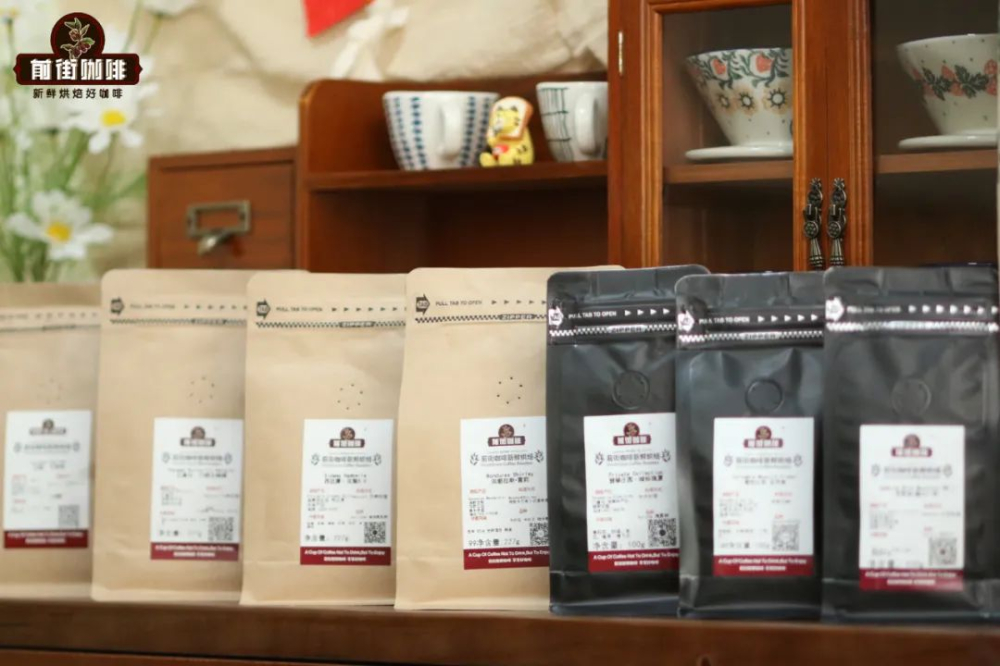
Some customers have asked, "Why don't FrontStreet Coffee's beans carry a roast level label?" In answer, this article lays out what we know about coffee roast levels.
Most people's mental model of roast levels is rudimentary: sour means light, bitter means dark. Within the industry, of course, nobody classifies beans that way. The more scientific approach today is to use Agtron color values (caramelization analysis values) as the standard for determining roast level.

In roasting, the generally accepted benchmark for "done" is the first crack. From the moment the first crack begins, the beans can be dropped at any time: the earlier the drop, the lighter the roast; the later, the darker.
By Agtron color value, roasts divide into 8 categories. The higher the value, the lighter the roast, and vice versa.

The Eight Roast Levels
The lightest is Light Roast, at Agtron 95—the beans are dropped at the peak of the first crack, while they're still snapping loudly. Coffee at this level shows bright, vivid acidity.
At Agtron 85 comes Cinnamon Roast, dropped around the end of the first crack, when the cracking has just stopped or only the occasional pop remains. Coffee at this level leads with acidity backed by sweet aromatics.

At Agtron 75 is Medium Roast, dropped shortly after the first crack ends—cracking fully stopped. Here sweetness takes the lead with just a touch of fruit acidity.
At Agtron 65 is High Roast, dropped between the end of the first crack and the start of the second, across a quiet stretch of roughly 1–2 minutes. The cup shows nutty and caramel notes, balanced, with no acidity.
At Agtron 55 is City Roast, dropped just as the second crack begins—after the silence, one or two faint pops. The flavor turns more bitter, with a heavier caramel character.

At Agtron 45 is Full City Roast, dropped just before the second crack intensifies, before the louder crackling sets in. The beans are already quite dark at this point, with a deeper burnt bitterness and rich aroma.
At Agtron 35 is French Roast, dropped as the second crack intensifies—the crackling returns, deeper in pitch than the first crack. By now the beans have begun to show oil.
At Agtron 25 is Italian Roast, dropped as the second crack winds down. The beans are jet black and glossy, their oils fully covering the surface.

Industry Standards vs. Consumer Understanding
In practice, of these 8 levels, anything below Agtron 65 leans predominantly bitter. But most consumers will never encounter the full range. Today's beans, for instance, are rarely roasted to the point of surface oil the way they once were, so French and Italian roasts are genuinely hard to find.
Handing these industry classifications straight to shoppers would only add to their learning burden. "Wait—dark roast isn't the darkest?" "I just want coffee that isn't sour—why are you telling me about city roast and full city roast? I understand none of this." Honestly, some of these terms are meaningless without deeper study, and labeling bags that way would confuse more people than it helps.

And without a shared standard, if you try to define "light" and "dark" by each roaster's personal judgment, uniformity goes out the window. If Shop A's idea of light roast differs from Shop B's, then the "light roast" on both bags tells you nothing.
FrontStreet Coffee's Approach to Roast Classification
FrontStreet Coffee believes the simplest way to classify roasts is by the coffee's sourness, sweetness, and bitterness—that way customers can actually tell whether a bean suits them. We group coffees with noticeable acidity as medium-light roast, and those led by bitterness as medium-dark roast. From the flavor notes on the label, you can then place the bean's roast level at a glance.
For example, flavors like "lemon, citrus, berries"—fruits on the tart side—point to beans on the lighter end of medium-light. "Honeydew melon, grapes, mildly acidic fruits"—the sweeter fruits—sit in the middle of medium-light. "Sugarcane, maple syrup, chocolate"—clearly sweet—mark the middle of medium-dark. And "nuts, dark chocolate, caramel"—sweet with a bitter edge—mark the darker end of medium-dark.
Brewing Parameters and Roast Levels
These groupings map onto the brewing parameters FrontStreet Coffee recommends. For medium-light roasts, use water at 90–93°C with a grind that passes 75–80% through a #20 sieve. To chase brighter acidity, choose the higher end of that temperature range with a finer grind; to emphasize sweetness, go lower on temperature and coarser on grind size. For medium-dark roasts, use 86–89°C water with a grind passing 70–75% through a #20 sieve. To tame bitterness, drop the temperature and coarsen the grind.

Conclusion
So FrontStreet Coffee isn't omitting roast-level information—we're simply expressing it in another form .
.
FrontStreet Coffee Recommendation
If balance is what you're after, medium roast is where to start: the deeper the roast, the more bitter and heavy the cup; the lighter, the more acidic and delicate. FrontStreet Coffee's medium-roast lineup is built for exactly that middle ground. The Brazil Queen Estate Yellow Bourbon, from the world's largest coffee-producing country, offers a gentle, honeyed sweetness with creamy peanut, chocolate, toast, and sugarcane notes after medium roasting—equally at home in a pour-over, a moka pot, or an espresso machine.
For a sweeter medium roast, the FrontStreet Strawberry Sugar Geisha blend combines a honey-processed Costa Rican component with washed Panamanian Geisha. Medium roasted to preserve the best of both, it pours with orange-blossom honey aromatics and a rounded sweetness, and handles cold brew, pour-over, and espresso with equal grace.
And for a taste of China's own specialty scene, the 2013 Yunnan Natural Typica carries the classic Yunnan arabica profile—nuts, brown sugar, black tea, and dried apricot in a soft, balanced cup that suits pour-over, cold brew, or drip machines, all at a very friendly price.
Important Notice :
FrontStreet Coffee is a long-established specialty coffee roaster in Guangzhou China, selling freshly roasted beans from its own farm in Yunnan as well as dozens of carefully selected single-origin beans from around the world for both pour-over and espresso. The products deliver consistently excellent quality and great value, with shipping within 24 hours. Guangzhou's FrontStreet Coffee shop is recommended by many coffee lovers, and the beans are now available online at the Tmall 。
FrontStreet Coffee has moved to a new address:
FrontStreet Coffee Address: 315,Donghua East Road,GuangZhou
Tel:020 38364473
 Scan and follow the En Gafei WeChat official account. Please indicate that the reprint comes from "En Gafei".

