
Does Moka Pot Make Espresso? Differences Between Coffee Machine and Moka Pot
Is Moka Pot Coffee Really Espresso?

Lately, quite a few friends have messaged FrontStreet Coffee about moka pots. We've actually covered the basics before — brewing operations and all the details — in articles from a few months ago, which interested readers can revisit.
This time, though, we want to tackle the question head-on: "Is coffee brewed in a moka pot actually espresso?"

The question comes up because many of the people we talk to are drifting toward espresso-style coffee. They look into semi-automatic machines, weigh their budget — and then suddenly pivot to a moka pot. Historically, the two really are related.
A Brief History
The first true espresso machine, the "Ideale," was born in 1905, and it looked nothing like today's machines. Its extraction pressure was far below the modern 9 bar — just 1.5 bar — with espresso extracted within 45 seconds. Its body and flavor fell short of modern espresso, essentially a black coffee without crema.
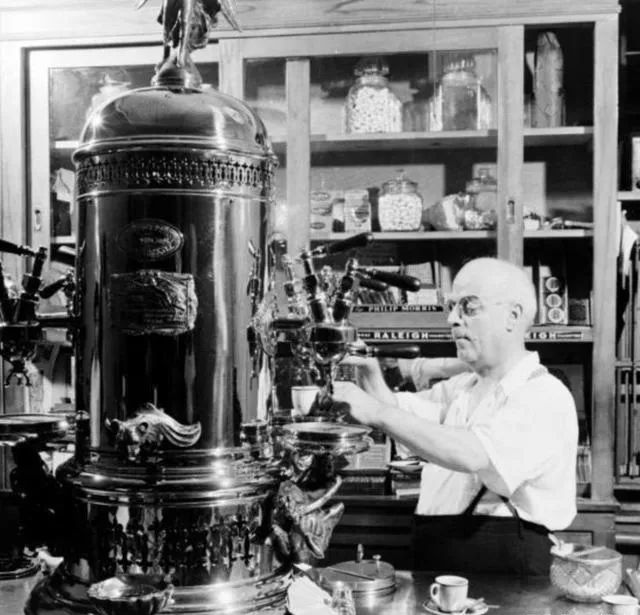
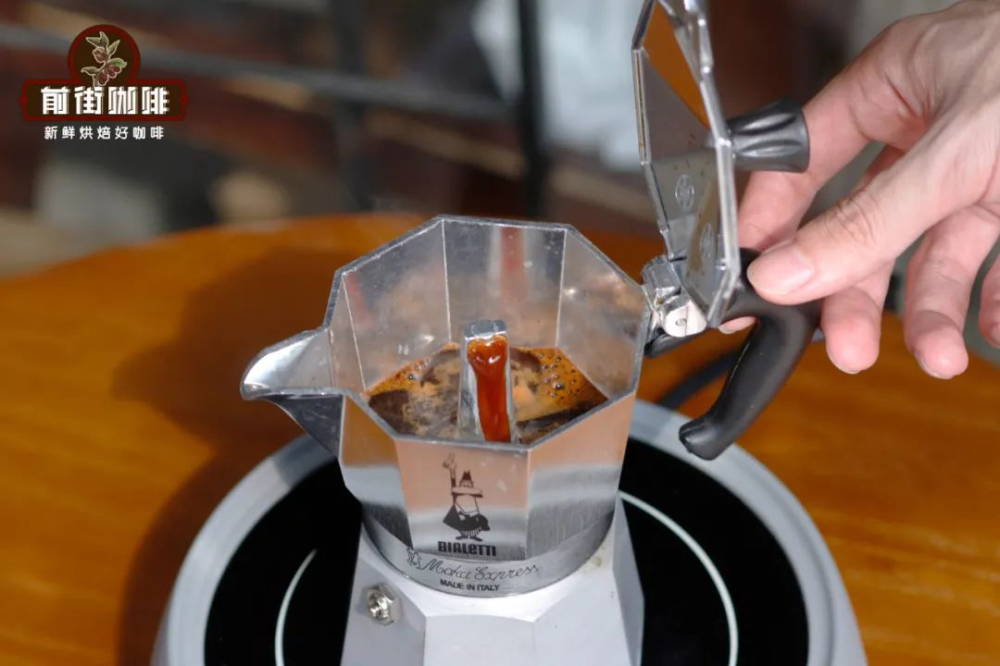
The moka pot was invented by Bialetti in 1933. In working principle it also extracts quickly by pressure — around 1-2 bar — which made it very similar to the coffee machines of its era, essentially a miniaturized espresso machine.
Around 1920, the Italian dictionary by Alfredo Panzini gave the first definition of "espresso": "concentrated coffee made using a pressurized machine or filter." The moka pot's method fit that definition perfectly.
The Modern Definition of Espresso
But today's espresso is not what was defined back then. In 1961, Faema released the revolutionary E61, capable of extracting at up to 9 bar — instantly leaving earlier machines far behind. The coffee became more aromatic and rich, with more abundant, finer crema.
From that point on, the definition of espresso shifted, and the gap between espresso-machine coffee and moka pot coffee grew wider and wider.

Compare the mainstream parameters: espresso machines use a coffee-to-liquid ratio of 1:2 at 9 bar pressure; moka pots run roughly 1:5 at 2 bar. Espresso is more concentrated, with crema that's richer, finer, and longer-lasting.

So the moka pot is neither a transitional version of an espresso machine nor a budget stand-in. By today's definition of espresso, moka pot coffee simply isn't espresso — it's a distinctive strong coffee all its own.
How to Get Rich Crema from a Single-Valve Moka Pot
1. Bean Selection
Fresh, dark-roasted beans are the best choice. Deep roasting makes the bean's structure more porous, so hot water penetrates easily and releases the carbon dioxide still trapped inside!

But be careful — "fresh" doesn't mean beans straight out of the roaster. At that point the CO2 content is too high, hindering extraction of aromatic compounds and hurting the flavor.
What you want are beans that have rested properly and are still within their optimal tasting window. Those hold the most CO2, and combined with the porous texture of a dark roast, they'll produce plenty of crema.
2. Grind Size
Beyond bean choice, you need to manage the moka pot's extraction pressure. It isn't 9 bar — but that doesn't mean there's no pressure at all, just less of it.
Two pressure-control levers work together. The first is grind size: moka pot grinding sits finer than pour-over but a touch coarser than espresso!

(Left: pour-over grind. Middle: moka pot grind. Right: espresso grind.)
Use pour-over coarseness and hot water will gush straight through with no resistance. Use espresso fineness and the coffee won't rise at all — the pot lacks the pressure to push through the puck — which risks a dangerous pressure buildup.
If you see coffee liquid failing to rise for a long time, kill the heat immediately. Whether you grind manually or electrically, set the grinder a bit coarser than espresso when brewing with a moka pot!

(Moka pot coffee brewed with pour-over grind size.)
Once the beans are chosen and ground, filling comes next — the second pressure-control step.
3. Filling the Basket
The dose depends on your pot's size. FrontStreet Coffee is using a three-cup moka pot here, which takes about 19g of ground coffee.

Notice the coffee bed sits higher than the groove. Don't just press it down with your palm! First level it, then tap the sides — left and right — to settle the grounds evenly into the lower chamber. This closes up gaps and reduces channeling.

Then decide whether to tamp based on your grind. Slightly coarser? Give it a light press with your fingers while leveling, adding resistance that helps crema form. Slightly finer? No need to press — resistance is already enough. Assemble the filter basket and upper pot and start brewing.
Before that, pour 110ml of hot water into the lower chamber, then assemble in order.

Once crema covers the silver surface at the bottom of the upper pot, remove the pot from the heat.

The residual heat is enough to push out the remaining liquid.

And there you have it — a cup of moka pot coffee with rich crema. If yours is a dual-valve model, the crema will be even thicker. Don't wait — make whatever coffee you like and enjoy.

FrontStreet Coffee Recommendation
For moka pot brewing, FrontStreet's blends are designed for exactly this: the FrontStreet Classic Blend, created specifically for espresso machines and moka pots, produces outstanding crema even for beginners on basic home equipment, with a mellow Mandheling-Brazil body; the FrontStreet Dark Cocoa Blend, 100% Arabica and budget-friendly, delivers plenty of crema and a full-bodied cup.
Prefer single origins? The dark-roasted FrontStreet PWN Golden Mandheling offers herbal and dark chocolate depth with barely any acidity, while the FrontStreet Brazil Fazenda Rainha brings balanced nut and cocoa sweetness with caramel notes — smooth, low-acid, and perfect for moka pot extraction.
Important Notice :
FrontStreet Coffee is a long-established specialty coffee roaster in Guangzhou China, selling freshly roasted beans from its own farm in Yunnan as well as dozens of carefully selected single-origin beans from around the world for both pour-over and espresso. The products deliver consistently excellent quality and great value, with shipping within 24 hours. Guangzhou's FrontStreet Coffee shop is recommended by many coffee lovers, and the beans are now available online at the Tmall 。
FrontStreet Coffee has moved to a new address:
FrontStreet Coffee Address: 315,Donghua East Road,GuangZhou
Tel:020 38364473
 Scan and follow the En Gafei WeChat official account. Please indicate that the reprint comes from "En Gafei".

