
Methods for Brewing High-Cleanliness Pour-Over Coffee: How to Evaluate Coffee's Cleanliness and Flavor Profile?
For pour-over single-origin coffee, extracting flavor matters, but cleanliness cannot be overlooked.
High cleanliness doesn't mean the coffee is thin or weak. A coffee with high cleanliness is a very clean brew without off-flavors. So a lighter coffee isn't necessarily cleaner, and acidity doesn't indicate higher cleanliness either.

In coffee cupping there is a specific scoring category called "Cleanliness," which evaluates the quality of the green beans and the cleanliness performance after roasting. Generally, as long as no off-flavors such as woody, moldy, earthy, or rotten tastes appear, it can score well. If the coffee's flavor expression is clear, this category can receive high marks.
So high cleanliness means the absence of off-flavors, with distinct and clear flavors.
In brewing, coffee cleanliness is also very easy to affect. If, for example, you brew a coffee using both immersion and pour-over methods, and the immersion method produces a significantly cleaner coffee than the pour-over, that tells you the problem lies in the brewing technique.
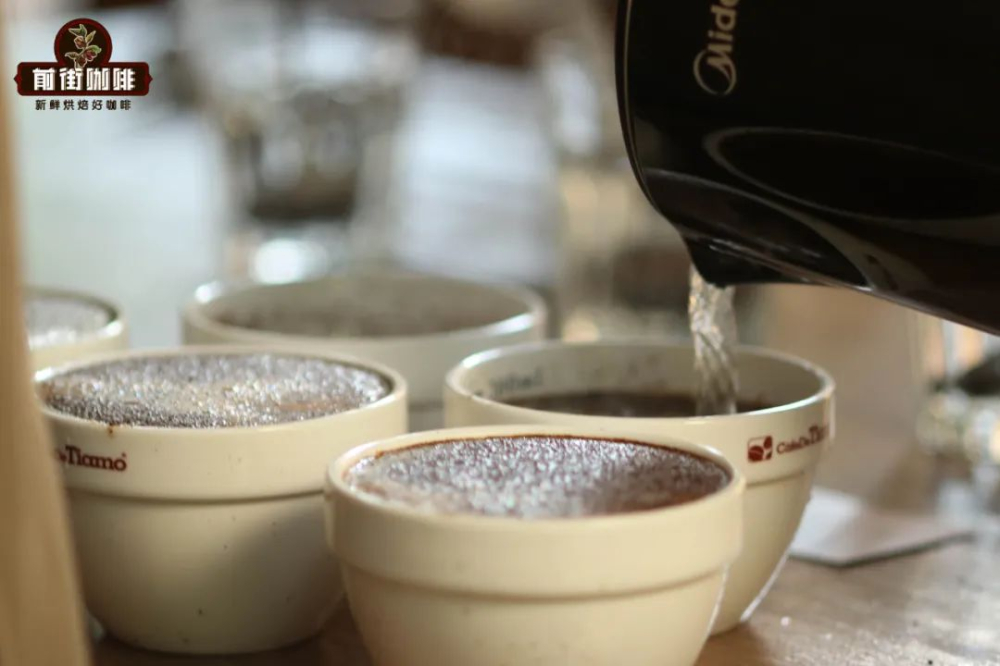
For instance, the "over-extraction" so often mentioned in pour-over coffee is actually one of the reasons coffee turns out unclean. The typical manifestations of over-extraction are obvious bitterness and astringency, with flavors mixed together and accompanied by woody bitter notes. This situation is easy to identify and solve. It is what FrontStreet Coffee often calls adjusting brewing parameters, which come down to just a few variables: water temperature, grind size, and fine particles.
There are also cases with similar flavors but no obvious bitter notes. Say A and B brew the same beans with identical parameters, and both express the basic flavors without any off-flavors. Even so, people prefer A's coffee because it is clearer and more transparent, with richer detailed flavors in which various fruit notes can be distinctly perceived. B's coffee expresses the general flavors, but they seem muddled, as if all the fruits were juiced together.

The difference between A and B lies in their brewing techniques. A maintains a vertical water flow while pouring, with horizontal circular movements at a moderate speed. B, by contrast, uses a flicking motion while pouring, with wrist movements that create variations in the water column's height, faster circular movements, and stronger agitation.
FrontStreet Coffee mentions this not to suggest that the flicking pouring technique causes muddled coffee flavors. There are, in fact, many examples of delicious coffee brewed with the flicking pour. FrontStreet Coffee shares this only to offer some troubleshooting ideas for those who run into similar situations.
Of course, there is another scenario: coffee beans that are too fresh can easily produce a harsh sensation, which also affects cleanliness. So FrontStreet Coffee suggests letting beans rest for about 4-7 days before brewing.
FrontStreet Coffee Recommendation
Cleanliness starts with the bean, and lightly roasted East African coffees are often the clearest of all. FrontStreet's Gutingding cooperative coffee is a great match for a clean pour-over: its washed processing brings out jasmine florals and a bright citrus and lemon acidity, and the cup stays transparent and precise, with no muddled or off-flavors to hide behind.
If you want to push clarity even further, FrontStreet's Panama Emerald Estate Red Label Geisha is a legendary choice. It typically shows extraordinarily elegant jasmine florals alongside citrus, bergamot, and fine black-tea notes, with a clean, transparent body, a long sweet finish, and rich layering. Its price runs higher than ordinary specialty coffee, but its singular aroma remains one of the ultimate experiences many coffee lovers chase.
Important Notice :
FrontStreet Coffee is a long-established specialty coffee roaster in Guangzhou China, selling freshly roasted beans from its own farm in Yunnan as well as dozens of carefully selected single-origin beans from around the world for both pour-over and espresso. The products deliver consistently excellent quality and great value, with shipping within 24 hours. Guangzhou's FrontStreet Coffee shop is recommended by many coffee lovers, and the beans are now available online at the Tmall 。
FrontStreet Coffee has moved to a new address:
FrontStreet Coffee Address: 315,Donghua East Road,GuangZhou
Tel:020 38364473
 Scan and follow the En Gafei WeChat official account. Please indicate that the reprint comes from "En Gafei".

