
What is the optimal extraction time for pour-over coffee? Does the brewing time include the blooming period?
When you brew coffee, an electronic scale is usually essential, since scientific brewing depends on accurate data. The scale's weighing function is needed both for measuring the coffee grounds and for measuring the water poured.
A coffee brewing scale needs another feature too: a timer. That is right, we also need timing when we brew coffee. It helps us brew more accurately and scientifically, and it helps us evaluate the final result.
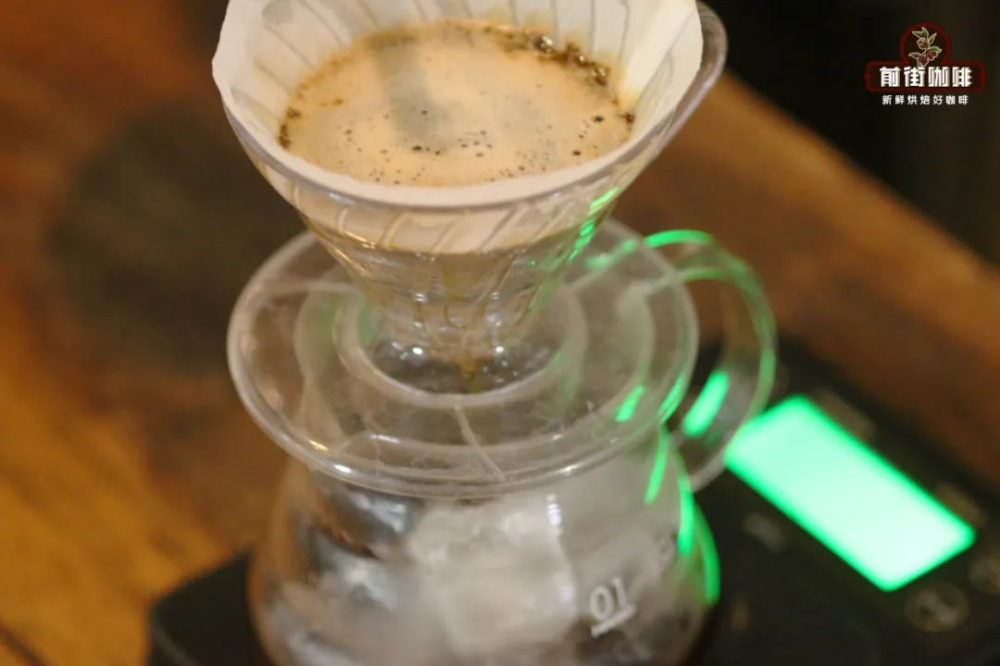
When you buy coffee beans, you will notice that brewing guides usually include a recommended brewing time. For pour-over coffee, by FrontStreet Coffee's standard, we typically recommend a brewing time of around 2 minutes.
For beginners, the biggest challenge is the uncertainty of the variables. When we pin those variables down more precisely, it becomes easier for a novice to get started and to troubleshoot problems. In the past, when FrontStreet Coffee shared brewing parameters, we explained how coffee dose, grind size, water temperature and coffee-to-water ratio affect flavor. Time works the same way. Using FrontStreet Coffee's brewing parameters, we found that the final extraction time typically lands between 1 minute 50 seconds and 2 minutes 10 seconds.
If the final extraction time is longer, the coffee's flavor tends toward bitterness. If the final time is shorter, the flavor turns more acidic and lighter.
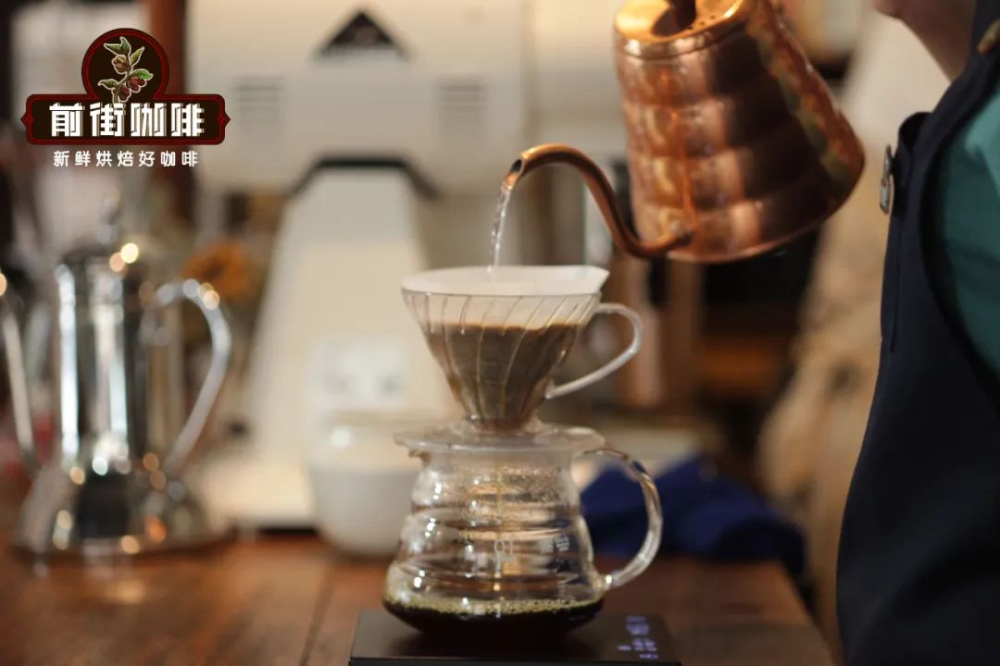
Standardizing How We Time the Brew
Now that we understand how to use time to judge brewing conditions, we need one unified timing method that everyone accepts.
Currently there is disagreement about when to start the clock. Some people prefer to start timing the moment they begin the first pour, while others press the timer button only after finishing the first pour.
At FrontStreet Coffee, we believe extraction begins the moment water first contacts the coffee grounds. If you pour all the water first and then start timing, you are essentially ignoring the extraction that happens during the pour. Since everyone agrees on a 30-second bloom, timing differences mean the latter method actually results in a bloom longer than 30 seconds.
So in the brewing methods FrontStreet Coffee shares, we always start timing from the moment water first touches the grounds.
Using Time as a Diagnostic Tool
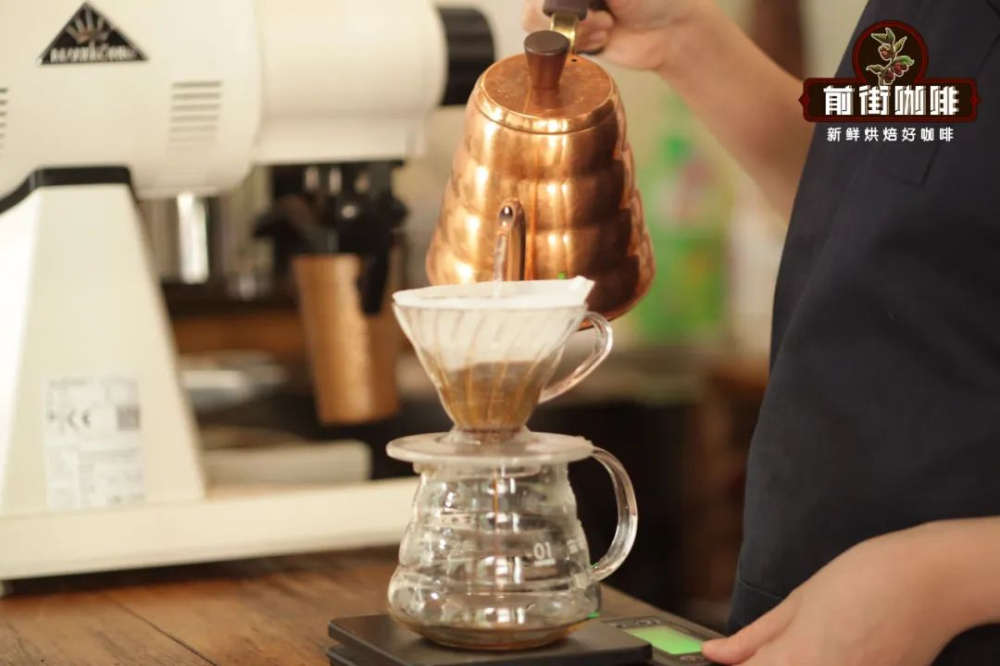
Timing also serves as an auxiliary tool that helps us spot problems during brewing or confirm them afterward.
During brewing, FrontStreet Coffee builds a pouring model around time checkpoints. With a total extraction time of 2 minutes: the first pour begins at 1 second; the second pour starts at 30 seconds and ends at roughly 55 seconds; the third pour begins at 1 minute 10 seconds and ends at roughly 1 minute 35 seconds; and the drip finishes at the 2-minute mark.
Within this framework, we gauge the total extraction time by monitoring each checkpoint during the actual pour. If the second pour ends after 55 seconds, for example, that tells us the flow is slow. If the next pour continues at that rate, the total time will definitely exceed 2 minutes, so we need to increase the water flow on the following pour.

Post-Brew Analysis
When judging the result, time can also tell us a lot. If all the time checkpoints line up but the final extraction time does not match expectations, the issue is most likely the grind size. A finer grind extends the extraction time, while a coarser grind shortens it.
If the timing is right but the coffee still tastes off, this helps us rule certain factors out and systematically track down the root cause.
FrontStreet Coffee Recommendation
Good timing only pays off when the beans in the dripper are worth it, and the V60 is a natural partner for pour-over because its conical shape and 60-degree angle force the water to travel to the center before it drips, lengthening contact with the coffee and pulling out more aroma and flavor. The single large hole lets the flow run unrestricted, so the speed depends almost entirely on the brewer's control, which shows up directly in the cup.
For lighter-roasted beans, as the third wave pushed roasting lighter and flavors toward delicate acidity and florals, V60's fast extraction suits them well. FrontStreet's Ethiopia Yirgacheffe Gutingding, with its classic citrus, berry and jasmine notes and a green-tea finish, brews beautifully here, as does the FrontStreet Yirgacheffe daily bean, which shows soft, bright fruit-like acidity rather than a sharp bite. The FrontStreet Huakui, with its dense tropical fruit, and the FrontStreet Strawberry Candy, with its Geisha-like floral lift, are also natural fits for a V60.
If you are just starting out, the standard brew is a good baseline: 15 g of coffee at a 1:15 ratio, around 90 degrees C water, and a medium-fine grind, then watch the clock and adjust the grind finer if the drawdown runs under 2 minutes and coarser if it stretches past 2 minutes 30 seconds.
Important Notice :
FrontStreet Coffee is a long-established specialty coffee roaster in Guangzhou China, selling freshly roasted beans from its own farm in Yunnan as well as dozens of carefully selected single-origin beans from around the world for both pour-over and espresso. The products deliver consistently excellent quality and great value, with shipping within 24 hours. Guangzhou's FrontStreet Coffee shop is recommended by many coffee lovers, and the beans are now available online at the Tmall 。
FrontStreet Coffee has moved to a new address:
FrontStreet Coffee Address: 315,Donghua East Road,GuangZhou
Tel:020 38364473
 Scan and follow the En Gafei WeChat official account. Please indicate that the reprint comes from "En Gafei".

