
How Much Coffee for 1 Shot of Espresso? Single Shot Basket Extraction Parameters

When we talk about a "single shot" of espresso, the word "shot" actually comes from spirits — one shot equals one ounce, roughly 30ml. The classic standard for a single espresso calls for 9-11g of coffee grounds. These days, however, you'll rarely see that parameter used, and the reason lies in the single-shot portafilter itself.
Single-Shot Portafilter
Anyone familiar with semi-automatic espresso machines knows the double-shot portafilter, which has a straight cylindrical shape. After extraction, the spent puck pops out as a tidy "circular almond cake."
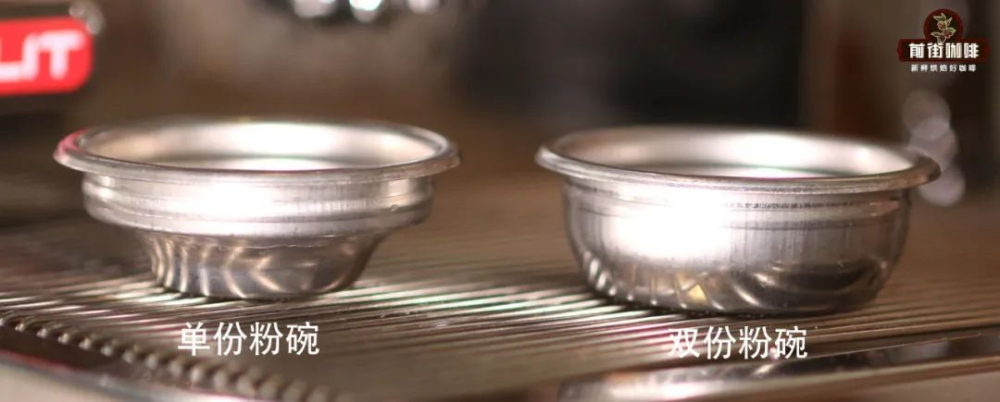
The single-shot portafilter, by contrast, is an inverted cone, generally built in two layers. The upper layer matches the diameter of the double-shot basket, but because the single-shot basket holds only half the grounds, its lower half narrows to keep the same surface diameter and maximum coffee-bed depth.
Yet as FrontStreet Coffee's extraction experiments show, a single-shot basket is not simply "half of a double."

FrontStreet Coffee started from a double-shot baseline: 20g of grounds, 40g of espresso extracted in 27 seconds, with a measured concentration of 10.48% and a calculated extraction yield of 21.72%.
Then, using a single-shot basket with 10g of grounds to extract 20g of liquid, the flow ran noticeably faster — 22 seconds — with a measured concentration of just 8.83% and an extraction yield of 18.38%. The gap between the two is significant.
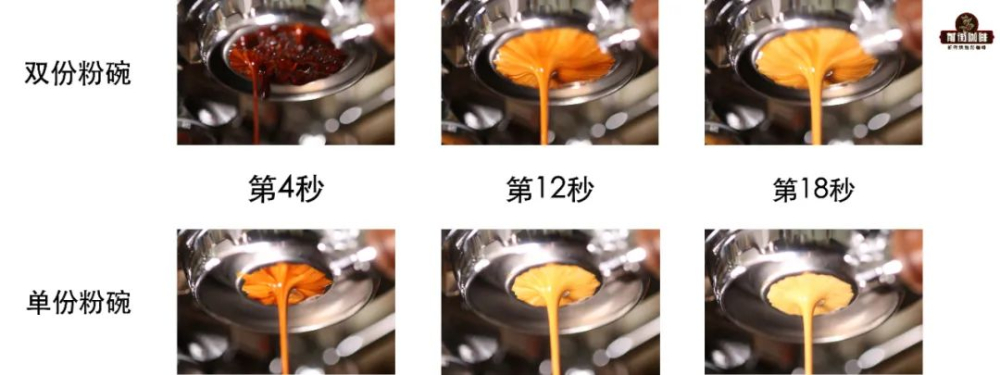
To bring the single-shot output closer to the double-shot standard, the only options are grinding finer or increasing the dose. Grinding finer isn't practical for cafés, while raising the dose adds cost and unpredictability.
FrontStreet Coffee found through testing that the dose had to rise to 12.5g before the concentration approached the double-shot numbers.
Why Such a Big Difference?
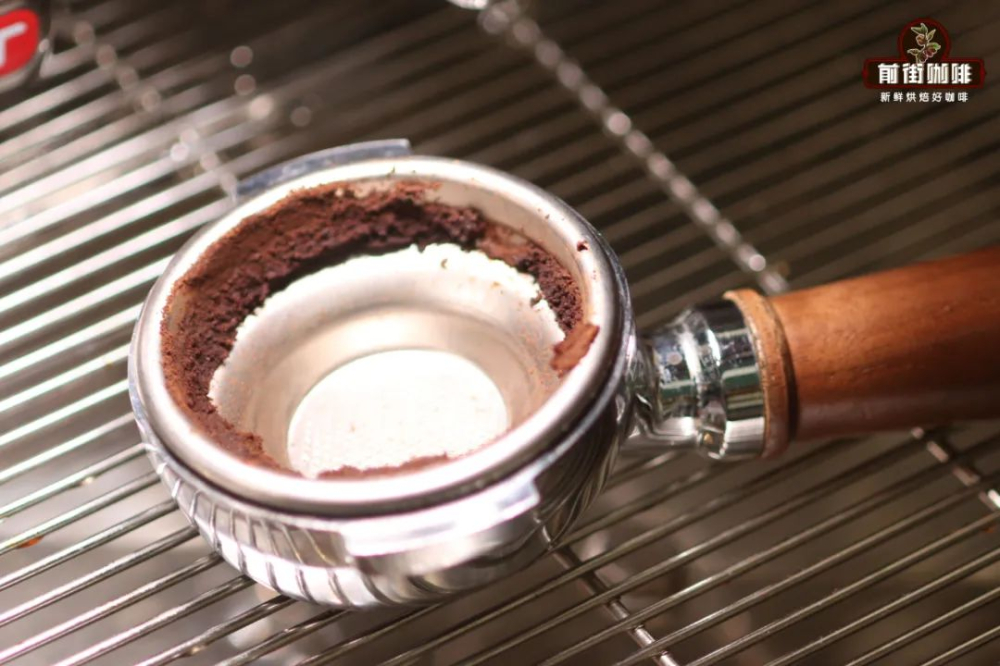
It all comes down to geometry. The double-shot basket's straight cylinder distributes force evenly during both tamping and pressurized extraction, which produces a more uniform extraction.
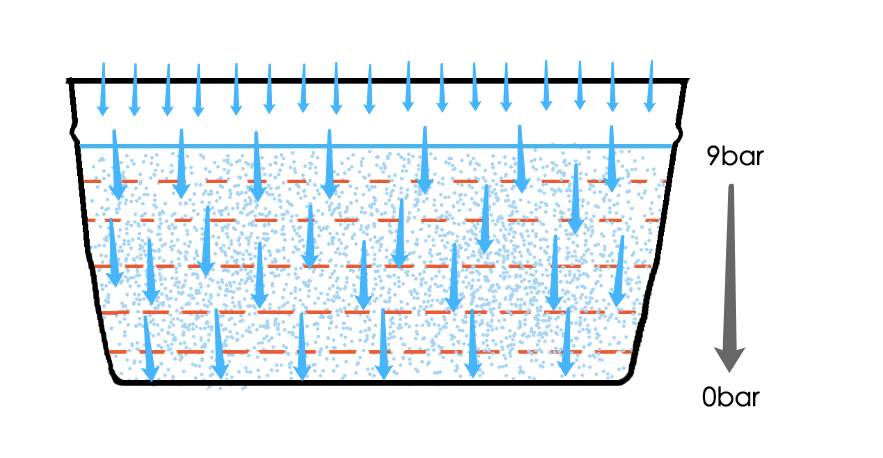
The single-shot basket, in order to keep a uniform top diameter (so it fits the group head) while preserving coffee-bed depth, sacrifices its bottom structure. As a result, during tamping and extraction, the pressure at the edges is always higher than at the center at the same depth. In other words, the edges end up denser than the center after tamping. During extraction, water penetrates the center faster than the edges in the upper layer, but in the lower layer, water from the edges converges toward the center — an uneven extraction that, in severe cases, causes channeling.
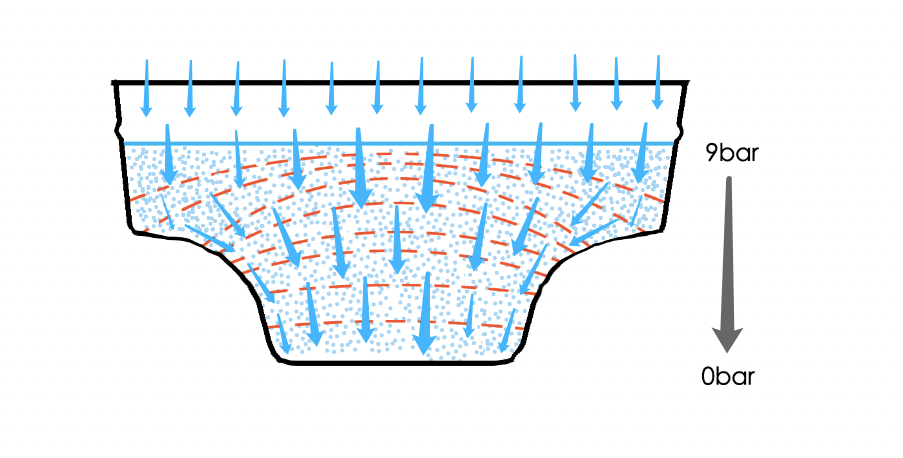
For such an impractical piece of kit — even though espresso machines still ship with both baskets — the single-shot portafilter usually ends up sealed back in the box. Increasingly, the industry now treats an espresso pulled with a double-shot basket as one serving, with the coffee-to-liquid ratio tending toward 1:2.
Next, FrontStreet Coffee will demonstrate how to make a standard espresso using their signature "Sunflower Warm Sun Blend Espresso Beans" with their usual double-shot portafilter. If you want to follow along, grab a notebook!

First, FrontStreet Coffee fills the double-shot basket with roughly 18-20g of grounds. They use a 1:2 extraction ratio, meaning 20g of grounds yields 40g of espresso; if you dose 18g, the target yield is 36g. Extraction time depends on flow rate through the puck, but a shot generally falls within 20-35 seconds: espresso extracted in under 20 seconds tends to taste thin, while anything beyond 35 seconds risks over-extraction and burnt, bitter flavors. Most of FrontStreet Coffee's shots land in the 28-30 second range.

Before extracting, wipe the portafilter dry. Switch on the grinder, grind a double dose, and place the grounds on a scale, adjusting until you reach 20g. Then level the grounds with a distributor and tamp firmly to compact the puck, which keeps extraction more stable.

Next, flip the extraction switch and run water for 1-2 seconds to moisten the group head and flush away any stuck coffee residue. Place a scale under the cup, tare it, then put both under the group head for extraction.

Gently lock the portafilter into the group head and begin extraction by flipping the switch. Watch the flow. When the scale reads 40g of liquid — around the 30-second mark — stop the extraction. Parameters shift subtly with daily humidity and bean freshness, so you may need to adjust dose, grind setting, and yield.

A freshly pulled espresso can be enjoyed straight, ideally with a glass of water to cleanse the palate so you can savor the thick crema and the mellow body underneath. If the intensity is too much, simply add water or milk to soften it to taste.

When tasting a fresh espresso, FrontStreet Coffee starts by smelling it. This coffee carries full-bodied notes of whiskey, vanilla, nuts, and cream. Drink it neat, or add sugar and milk as you like. Stir gently with a metal spoon to blend the layers. The first sip reveals dense crema and full, mellow chocolate aromas. A larger sip lets the warm liquid and crema enter together, with rich flavors of nut cookies, chocolate, berries, and whiskey. Sipping water midway brings out the sweet aftertaste. The whole experience is layered and lingering.
FrontStreet Coffee Recommendation
Looking for beans that make these parameters shine? Here are three espresso-specific picks:
FrontStreet Classic Blend — purpose-built for espresso machines and moka pots, with crema so thick that even beginners on basic home machines can pull a dense, velvety shot. Its traditional Mandheling-Brazil formula delivers a full-bodied, mellow cup that works equally well for lattes, cappuccinos, and Dirty drinks.
FrontStreet Premium Blend — Brazil Cerrado and Colombia Huila beans offering butter, nut, spice, dark chocolate, and toast aromas, with a wild, thick texture and a golden crema that makes latte art effortless. The go-to for fans of nut-forward espresso.
FrontStreet Sun-Dried Huakui SOE — for those who prefer a single-origin shot, this natural-processed coffee from Guji, Hambella in Ethiopia (grown at elevations up to 2,300 meters) offers a creamy strawberry character. Medium roast brings out cream, cocoa, berries, delicate florals, and black tea — lovely as an Americano or a latte.
Important Notice :
FrontStreet Coffee is a long-established specialty coffee roaster in Guangzhou China, selling freshly roasted beans from its own farm in Yunnan as well as dozens of carefully selected single-origin beans from around the world for both pour-over and espresso. The products deliver consistently excellent quality and great value, with shipping within 24 hours. Guangzhou's FrontStreet Coffee shop is recommended by many coffee lovers, and the beans are now available online at the Tmall 。
FrontStreet Coffee has moved to a new address:
FrontStreet Coffee Address: 315,Donghua East Road,GuangZhou
Tel:020 38364473
 Scan and follow the En Gafei WeChat official account. Please indicate that the reprint comes from "En Gafei".

