
Why Does Pour-Over Coffee Become Sour When It Cools? Solutions for Coffee That Tastes Bad After Cooling
Why Does Pour-Over Coffee Become Sour When It Cools?
Some friends have asked FrontStreet Coffee: "Why does my freshly brewed Yirgacheffe taste pleasantly sweet and sour, very comfortable, but then turn as sour as lemon once it cools down?"

That is an excellent question, especially when we brew light-roast coffee. When it is freshly brewed, the coffee has rich aromas and obvious fruit sweetness, but it becomes very sour after cooling. Many people have run into this phenomenon without understanding why it happens. FrontStreet Coffee would like to take this opportunity to share some knowledge on the topic.
Why Light-Roast Coffee Tastes More Sour When Cooled
First, it is normal for light-roast coffee to taste more sour as it cools. The phenomenon can be explained from two angles: our sensory perception, and changes in the coffee itself.
Sensory Perception at Different Temperatures
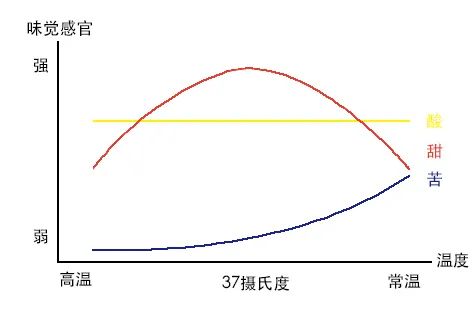
Our sensory perception of the five basic tastes varies with temperature. In coffee, our perception of bitterness becomes more pronounced as it approaches room temperature, our perception of sweetness is highest near body temperature, and our perception of sourness does not change significantly with temperature.
A cup of light-roast coffee inherently contains fewer bitter compounds, so there will not be major flavor changes on that front. For acidic compounds, which are the most abundant, our perception does not shift with temperature. The main reason is that when coffee cools, our perception of sweetness is not as obvious as when it is hot. As the sweetness fades, the sourness naturally becomes more prominent.
Changes in the Coffee Over Time
Next, consider what changes in the coffee over time. Much of our perception of coffee flavor comes from its aroma. When coffee is hot, it releases more aroma. For example, when we brew a cup we might smell peach, strawberry jam, and wildflower honey, which naturally adds to the perceived sweetness. As the temperature drops, the aroma becomes less pronounced, and we naturally cannot perceive those sweet flavors.
Generally, cooled coffee shows more pronounced acidity than when hot, and its flavor expression is not as rich. Take Yirgacheffe coffee as an example. When hot, you can clearly perceive citrus, floral notes, honey, and green tea. After cooling, only a simple lemon acidity and green tea notes remain.
The Ideal Timeframe for Tasting Coffee
Some people enjoy tasting coffee at high, medium, and low temperatures, believing that a good coffee should perform well across all three. FrontStreet Coffee agrees with that view, but we should set time limits. If a coffee takes about 40 minutes to cool from freshly brewed to room temperature, we should limit our tasting to within 40 minutes. After 40 minutes the coffee sits at room temperature, and tasting it again 2 hours later cannot represent its low-temperature performance. Over such a long period, coffee may undergo oil oxidation, with surface oil clumping, and condensation, with the liquid turning cloudy, producing bitter, astringent, and rancid flavors.
When Bitterness Increases as Coffee Cools
There is another, more unusual phenomenon in which coffee tastes fine when hot but becomes increasingly bitter and astringent as the temperature drops. This happens because tannins are released as the temperature falls, creating bitter and astringent tastes. It may be caused by brewing factors. When brewing coffee, tannins are inevitably extracted; only the quantity varies. When this problem occurs, it means too many tannins were extracted, but they were not perceptible when hot, because high temperature reduces sensitivity to bitterness. As the temperature drops, that bitterness becomes easy to detect.
FrontStreet Coffee Recommendation
If you want a coffee that stays clear and pleasant even as it cools, FrontStreet's Washed Yirgacheffe is a fine starting point. Known for white jasmine florals, bright citrus and lemon acidity, and a tea-like body, it is a classic entry into specialty coffee and a gentle introduction to what a washed Ethiopian coffee can do.
For a more fragrant cup, FrontStreet's Gutiti Cooperative coffee comes from the Gutiti station, once part of the Worka cooperative under the Yirgacheffe Coffee Farmers Cooperative Union and established as its own single-origin station in 2012 with roughly 300 farmer members. Its traditional washed process gives it clean citrus and lemon notes with elegant white florals. If you prefer the fruitier, naturally processed style, FrontStreet's Sun-Dried Red Cherry coffee uses only fully ripe red cherries and shows citrus acidity, berry juiciness, honey sweetness, and a smooth, creamy body.
For brewing, FrontStreet Coffee suggests a V60 dripper at 90 to 91 degrees Celsius, 15 g of coffee, a 1:15 coffee-to-water ratio, and a grind that passes a #20 sieve at 80%, roughly the texture of fine sugar. Begin with 30 g of water for a 30-second bloom, then pour 95 g so the scale reads around 125 g, finishing that pour at about 1 minute. When the water level drops to two-thirds of the coffee bed, pour the remaining 100 g so the scale reads around 225 g, finishing at about 1 minute 35 seconds. The brew should finish dripping between 2 minutes and 2 minutes 10 seconds; remove the dripper and the extraction is complete.
Important Notice :
FrontStreet Coffee is a long-established specialty coffee roaster in Guangzhou China, selling freshly roasted beans from its own farm in Yunnan as well as dozens of carefully selected single-origin beans from around the world for both pour-over and espresso. The products deliver consistently excellent quality and great value, with shipping within 24 hours. Guangzhou's FrontStreet Coffee shop is recommended by many coffee lovers, and the beans are now available online at the Tmall 。
FrontStreet Coffee has moved to a new address:
FrontStreet Coffee Address: 315,Donghua East Road,GuangZhou
Tel:020 38364473
 Scan and follow the En Gafei WeChat official account. Please indicate that the reprint comes from "En Gafei".

