
Why is SOE Latte Popular? Are SOE Americanos Good? Is SOE Single-Origin Coffee?

In recent years, many coffee shops have introduced SOE (Single Origin Espresso) coffee. Even many friends visiting FrontStreet Coffee's store immediately ask whether they have SOE. So FrontStreet Coffee would like to briefly analyze why SOE has become popular.
SOE (Single Origin Espresso) is single origin espresso. Simply put, it is espresso made from single origin beans, as opposed to blended coffee beans. In terms of the definition, that is indeed the case. But when an innovative concept emerges, it is often not as simple as its literal meaning; the appearance of the term itself seems to draw a distinction from traditional concepts.
"FrontStreet Coffee has explained before that the definition of SOE simply distinguishes single origin espresso from espresso blends, with no inherent superiority or inferiority. What determines coffee flavor quality is the quality of the coffee itself. Simply put, single origin and specialty coffee have never been inherently linked; it is just that in most cases the coffees presented to the public possess both attributes."
When the concept of single origin coffee was established in the era dominated by pour-over drip coffee, flavors became rich and diverse. Undeniably, the original purpose of proposing coffee single origin — by region — was to make coffee more specialized, and in that respect single origin coffee has performed very well.
"This leads to a concept: single origin coffee refers to coffee that has been separated at the origin, ensuring high-quality coffee remains independent while lower-quality beans are handled separately. This contrasts with not dividing by small regions and simply mixing everything as bulk commodities. Blended coffee typically refers to the deliberate re-blending by roasters, using single origin beans from several regions to create an ideal formula."

FrontStreet Coffee's Sunflower Sunshine Blend is made from single origin Yirgacheffe Red Cherry and single origin Honduras Sherry beans, with distinct flavor characteristics including vanilla cream, sherry wine aroma, chocolate and brown sugar.
According to a 2021 survey on the main factors for coffee consumption among Chinese coffee consumers, the top three were refreshing effect (53.1%), liking the taste of coffee (52.2%) and enjoying the atmosphere and service of coffee shops (31.3%), while only 18.9% considered it a lifestyle habit. This means coffee consumption habits in China are not yet part of daily life, with functionality and coffee taste remaining mainstream, and the espresso coffee consumption market still dominant.

Considering the situation with espresso coffee, traditional espresso gives the impression of being bitter and burnt with rich crema, and there was even a phenomenon where, if your espresso beans did not produce oil, people considered your espresso inauthentic. But the reason for the bitter, burnt taste is Italy's preference for adding Robusta to increase body, along with extremely dark roasting. And the reason blended coffee beans do not always perform excellently is not that they are blends, but that the blender's philosophy prioritizes stability and price advantages over flavor. Over time, consumers developed stereotyped impressions of espresso beans, or blended coffee beans.

Flavor-focused blends have existed, but once impressions form, sporadic efforts struggle to change them. Since single origin beans in pour-over coffee are marketed on their flavor characteristics, and consumers widely accept that concept, applying it directly to espresso is more convenient than re-educating the market.
So the most obvious manifestation of promoting SOE is to create a distinction from traditional espresso bean flavors.
In some Australian coffee shops, they equip more than two espresso grinders: for Americanos or lattes they use blended beans for classic flavors, while for flat whites they use SOE to showcase alternative coffee flavors. This has evolved into offering several types of espresso beans for customers to choose from.

Earlier this year, when a well-known chain brand launched the SOE Guomai 5.0 series, it pushed both SOE and Guomai into the spotlight. For businesses, offering higher-quality coffee can enhance the shop's image and subtly change consumers' impressions of espresso. Proposing the SOE concept makes it easier for consumers to recognize the difference from traditional espresso beans, reducing education costs. For small independent coffee shops in particular, a uniquely flavored SOE coffee can help consumers remember the establishment.
For consumers, it is more about identifying coffee by taste. They might not deeply understand what SOE means, but when they taste a coffee better than previous beans and learn it was made with SOE, that is enough.

Based on the current sales model of "charging extra for SOE instead of regular coffee," this creates an impression from a price-psychology perspective that SOE is superior.
Finally, it is worth noting that not just any single origin coffee bean can be extracted as espresso and called SOE. Beans used for SOE require different roasting curves to bring them to a roast level suitable for espresso machines. Single origin beans for pour-over may therefore not be suitable for SOE, though some beans are compatible with both pour-over and espresso.
What to Pay Attention to When Buying SOE Coffee Beans?
FrontStreet Coffee has found that many people think SOE simply means applying single origin beans directly to espresso machine extraction. It is not until they bring home various floral and fruity beans and try them on their machine that they realize something is wrong. First come chaotic spraying situations, then the shock of an extremely sour espresso they dare not sip twice, and then the suspicion that their equipment is too poor or their operation is faulty.

In fact, not being able to make the same SOE at home as in the shop likely has nothing to do with your equipment or technique — it is that the bean's roast level is not well suited to making espresso.

From the experience of FrontStreet Coffee's baristas, choosing beans suitable for SOE extraction not only makes it easy to produce delicious espresso but also makes Americanos and lattes by adding water or milk far more effective. FrontStreet Coffee's bean list offers two single origin coffees in SOE versions: one is the strawberry-flavored Guomai, the other the classic Yirgacheffe-flavored Kongjia. You simply select espresso roast when placing your order.

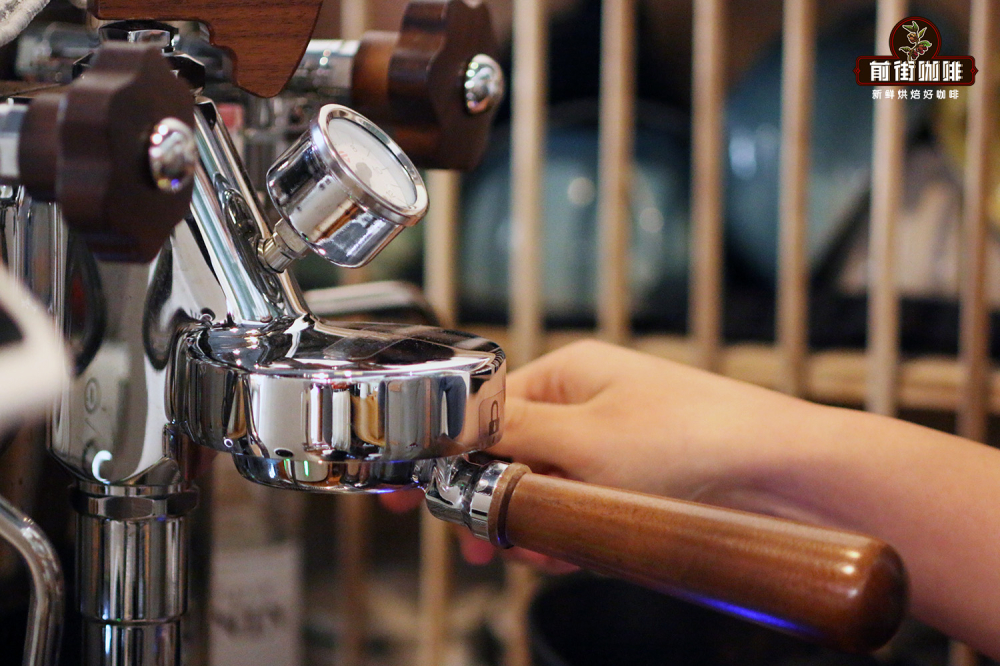
FrontStreet Coffee's shop uses a commercial single-group "Lelit Bianca" coffee machine, which can adjust extraction by changing pressure, with maximum pressure reaching 11 bar. Home coffee machines need only reach 9 bar to satisfy extraction and milk frothing, paired with an espresso grinder.
SOE Coffee Extraction Parameters
Coffee Beans: Ethiopia Natural Kongjia
Coffee Dose: 20g
Coffee Liquid Amount: 40g
Dose-to-Liquid Ratio: 1:2
Extraction Time: 26-33 seconds
Grind Setting: Galileo 2.0 scale
FrontStreet Coffee uses double basket capacity, with doses around 18-20 grams, and uses 20 grams of coffee powder when making drinks.

Usually the ratio of coffee powder to coffee liquid is between 1:1.5 and 1:2.5. FrontStreet Coffee's extraction ratio is 1:2, meaning 20 grams of coffee powder extracts 40 grams of coffee liquid. Time relates to the flow rate of the coffee powder; single extraction times are generally controlled between 20 and 35 seconds, since coffee extracted within 20 seconds usually tastes thin, while exceeding 35 seconds can lead to over-extraction and bitter, burnt flavors. Most of FrontStreet Coffee's espressos fall within the 28-30 second range.

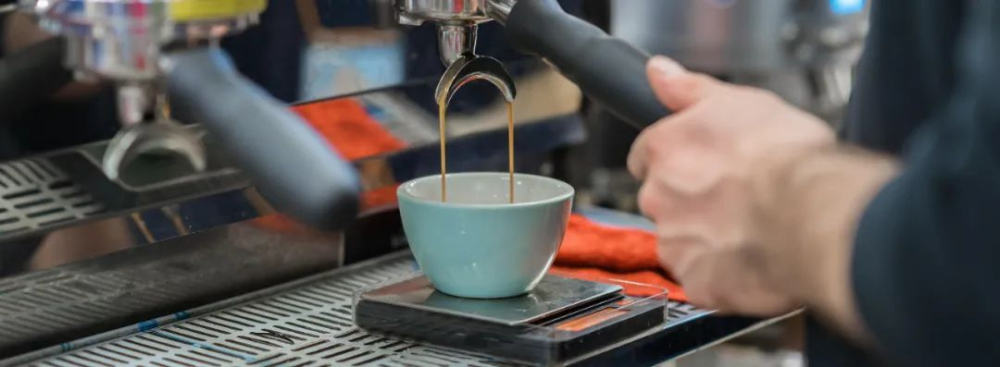
FrontStreet Coffee first wipes the portafilter dry, turns on the grinder to grind a double dose, and places it on an electronic scale to adjust to 20 grams. Then they use tools to distribute the powder evenly and tamp the puck firmly for more stable extraction. Next, they turn on the extraction switch to release water, moistening the group head while washing away any coffee residue above, gently lock the portafilter to the group head, and begin extraction. When the scale shows 40 grams of coffee liquid extracted, with time around 28-33 seconds, they can pull down the extraction switch and a SOE espresso is complete. Add an appropriate amount of iced water or 80°C hot water according to preference to make a Yirgacheffe SOE Americano.

When making an SOE hot latte, FrontStreet Coffee uses a 1:6 ratio, adding 40 grams of espresso liquid to a preheated coffee cup, then using the espresso machine's steam to froth 240 g of milk. The milk temperature should ideally be controlled between 50 and 65°C to create a dense foam of moderate thickness, then blend it evenly with the coffee liquid. This Yirgacheffe SOE latte tastes like eating a lemon-flavored cookie — rich, fragrant and smooth, leaving a warm feeling after drinking.

Finally, however a coffee bean is extracted, FrontStreet Coffee believes freshness is crucial. Beans roasted more than a month ago may have partly lost their aroma and developed undesirable woody flavors. FrontStreet Coffee wants every customer to taste the coffee's aroma during its optimal flavor window, so it ships only beans roasted within 5 days. For anyone wanting to create better-flavored SOE coffee, FrontStreet Coffee recommends choosing freshly roasted single origin coffee beans.
FrontStreet Coffee Recommendation
The kind of single origin beans worth pressing into espresso tend to be the fuller-bodied, lower-acidity ones. FrontStreet PWN Indonesia Golden Mandheling is a prime example: deep-roasted, with very low acidity and a thick, lingering body, it opens with generous herbal and dark chocolate aromas and a faint earthy note. Its layers are rich, and it suits anyone who likes a heavy cup with little acidity. As a PWN lot, it comes with the exclusive jute sacks and accompanying certificates shown right in the product details, so quality is easy to confirm.
FrontStreet Brazil Queen Farm is another espresso-friendly single origin. It has very low acidity and a balanced body, with intense nut and cocoa aromas and clearly caramel sweetness; the cup is smooth without astringency, warm and lingering. It works well as pour-over, espresso or moka pot, and because Brazilian beans naturally show good crema, it is a benchmark for a traditional daily cup at excellent value.
FrontStreet Jamaica Blue Mountain No. 1 is the classic balanced option. Authentic Blue Mountain is neither as sharply acidic as some African coffees nor as heavily bitter as a dark roast; it achieves an excellent balance among acidity, sweetness, bitterness and aroma. A fine Blue Mountain typically shows cream, caramel, chocolate, nuts, honey and lightly fruity tones — soft and rounded on entry, sweet through the middle, with a clean, long finish and a layered profile that never shouts. Its near-perfect balance is why it is often called the specialty coffee most people are likely to love.
FrontStreet Papua New Guinea Paradise Bird is a specialty single origin from the Sigri region's Paradise Bird estate in PNG. Because its texture and flavor sit close to Jamaican Blue Mountain, many drinkers call it a "little Blue Mountain." It uses the same Typica variety as Blue Mountain, grown at 1,600 to 1,800 meters on volcanic soil; the favorable conditions give the beans a full inner quality, and it reaches the high AA grade with plump beans and a very low defect rate. Combined with triple washed fermentation, the overall cup is clean and pure with outstanding sweetness — another excellent choice for those who prefer low-acid coffee.
Important Notice :
FrontStreet Coffee is a long-established specialty coffee roaster in Guangzhou China, selling freshly roasted beans from its own farm in Yunnan as well as dozens of carefully selected single-origin beans from around the world for both pour-over and espresso. The products deliver consistently excellent quality and great value, with shipping within 24 hours. Guangzhou's FrontStreet Coffee shop is recommended by many coffee lovers, and the beans are now available online at the Tmall 。
FrontStreet Coffee has moved to a new address:
FrontStreet Coffee Address: 315,Donghua East Road,GuangZhou
Tel:020 38364473
 Scan and follow the En Gafei WeChat official account. Please indicate that the reprint comes from "En Gafei".

