
Song Dynasty Dian Cha and Tea Competitions: More Challenging Than Coffee Latte Art?!
The Art of Tea Painting: Creating Masterpieces on Tea Foam
A beautiful pattern can transform an ordinary drink into something delightful. Usually, when we see attractive designs on beverages, it's latte art in coffee shops. But have you ever wondered whether it's possible to paint beautiful patterns on the surface of tea?
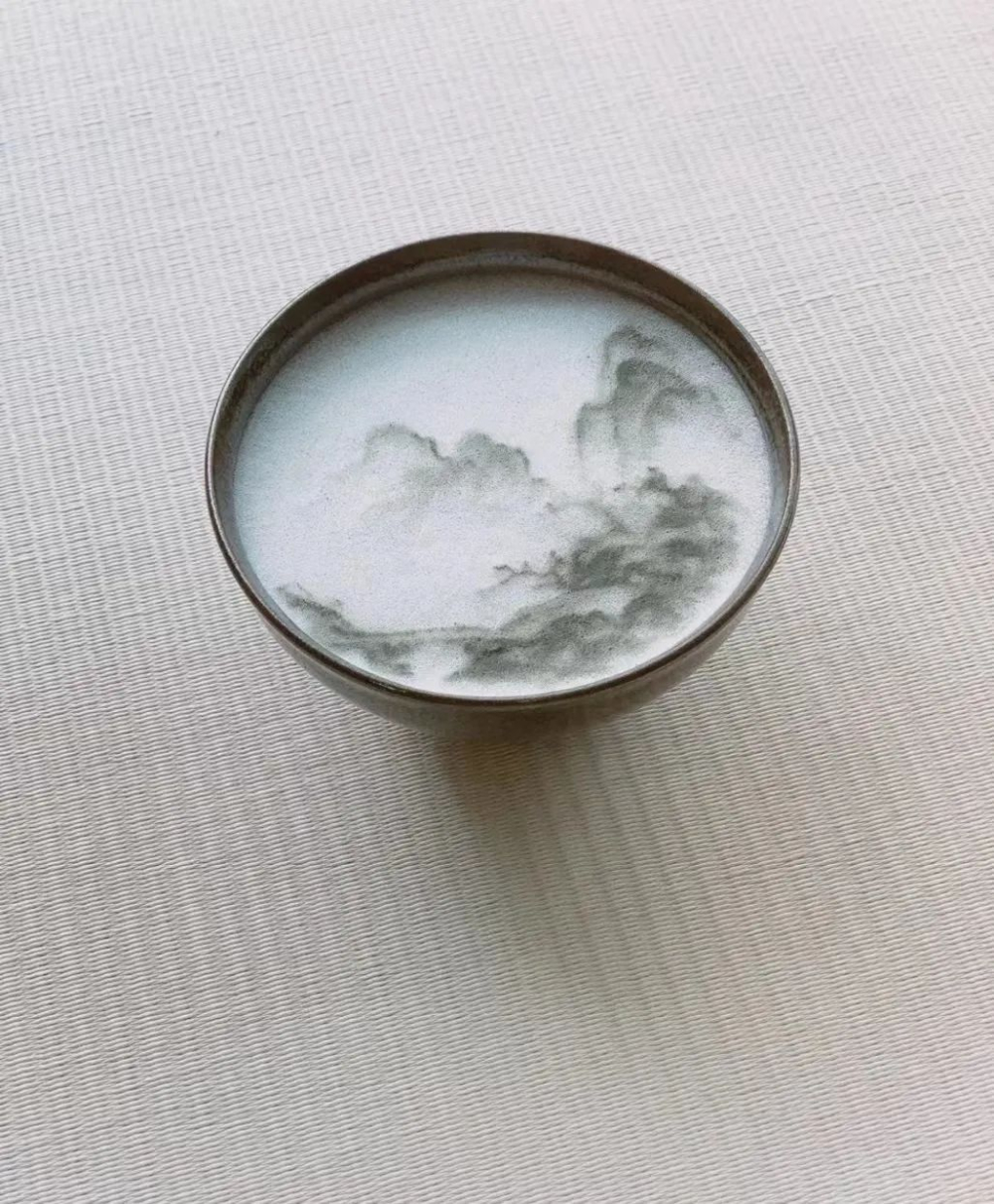
Recently, Han Zheming, a Shanghai-based graphic designer, went trending on Weibo for recreating traditional Chinese paintings on tea. He began studying painting in childhood and worked as a graphic designer after graduating from the China Academy of Art. Years ago, he developed a passion for collecting Song Dynasty porcelain — mostly tea ware. To understand why people of the Song Dynasty used such vessels for tea, he encountered the Song-era tea-whisking practice known as "Dian Cha."
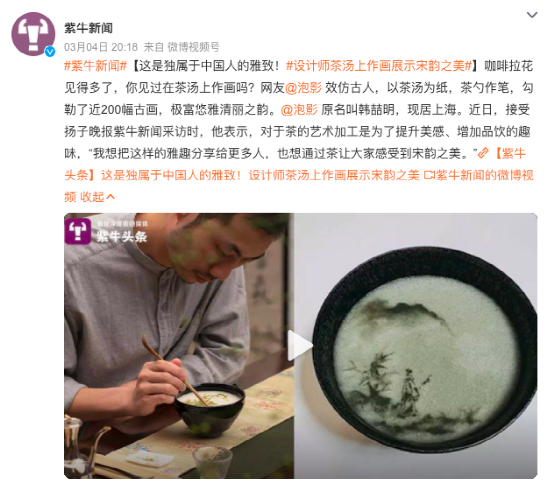
After experimenting with different ground teas, he settled on white tea. During the Song Dynasty, Dian Cha was enjoyed by everyone from nobles to commoners. It even gave rise to "tea competitions," where participants vied to see whose tea foam would last longest on the surface — a feat that had its own term: "yao zhan," literally "biting the cup."
The Dian Cha process is intricate. It uses tea powder ground from tea leaves, and water is added seven times. The first addition mixes the powder into a paste; the six subsequent additions are each accompanied by continuous whisking to build thick foam. Compared with ordinary steeped tea, this whisked tea has a denser, richer mouthfeel thanks to its fine layer of foam.
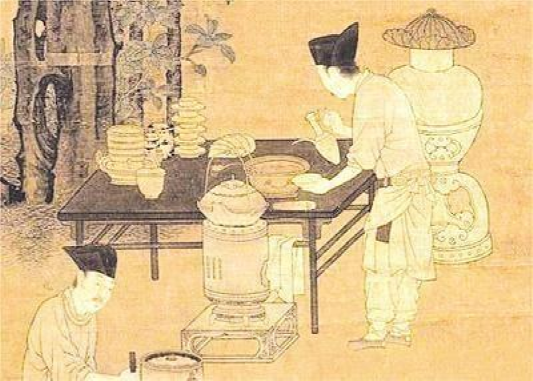
Unlike coffee — whose flavor changes when milk is added — Dian Cha uses only tea powder and water, so the tea keeps its original flavor untouched.
Notably, people during the Song Dynasty also painted on tea foam. Drawing on his knowledge of Song painting, Han Zheming mixes tea powder with water into a tea paste that serves as his "paint." Unlike brushwork on paper, painting on tea foam means working a tea spoon across the delicate surface in a "hard-meets-soft" technique. And since the foam eventually dissipates no matter how beautiful the image, each painting must be completed within three to five minutes, with the entire process from tea preparation to finished artwork taking about 10 minutes.
Over six years, he has recreated nearly 200 ancient paintings, including "Plum Blossom and White-eye Bird" by Zhao Ji of the Northern Song, "Autumn River Fishing Boats" by Xu Daoning of the Northern Song, "Distant View of Cloudy Peaks" by Ma Yuan of the Southern Song, and "Autumn Forest with Walking Stick" attributed to Ma Yuan of the Southern Song.
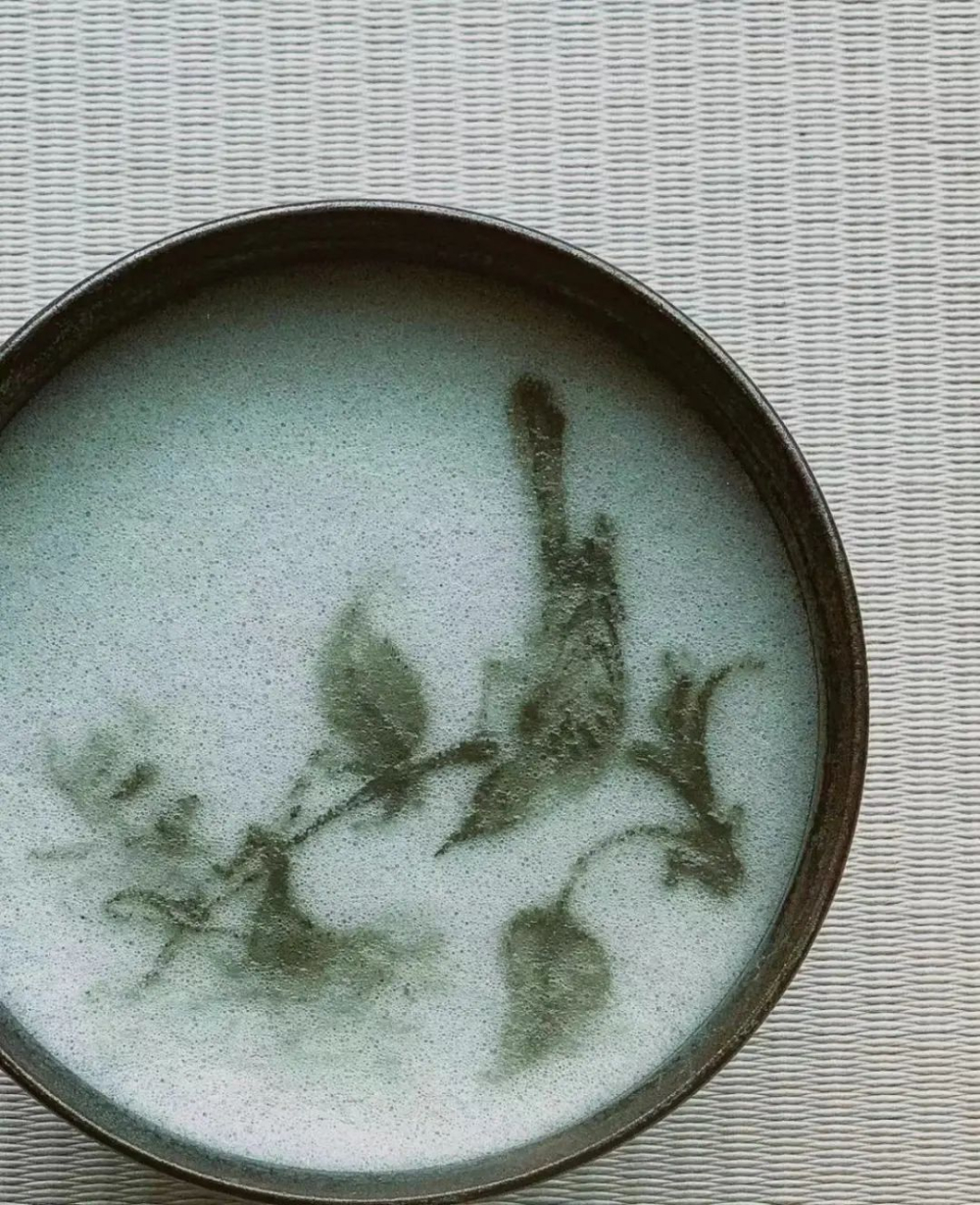
Tea Whisking and Tea Painting: Ancient Techniques
The process of creating the tea foam is called "Dian Cha," while painting on that foam is known as "Cha Bai Xi" (Tea Hundred Tricks). It's worth noting that this Shanghai designer's use of tea paste to paint on foam is a modern innovation, and he skips the traditional final tea-serving step. In the Weibo comments, netizens shared what "Cha Bai Xi" truly involved.
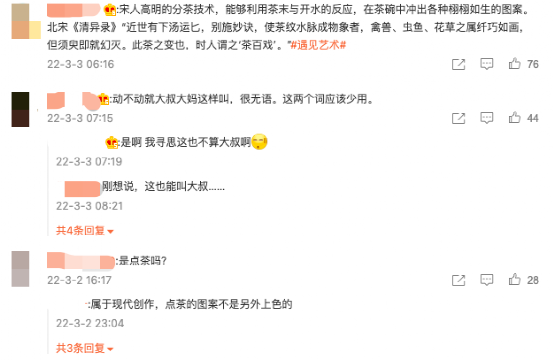
According to ancient records, traditional "Cha Bai Xi" created patterns on the foam by adding water directly, or by dipping a tea spoon in clear water to outline designs. In other words: tea as the canvas, water as ink — "adding water and moving the spoon."
Finally comes the tea-serving step, where the tea is distributed into cups one spoonful at a time, ensuring each serving carries an even amount of foam.
But with such beautiful artwork on top — would you really have the heart to drink it?
Image source: Weibo, Xiaohongshu (Paoying)
FrontStreet Coffee Recommendation
Feeling inspired to try your hand at latte art after all that tea painting? Here are three blends that make the practice easy:
FrontStreet Classic Blend — a medium-dark espresso recipe combining three origins, inspired by the classic "Mandheling-Brazil" pairing, with a touch of robusta for extra aroma and crema. Expect buttery, toasted-toast, and caramel-cookie notes, a solid body, fine crema, and highly stable extraction — the essential beginner's home espresso bean.
FrontStreet Premium Blend — the classic pairing of Colombia washed and Brazil pulped natural beans, showing nuts, dark chocolate, and caramel in espresso, with smooth cream, almond, and cocoa aromas in any milk drink. Crema that rivals café output — more than enough for practicing latte art at home or in a shop.
FrontStreet Commercial Blend — built on FrontStreet Coffee's Premium Blend with a touch of robusta added for deeper, darker-brown crema and a heavier body. Nuts, cocoa, and caramel in Americanos, lattes, and mochas alike, with latte art made effortless — tailor-made for anyone about to open a café.
Important Notice :
FrontStreet Coffee is a long-established specialty coffee roaster in Guangzhou China, selling freshly roasted beans from its own farm in Yunnan as well as dozens of carefully selected single-origin beans from around the world for both pour-over and espresso. The products deliver consistently excellent quality and great value, with shipping within 24 hours. Guangzhou's FrontStreet Coffee shop is recommended by many coffee lovers, and the beans are now available online at the Tmall 。
FrontStreet Coffee has moved to a new address:
FrontStreet Coffee Address: 315,Donghua East Road,GuangZhou
Tel:020 38364473
 Scan and follow the En Gafei WeChat official account. Please indicate that the reprint comes from "En Gafei".

