
Pour-over Guji Coffee Tutorial: Perfect Grind Size, Water Temperature, and Ratio for Guji 8.0 Black Coffee

Guests often ask FrontStreet Coffee how to brew a good cup of coffee. Strip away the human factor, and coffee brewing really comes down to four variables: coffee dose, grind size, water temperature, and coffee-to-water ratio. Follow the principles behind those parameters, and you can honestly brew a decent cup every time.
Coffee Dose
This is the variable beginners most often overlook. The dose directly determines the thickness of the coffee bed, which behaves differently as you brew—and the dose should be matched to the size of your filter cup.

For small drippers serving 1-2 people, the sensible dose is generally 10-20 grams; FrontStreet Coffee suggests beginners start at 15 grams. For large drippers serving 2-4 people, the range is generally 20-40 grams, with 30 grams as a good starting point. You can brew outside a dripper's recommended range, but it gets harder and puts your control skills to the test.
Grind Size
Grind size is the number-one hurdle for beginners, and most bad brews trace back to it. Part of the problem is the grinder itself: newcomers rarely invest heavily in gear, and entry-level grinders typically produce too many fines, pushing the coffee bitter and astringent.

The second problem is simply not knowing how coarse "coarse" should be. Sugar-granule analogies are popular but ambiguous. If you genuinely want to calibrate your grind, FrontStreet Coffee suggests buying a #20 sieve (0.85mm aperture).

For pour-over, aim for a grind with an 80% retention rate on the #20 sieve for light roasts, and 70% retention for dark roasts. These settings are not the only ones that can make good coffee, but for a beginner they are the simplest, most reliable path to a tasty cup.
Water Temperature
Water temperature is relatively easy to control, but not to be taken lightly. Too low and the flavor falls short; too high and the coffee turns bitter. FrontStreet Coffee suggests beginners use 90-93°C for light roasts (acidic) and 86-89°C for dark roasts (bitter).

Watch for heat loss during the brew, too: keep the pour stream low—around 3-4cm above the bed—and keep the lid on your kettle while brewing.
Coffee-to-Water Ratio
In plain terms: for a given dose of coffee, pour a fixed multiple of water. The ratio has a profound effect on both extraction rate and strength—as water increases, extraction rate rises and concentration falls.
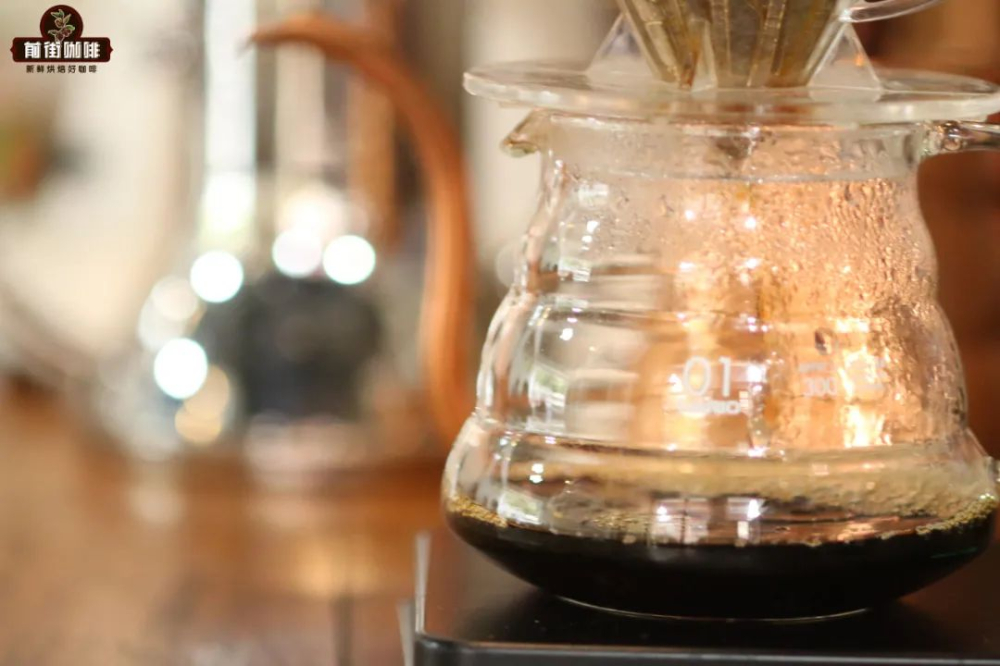
A good ratio is the balance point where the coffee has extracted its desirable compounds and the strength lands just right. That point sits between 1:15 and 1:16. In this range the odds of a tasty cup are highest, which makes it an ideal ready-made formula for beginners.
Pouring Technique
Pouring technique is how you arrange the details—water distribution, flow rate, and pour path. Once the parameters above are dialed in, technique becomes a way of holding the brew at its dynamic equilibrium. Whether you use a single pour, a three-stage pour, the four-six method, or fancier patterns, the primary goal is even extraction—uniform water distribution. The simplest way to check is the coffee bed after brewing. FrontStreet Coffee's article from last week, "Complete Guide to Pour-Over Coffee Beds!", walks through the specifics.
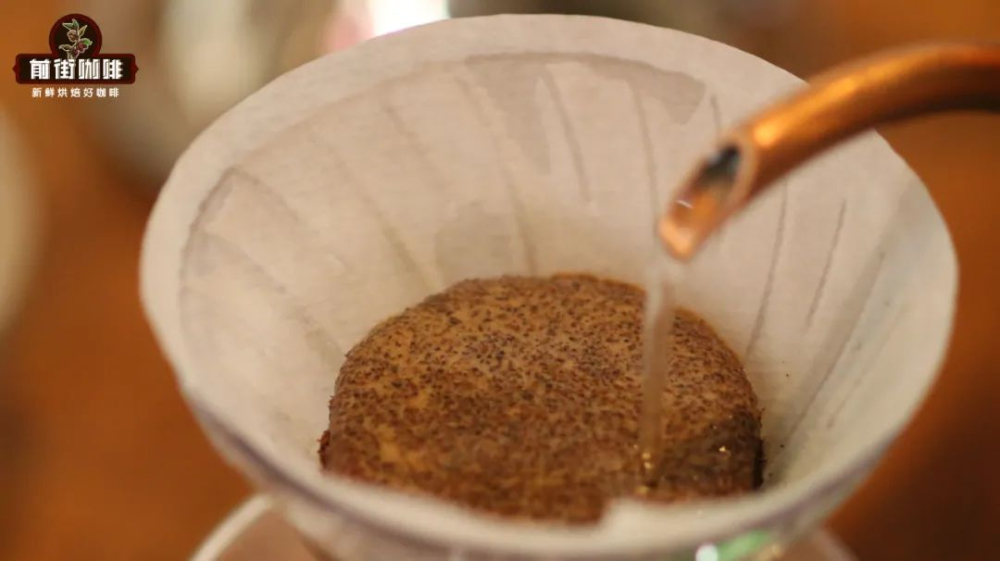
Compared with the visual, measurable parameters, pouring is the most human-controlled—and therefore the biggest source of uncertainty. So while you are still learning, FrontStreet Coffee suggests a steadier method such as the three-stage pour. Master the flow rate and the spiral motion, and you can brew any bean—this is the "universal remedy of the pour-over world."
That said, technique can also serve as a flexible lever for more complete extraction.
For example, FrontStreet Coffee brewed Yirgacheffe's Guji 8.0 with standard parameters (15g of grounds, 1:15 ratio, 91°C, 80% sieve retention) and a three-stage pour (30ml, 95ml, 100ml). This bean, processed by the traditional natural method, is wonderfully aromatic: sweet honey and berry notes rise from the dry grounds, and in the cup you find guava, jackfruit, apricot, dried fruit, citrus, and florals. The aroma is full and pleasant, the price is friendly, and it makes an excellent practice bean for beginners.

Step by Step

First, add 15g of grounds to the dripper and zero the scale. Start the timer and pour 30g of water for a 30-second bloom, using a small stream from the center spiraling outward so the entire coffee bed is wetted.

For the second stage, pour 120g of water with a slightly larger flow, aiming to lift the whole coffee bed; pour vertically and evenly. The scale should read 150g, with the pour finished around 55 seconds.

When the liquid level drops to about half, begin the third stage: pour 90g in small circles. Keep the circles tight—large swirls break up the bed and invite under-extraction. The total should reach 240g, with drippings finishing around 2 minutes 10 seconds. Remove the dripper, swirl the coffee gently in the server to even it out, and enjoy.
FrontStreet Coffee Recommendation
If Guji's natural-process charm wins you over, Ethiopia has plenty more where that came from. FrontStreet Coffee's washed Yirgacheffe is the classic entry point—clear jasmine florals and bright citrus acidity with a light, elegant, tea-like body, like a crisp lemon tea. The Guodingding Cooperative, independent since 2012 with roughly 300 member farmers in the Worka area, shows citrus and lemon tones with graceful white florals thanks to its pre-drying depulping. And for natural-process lovers, the FrontStreet sun-dried Sidamo Huakui—raised-bed dried for 21 days near Hambella in Guji—delivers faint fermented wine notes, florals, citrus, and mango with honeyed sweetness, cocoa depth, and a thick, lingering body.
Important Notice :
FrontStreet Coffee is a long-established specialty coffee roaster in Guangzhou China, selling freshly roasted beans from its own farm in Yunnan as well as dozens of carefully selected single-origin beans from around the world for both pour-over and espresso. The products deliver consistently excellent quality and great value, with shipping within 24 hours. Guangzhou's FrontStreet Coffee shop is recommended by many coffee lovers, and the beans are now available online at the Tmall 。
FrontStreet Coffee has moved to a new address:
FrontStreet Coffee Address: 315,Donghua East Road,GuangZhou
Tel:020 38364473
 Scan and follow the En Gafei WeChat official account. Please indicate that the reprint comes from "En Gafei".

