Starbucks Cancels Fair Trade Certification! Changes Stance on Ethical Coffee Sourcing
According to a February 16th report by the British news outlet inews, Starbucks has severed its partnership with the Fairtrade Foundation. Peg Willingham, Executive Director of Fairtrade USA responsible for Starbucks' global relations, subsequently issued a statement to supply management departments: "Although the partnership has been terminated, Starbucks will continue to purchase Fairtrade coffee beans. However, it will gradually reduce Fairtrade purchases from Europe, the Middle East, and Africa regions."
The statement also made clear that even without the Fairtrade Foundation, Starbucks has internal plans to maintain and implement its Coffee and Farmer Equity (C.A.F.E) practices, which were developed together with the environmental non-profit Conservation International.
The practical consequence: coffee sold at Starbucks stores worldwide will no longer carry Fairtrade certification.

About the Fairtrade Foundation
The Fairtrade Foundation is the UK member of Fairtrade International, an independent non-profit established in 1992. It unites more than 20 labeling initiatives across Europe, Japan, North America, Mexico, and Australia/New Zealand, together with producer networks spanning Asia, Africa, Latin America, and the Caribbean.
Starbucks' History with Fairtrade
Starbucks began working with the Fairtrade Foundation in 2000. By 2010, the partnership covered two coffee fair trade agreements, with Starbucks investing over $14 million to fund loans for farmers in Fairtrade cooperatives. From then on, Starbucks sourced beans from its own registered growers as well as democratically operated coffee cooperatives and associations affiliated with the Foundation.
That partnership also shaped Starbucks' own framework: in 2004, the company began formulating strict procurement guidelines — the Coffee and Farmer Equity (C.A.F.E) practices — which promoted environmentally responsible growing, guaranteed minimum wage standards for coffee farmers, provided fairer working environments, and increased economic transparency.
Concerns and Criticism
News of the split drew immediate concern from advocacy groups. With Fairtrade's independent audits gone, critics worry that the C.A.F.E practices could become less rigorous than before.
The groups also questioned the substance of C.A.F.E itself. Under Fairtrade rules, buyers must pay farmers a minimum price for coffee beans plus the Fairtrade premium, while meeting standards that protect workers' and environmental rights. C.A.F.E guarantees no minimum price. Fairtrade standards likewise require purchasing coffee from small-scale farmers organized in cooperatives — a requirement C.A.F.E does not impose.
Starbucks' Response
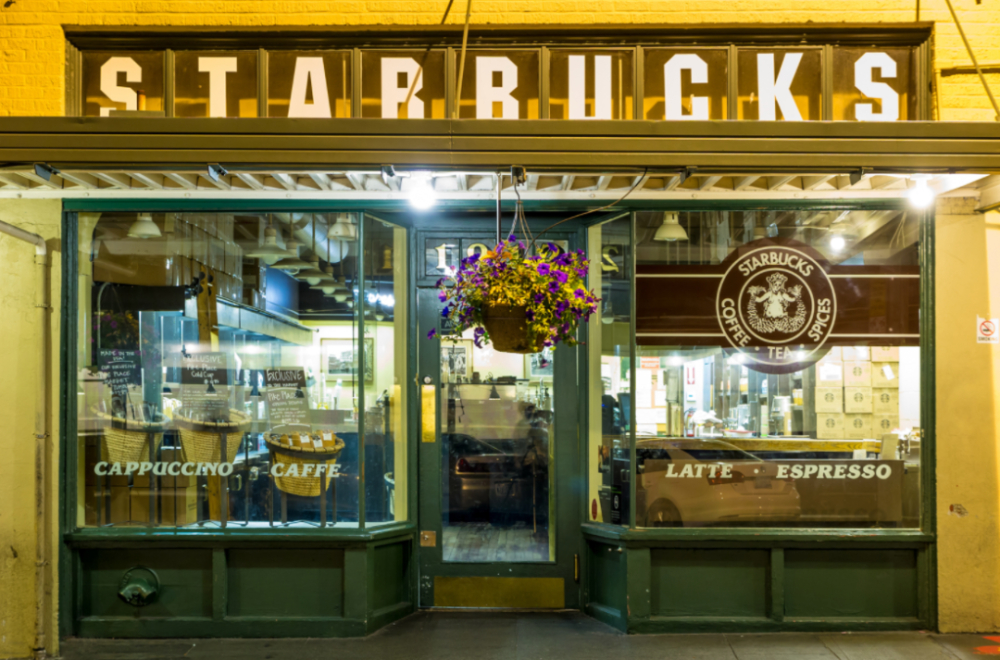
A Starbucks spokesperson pushed back on the criticism: "It is inaccurate to call C.A.F.E Starbucks' own standard. This was developed in collaboration with Conservation International and independently verified by SCS Global Services. These standards have been in place since 2004, representing a robust program."
On the concern that C.A.F.E might soften without Fairtrade audits, the spokesperson said: "Going forward, audits will be conducted by SCS Global Services, a leading third-party organization in environmental and sustainability certification." The firm specializes in high-quality sustainability services, and Starbucks' environmental work in recent years has been closely tied to it.

Not the First Policy Change
Nor is this the first time Starbucks has walked back an ethical sourcing commitment. In 2015, the company pledged to use 100% cage-free eggs (from free-range hens) in all egg-containing food sold at its global stores, including both company-operated and franchised locations, by 2020.
Not long after, Starbucks quietly narrowed the commitment to company-operated stores only — excluding the 40% of Starbucks locations worldwide that are franchised.
Image source: Internet
FrontStreet Coffee Recommendation
When certification logos disappear, the surest guarantee is knowing exactly who grew your coffee. FrontStreet Coffee works directly with the origins behind every bean it sells, and its entry-level single-origin lineup makes that transparency affordable. The FrontStreet natural Huakui from Ethiopia's Sidamo region offers berry, floral, jackfruit, melon, and honey flavors, while the FrontStreet Washed Guodingding Cooperative delivers the jasmine, lemony acidity, and berry sweetness typical of washed Yirgacheffe.
Beyond Ethiopia, the FrontStreet Cerrado Red Bourbon from Brazil is a soft, sweet, balanced everyday bean with cream, peanut, and cocoa notes; the higher-grown yellow bourbon from FrontStreet Queen Estate adds sugarcane and mixed-nut aromas. For low-acid drinkers, the wet-hulled FrontStreet Lindong Mandheling brings herbal and spice depth, and the FrontStreet PWN Golden Mandheling — triple hand-selected for minimal defects — is cleaner and smoother, with clear wood and caramel notes. The high-grown FrontStreet Huila from Colombia, and the honey-processed FrontStreet Costa Rica Blackberry and Mozart, round out a lineup suited to pour-over, cold brew, americano, or latte.
Important Notice :
FrontStreet Coffee is a long-established specialty coffee roaster in Guangzhou China, selling freshly roasted beans from its own farm in Yunnan as well as dozens of carefully selected single-origin beans from around the world for both pour-over and espresso. The products deliver consistently excellent quality and great value, with shipping within 24 hours. Guangzhou's FrontStreet Coffee shop is recommended by many coffee lovers, and the beans are now available online at the Tmall 。
FrontStreet Coffee has moved to a new address:
FrontStreet Coffee Address: 315,Donghua East Road,GuangZhou
Tel:020 38364473
 Scan and follow the En Gafei WeChat official account. Please indicate that the reprint comes from "En Gafei".