
How to Adjust Espresso Dosing Grinders and Key Considerations for Coffee Grind Size Settings
Understanding Dosing Grinders: Are They Really Convenient?
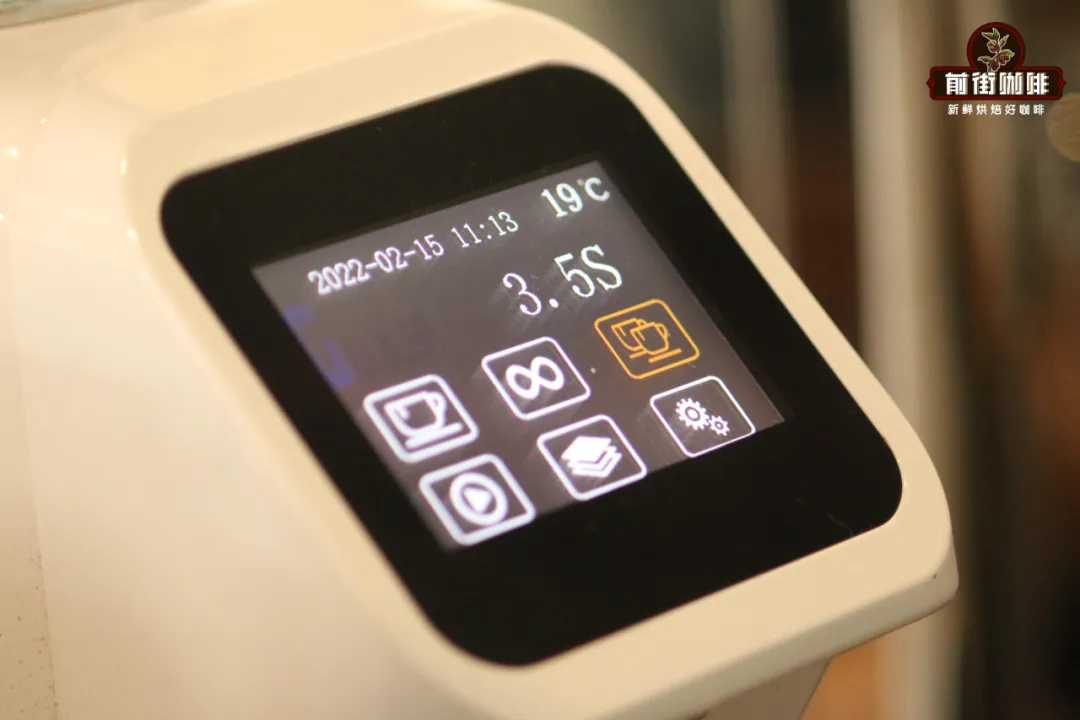
Dosing grinders are, as the name suggests, grinders that can dispense a preset amount of grounds in a single run — cutting out the weighing step entirely. At first glance, they seem like the more convenient option.
But is that actually true? Dosing grinders work in two ways: by weight and by time. Most models on the market are time-based. Take the grinder FrontStreet Coffee uses: you can set a grinding time and the machine stops automatically. If grinding 20g of coffee takes 3.5 seconds, you dial in 3.5 seconds and every subsequent dose runs for exactly that long.

In practice, though, FrontStreet Coffee has found the dose can drift anywhere from 0.3g to as much as 1.3g off target. Several details are behind this.
Detail 1: Gaps Between Coffee Beans
Even though the beans in the hopper look densely packed, there are real gaps between them. If identical spheres were stacked at equal distances, those gaps would be uniform — but coffee beans are irregular objects of varying sizes, so the spacing differs. That variation alone produces small errors (around ±0.3g) in timed grinding.
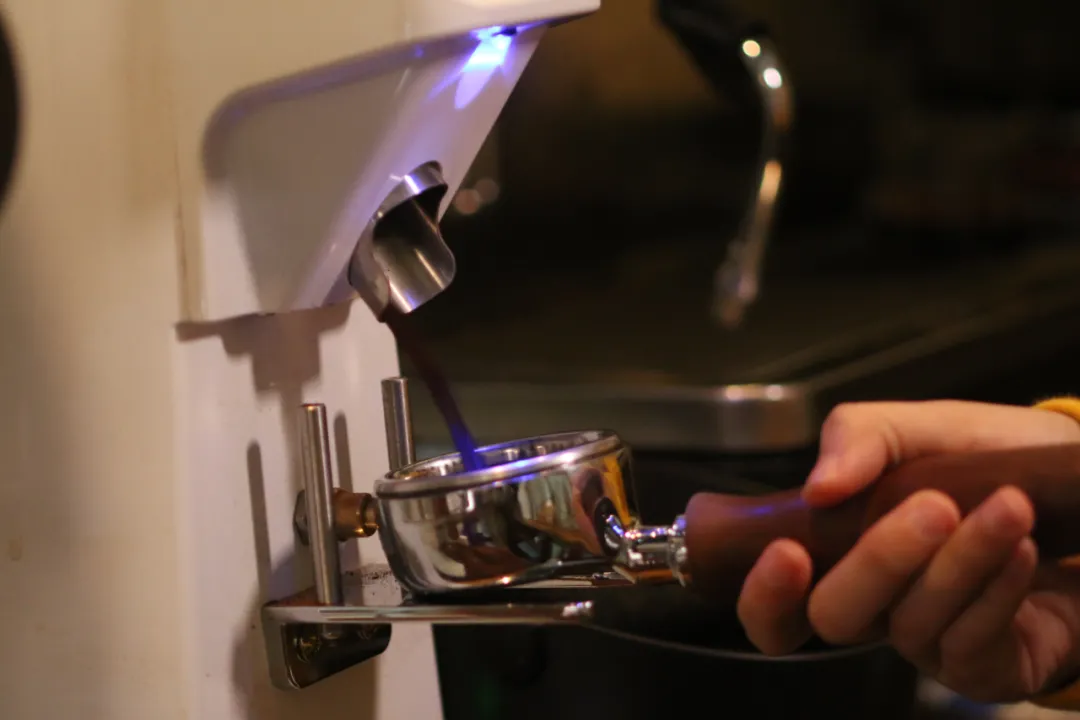
Detail 2: How Full the Hopper Is
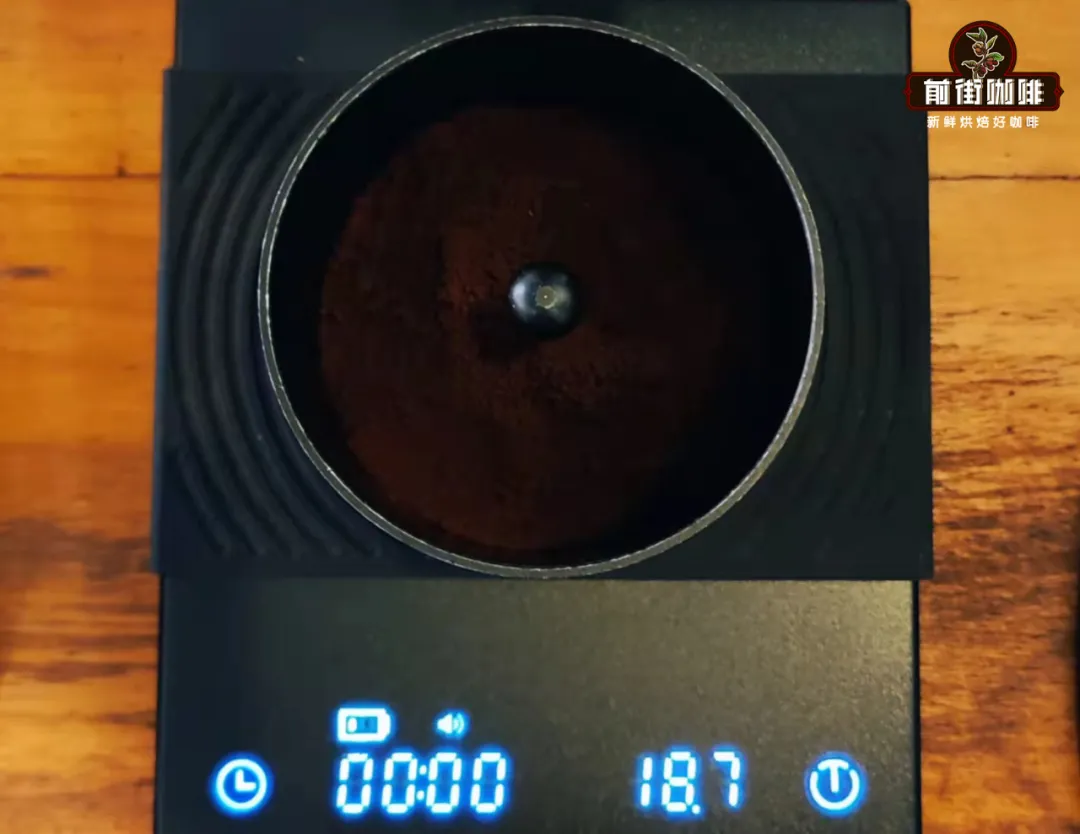
Hopper level is the most overlooked factor. Most people fill the hopper to the brim and only refill when it's empty. FrontStreet Coffee ran a comparison: timed grinding with a full hopper versus a hopper only 1/5 full, all other parameters unchanged. Using 3.5 seconds yielding 20g with a full hopper as the baseline, the same 3.5 seconds with a 1/5-full hopper produced only 18.7g — an error of 1.3g. So if you blindly trust the dosing function through a busy day of brewing, your doses will quietly shrink as the beans run low. This is exactly why FrontStreet Coffee, despite using a dosing grinder, still checks every dose on an electronic scale.
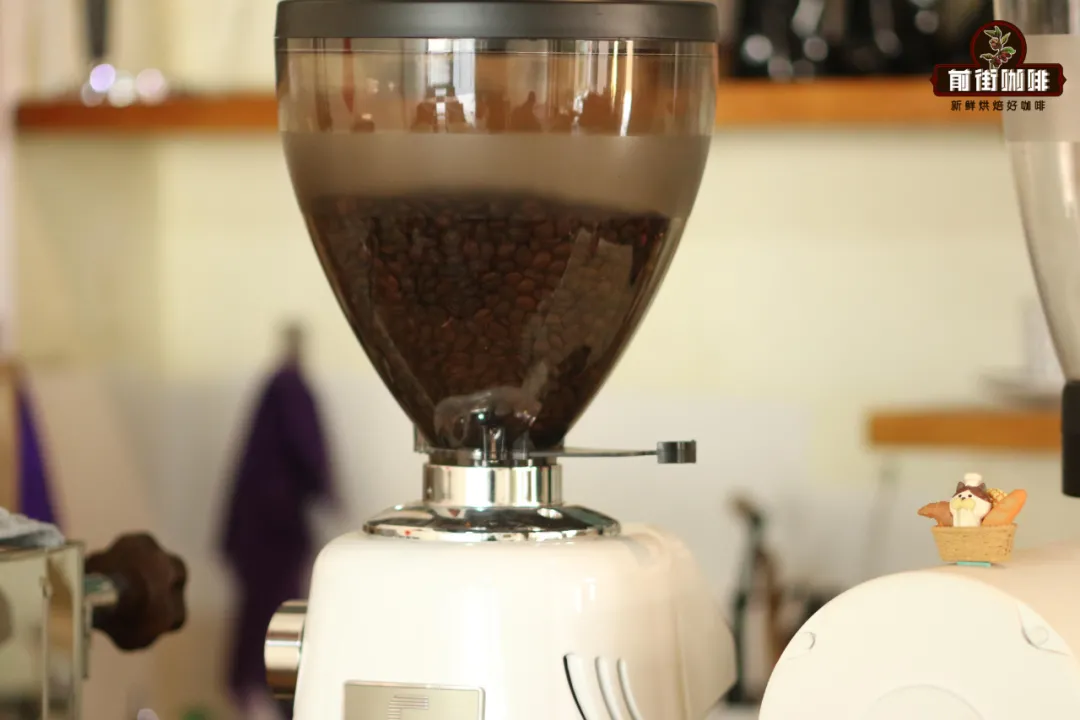
The physics are simple: when the hopper is full, the weight of the beans above presses the lower beans into the burrs. As the hopper empties, that pressure fades — and when it's nearly empty you can even see "jumping beans" bouncing back up.
For that reason, FrontStreet Coffee recommends keeping the hopper at 40–70% capacity (don't wait until it's bone dry to refill); in that range, results stay much more consistent.
Detail 3: Residual Coffee in the Grinding Channel
If your dosing grinder swings between over-dosing and under-dosing, coffee may be snagging in the grinding channel. If the channel can be disassembled, cleaning it regularly will cut down on these fluctuations.

Detail 4: Grind Setting Changes
Adjusting the grind also changes the timed output. Grinding finer means less coffee comes through in the same time; grinding coarser means more. Whenever you change the grind, re-calibrate the dose time.
Bottom line: for truly consistent shots, even a dosing grinder should be paired with an electronic scale to verify each dose.
FrontStreet Coffee Recommendation
A precisely dosed, finely tuned grind deserves beans built for espresso. For the classic Americano-and-latte style, FrontStreet Coffee recommends the Classic Blend or Commercial Blend — both built on traditional Italian recipes with a touch of Robusta, pulling shots with buttery, nutty, spice, dark chocolate and toast aromas, a thick golden crema, and a wild, full-bodied texture that makes latte art effortless.
If you love almond, walnut and other nut-forward espresso notes, reach for FrontStreet Coffee's Signature Blend or Black Cocoa Blend. Both lean heavily on Brazilian beans for a comfortable bittersweetness and creamy peanut aroma. The Signature Blend adds Colombian nut, chocolate and caramel notes with gentle acidity, while FrontStreet Coffee's Black Cocoa Blend brings the plum-like acidity of Yunnan beans and a cream-chocolate fragrance — balanced, versatile, and a great workhorse for cafés. For a single-origin option, FrontStreet Coffee's natural Huakui SOE (from Guji Hambela, Ethiopia, grown at 2,300 meters) delivers creamy strawberry, cocoa, berry and black-tea notes that shine in both Americano and latte form.
Important Notice :
FrontStreet Coffee is a long-established specialty coffee roaster in Guangzhou China, selling freshly roasted beans from its own farm in Yunnan as well as dozens of carefully selected single-origin beans from around the world for both pour-over and espresso. The products deliver consistently excellent quality and great value, with shipping within 24 hours. Guangzhou's FrontStreet Coffee shop is recommended by many coffee lovers, and the beans are now available online at the Tmall 。
FrontStreet Coffee has moved to a new address:
FrontStreet Coffee Address: 315,Donghua East Road,GuangZhou
Tel:020 38364473
 Scan and follow the En Gafei WeChat official account. Please indicate that the reprint comes from "En Gafei".

