
Italian Espresso Recognized as Intangible Cultural Heritage - The Historical Development of Espresso Machines
Italian Espresso Recognized as UNESCO Intangible Cultural Heritage Candidate
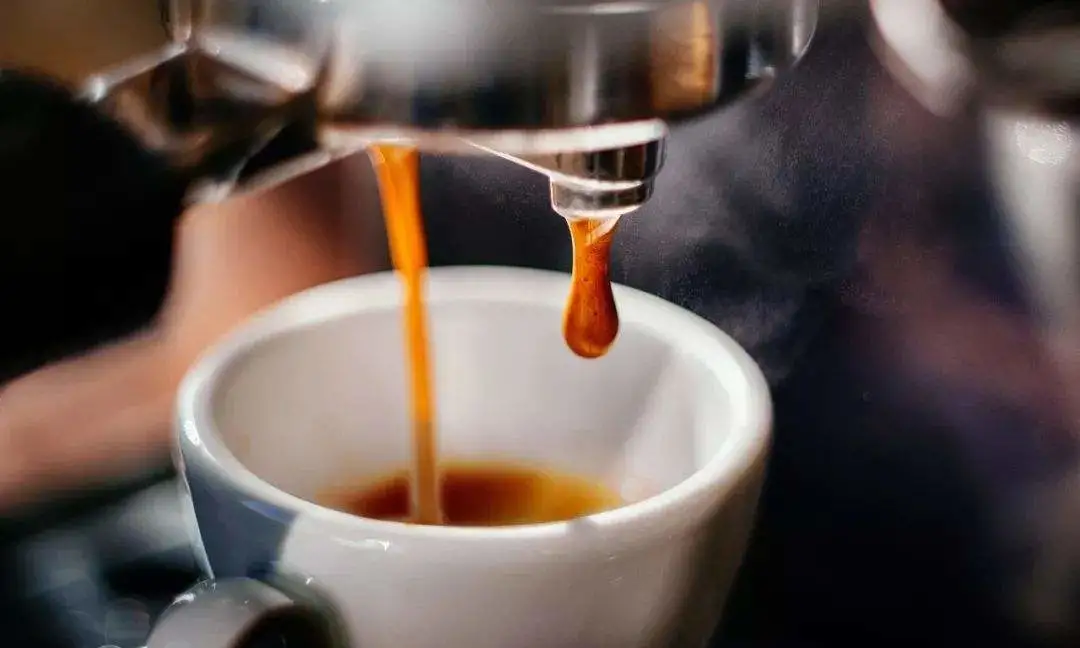
According to foreign media reports, on January 20th, Gian Marco Centinaio, Deputy Minister of Italian Agriculture, Food and Forestry, announced to the media that Italian espresso had officially been placed on UNESCO's candidate list for Intangible Cultural Heritage of Humanity. Official approval and announcement were set to take place in Paris before March 31st.
As an inseparable part of Italian life, every cup of espresso tells a story—about a region, a culture, and how the industrial age drove society to develop at breakneck speed.
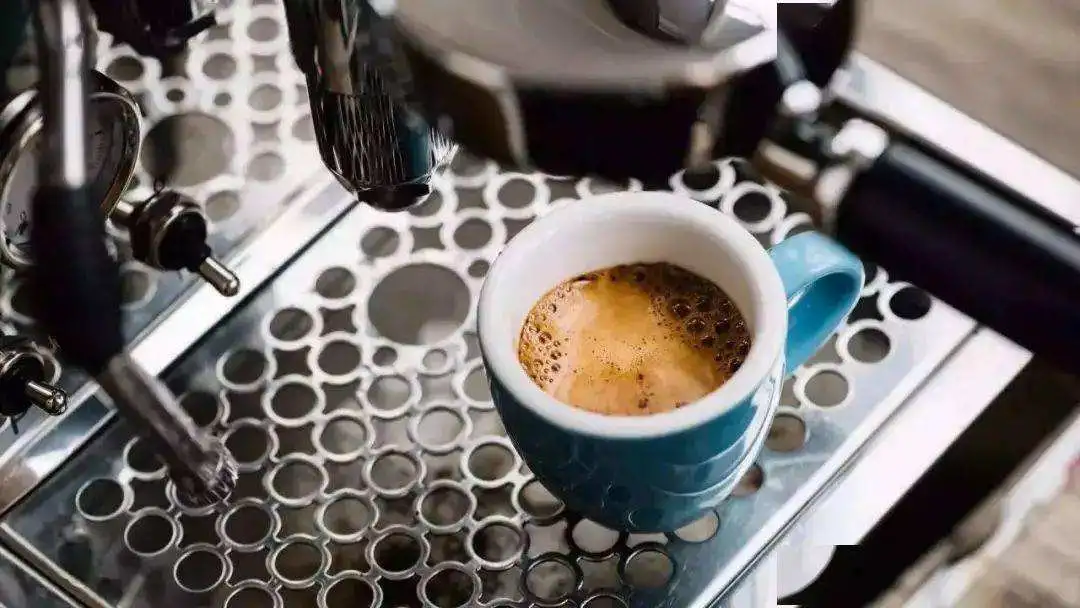
To the rest of us, espresso may be nothing more than a strong, mellow drink that wakes up the mind—or the base for building other coffee drinks. But for Italians, it is a genuine daily ritual, a form of cultural identity, and a piece of what makes Italy unique in the world.
The Origins of Espresso: Speed Over Quality
Espresso wasn't born for the sake of crema or flavor. It emerged simply to serve a rapidly industrializing society obsessed with speed. The industrial era demanded that everything be faster, more efficient, more mechanized—and coffee was no exception.
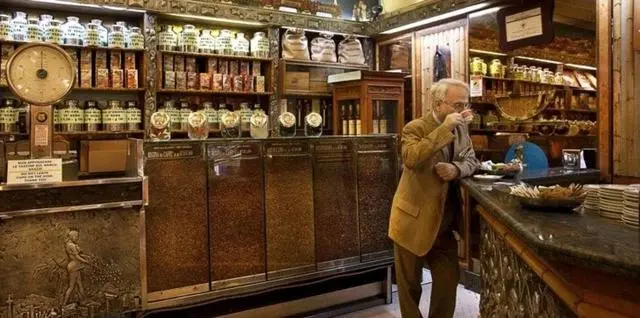
Traditional brewing methods were hopelessly slow. At the time, Italian men (in late 19th-century Italy, coffee was largely men's territory) drank coffee because the caffeine—which came from the robusta-heavy beans of the era, long before specialty coffee—fueled another hour of productive work. But the brewing itself was a slog, and impatient minds turned to the steam engine.
With steam pressure, hot water could be driven through coffee grounds quickly, extracting a cup in moments. So it was that in 1884, someone successfully registered a patent in Turin, Italy, for a steam-powered coffee machine. Speed was no problem—but the taste was burnt and bitter, barely drinkable. Still, because it was extracted fast, the coffee it made was named "espresso" (from the Italian for "express"—fast).
Evolution and Innovation: The Quest for Better Quality
The first "fast coffee" tasted awful, but once Italians saw that steam pressure could produce a cup in seconds, a switch was flipped: the steam-powered machine entered an era of continuous upgrades and modification.
First, the Milanese designer Luigi Bezzera acquired the patent. He added a portafilter and basket to the original steam-boiler design, and refined the grind size so the coffee particles could be compacted under pressure. The puck itself could then resist the rush of high-pressure water, distribute the force of the stream, and let the water pass evenly through the whole bed before "expressing" a balanced cup. He also added cooling channels inside the machine to avoid the scorched, bitter taste caused by excessively hot water, and patented the design in 1901.
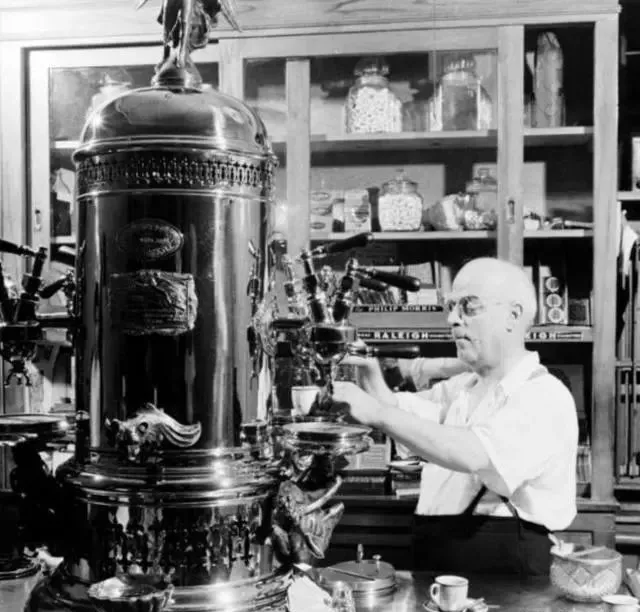
It was the La Pavoni Company—buyer of Bezzera's patent—that carried espresso across Italy. After the acquisition, La Pavoni added a pressure relief valve, taming the temperature and pressure swings caused by inconsistent flame heating, and fitted a steam wand as well.
The upgraded machine was named the Ideale and launched in 1906. As the Ideale spread, more and more Italians fell for the quickly extracted coffee it produced. The word "espresso" even entered the dictionary in 1920, defined as "concentrated coffee made with pressurized machines or filters."
Global Expansion and Modernization
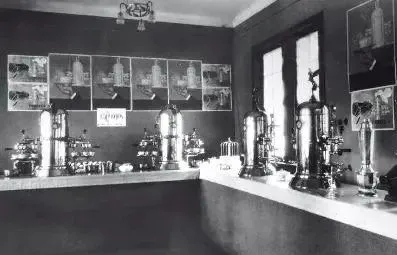
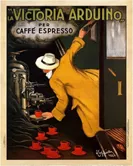
The man who began taking the espresso machine to the world—convincing people that Italy's pressurized machine could produce concentrated coffee in seconds—was Pier Arduino of Turin. He sold these distinctly Italian machines to France and gradually exported them worldwide, commissioning promotional posters along the way that introduced still more people to Italian espresso.
By 1942, Arduino decided espresso still wasn't concentrated enough, so he added a manual spring piston to the machine, letting the brewer push the original 1.5–2 bar extraction pressure up to 8–10 bar by hand. Greater attention was also paid to how fine and uniform the grind was, and the "expressed" coffee grew more concentrated still. The espresso we recognize today dates from this era.
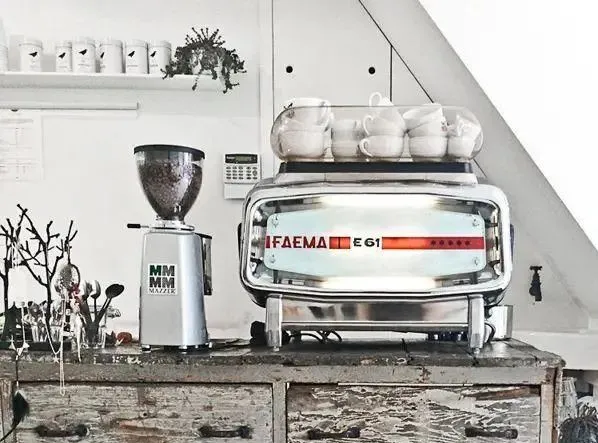
By 1961, Faema had automated that manual spring piston, guaranteeing consistent quality from shot to shot. The resulting model—the E61—became the first semi-automatic espresso machine. Simple to operate, affordable, and compact, the Faema E61 swept across Italy almost overnight. Italians gathered in cafés to share inexpensive, distinctive coffee, and Italy's signature social ritual took shape.
Espresso Today: A Global Cultural Phenomenon
By 1970, Ulka had built semi-automatic machines compact enough for the home, letting households pull their own shots in the kitchen. And by 1987, Starbucks' mass purchase of commercial espresso machines carried representative Italian espresso into daily life around the globe, cementing the espresso machine's place in cafés everywhere.
Today, espresso belongs to more than Italy, and it's enjoyed far beyond Italian borders. Espresso created an entire coffee era and opened a window onto Italy's cultural history for the rest of the world. Even through the pandemic, people everywhere still reached for a cup of Italian espresso—proof enough that it has become an essential ritual of daily life.
UNESCO Recognition Process
Italy's push began as early as March 2016, when it first applied for espresso to be designated Intangible Cultural Heritage. It took until now for espresso to make UNESCO's candidate list and formally enter the approval process.
Centinaio said he was deeply honored to see Italian espresso named a candidate for UNESCO Intangible Cultural Heritage of Humanity, and confirmed that the Italian Ministry of Agriculture, Food and Forestry had officially submitted the nomination documents to UNESCO headquarters.
Image source: Internet
For professional coffee knowledge exchange and more coffee bean information, follow Coffee Workshop (WeChat public account: cafe_style). For more specialty coffee beans, add FrontStreet Coffee on WeChat (ID: kaixinguoguo0925)
FrontStreet Coffee Recommendation
Espresso beans generally come in two forms: the blends most cafés reach for first, and single-origin espresso—SOE—for drinkers who want one region's character in the cup. Blends exist because combining origins lets roasters build a more balanced flavor than any single bean can achieve, marrying, say, a smooth but quiet coffee with one bursting with aroma. For a traditional-style Americano or latte, the FrontStreet Classic Blend and FrontStreet Commercial Blend are the picks: both build on old-school Italian formulas with a touch of robusta, yielding butter, nut, spice, dark chocolate, and toast aromas, a thick, wild body, and that dense golden crema that makes latte art effortless.
If almond, walnut, and other nut aromas are what you crave, go for the FrontStreet Signature Blend or FrontStreet Coffee's Black Cocoa Blend—both built on a large proportion of Brazilian coffee, offering gentle bitter-sweetness and a creamy peanut smoothness. The Signature Blend adds Colombia's nut, chocolate, and caramel notes with just the right acidity, while FrontStreet Coffee's Black Cocoa Blend brings Yunnan arabica's ripe-plum brightness and a ground-bloom aroma of creamy chocolate—balanced, versatile, and equally at home in a latte, an Americano, or a signature coffee special, making it a shop owner's best partner.
For SOE, traceability is the point—you can follow a single-origin lot back to its farm, or even a single grower. The FrontStreet Natural Huakui SOE from Guji, Ethiopia, grown at 2,300 meters and natural-processed, shows cream, cocoa, berry, delicate florals, and black tea after medium roasting. Prefer high sweetness over acidity? The honey-processed FrontStreet Costa Rica Blackberry SOE makes a bright, clean Americano and turns into cranberry cookie, raisin, and nut in a latte. And the Brazil Queen Estate SOE, in the rare Yellow Bourbon variety and roasted medium-dark, pulls shots of butter cookie, macadamia, and toast—the smooth, low-acid backbone many espresso drinkers love.
Important Notice :
FrontStreet Coffee is a long-established specialty coffee roaster in Guangzhou China, selling freshly roasted beans from its own farm in Yunnan as well as dozens of carefully selected single-origin beans from around the world for both pour-over and espresso. The products deliver consistently excellent quality and great value, with shipping within 24 hours. Guangzhou's FrontStreet Coffee shop is recommended by many coffee lovers, and the beans are now available online at the Tmall 。
FrontStreet Coffee has moved to a new address:
FrontStreet Coffee Address: 315,Donghua East Road,GuangZhou
Tel:020 38364473
 Scan and follow the En Gafei WeChat official account. Please indicate that the reprint comes from "En Gafei".

