How Long Should Coffee Beans Rest? Can Coffee Beans for Pour-Over Be Stored Completely Sealed?
Understanding Coffee Bean Resting: Why and How Long
If you brew your own coffee, you may already have some idea of what "resting" beans means. If the term is new to you, do not worry. Let us look at why coffee beans need to rest and how long it should take.
When you brew coffee, the moment water touches the grounds the coffee begins to swell. Watching the bed slowly expand and bubble up is a sight everyone enjoys, but without proper resting the bloom is likely to release gas chaotically, with countless large bubbles surfacing at once.

Most people, and especially Cantonese diners, insist on fresh ingredients, wanting everything eaten while it is fresh and hot. With coffee beans, however, patience is essential. When beans first come out of the roaster they do not carry much aroma yet, only roasting smells. At this stage they hold plenty of carbon dioxide and are very active, like a child running everywhere and unable to sit still.
Brewing at this stage runs into real trouble. If the grounds have not released enough gas during the bloom, the extraction of flavor compounds that follows will suffer. During later extraction the coffee bed keeps bubbling and releasing gas, creating turbulence and uneven extraction, which makes brewing a delicious cup much harder.
After about 4 days, roasted beans will have released 60-70% of their gas. From that point the release becomes less urgent and slows to a trickle over time. The beans then stabilize, like a grown man - calm, mature and charming. Their flavor is now very close to its peak, after which it gradually fades as gas continues to escape.

A swollen coffee bag shows that the beans are releasing gas.
Gas release is continuous. Once all of it has escaped, the beans are no longer fresh, and naturally the flavor is nearly gone. The development of coffee flavor is therefore closely tied to degassing. After the intense release, flavor reaches its peak, then declines as the release slows. Resting beans is simply about letting them reach their peak flavor expression.
How to Determine When Coffee Beans Reach Peak Flavor
So how can you tell when beans have reached their peak? There is no exact figure for this. Even a roaster's suggestion is only a recommendation, and it does not guarantee that flavor will be best after 7 days; it might be day 8 or day 9.
The length of the resting period is influenced by three factors: the degree of roast, the roasting style, and the heat conduction method used during roasting.
First, the heat conduction method. Roasters generally work with direct fire, semi-direct fire or hot air, and among these three, direct fire usually needs the longest resting time, followed by semi-direct fire, then hot air.
As for roast degree, light roast coffee generally rests for less time than dark roast. Taking FrontStreet Coffee's semi-direct fire roasting as an example, medium-light roasted beans need roughly 4-7 days of resting, while medium-dark roasted beans need about 7-10 days to reach their optimal flavor.
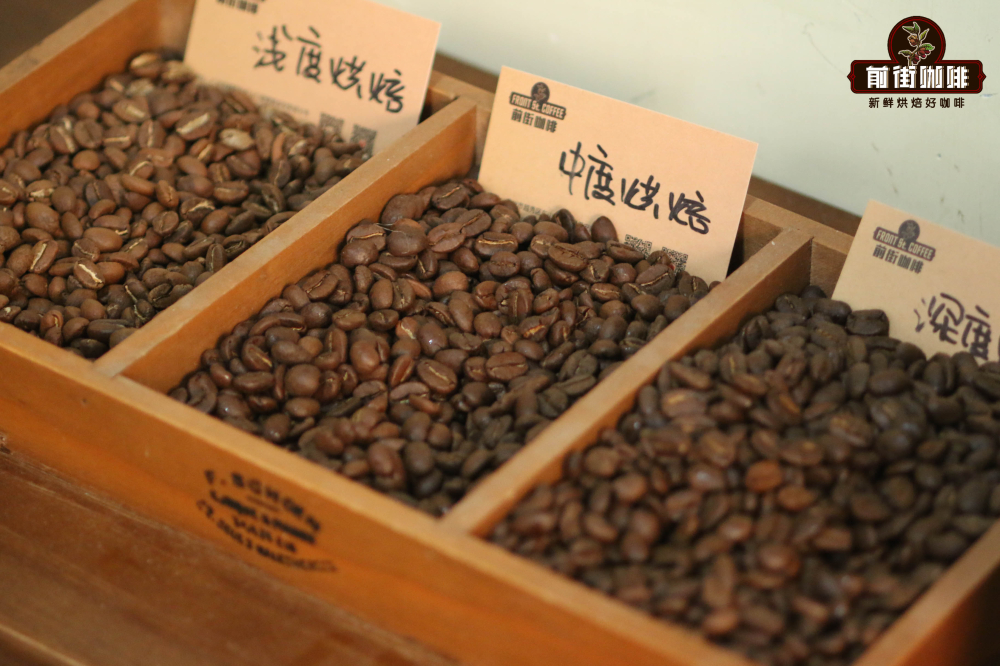
Roasting style is like a roasting competition: using the same beans, different roasters produce different results. Some prefer a faster pace, others a slower one. The resulting beans may share the same primary flavors, but subtle differences will exist, including differences in resting time.
So FrontStreet Coffee's 4-7 day figure does not necessarily apply to every coffee bean. It is based on FrontStreet Coffee's own roasted beans and should in theory apply to FrontStreet Coffee beans, but it still needs to be confirmed against actual circumstances.
How Consumers Can Determine Coffee Bean Resting Periods
So as a consumer, how should you work out the resting period? First, understand clearly that every roaster has a different style, so do not rigidly apply store A's resting recommendation to store B's beans. Then know the roast date on the bag.
If the beans come from the same roaster, the roasting style is consistent and you can draw conclusions from patterns. The fundamental purpose of resting beans is to enjoy a cup at its peak, which means starting from reality and using your senses to explore.
When you meet an unfamiliar coffee, brew a cup each day, taste it, and compare today's cup with yesterday's.

When you notice the flavor improving day by day and then, suddenly, the aroma and flavor weaken slightly, that turning point is the limit of the resting period. You can use it as a reference for similar beans in the future. There is no need to taste every bag every day afterward, since opening the bag each time also affects the condition of the beans.
FrontStreet Coffee Recommendation
Light roasts are the beans that benefit most from a thoughtful rest, and FrontStreet Yirgacheffe Gedingding is a good example. As a lightly roasted washed Ethiopian coffee it typically peaks within roughly 4-7 days of roasting, and at its best it shows white jasmine, bright citrus and lemon acidity and a clean tea-like finish - a gentle introduction to specialty coffee for anyone new to it.
If you want a bean whose sweetness blooms as it rests, FrontStreet Ethiopia Huakui is a strong choice. Its tropical fruit aromatics of strawberry, passion fruit and jackfruit are at their most vivid in the first weeks after roasting, with very low bitterness and a smooth, juicy body. Brew a cup each day and you can taste exactly why resting matters.
Important Notice :
FrontStreet Coffee is a long-established specialty coffee roaster in Guangzhou China, selling freshly roasted beans from its own farm in Yunnan as well as dozens of carefully selected single-origin beans from around the world for both pour-over and espresso. The products deliver consistently excellent quality and great value, with shipping within 24 hours. Guangzhou's FrontStreet Coffee shop is recommended by many coffee lovers, and the beans are now available online at the Tmall 。
FrontStreet Coffee has moved to a new address:
FrontStreet Coffee Address: 315,Donghua East Road,GuangZhou
Tel:020 38364473
 Scan and follow the En Gafei WeChat official account. Please indicate that the reprint comes from "En Gafei".