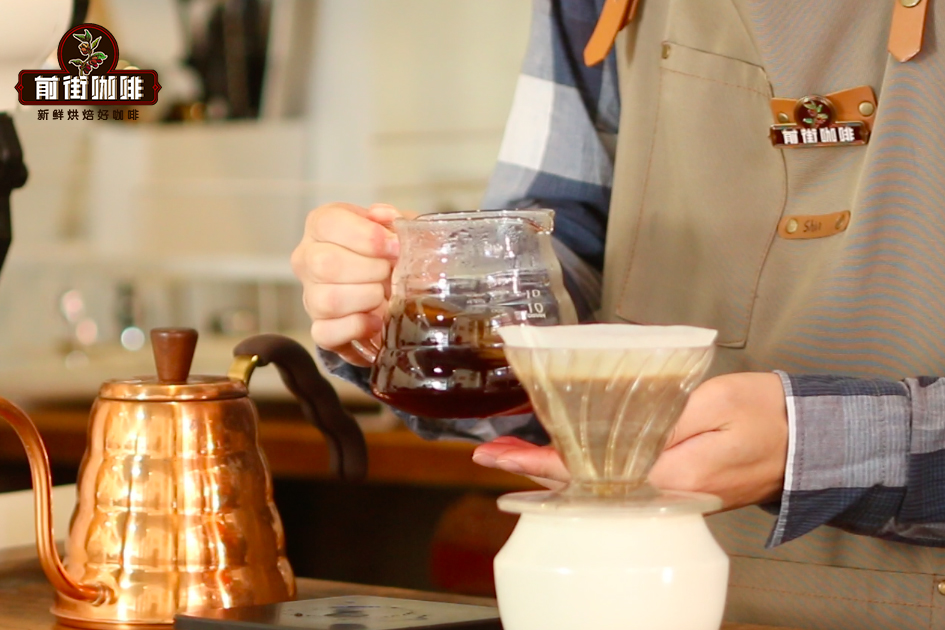
What Are the Best Pour-Over Coffee Kettle Brands? Pros and Cons of Pour-Over vs. Regular Kettles

Open any shopping platform and the sheer variety of coffee gear can be overwhelming. Take pour-over kettles: most are built from a spout, a body, a handle, and a lid, yet the differences in shape and structure produce very different pouring behavior.
Choosing the right pour-over kettle therefore matters. FrontStreet Coffee is here to walk you through how to pick one that suits you.
Temperature-Controlled vs. Non-Temperature-Controlled Kettles

The first decision is whether to go temperature-controlled. The advantages of a temperature-controlled kettle are clear: automatic temperature adjustment whenever you need it; a built-in heating element that removes the need for a separate thermometer; and continued heat retention between pours.
The drawbacks are just as clear: the heating module at the base shifts the center of gravity downward; that same module adds overall weight; and the price runs about 300 yuan higher than the regular version, though not everyone would call that a flaw.
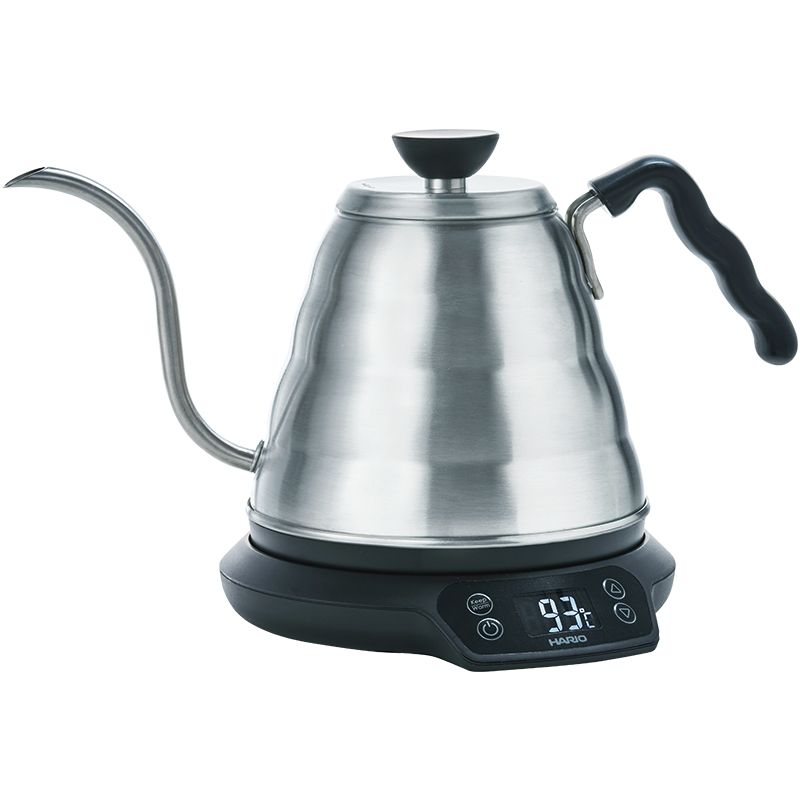
Non-temperature-controlled kettles, the conventional pour-over type, come in far more shapes and sizes and serve as the base models for many equipment makers.
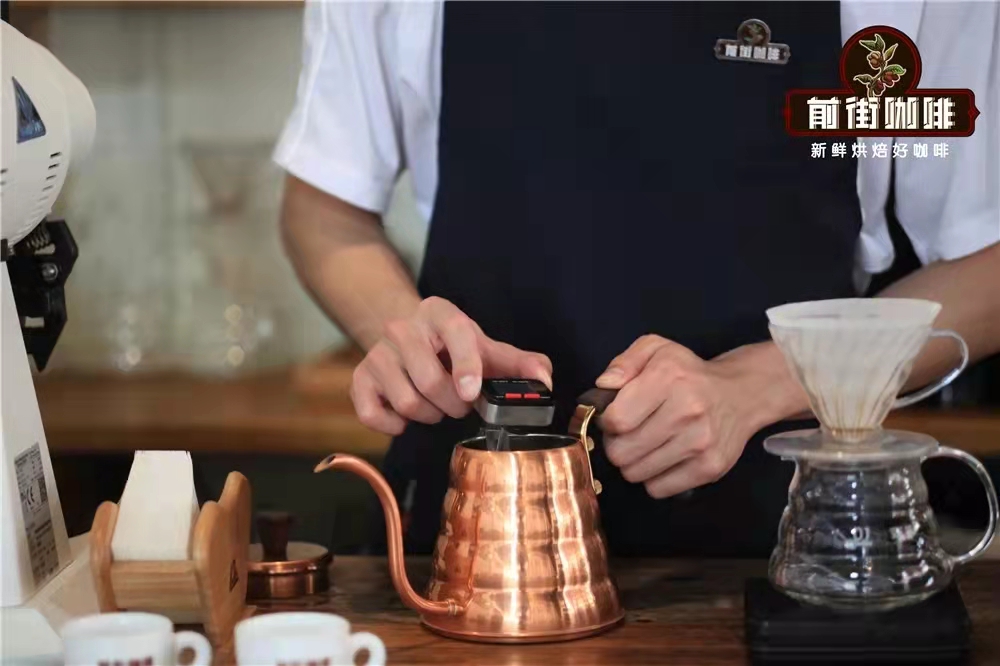
If simplicity is your goal, a temperature-controlled kettle is the easy answer; there are not many to choose from, with the B-brand and F-brand models among the more common in the industry. If you prefer a conventional non-temperature-controlled kettle, read on.
Spout
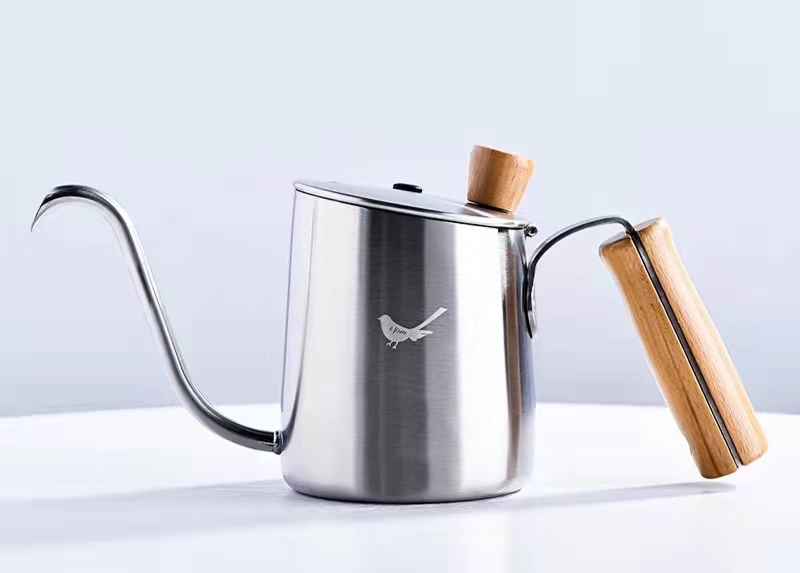
The spout is the single most important factor in how the water stream forms. On the market, spouts fall roughly into narrow-necked goosenecks, wide-necked goosenecks, elephant-trunk spouts, flat spouts, and hawk spouts. Each shape strongly affects pouring ease and the working space you have. The size of the opening directly determines the range of stream thickness you can produce.
Narrow-spout kettles, for example, are easy to use and control, but they offer limited range and cannot deliver a large flow. A representative is Takahiro's "Shizuku" kettle, nicknamed the "cheating kettle," whose 4mm spout makes water control effortless.
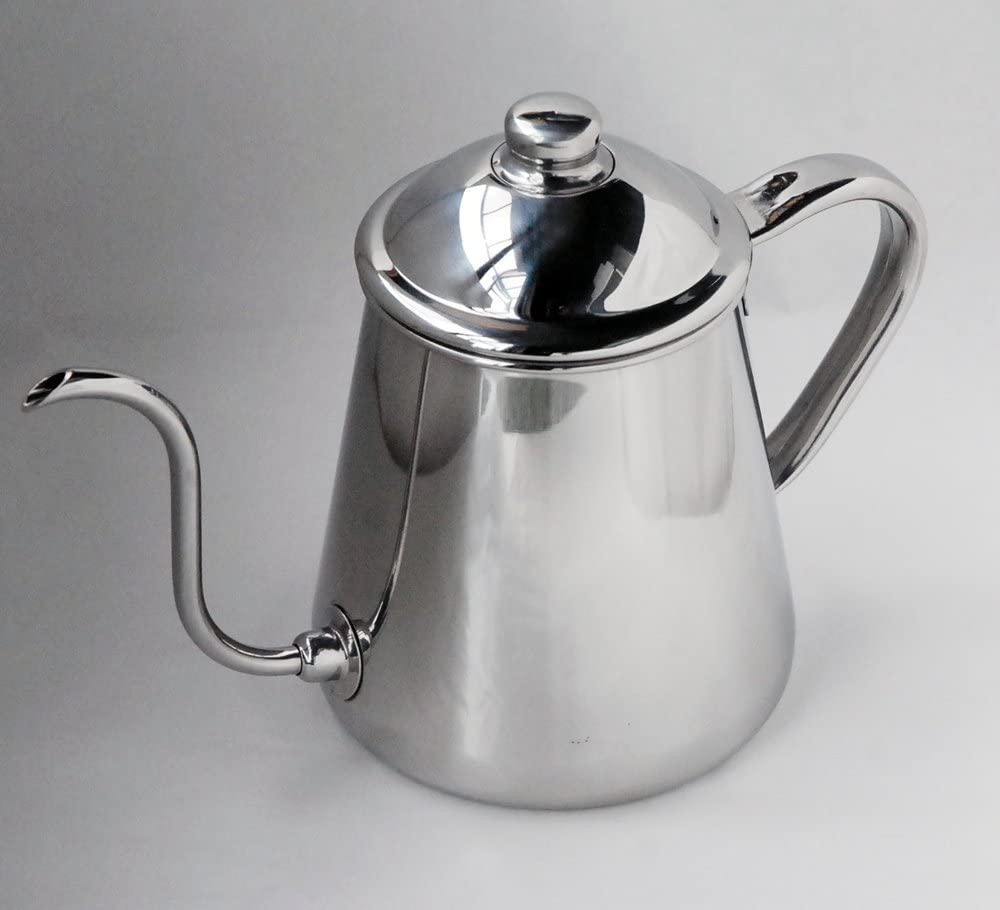
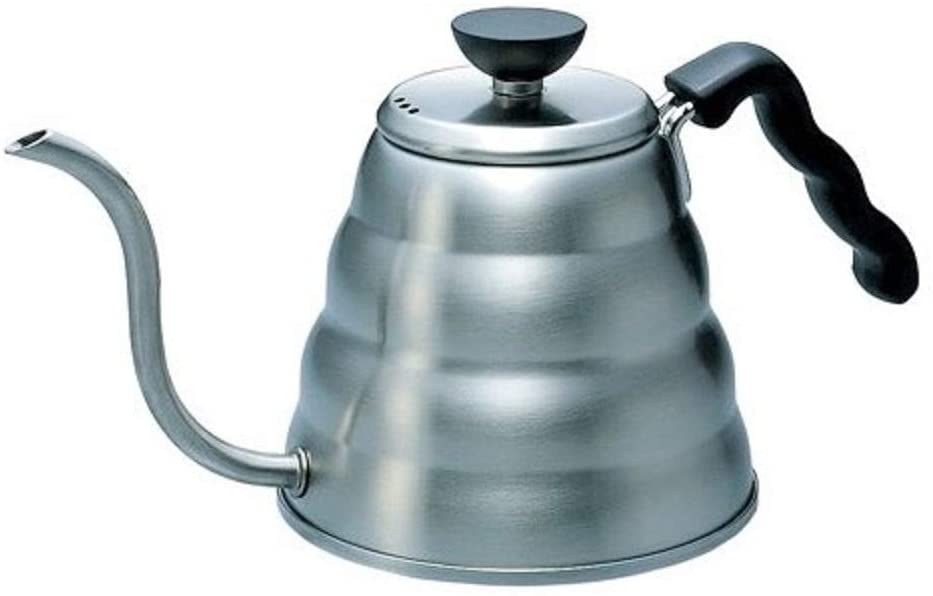
Wide-spout kettles are harder to control and take practice to master, but their versatility is outstanding. Once you can control the flow, you can manage both large and small streams to meet any brewing demand, down to the drop-by-drop method. A representative is the Hario stainless steel cloud pour-over kettle, commonly known as the "water mine kettle," which is difficult to operate but highly versatile and well suited to enthusiasts who enjoy a challenge.
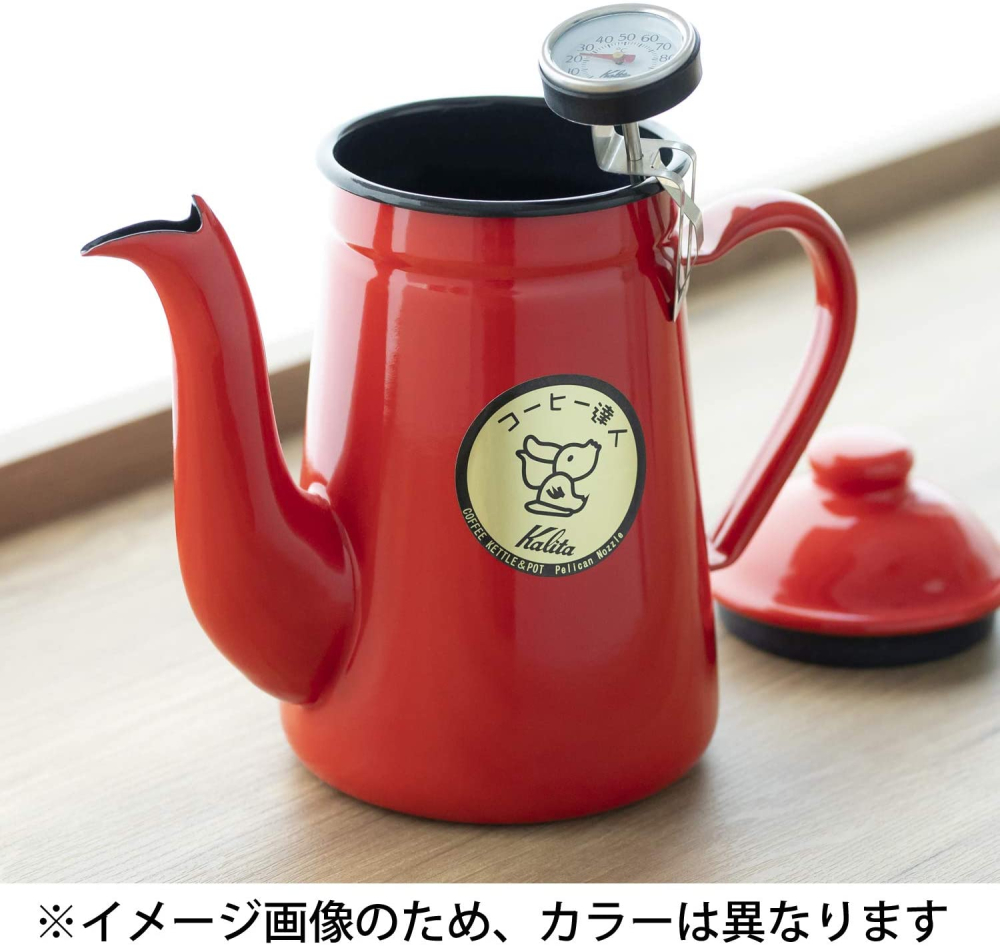
Hawk spouts are named for the way the opening resembles a hawk's head in profile. Representatives include Kalita's Master kettle and Wave kettle. The Master kettle's opening is longer and pointed, somewhat like a pelican, letting you pour a very fine, long stream or a large one, while the Wave kettle's opening is wider and shorter for a more stable stream.
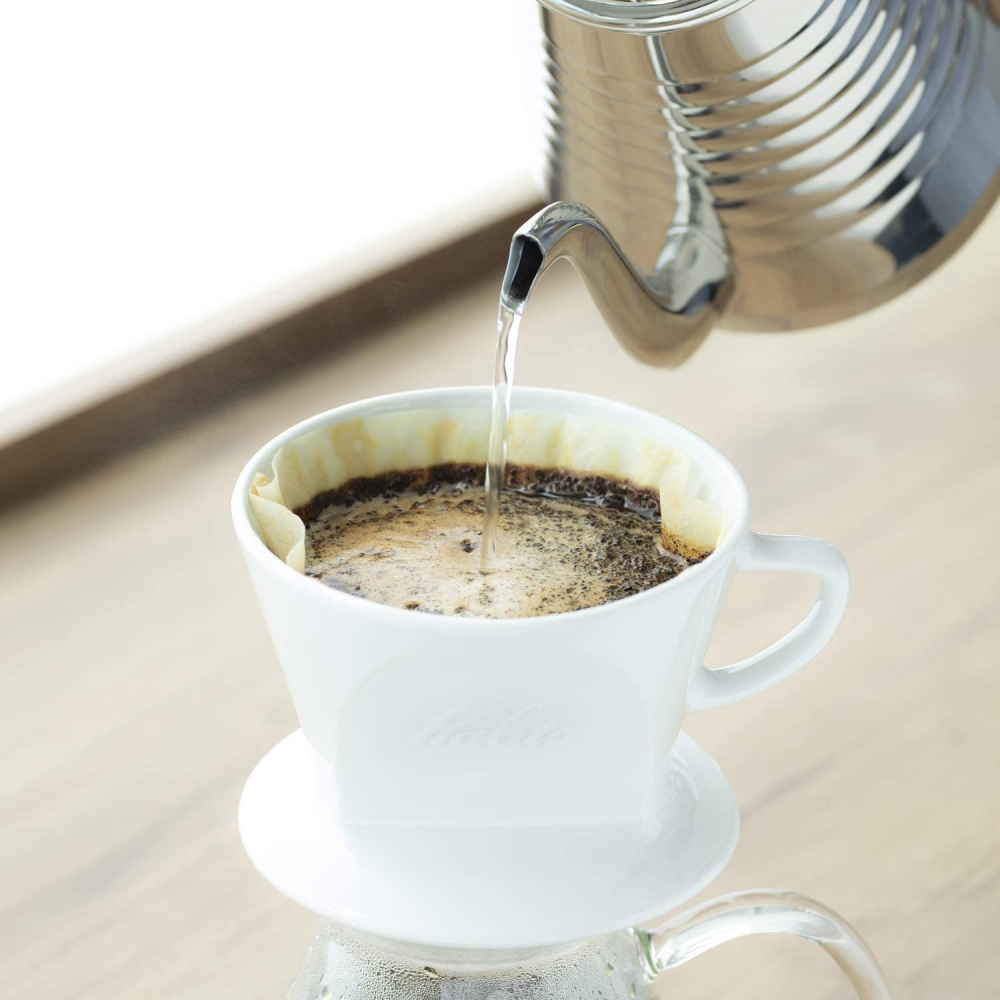
Flat-spout kettles have an opening nearly parallel to the horizontal plane, without a guide, which tends to produce a parabolic flow and makes a vertical stream hard to form. They are, however, excellent for practicing water control; master one of these and every other kettle will feel easy.
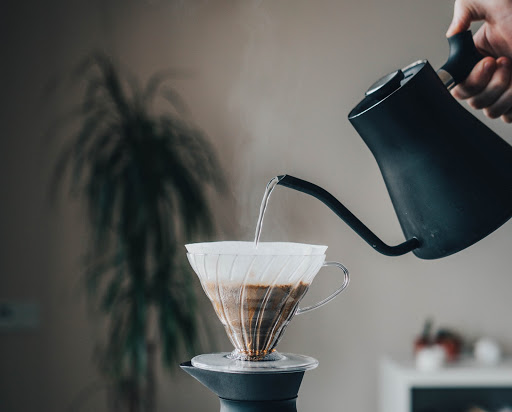
Spouts with a downward-curved guide have become almost standard in kettles designed over the past two or three years. The benefit is that the curve helps users form a vertical stream more easily, and its downward shape prevents backflow when pouring a small stream.
Kettle Body
What is there to consider about the body? Generally two things: capacity, and whether to choose a "fat" or a "thin" design.
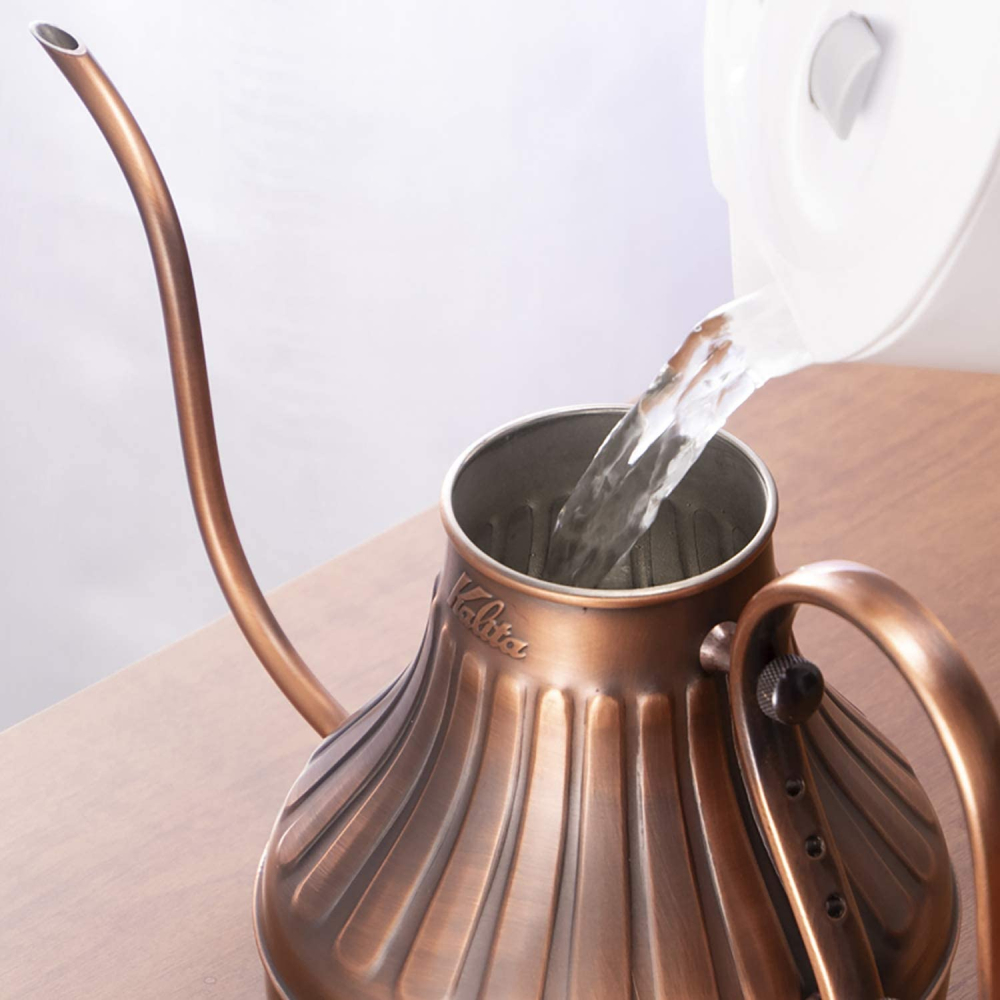
Under normal circumstances, pour-over kettle capacities range between 0.5 and 1.2 liters, with the size chosen according to your own strength. The fat-versus-thin question is essentially about center of gravity. A short, stout kettle has a lower center of gravity when filled, so it feels more stable but takes more effort to lift; a tall, slender kettle has a higher center of gravity and can feel unsteady when not filled enough, so taller kettles are usually filled with more water.
There is also a type called the palace kettle, whose structure resembles Aladdin's lamp. FrontStreet Coffee has yet to understand the advantage of this design; perhaps it exists only for retro styling. If you know, you are welcome to share.
Handle
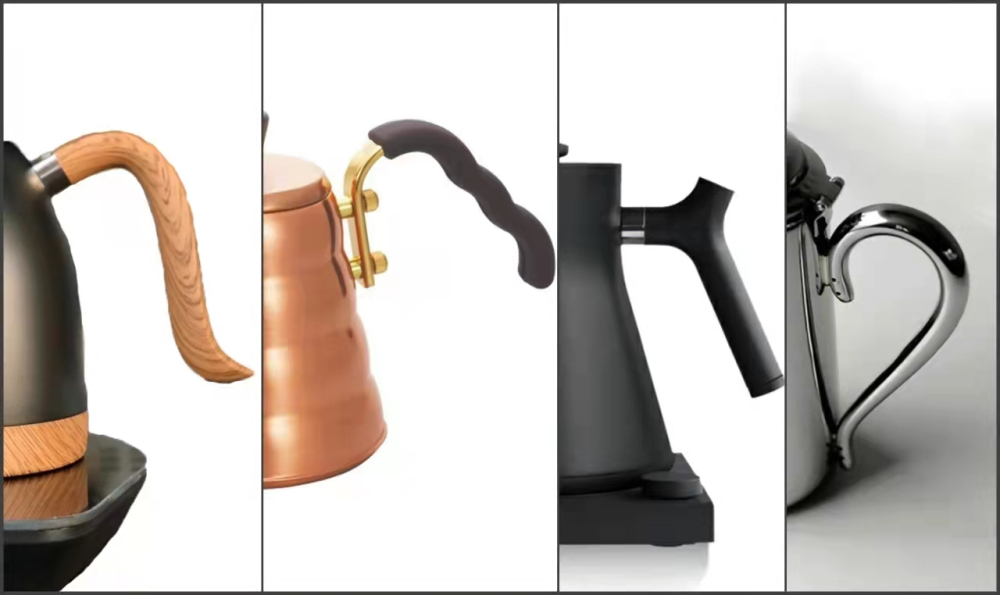
Handles look different and feel different from maker to maker, yet almost every company claims its handle is ergonomic and effort-saving. That alone shows how adaptable our hands are.
A good handle keeps your hand comfortable and lets you better sense the kettle's center of gravity as you pour, which in short means less effort and better control. The handles on most modern pour-over kettles are generally problem-free.
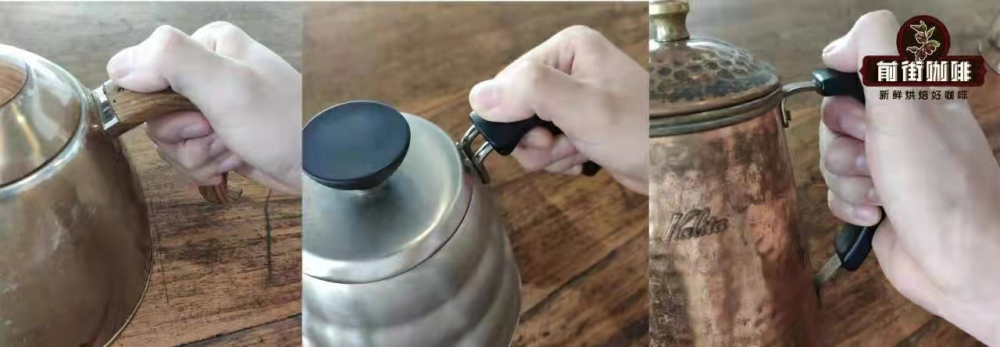
One more point: kettle choice is closely tied to brewing style. Traditional Japanese pour-over kettles, for example, are mostly tall and slender with ring handles, which matches their slow-pour habits.
Materials
Pour-over kettles are mostly made of stainless steel, copper, enamel porcelain, or glass, though few people choose glass. From a performance standpoint, FrontStreet Coffee recommends copper, which offers the best heat retention and quality. From a value standpoint, choose stainless steel: attractive and affordable. From an aesthetic standpoint, consider enamel porcelain, which adds beauty, though it is genuinely fragile and genuinely gets hot, and genuinely beautiful.

Price
Pour-over kettles range from 30 yuan to over a thousand yuan. Unlike grinders, though, a kettle is different: with good technique, even a 30-yuan kettle can produce excellent coffee, so a higher price does not necessarily mean better quality. When choosing, refer to the notes above on spouts, bodies, and handles.
One more thing to watch for is that some online platforms sell beautifully designed, unusually cheap pour-over kettles. Most are imitations that may reach 99% similarity in appearance but feel different in the details and in handling, and though they are still usable, they can become a reason for beginners to give up on brewing.
FrontStreet Coffee Recommendation
A good kettle deserves good coffee. For the floral, fruit-forward profile that V60 brewing shows best, FrontStreet Yirgacheffe Gedingding is a natural match, with clean citrus acidity, jasmine florals, and a honeyed finish. FrontStreet Ethiopia Huakui leans tropical, with strawberry, passion fruit, and jackfruit aromas and very low bitterness, while FrontStreet Kenya Cherry Tomato brings bright tomato and dark plum acidity with a clean sugarcane and green tea finish.
If you would rather start with a heavier, low-acid cup, FrontStreet PWN Indonesia Golden Mandheling is deep roasted with rich herbal and dark chocolate notes, and FrontStreet Brazil Queen's Estate balances nut and cocoa aromas with clear caramel sweetness and a smooth body that works for pour-over, espresso, or moka pot. For a lighter, tea-like cup, FrontStreet Panama Esmeralda Red Label Geisha delivers elegant jasmine, bergamot, and black tea flavors across a clean and layered finish.
The V60, meanwhile, is the dripper FrontStreet Coffee favors for these coffees. Designed by Hario, founded in Tokyo in 1921, and redesigned into its familiar form in 2004 before launching a year later, its 60-degree cone forces water to travel to the center before dripping through, extending contact with the grounds so aroma and flavor extract fully, while the single large hole leaves flow rate entirely in the brewer's hands.
Important Notice :
FrontStreet Coffee is a long-established specialty coffee roaster in Guangzhou China, selling freshly roasted beans from its own farm in Yunnan as well as dozens of carefully selected single-origin beans from around the world for both pour-over and espresso. The products deliver consistently excellent quality and great value, with shipping within 24 hours. Guangzhou's FrontStreet Coffee shop is recommended by many coffee lovers, and the beans are now available online at the Tmall 。
FrontStreet Coffee has moved to a new address:
FrontStreet Coffee Address: 315,Donghua East Road,GuangZhou
Tel:020 38364473
 Scan and follow the En Gafei WeChat official account. Please indicate that the reprint comes from "En Gafei".