
What Are the Reasons for No Crema in Espresso? The Correct Method for Making Espresso
Pulling an espresso with rich crema is a romantic ritual for espresso lovers, and it is also the daily work of modern baristas. Then one day the shot comes out different from usual, with no crema at all. For anyone seeing this for the first time, it can be quite alarming. What could be behind it?

A well-extracted espresso should show black coffee liquid topped by a layer of golden crema about a third as thick, and when the cup is swirled it should cling to the walls like cream.
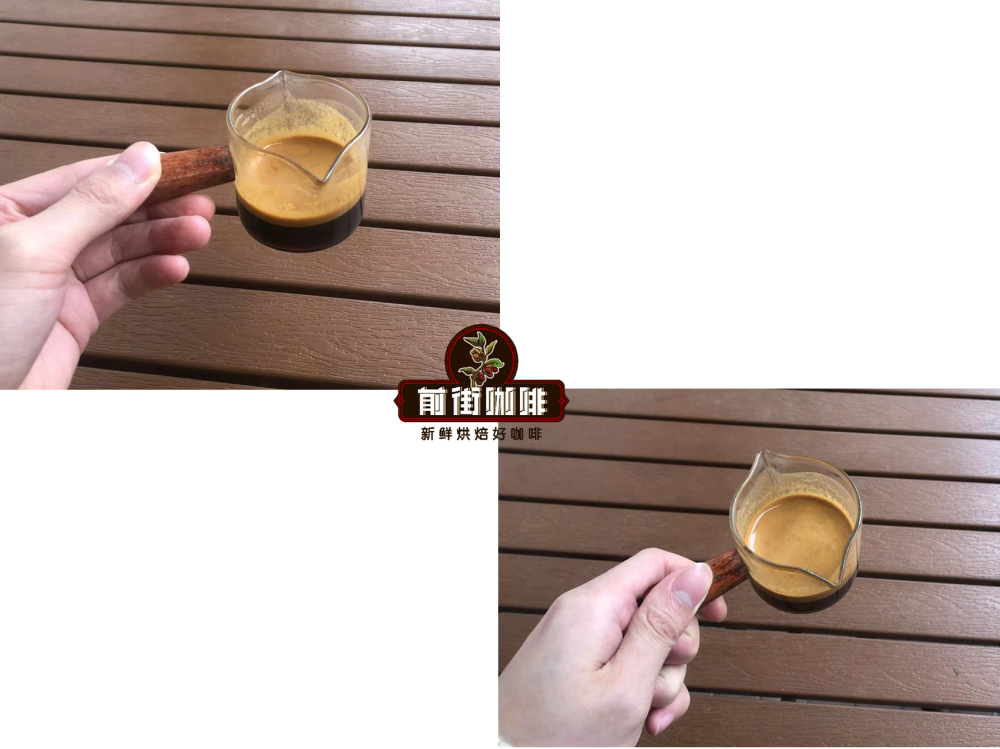 Normal espresso state
When a shot comes out with no crema, though, something in the process has gone wrong. The cause could be the beans, the machine, or, more often, the parameters and technique.
FrontStreet Coffee has summarized some likely causes for reference.
① Coffee beans are too lightly roasted
Beans on the market generally fall into two camps: those meant for pour-over drip brewing and those meant for espresso machines. The former are mostly lighter-roasted single origins, the latter mostly blends, though there are single-origin SOE options too, and these tend to be roasted darker.
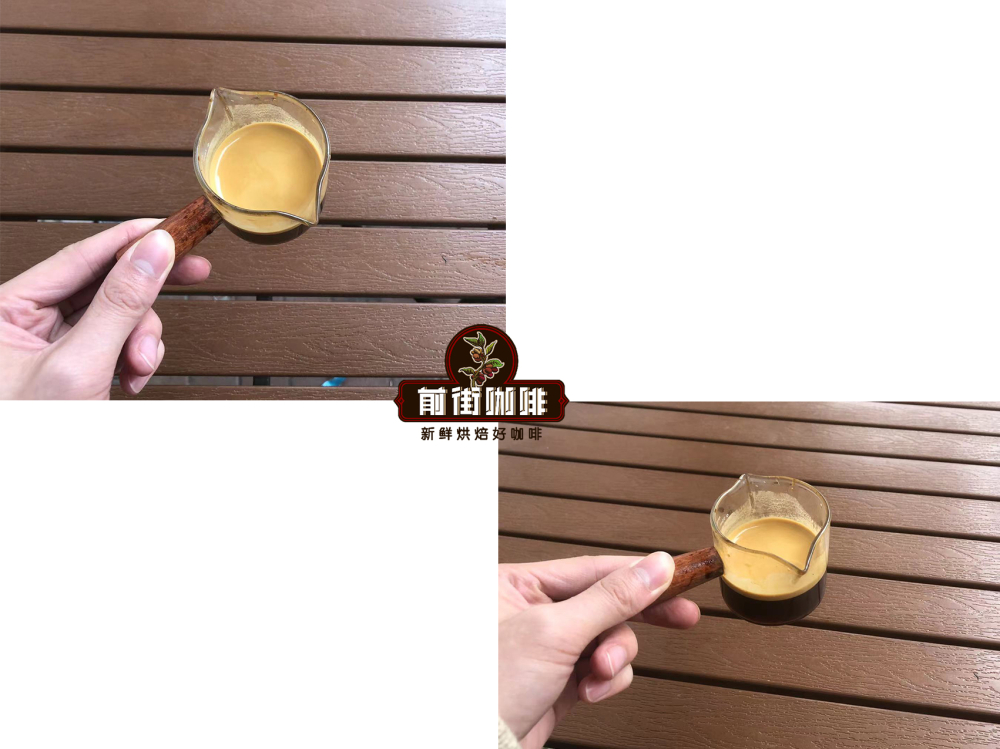 Light roast coffee crema effect: relatively thin, pale yellow-white in color
In general, the darker the roast, the richer the crema. Using a light pour-over single origin for espresso will give you a thinner crema, so it pays to choose carefully when buying.
② Coffee beans are no longer fresh
If extraction runs normally but there is still no crema, the beans are very likely no longer fresh. Espresso is particular about this: overly fresh beans can produce unstable crema with large bubbles that vanish quickly, while stale beans produce no crema at all.
As a rule, espresso beans rest best for about 7 to 10 days, meaning the extraction only begins to stabilize from the seventh day after roasting. Their optimal flavor window is roughly 60 days. After two months, espresso beans have lost most of their aroma and flavor, and the crema is markedly reduced. This applies only under normal storage conditions; FrontStreet Coffee has not tested nitrogen preservation.
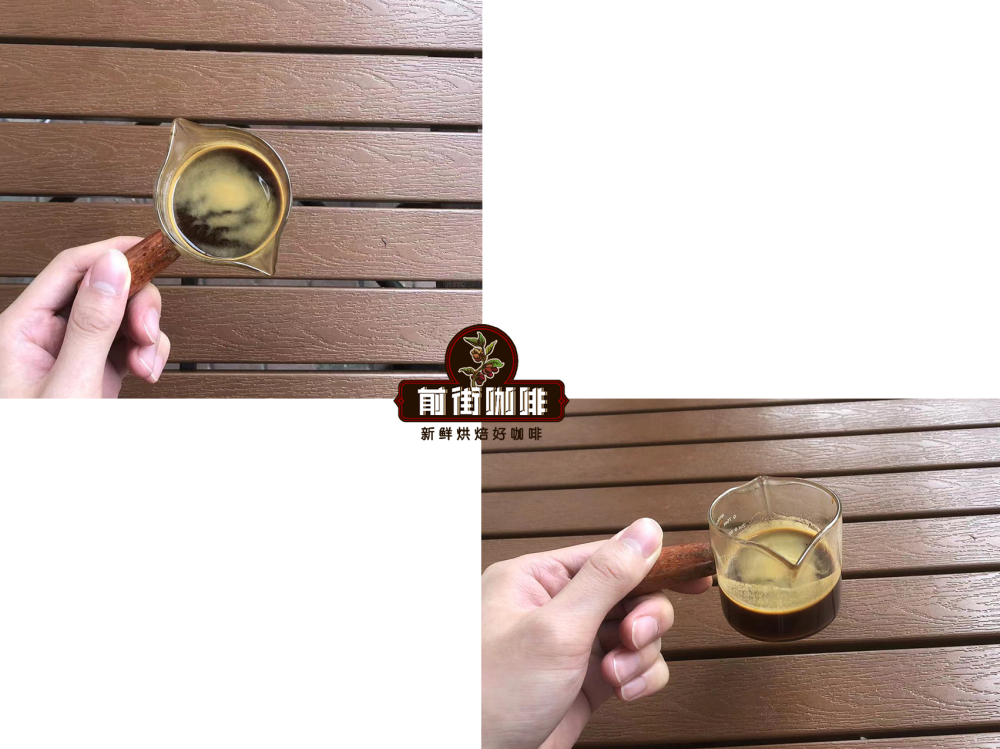 Espresso extracted from stale beans has sparse crema
③ Insufficient pressure from the machine itself
This problem is more common with home machines. Normally, we get rich crema because the machine's 9-bar pressure forces the essence out of the coffee puck. Some smaller machines cannot hold a stable 9-bar extraction pressure, so they cannot produce rich crema.
④ The grind is too coarse
Here the crema will be lacking as well, and it is easy to confirm. During extraction the liquid flows very quickly, with channeling and spraying, and the crema looks pale and thin. The taste will be weak too. Use 20 seconds as a benchmark: if twice the weight of the grounds in liquid finishes within 20 seconds, the grind is very likely too coarse.
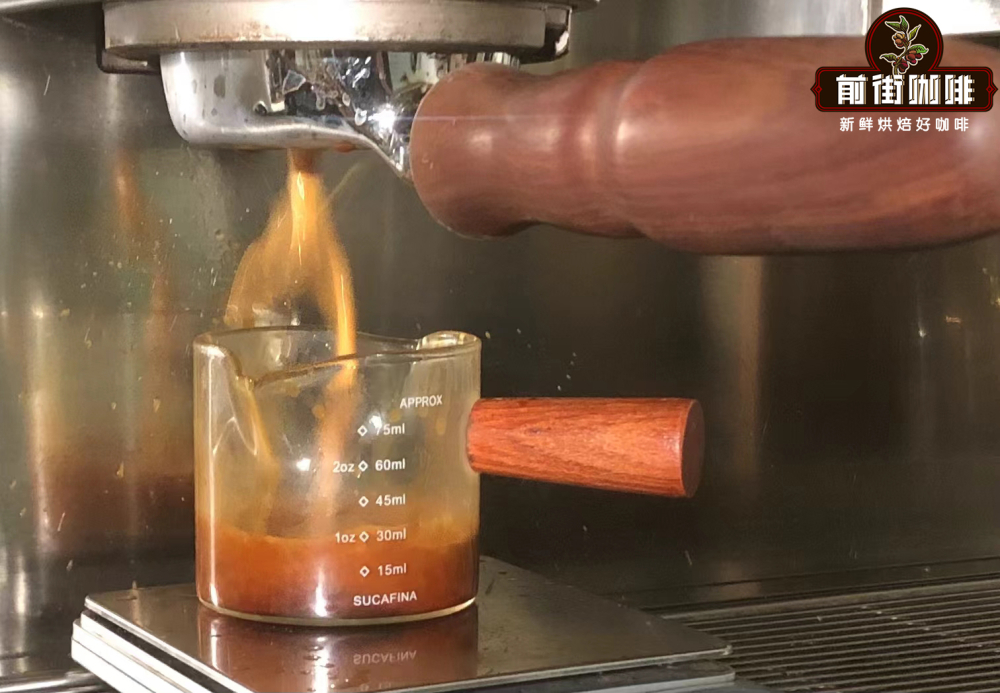
Chaotic extraction process
⑤ Water temperature is too low
Many modern machines now allow manual water temperature adjustment. The general water temperature for extracting espresso is around 93°C, and too low a temperature can also leave you with no crema.
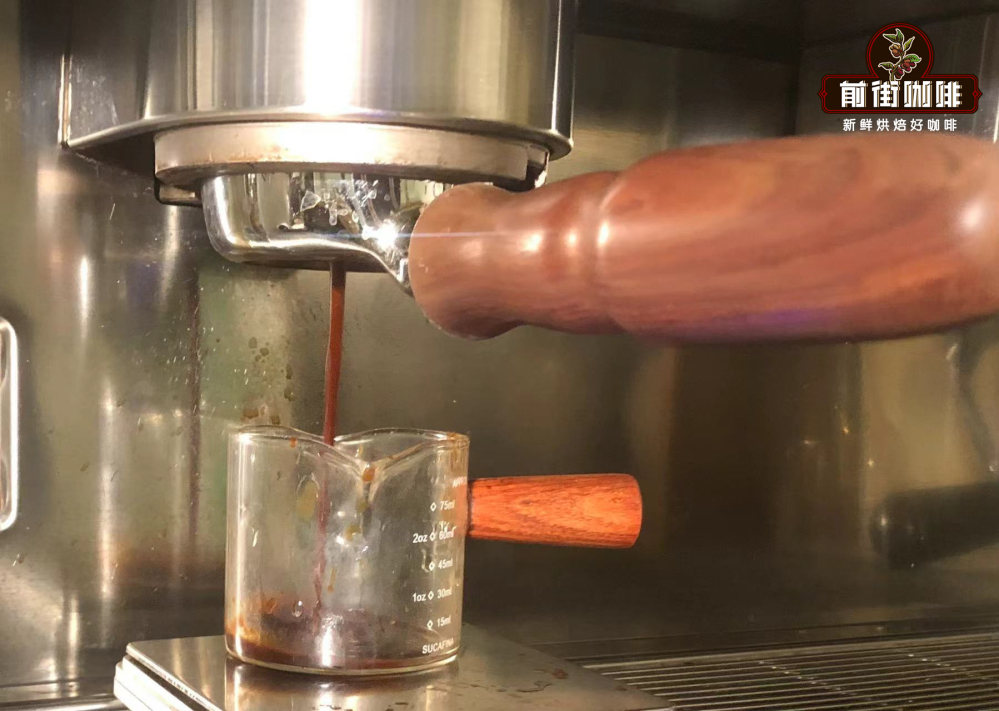
Another common issue with home machines is that heating can take 10 minutes or more from startup. Pulling a shot before the machine finishes heating leaves the water too cool, resulting in no crema and a cup that leans toward sharp acidity.
FrontStreet Coffee Recommendation
Since crema depends heavily on roast level and freshness, darker-roasted beans are the safer bet for espresso. FrontStreet Coffee's deep-roasted PWN Indonesia Golden Mandheling has very low acidity and a full, lingering body, with herbal and dark chocolate aromas and a faint earthy note that suits anyone who likes a heavy, low-acid cup.
For a gentler profile, the Brazil Queen Manor is low in acidity and beautifully balanced, rich in nut and cocoa with obvious caramel sweetness and a smooth, dry-free finish; it works equally well as pour-over, espresso, or moka pot. A traditional choice is the Jamaica Blue Mountain No. 1, which neither lashes you with African-style fruit acidity nor buries you in dark-roast bitterness, instead balancing acidity, sweetness, bitterness, and aroma across creamy, caramel, chocolate, nut, and honey notes. Whichever you pick, use it within its optimal window so the crema stays thick and stable.
Important Notice :
FrontStreet Coffee is a long-established specialty coffee roaster in Guangzhou China, selling freshly roasted beans from its own farm in Yunnan as well as dozens of carefully selected single-origin beans from around the world for both pour-over and espresso. The products deliver consistently excellent quality and great value, with shipping within 24 hours. Guangzhou's FrontStreet Coffee shop is recommended by many coffee lovers, and the beans are now available online at the Tmall 。
FrontStreet Coffee has moved to a new address:
FrontStreet Coffee Address: 315,Donghua East Road,GuangZhou
Tel:020 38364473
 Scan and follow the En Gafei WeChat official account. Please indicate that the reprint comes from "En Gafei".

