How to Learn and Practice Latte Art Etching Designs: Steamed Milk Frothing Tutorial
Scrolling through latte art videos, you watch baristas shake their pitchers and conjure up beautifully textured lines. Then it's your turn, and... wait, are these videos even real?
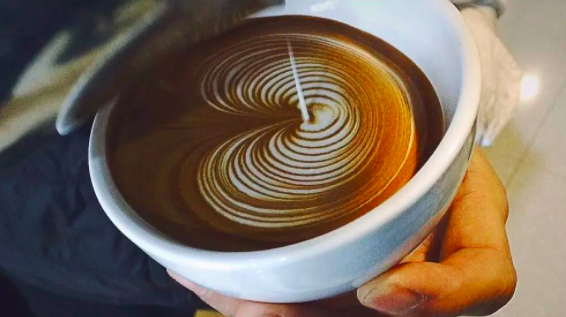
The truth is, failing to produce textured patterns usually comes down to the milk foam itself. Textured latte art makes heavy demands on foam thickness and density. If you're only after a "big heart," dense foam is enough - the tolerance for thickness is fairly generous as long as it still flows. But to draw fine, delicate lines, the foam has to be thin. Only thin foam has the fluidity needed to press out those crisp lines.
When it comes to frothing, FrontStreet Coffee would like to share a stability trick. Whether you swirl clockwise or counterclockwise, find a pivot point between the pitcher and the steam wand. Locking in that pivot saves the effort of constantly holding the pitcher in place and makes the whole frothing process steadier.
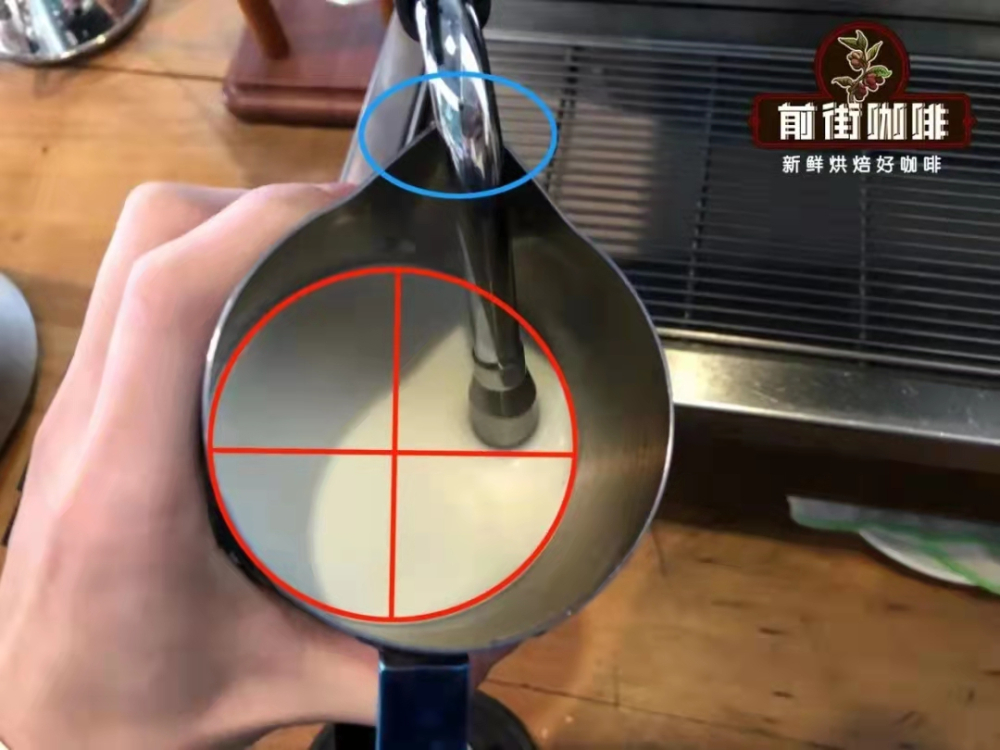
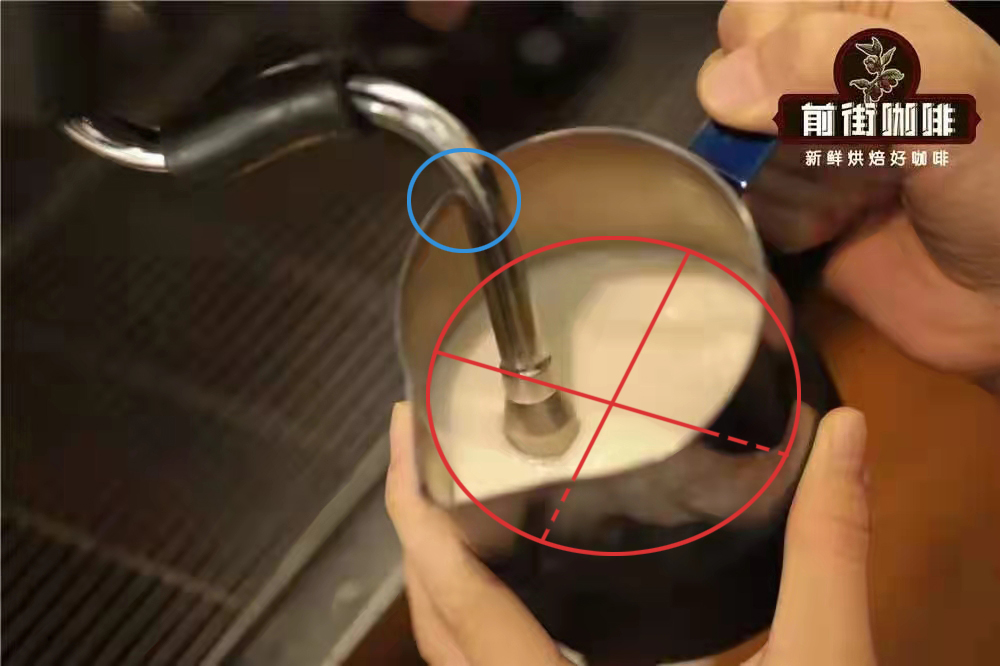
In the images above, the blue box marks the pivot point, and the red box shows the steam holes as a reference line.
How much foam you produce depends on how much air gets incorporated. Most mainstream espresso machine steam wands these days have 3 or 4 holes, while some home machines have only 1 or 2. Wands with more holes generally froth faster, spin up stronger vortexes, and are easier to control. Fewer holes means a longer frothing time, which demands more patience and a more precise angle. Typically, during the frothing stage the steam tip sits half-submerged - on a 4-hole wand, for example, 3 holes stay in the milk while 1 sits just above the surface.
Next comes steam power, which depends on the machine's boiler. Some machines have plenty of pressure, while others feel weak even at full throttle. Higher steam power heats the milk faster and generates stronger vortexes; lower power does the opposite.
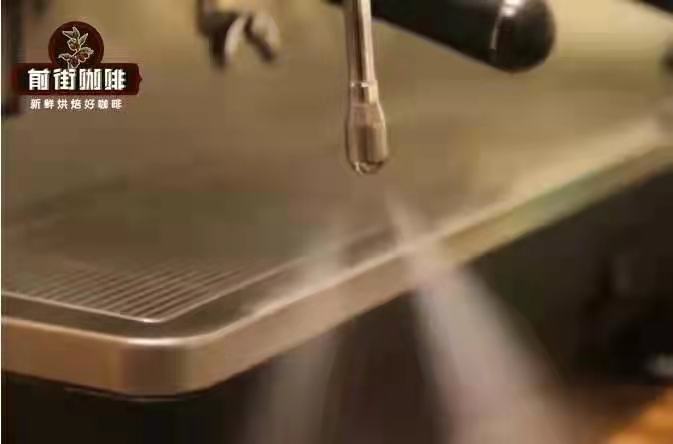
FrontStreet Coffee's recommended way to manage steam power: set your frothing angle first, then crack the steam valve open slowly, bit by bit, until the milk starts to swirl - then hold that steam level. Adjust later if you find the power too strong or too weak. On a machine with strong steam, thin, dense, highly fluid foam is easy: half-submerge the steam tip, set your angle, open the valve, wait for the vortex, and listen for two "squeaks" (that squeaking is air being injected into the milk - the longer it lasts, the thicker the foam gets). Then raise the pitcher slightly and move into the texturing stage.
At this stage, submerge all 4 steam holes fully beneath the surface to eliminate the squeaking while keeping the vortex going. The primary goal is to polish and refine the foam; the secondary goal is to heat it to 55-65 degrees C.
On machines with weaker steam, FrontStreet Coffee suggests frothing and texturing at the same time. Position the steam holes so they're just barely submerged, angle the pitcher to create a vortex, open the steam, then lower the pitcher bit by bit - a squeak, then texture, another squeak, texture again - until you reach the right thickness.
Common Problems When Failing to Create Textured Patterns
Once the foam is ready, a few common mistakes stand between you and crisp textured lines:
1. Excessive Integration
The longer you integrate the milk and espresso, the less the surface flows, and the harder texturing becomes. Normally, integrating until the cup is 4/5 full is plenty for convection-style textured patterns.
2. Foam Too Thin
Ultra-thin foam isn't easy for everyone to handle. The most common failure is "milk sinking": not enough foam floats on the surface, so the pour punches holes through the crema.
3. Spout Too Close to the Liquid Surface
Some people get in the habit of resting the pitcher spout right against the cup rim. Texturing from that position produces thick, clumsy lines. Instead, raise the spout about 1 centimeter - at the very least, keep it from touching the cup.

4. Uneven Pattern Distribution
One possibility is that your side-to-side swing isn't consistent. Another is that your hand position has tilted the pitcher, shifting the direction and force of the pour so one side comes out larger than the other. Having a friend watch your movements from the side can reveal exactly what's going wrong.
FrontStreet Coffee Recommendation
Great latte art needs a great base: a well-extracted espresso with plenty of crema. For practicing at home, FrontStreet Coffee recommends the FrontStreet Classic Blend, a medium-dark espresso recipe built from beans of three origins. Its inspiration is the old-school "Mamba" combination of Mandheling and Brazil, with a touch of Robusta added for aroma and crema. Expect buttery toast and caramel biscuit notes, a solid body, fine crema, and very stable extractions - exactly what a beginner needs.
If you prefer richer nut-forward flavors, go for the FrontStreet Premium Blend, a medium-dark blend of washed Colombian and pulped-natural Brazilian beans. It shows hazelnut, dark chocolate, and caramel in espresso, and pulls out smooth cream, almond, and cocoa aromas in milk drinks like lattes and flat whites. Its crema holds up to cafe standards, which makes it more than capable of handling all your latte art practice.
Important Notice :
FrontStreet Coffee is a long-established specialty coffee roaster in Guangzhou China, selling freshly roasted beans from its own farm in Yunnan as well as dozens of carefully selected single-origin beans from around the world for both pour-over and espresso. The products deliver consistently excellent quality and great value, with shipping within 24 hours. Guangzhou's FrontStreet Coffee shop is recommended by many coffee lovers, and the beans are now available online at the Tmall 。
FrontStreet Coffee has moved to a new address:
FrontStreet Coffee Address: 315,Donghua East Road,GuangZhou
Tel:020 38364473
 Scan and follow the En Gafei WeChat official account. Please indicate that the reprint comes from "En Gafei".