Electric vs Manual Coffee Grinders: Comparison Differences and Which to Buy - Hand Grinder or Electric Grinder?

Anyone with specific expectations for coffee flavor will end up choosing freshly ground coffee, and if you want to brew it yourself, a grinder is essential.
Open an online shopping platform and search for "coffee grinder," and you will find prices ranging from 22 yuan to 71,271 yuan, a difference of 3,239.6 times. It may look like small change next to the billion-yuan figures in the news, but it is an extraordinary spread between products. That is why FrontStreet Coffee decided to write a guide to choosing a coffee grinder.

FrontStreet Coffee is not especially focused on equipment, so professional comparative reviews of grinders are not our strength. But FrontStreet Coffee has been in business for 8 years, has used seven or eight electric grinders, and has basically tried every popular manual grinder on the market. Below are some insights from working with so many different grinders.
Manual or Electric Grinder?
Electric grinders comprehensively outperform manual grinders in precision, durability, and even the ceiling on price. The advantages of manual grinders are portability, no need for electricity, and adaptability to any situation. Compared at the same price, however, a manual grinder is actually the better buy. A 1,000-yuan manual grinder has significant advantages over a 1,000-yuan electric grinder.
FrontStreet Coffee has listed a few groups of people who might suit a manual or an electric grinder.
Consider choosing a manual grinder first if you are:
- A student still living in a school dormitory
- Working with a limited budget, under 1,000 yuan
- Just starting with pour-over coffee and want to explore gradually
- A regular at chain coffee shops who wants to improve your coffee quality
- A fitness enthusiast
- A hiking enthusiast or frequent business traveler
Then FrontStreet Coffee suggests starting with a manual grinder and considering an electric one later.
Consider going directly for an electric grinder if you:
- Want to make a one-time investment and get it right
- Have a fixed 200-square-meter space at home for brewing coffee
- Pursue speed and precision
- Have an ample budget with no upper limit
Then you might as well go straight for an electric grinder.
If you are:
- An equipment enthusiast and collector
- A coffee fanatic player
Then FrontStreet Coffee suggests getting both.
How to Choose a Manual Grinder?
With the rise of domestic manual grinders, foreign models that once cost over a thousand yuan can now be found in China for under 500 yuan. So how should you choose? Basically, FrontStreet Coffee will not discuss manual grinders under 200 yuan, those with ceramic burrs, or retro-style manual grinders.

The remaining options can be roughly divided into the 200-499 yuan range, the 500-799 yuan range, the 800-999 yuan range, and anything above 1,000 yuan.
The 200-499 yuan range is entry-level. Focus on grind size, and when purchasing, check whether the grinder has a dual-axis construction. In lifespan, precision, and mechanics, these grinders are basically similar, and they suit beginners and office workers.
The 500-799 yuan range is advanced. Each manufacturer tends to use slightly better burrs, and there are subtle improvements in the bearings that markedly enhance durability. FrontStreet Coffee recommends choosing a larger burr diameter, because grinding will be more effortless and more uniform. Buy a manual grinder in this range, clean it regularly, and using it for two years should be no problem.
The 800-999 yuan range is high-end, with only about 3 models to choose from. These mainly improve the user experience and innovate in appearance, since they look better. You will see improvements on the data charts the sellers provide, the kind of professionalism smartphone makers would recognize, but in FrontStreet Coffee's actual experience there is no noticeable difference in the brewed cup compared with the advanced range.

The range above 1,000 yuan can be called expert-level. You might ask why FrontStreet Coffee does not split it into 1,000-2,000 and 2,000-3,000 tiers. Because for anything above 2,000 yuan, FrontStreet Coffee would recommend going directly for an electric grinder, which is far more convenient. Manual grinders above 1,000 yuan do exist, some at 1,000, some at 2,000, some at 4,000, and there is a famous German manual grinder that rose from 1,500 yuan to 2,500 yuan. Overall, quality and experience will have visibly noticeable improvements compared with those under a thousand yuan.
How to Choose an Electric Grinder?
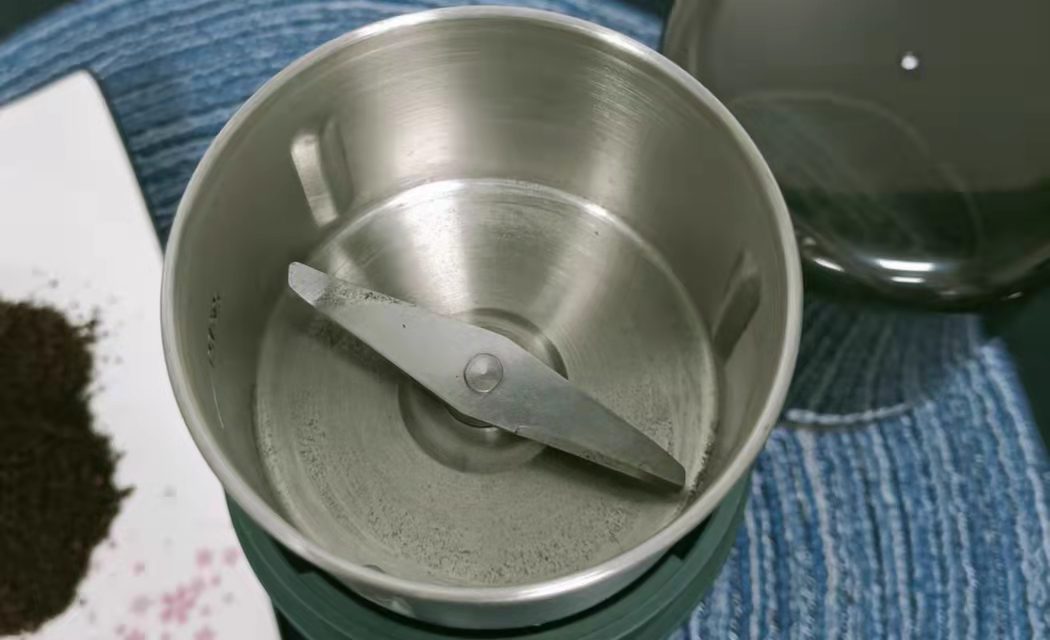
FrontStreet Coffee particularly advises against buying those portable electric grinders, and this point is worth attention. Grinders that set grind size by time are commonly known as "bean choppers," and they are built like a blender, with two blades that randomly chop the beans.
One thing to consider when buying an electric grinder is whether you need very fine espresso grinding or coarser pour-over drip grinding. The appearance and grinding range of these two types are very different, and they generally cannot serve both purposes, except for some universal grinders.
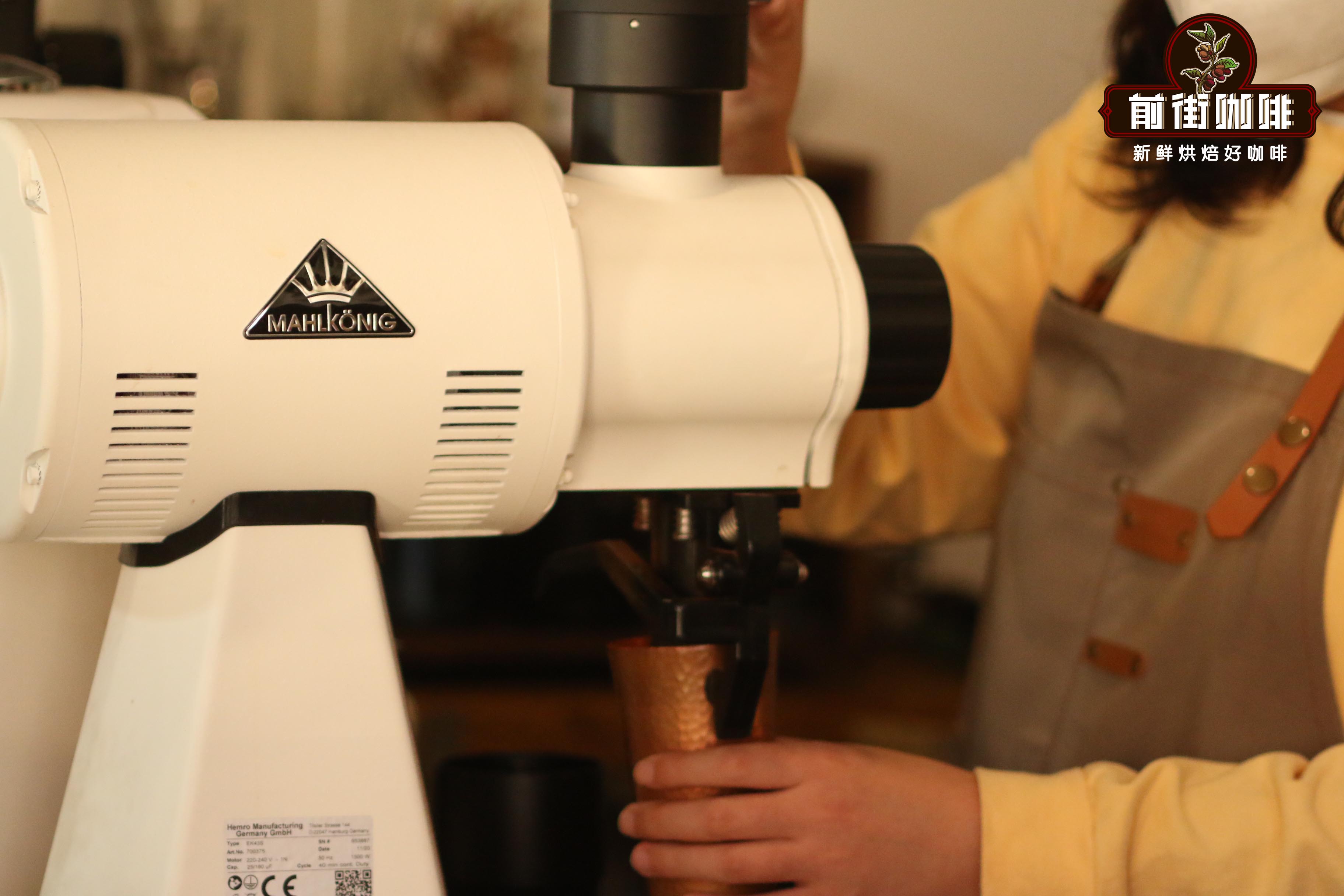
With a budget of 20,000 yuan, you can choose between the Mazzer ZM Filter and the Mahlkönig EK 43. Beyond their beautiful prices and relatively large footprints, it is hard to find reasons not to buy them.
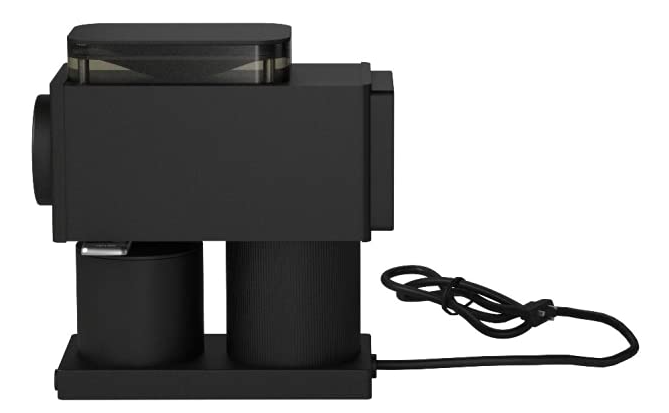
Most people will not have such a high budget and will be looking within 4,000 yuan. What are the options? FrontStreet Coffee believes the Royal Fuji and the Fellow ODE are good choices. The Royal Fuji features ghost tooth burrs as its selling point, and its grind size is well suited to pour-over-focused drip grinding. The Fellow ODE is compact and pure black, known as the little black box, with full marks for aesthetics. Both belong to the small electric grinder category, and they share one common drawback: grinding time is relatively long.
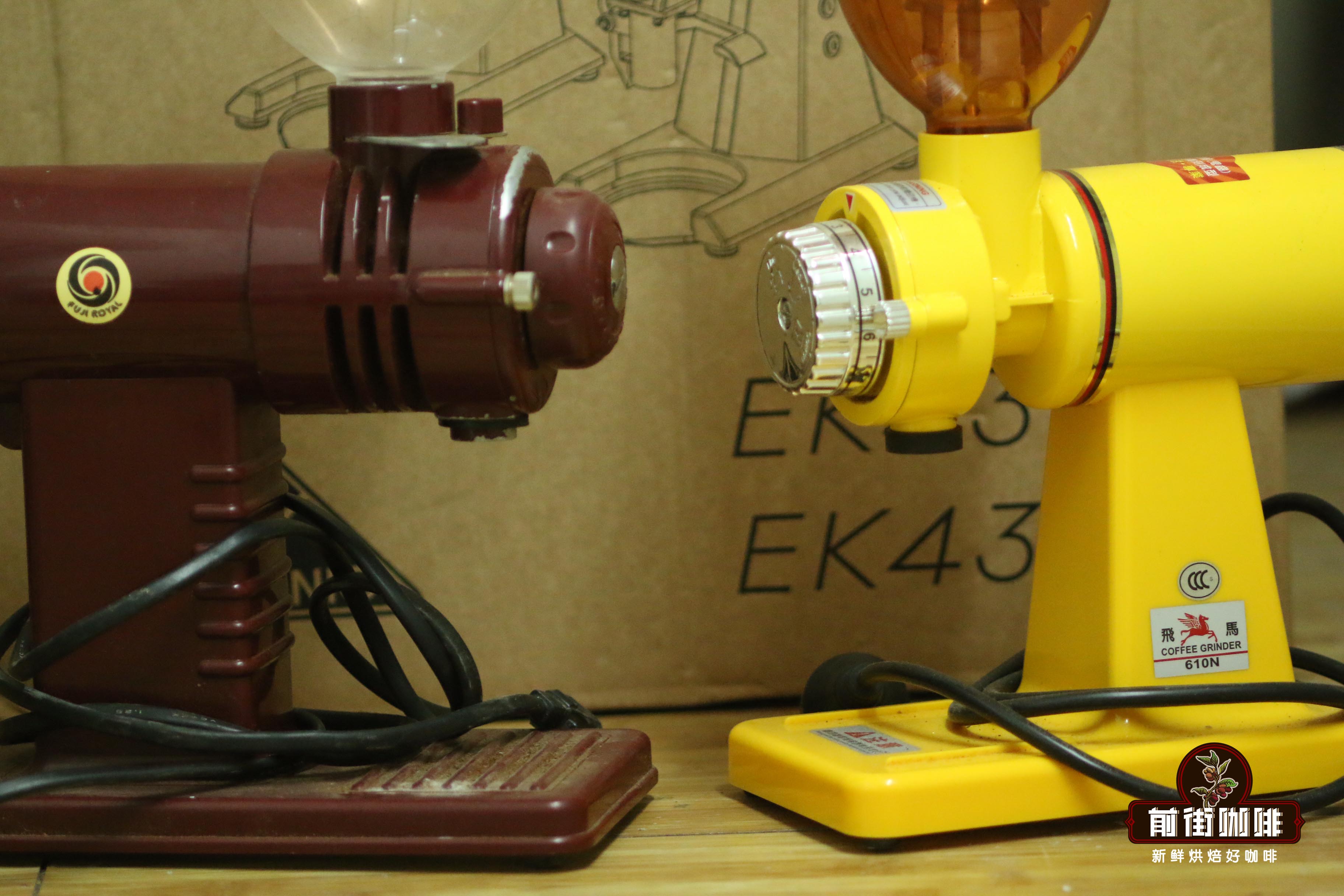
Some friends have also asked FrontStreet Coffee whether the small Fuji models priced between 300 and 600 yuan on online shopping platforms are trustworthy. FrontStreet Coffee took a quick look and found various "small Fuji" designs, described with terms like "small cannon," "defeated version," and "domestic small Fuji." Meanwhile, on one overseas online shopping platform, the small Fuji costs over 3,300 yuan. This is clearly an imitation of the Royal Fuji.

FrontStreet Coffee has not used these grinders, but it has used the Little Pony 610N, priced around 800 to 900 yuan. Compared with the small Fuji's grinding, the Little Pony lost on precision, most obviously in the amount of fine powder, which was a sorry sight. FrontStreet Coffee's barista's experience: when using only the Little Pony, you will not notice any problems, but once you make a comparison, the difference becomes immediately apparent. As for how the 300-600 yuan "small Fuji" performs, FrontStreet Coffee cannot make an assessment.

There are also many relatively inexpensive but high-quality electric grinders, but since FrontStreet Coffee has not used them, we have not mentioned them here.
FrontStreet Coffee Recommendation
A grinder only earns its keep with good beans, and if you are setting up a manual setup, FrontStreet Coffee has a few suggestions. FrontStreet Yirgacheffe Sun-Dried Red Cherry is a classic among high-sweetness light roasts and one of the earliest beans to champion all-red-cherry sun-drying. From the well-known Yirgacheffe region and roasted medium-light, it smells of ripe fruit, opens with noticeable fermented and berry notes, and as it cools reveals citrus acidity, a creamy smoothness, and a ripe grape juice finish.
If you prefer something sweeter and softer, FrontStreet Strawberry Candy Geisha Blend combines a high-altitude washed Panama Geisha with a honey-processed Costa Rican coffee. FrontStreet roasts it medium so it keeps rich florals and fruit while emphasizing roasted aromas, yielding caramel, raisin, and dried fruit with a sweet rose floral note. FrontStreet Musician Series Mozart is another Costa Rican favorite: a raisin-honey process that lets the fruit ferment slowly, giving the sweetness of Kyoho grape along with pineapple and osmanthus. Roasted medium-light, it highlights raisin, rose, and fermented wine aromas.
For an all-rounder that works in a pour-over, French press, moka pot, or espresso machine, FrontStreet Queen Farm Yellow Bourbon is hard to beat. Queen Farm is a specialty estate in Brazil, and Yellow Bourbon is an excellent variety whose sun-dried processing makes the sweetness especially pronounced; roasted medium, it shows nuts, cream, cane sugar, and gentle fruit acidity. Finally, FrontStreet 2013 Yunnan Typica comes from coffee FrontStreet planted in Yunnan, with site selection, breeding, planting, and management carried out step by step since 2013 in Lincang. It is a Typica, an excellent Arabica variety, sun-dried and medium-roasted for high dried-fruit sweetness with plum, yellow sugar, and chocolate.
Important Notice :
FrontStreet Coffee is a long-established specialty coffee roaster in Guangzhou China, selling freshly roasted beans from its own farm in Yunnan as well as dozens of carefully selected single-origin beans from around the world for both pour-over and espresso. The products deliver consistently excellent quality and great value, with shipping within 24 hours. Guangzhou's FrontStreet Coffee shop is recommended by many coffee lovers, and the beans are now available online at the Tmall 。
FrontStreet Coffee has moved to a new address:
FrontStreet Coffee Address: 315,Donghua East Road,GuangZhou
Tel:020 38364473
 Scan and follow the En Gafei WeChat official account. Please indicate that the reprint comes from "En Gafei".