Moka Pot Coffee: Grind Amount, Water Ratio, Time, and Methods for Rich Crema

An introduction to the moka pot
The moka pot has to be the simplest and most affordable device for making espresso-style coffee. For anyone who loves espresso but has not yet moved on to a semi-automatic machine, it is an excellent choice. Every Italian grandmother may know how to use one, but however easy it is, a grasp of the basics still matters. So today, FrontStreet Coffee will guide you into the world of this device.
Choosing the right coffee beans
The first question many people ask is: what kind of coffee beans are best for a moka pot?
For domestic specialty coffee enthusiasts, the beans are a crucial factor. Which region the beans come from, which variety, which roast level, all are considered carefully. Abroad, however, many people buy beans or ground coffee from supermarket shelves because they prioritize the brand's reputation, the bean's intended use and its flavor profile.

In Italy, many brands offer coffee ground specifically for the moka pot; the well-known brand illy, for instance, has multiple products designed for this small brewer. So to return to the question of what beans to use, FrontStreet Coffee believes that as long as you find the right roast level and ensure freshness, you can easily make a rich moka pot black coffee.
Understanding the moka pot's structure and principle
The moka pot consists of three parts: the upper chamber, the coffee filter basket and the lower chamber, available in different sizes. The lower chamber holds water, the filter basket holds coffee grounds and the upper chamber collects the brewed coffee. The principle is actually quite simple. During use, the water in the lower chamber is heated, creating steam pressure. The extraction water flows from bottom to top, and once pressure is sufficient it moves upward. Hot water flows through the filter basket layer, where the coffee grounds create resistance to the flow. Finally, the hot water overcomes the resistance of the coffee bed and rushes into the upper chamber as rich coffee liquid.

Because the moka pot uses pressurized extraction at high temperature and fast speed, you should prioritize fresh, medium-dark roast beans to achieve coffee with moderate crema and rich flavor. FrontStreet Coffee recommends the Classic Italian Blend, FrontStreet Coffee's Commercial Blend and the Specialty Blend. To help everyone enjoy good coffee freely, FrontStreet Coffee promises that every package of beans is roasted within 5 days, so all customers receive them in the freshest state and can easily brew a delicious moka pot coffee.

Grind size for the coffee
The second question is: how fine should the coffee be ground?
The particle size should be approximately 0.3-0.55mm. There are two ways to determine it. The first is to buy a particle size ruler, or moka-specific ground coffee for reference. The second is through continuous testing, which generally does not take many attempts; testing 3-5 times should help you master it. If the grind is too coarse, the coffee liquid will gush out quickly, possibly like a fountain. If it is too fine, you will hear the gurgling of boiling water but the coffee liquid will not come up, which means it is too fine and you should turn off the heat quickly. Remember to take safety precautions when testing.
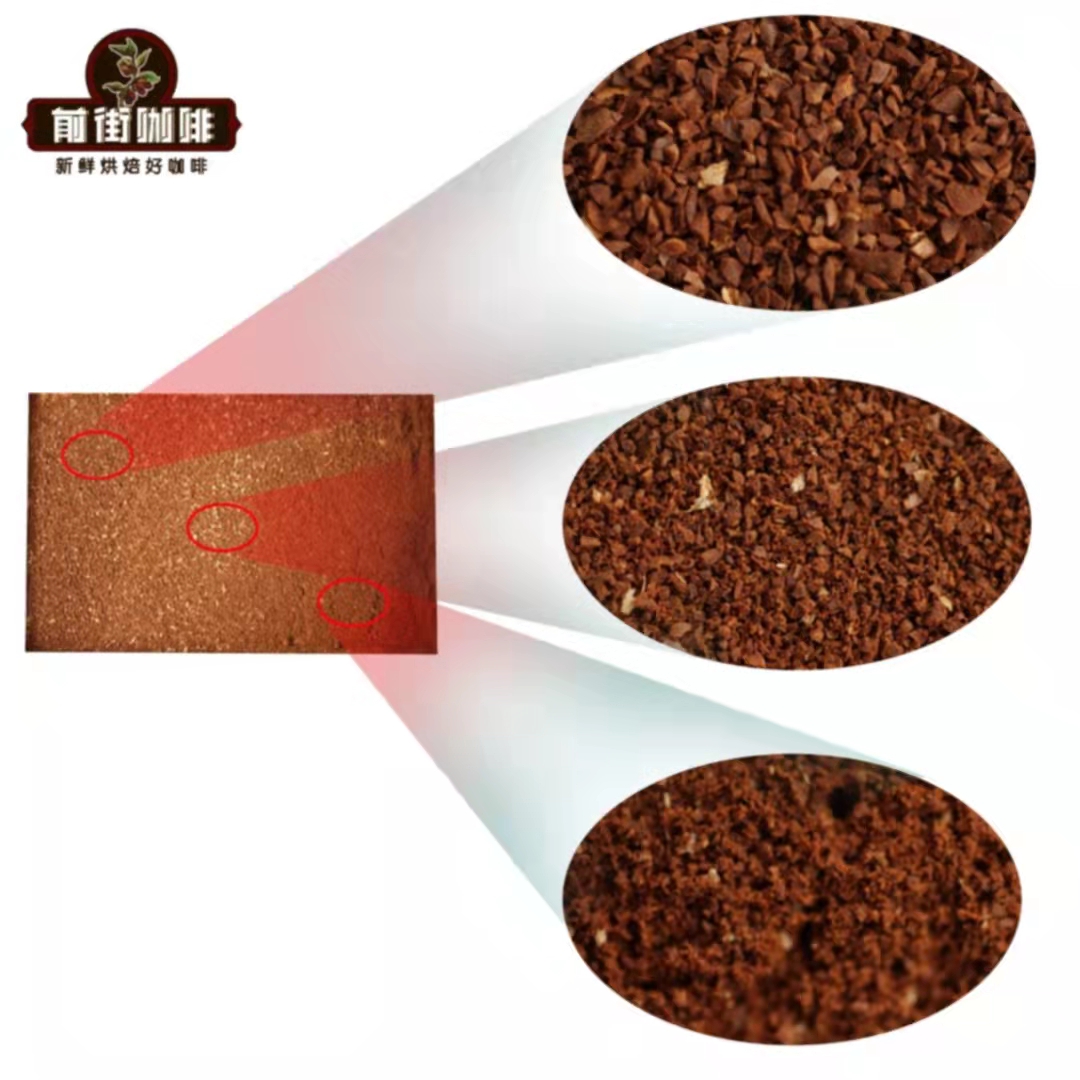
Of course, if you really cannot work out the grind size, or have no grinding equipment at home, FrontStreet Coffee provides a grinding service for its own beans. Note, though, that pre-ground coffee loses its aroma faster, and the crema of a moka pot brew will be noticeably reduced. We therefore still recommend buying your own grinder and brewing fresh-ground coffee right away.

How to fill the coffee
The third question is: how should the coffee be filled?
For this, FrontStreet Coffee decided to share the everyday practice of Italians, drawing on a YouTube creator named "Sono Meng," who is not in the coffee business. He shared the approach used by the Italians around him: "Wrap your left hand around the filter basket, then fill the basket with coffee without pressing, letting it remain fluffy and forming a small hill with a raised center. There is no need to level it, because the upper chamber's filter lid is also convex. Then press the upper chamber down vertically and tighten it. Be sure to clean any coffee residue off the threads."
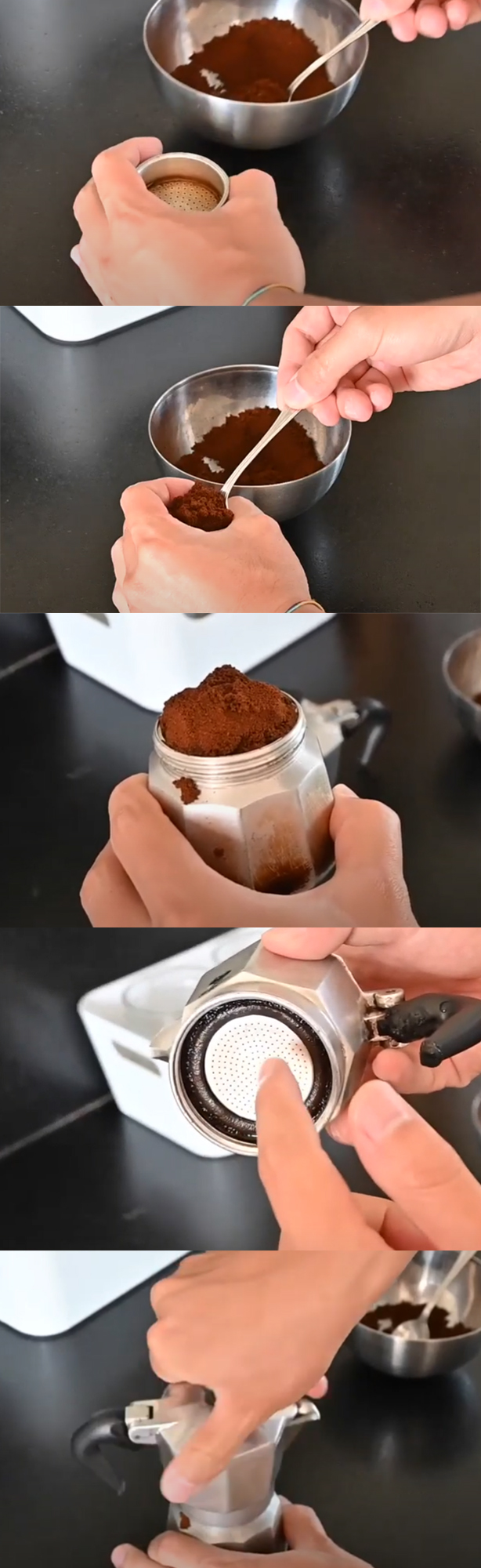
FrontStreet Coffee tested this method once and found it quite practical, with very rich crema and a firm extracted puck without perforations. Everyone can try imitating it.
Measuring the water
The fourth question is: how should the water be measured?
Compared with other brewing methods, the moka pot's water-to-coffee ratio has no particularly high requirements. Generally, the water level should be controlled at about 0.5cm below the pressure relief valve, also called the safety valve. FrontStreet Coffee has measured that when water is added to 0.5cm below the pressure relief valve, it is approximately 100g. When the filter basket is filled with leveled coffee, it is 20g, so the powder-to-liquid ratio works out to about 1:5. But if we want to brew only half a serving at a time, both the powder and water amounts should be reduced accordingly. For example, adding 15g of coffee at a 1:5 ratio means the water added should be 60g, which is the position 1cm below the pressure relief valve.

Note that using a smaller amount of coffee tends to cause splashing when the moka pot boils. After pouring the coffee into the filter basket, FrontStreet Coffee gently taps it left and right so the fluffy grounds settle naturally and the particles pack tightly against one another. Then, using the back of a small spoon, gently press the coffee layer until it is reduced to about half its original thickness.

As for the water, using cold water increases the soaking time of the coffee, causing over-extraction and bitterness. FrontStreet Coffee therefore recommends hot water, which also shortens the extraction time.
When to turn off the heat
The fifth question is: when should you turn off the heat?
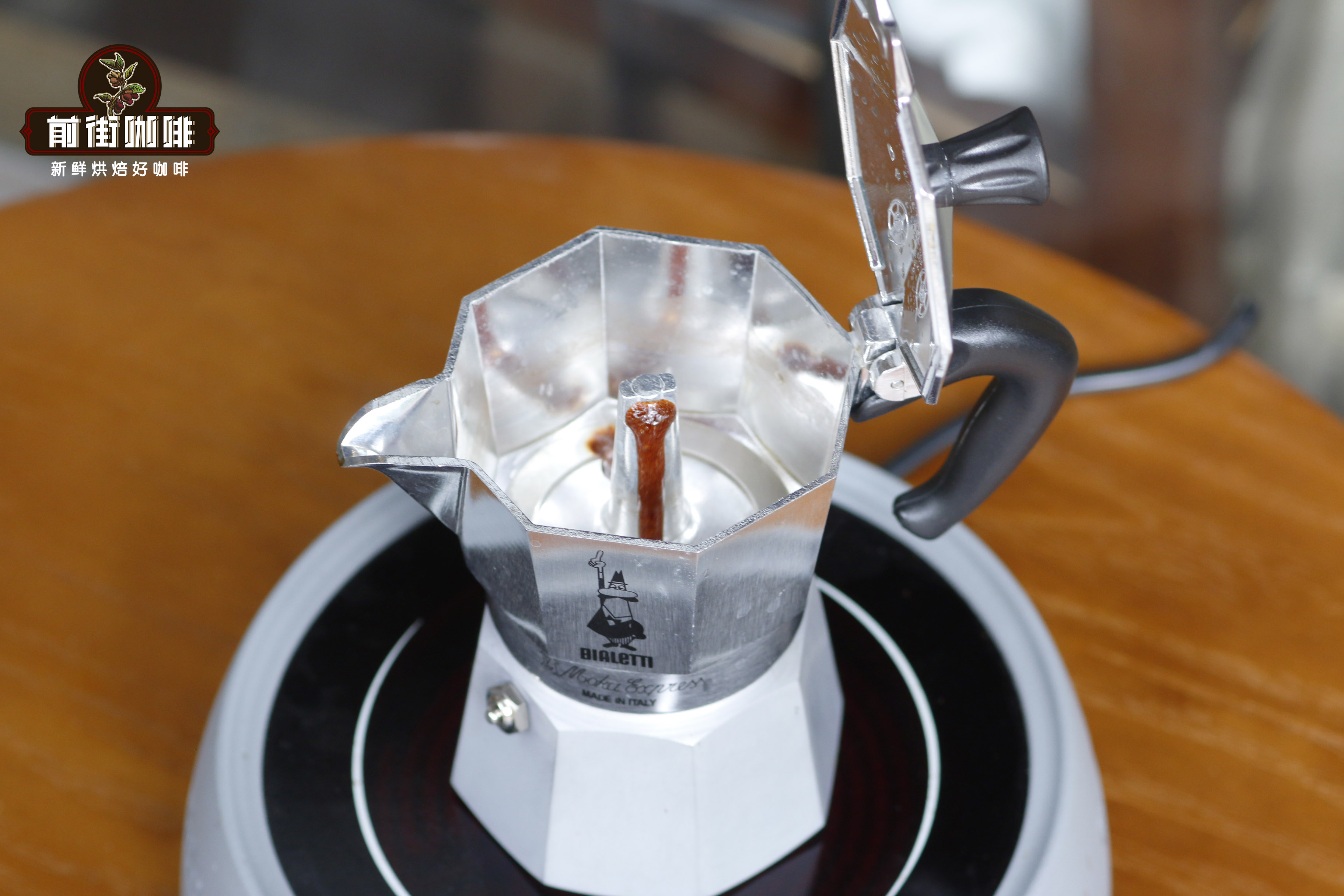
When brewing with a moka pot, the heat should be even, with medium heat best. When you hear the gurgling sound, you can open the lid to observe. When the first drop can spray out, you can turn off the heat. If you keep using high heat, or wait until the coffee is boiling before turning it off, the cup will likely develop a burnt taste.
Safety considerations
Finally, for safety, FrontStreet Coffee wants to remind everyone once more: since most moka pots use a metal shell with high thermal conductivity, try not to touch the pot body after heating. Remember to take insulation measures, such as using a wet towel, to avoid burns. If you hear the gurgling sound but the upper chamber never fills with coffee, the outlet is probably blocked. Turn off the heat source first to avoid excessive internal pressure that could cause an explosion and create a safety hazard.
FrontStreet Coffee Recommendation
For a moka pot, FrontStreet Classic Blend is the natural first pick. Designed for both espresso and the moka pot, it uses the traditional Manteca-Bahia recipe and produces outstanding, dense crema even on a basic home setup, with a rich, rounded body that suits lattes, cappuccinos and Dirty coffee.
If you prefer a single origin, FrontStreet PWN Golden Mandheling is dark roasted and low in acidity, with abundant herbal and dark chocolate aromas, a faint earthy note and a long, full body that suits strong-coffee drinkers. FrontStreet Brazil Queen Estate is another moka-friendly option, low in acidity and well balanced, with rich nut and cocoa aromas, clear caramel sweetness and a smooth, gentle finish.
Important Notice :
FrontStreet Coffee is a long-established specialty coffee roaster in Guangzhou China, selling freshly roasted beans from its own farm in Yunnan as well as dozens of carefully selected single-origin beans from around the world for both pour-over and espresso. The products deliver consistently excellent quality and great value, with shipping within 24 hours. Guangzhou's FrontStreet Coffee shop is recommended by many coffee lovers, and the beans are now available online at the Tmall 。
FrontStreet Coffee has moved to a new address:
FrontStreet Coffee Address: 315,Donghua East Road,GuangZhou
Tel:020 38364473
 Scan and follow the En Gafei WeChat official account. Please indicate that the reprint comes from "En Gafei".