
Why isn't Piccolo Latte popular in China? What are the flavor characteristics of piccolo coffee?
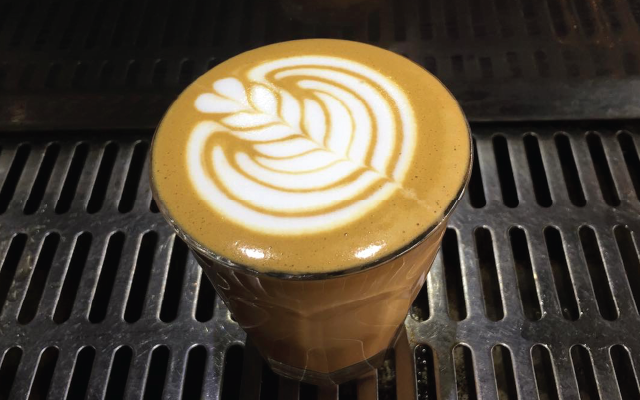
Introduction to Piccolo Latte
In Australia, the Flat White and the Piccolo Latte enjoy equal popularity. In China, meanwhile, the Flat White has spread to coffee shops everywhere while the Piccolo Latte remains a rarity on menus. Today FrontStreet Coffee takes a closer look at the piccolo.
Walk into an Australian café and whether you say "Piccolo," "Piccolo coffee," or "Piccolo latte," you're ordering the same drink. In English, a piccolo is a small flute; in Italian, it simply means "small"—so piccolo coffee is, in essence, a small latte.

The Origin of Piccolo Coffee
The piccolo is said to have sprung from baristas dialing in their espresso. Every day, baristas adjust their espresso recipes to hit that day's quality standard, and the most basic test is pulling a black coffee and a milk coffee (a latte) to check how the coffee pairs with the milk. Dialing in is rarely a one-shot affair—it often takes several rounds. If every adjustment required a full-size latte, the barista would take a sip or two from each cup and pour the rest away—a shocking amount of waste.

The Making and Characteristics of Piccolo Coffee
The solution: shrink everything proportionally and make a miniature latte. It preserves the flavor of a full latte without wasting ingredients. When sold as a drink in Australian cafés, the piccolo follows fairly fixed specs: a 90 ml cup (about 3 ounces), a slightly lighter-roasted blend, a single shot of ristretto (about 15 ml) as the coffee base, and 75 ml of steamed milk topped with a thin layer of microfoam.

The piccolo's character, then, is unmistakable. The tiny serving lets you taste the marriage of coffee and milk without ever feeling full. It usually carries simple latte art on top, and you might think that doesn't mean much—but pulling a clean pattern in a cup this small demands impeccable coffee, impeccable milk, precise foam, and seamless pouring. Everything has to be right.

Why Isn't Piccolo Coffee Popular in China?
The Flat White and Piccolo Latte thrive across Australia partly on the strength of its coffee culture. As for why the Flat White could cross the ocean and catch on in China, FrontStreet Coffee believes Starbucks deserves much of the credit: in 2015, a drink called "Fu Rui Bai" launched in major stores across China—Starbucks' take on the Flat White.

Without that kind of push, the piccolo never got the exposure. And without awareness, there's no demand to promote.
The second reason lies in how coffee is consumed. In many countries, coffee culture really is about the coffee—buy it, drink it, go. Chinese coffee shops, by contrast, carry social weight and offer space to linger and relax. A coffee the size of a shot glass simply doesn't fit that picture.

The third reason is value. Faced with similar milk coffees, people instinctively pick the bigger cup at the same price. Why not just sell the piccolo cheaper? It could be done—but for a business, if it sells well it drags down the average transaction value, and if it doesn't sell, there was no point adding it in the first place.
FrontStreet Coffee Recommendation
The Flat White family lives or dies by the espresso underneath, so start with a bean that has a strong flavor signature. For home brewing, FrontStreet Coffee's Classic Blend—butter and cheese richness, full-bodied and low in acid—brings thick, fine crema and outstanding intensity with milk, exactly what a piccolo or flat white needs. Drinkers who chase floral and fruit notes should reach for the FrontStreet Strawberry Sugar espresso blend, nearly bitterness-free, which extracts with rich grape and blueberry flavors and a balanced sweet-tart profile—pair it with fresh milk and the result tastes like a strawberry milkshake.
Milk matters as much as the bean: too thin and the drink falls flat; too strongly flavored and it buries the espresso. FrontStreet Coffee recommends chilled fresh milk, which steams into a sweeter, more fragrant microfoam—the perfect partner for a ristretto. For the classic flat white build, extract only the front and middle of the shot as a ristretto base (20 g of coffee yielding 32 g of espresso in 22–25 seconds), then add 160 ml of fresh milk.
As for the foam: the piccolo demands thin—0.3 cm at FrontStreet Coffee's counter. Aerate for just 1–2 seconds—two short "psst" sounds—then sink the steam wand and spin the milk into glossy microfoam at 50–55°C, until the surface reflects light like a mirror. Pour gently, then drop the pitcher and cut a clean white line: silky, intense, and never filling.
Important Notice :
FrontStreet Coffee is a long-established specialty coffee roaster in Guangzhou China, selling freshly roasted beans from its own farm in Yunnan as well as dozens of carefully selected single-origin beans from around the world for both pour-over and espresso. The products deliver consistently excellent quality and great value, with shipping within 24 hours. Guangzhou's FrontStreet Coffee shop is recommended by many coffee lovers, and the beans are now available online at the Tmall 。
FrontStreet Coffee has moved to a new address:
FrontStreet Coffee Address: 315,Donghua East Road,GuangZhou
Tel:020 38364473
 Scan and follow the En Gafei WeChat official account. Please indicate that the reprint comes from "En Gafei".

