The Significance of Bloom Expansion in Pour-Over Coffee: Optimal Bloom Water Amount and Duration
There's a saying among pour-over enthusiasts: "Bloom well, and the rest of the brew takes care of itself." Most of us already know why blooming matters — you pour a small amount of water first so the coffee bed can degas, which allows more flavor compounds to be extracted during the main pour that follows.

That said, wetting the entire coffee bed evenly is trickier than it sounds, which is exactly why pouring technique matters so much. Below, FrontStreet Coffee walks through several commonly used blooming pours, along with their strengths and weaknesses, so you can pick the approach that best fits your situation.
Blooming Pour Techniques
Fast, small circles around the center. In the ideal version of this pour, a thin stream of water quickly circles the center point, almost as if you were "spreading water across the surface" of the grounds. The wetted coffee layer slowly swells and spreads outward, so the whole bed blooms as one unit.
This technique works well when the coffee is ground finer, very fresh, and still full of gas, since water spreads through it more readily. It does, however, demand precise control — if the pour isn't consistent, water can run off in one direction and leave parts of the bed unevenly saturated.
Center-out spiral pour. This is one of the most common blooming methods: start at the center and spiral slowly outward until every bit of ground coffee on the surface is wet.
It's simple and works with virtually any coffee. Its weakness comes from geometry — in the conical drippers most people use, the coffee bed is thickest at the middle and thinnest at the edges, so some water tends to run down the dripper's ridges and drain straight into the server before it has soaked the center.
Edge-to-center spiral pour. This is the same idea in reverse: spiral inward from the outer edge. It fixes the drainage problem above, but it isn't a good match for very fresh or dark-roasted beans, because it can interfere with degassing and make it harder for the coffee in the middle to release its trapped CO2.
Poke a small well in the center, then pour around it. This one suits freshly roasted dark roasts in particular. Those beans are fluffy and swell dramatically during the bloom, and a small depression in the middle does two jobs at once: it thins out the deepest part of the bed and keeps the expansion in check.
How to Tell When the Bloom Is Done
So how do you judge the state of the bloom? Many of us treat it as a fixed formula — twice the coffee's weight in water, 30 seconds on the clock. For beginners, that kind of recipe brewing is genuinely the fastest way to get decent results. But remember, the whole point of blooming is releasing the gas trapped inside the grounds.
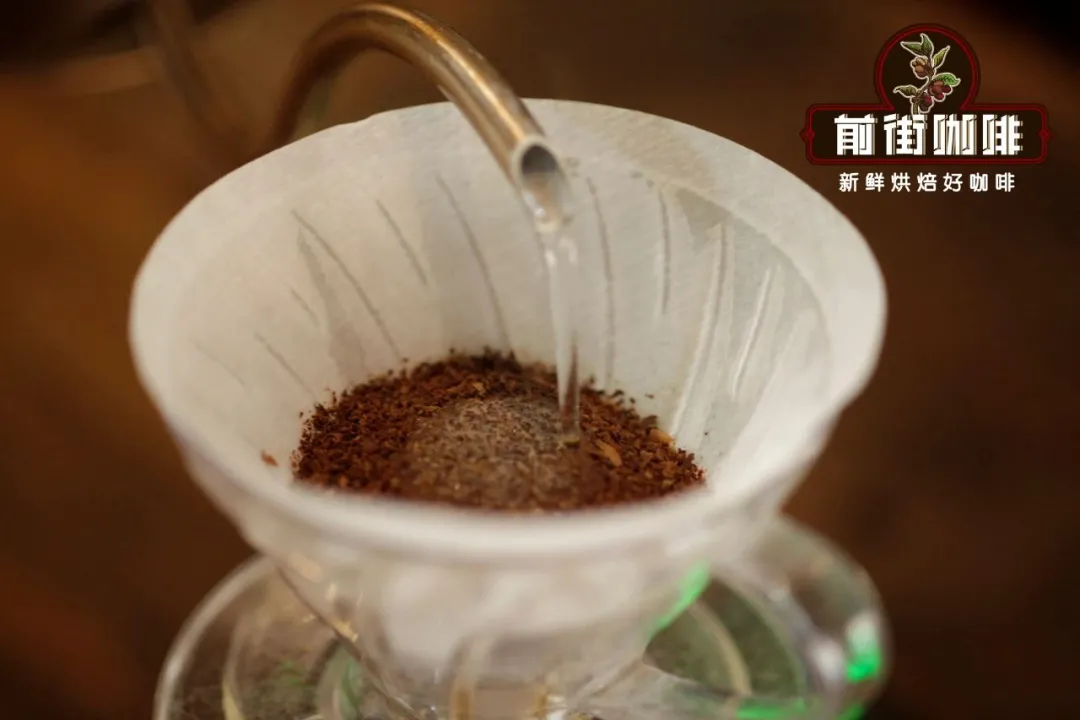
Density, roast level, and freshness all change how much gas a coffee holds, which means the one-size-fits-all formula is rarely the optimal approach.
To really understand blooming, you have to learn to observe. When you brew beans that are extremely fresh, you'll see bubbles bursting out of the swollen dome — that's excess gas escaping as the dome ruptures. Well-rested coffee won't do this.
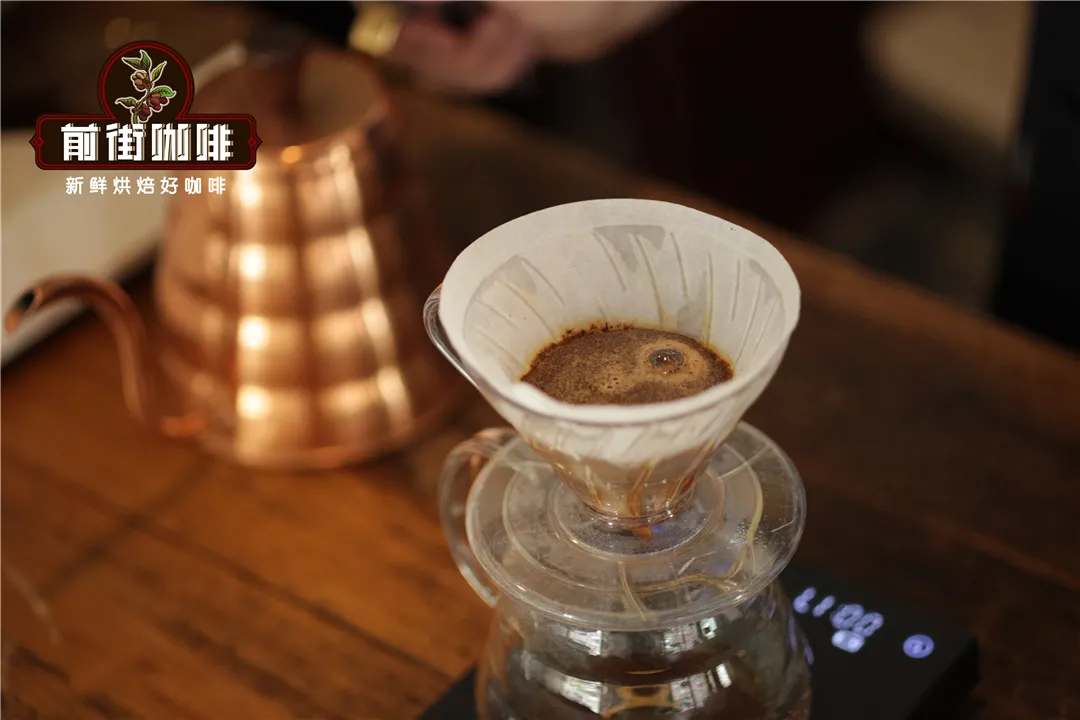
Denser, harder beans expand less and take longer for water to penetrate to the core, so their bloom can run a little longer. Softer beans swell more dramatically, so their bloom should be kept shorter.
As for when to move on, here's a simple visual check: once every ground is wet and the swollen dome has gone still — no longer releasing bubbles — the bloom is finished and you can start your main pour. That moment doesn't have to land exactly at 30 seconds; 25 or 35 seconds are both perfectly reasonable.
FrontStreet Coffee Recommendation
If you're dialing in your bloom technique, start with a coffee that rewards careful pouring. The FrontStreet Yirgacheffe Guodingding from Ethiopia is a classic choice: bright citrus, berry, and floral notes with a green-tea-like finish, its gentle acidity makes it very forgiving for beginners practicing their bloom on a V60.
For something fruitier, try FrontStreet Ethiopia Huakui, whose vivid tropical fruit character — strawberry, passion fruit, even lychee — really shines through a V60's fast, even extraction. And if you prefer a fuller, low-acid cup, FrontStreet PWN Golden Mandheling (dark roast) is an excellent match for the poke-a-well blooming method, since its fluffy, freshly roasted bed benefits from that extra control.
Important Notice :
FrontStreet Coffee is a long-established specialty coffee roaster in Guangzhou China, selling freshly roasted beans from its own farm in Yunnan as well as dozens of carefully selected single-origin beans from around the world for both pour-over and espresso. The products deliver consistently excellent quality and great value, with shipping within 24 hours. Guangzhou's FrontStreet Coffee shop is recommended by many coffee lovers, and the beans are now available online at the Tmall 。
FrontStreet Coffee has moved to a new address:
FrontStreet Coffee Address: 315,Donghua East Road,GuangZhou
Tel:020 38364473
 Scan and follow the En Gafei WeChat official account. Please indicate that the reprint comes from "En Gafei".